Skip to content
Vikings
A brutal historical epic drenched in mist, blood, and existential wonder, where fiercely ambitious warriors navigate the tempestuous edge between divine destiny and human mortality under a cold, raven-shadowed northern sky.
Vikings

Vikings

03 March 2013 — 30 December 2020 Canada 6 season 89 episode Ended 8.1 (7,777)

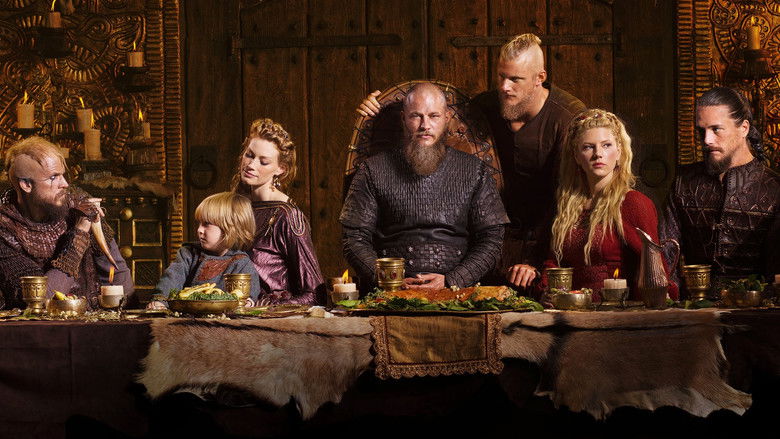
Cast: Katheryn Winnick, Gustaf Skarsgård, Alexander Ludwig, Georgia Hirst, Peter Franzén

Drama Action & Adventure War & Politics Clash of Faiths & The Search for Divine Truth Ambition, Legacy, & The Burden of Fame Brotherhood, Loyalty, & Betrayal Cultural Expansion, Exploration, & Assimilation Fate (Skuld) vs. Free Will & Individual Choice

Overview

Vikings is a sweeping six-season historical drama created and written by Michael Hirst for the History Channel. The narrative follows the legendary Norse chieftain Ragnar Lothbrok, who evolves from a humble farmer and curious navigator in early medieval Scandinavia into a mythic king whose bold raids across uncharted western waters reshape the geopolitical landscape of Anglo-Saxon England and Frankia. The early seasons explore the cultural, religious, and military shocks of first contact between Norse pagans and Christian Europe through the intimate lens of Ragnar's inner circle, including his warrior wife Lagertha, his conflicted brother Rollo, his eccentric shipbuilder Floki, and an enslaved English monk named Athelstan.

As the saga unfolds, the scope expands from localized tribal conflicts to grand continental conquests, political intrigue, and transatlantic exploration. Following Ragnar's transcendent journey, the narrative torch passes to his ambitious sons—Bjorn Ironside, Ivar the Boneless, Ubbe, Hvitserk, and Sigurd—whose fierce rivalries and diverging ideals propel the Viking Age across the Mediterranean, the frozen expanses of Kievan Rus, Iceland, and the shores of North America. Across its 89 episodes, Vikings blends kinetic battle spectacle with deep philosophical inquiry, tracing how a culture's relentless pursuit of fame, land, and spiritual truth ultimately led to both its historical zenith and its gradual assimilation into the Christian world.
Core Meaning

At its core, Vikings explores the transformative power and destructive cost of human ambition in a world governed by conflicting faiths. Creator Michael Hirst used the historical Viking Age not merely to depict raiding and warfare, but to interrogate how individuals seek meaning when forced to confront foreign cultures, shifting personal beliefs, and the burden of legacy.

The series demonstrates that true immortality is not achieved through brutal conquest or religious fanaticism, but through curiosity, adaptability, and the enduring human spirit. Through the parallel journeys of Ragnar Lothbrok and King Ecbert of Wessex, the series illustrates that despite vast differences in religion and tradition, visionary leaders share the same existential loneliness, doubts, and desire to build a better future for their people beyond endless cycles of violence.

Thematic DNA

Clash of Faiths & The Search for Divine Truth 25%
Ambition, Legacy, & The Burden of Fame 25%
Brotherhood, Loyalty, & Betrayal 20%
Cultural Expansion, Exploration, & Assimilation 15%
Fate (Skuld) vs. Free Will & Individual Choice 15%

Clash of Faiths & The Search for Divine Truth

Throughout all six seasons, the fundamental tension between Norse Paganism and Christianity drives both personal relationships and national conflicts. This theme evolves from initial shock and mutual demonization to deep syncretism and internal doubt, personified by Athelstan's dual faith and Ragnar's spiritual skepticism. In later seasons, characters like Floki, Ivar, and Alfred the Great test the boundaries of religious zealotry versus pragmatic tolerance, culminating in a world where old gods recede to make room for new ideologies.

Ambition, Legacy, & The Burden of Fame

The show constantly questions what it means to be remembered. Ragnar's desire to explore lands to the west is initially fueled by curiosity and a dream of fertile farmland, but his success burdens him with absolute power and devastating fame. His sons inherit this burden, each attempting to surpass their father's legendary stature—Bjorn through physical valor, Ivar through terrifying tactical intellect and self-deification, and Ubbe through fulfilling Ragnar's original dream of peaceful settlement.

Brotherhood, Loyalty, & Betrayal

Intimate personal betrayal is the quiet engine of the series. The volatile dynamic between Ragnar and Rollo sets the template in early seasons, showing how jealousy and the desire to step out of a brother's shadow can dismantle families and empires. This motif repeats tragically among Ragnar's sons in Seasons 5 and 6, where ideological differences and personal grudges shatter their unity, turning brother against brother in devastating civil wars.

Cultural Expansion, Exploration, & Assimilation

Vikings presents exploration as an organic, multi-generational process. Starting with short, dangerous voyages across the North Sea in Season 1, the narrative gradually encompasses Normandy, Paris, Spain, the Mediterranean, Russia, Iceland, Greenland, and North America. The show highlights that expansion inevitably leads to cultural exchange and adaptation, altering both the conquerors and the conquered.

Fate (Skuld) vs. Free Will & Individual Choice

Norse culture's rigid belief in predetermined fate is constantly weighed against individual agency. Characters consult the Seer for prophecies, yet leaders like Ragnar explicitly declare that man is the master of his own fate. The series tracks how characters either resign themselves to 'fate' or actively manipulate their circumstances, showing that even if death is inevitable, the manner in which one meets it remains a choice.

Character Analysis

Ragnar Lothbrok

Travis Fimmel

Archetype: The Visionary / Tragic Antihero Key Trait: Inquisitive intelligence coupled with ruthless pragmatism

Motivation

Initially driven by intellectual curiosity and a desire for fertile land; evolves into a battle-weary king burdened by power, searching for spiritual truth before choosing his own path to death.

Character Arc

Begins as a curious farmer seeking better lands; rises to Earl and King through cunning and military brilliance; falls into addiction, defeat, and self-imposed exile; ultimately crafts a grand final strategy by orchestrating his own execution to guarantee his sons' revenge and the future of his people.

Lagertha

Katheryn Winnick

Archetype: The Shieldmaiden / Matriarch Leader Key Trait: Indomitable resilience and fierce independence

Motivation

Driven by a fierce commitment to protect her family, her sovereignty, and her people; shifts from defending her household to ruling a kingdom with honor.

Character Arc

Evolves from a devoted wife and skilled farmer into an independent Earl (Earl Ingstad), Queen of Kattegat, and legendary warrior; faces aging, loss, and trauma, eventually retiring to a peaceful farm before dying a hero's death and being buried with full mythic honors.

All 5 characters and cast

Symbols & Motifs

The Raven

Meaning:

Symbolizes the god Odin (Huginn and Muninn), acting as a herald of death, wisdom, and divine favor.

Context:

Ravens appear during crucial turning points, such as Ragnar's decision to sail west, his death in the snake pit, and his sons' realization that their father has fallen.

The Longship

Meaning:

Designed by Floki, longships represent Norse technological genius, freedom, and the bridge between worlds.

Context:

Symbolically, ships mark both physical journeys to unknown shores and spiritual transitions into the afterlife during Viking funeral pyres.

The Sacred Arm Ring

Meaning:

Worn by Viking warriors and leaders, arm rings symbolize sacred oaths, tribal belonging, and feudal allegiance.

Context:

Renouncing or giving away an arm ring—as Rollo does when allying with the Franks, or Athelstan when torn between faiths—signifies a profound identity crisis or betrayal.

Water and the Sea

Meaning:

Oceans and rivers act as physical barriers and spiritual conduits, bringing both life and death.

Context:

Serves as the setting for baptisms, drownings, oceanic discoveries, and ultimate existential reflection on distant beaches.

The Sunstone and Wooden Compass

Meaning:

Represent Ragnar's visionary mindset, innovation, and refusal to be bound by traditional boundaries.

Context:

Introduced in the pilot episode, they symbolize looking beyond current horizons.

Memorable Quotes

You couldn't kill me if you tried for a hundred years.
— Lagertha

Context

Season 1, Episode 1 (Rites of Passage); Lagertha effortlessly defends herself against two attackers in her home while Ragnar is away.

Meaning

Establishes Lagertha's unbreakable confidence and formidable warrior spirit.

Warriors don't show their heart until the axe reveals it.
— Floki

Context

Season 2, Episode 7 (Blood Eagle); spoken during intense political jockeying and preparations for execution.

Meaning

Encapsulates the stoic, dangerous nature of Viking warriors and Floki's guarded, enigmatic mindset.

All 6 quotes

Episode Highlights

Wrath of the Northmen

S1E2

The raid on Lindisfarne monastery marks the pivotal moment of the dawn of the Viking Age in Europe.

Significance:

Serves as the catalyst for the entire series narrative and establishes the initial meeting and cross-cultural contact between Ragnar and Athelstan.

Sacrifice

S1E8

Depicts the pilgrimage to the sacred temple at Uppsala and human sacrifice rituals.

Significance:

Exposes the terrifying, ethereal, and deeply devoted pagan worldview, re-contextualizing Viking morality and deeply shaking Athelstan's Christian foundation.

Blood Eagle

S2E7

Features the graphic execution of Jarl Borg via the ancient 'Blood Eagle' ritual, highlighting cinematic tension and sound design.

Significance:

Solidifies Ragnar's absolute authority and cements the show's reputation for uncompromising historical brutal realism.

Born Again

S3E6

Floki murders Athelstan while the monk undergoes a divine Christian epiphany.

Significance:

Destroys Ragnar's emotional core, driving him into deep grief and permanently fracturing his friendship with Floki.

The Dead

S3E10

Ragnar fakes his death in a wooden coffin to gain entry into the impenetrable walls of Paris.

Significance:

A tactical masterclass resulting in the sacking of Paris, while revealing Rollo's decision to remain in Frankia.

The Last Ship

S4E10

The climactic, brutal river battle between Ragnar and his brother Rollo outside Paris.

Significance:

Ragnar's devastating defeat leads to his psychological collapse and a decade-long time jump.

All His Angels

S4E15

The execution of Ragnar Lothbrok in King Aelle's pit of snakes.

Significance:

The most critical turning point in the entire franchise, ending the lead hero's journey and triggering the invasion of the Great Heathen Army.

Revenge

S4E18

Ragnar's sons execute King Aelle via Blood Eagle.

Significance:

Fulfills Ragnar's death prophecy and establishes his sons as dominant global figures.

King of Kings

S6E11

Bjorn Ironside, mortally wounded, rides out alone to face the overwhelming Rus army.

Significance:

Marks the climax of Bjorn's arc, inspiring the unified forces of Norway to victory and giving him a mythic death that surpasses even his father's fame.

The Last Act

S6E20

The series finale featuring Ivar's death in England, Hvitserk's baptism, and Ubbe's peaceful arrival in North America where he reconciles with Floki.

Significance:

Elegantly resolves six seasons of war, closing the Viking Age with quiet existential reflection.

Philosophical Questions

Is fate an absolute force, or a construct created by those afraid to govern their own lives?

Explored through Ragnar's defiance of the Seer and his calculated orchestration of his own death.

Can two fundamentally opposing worldviews coexist without one destroying the other?

Explored through Athelstan's internal agony and the bloody history between England and Scandinavia.

What is the true measure of a man's legacy: fame, power, or the quiet happiness of his people?

Contrasted between Ivar's thirst for divine glory and Ubbe's search for peaceful farmland.

Does violent retribution ever achieve peace, or does it merely perpetuate an endless cycle of suffering?

Explored through the endless retaliatory blood feuds across all six seasons.

Alternative Interpretations

The series invites several distinct interpretations across its primary themes:

Full ending explanation

Cultural Impact

When Vikings premiered in 2013 on the History Channel, it marked the network's ambitious entry into scripted, high-concept drama. Coming during the height of Game of Thrones, Vikings distinguished itself by grounding its narrative in real historical sagas, rich archaeological detail, and authentic pagan spirituality rather than high fantasy.

The show fundamentally altered popular culture's perception of Norse civilization. Prior to the series, mainstream media heavily caricatured Vikings as mindless, horned-helmet savages. Vikings highlighted their sophisticated legal assemblies (Things), democratic elements, equal rights for shieldmaidens, advanced maritime engineering, and complex religious worldview. The show's massive global success revived commercial interest in Scandinavian history and mythology, directly paving the way for media such as The Last Kingdom, The Northman, Assassin's Creed Valhalla, and its official Netflix sequel series Vikings: Valhalla.

Audience Reception

Vikings received broad acclaim, though reception evolved across its multi-season run:

  • Seasons 1–3 (Peak Critical Acclaim): Praised universally for Travis Fimmel's magnetic performance, tight storytelling, unique atmospheric tone, and nuanced handling of culture clash. Critics noted it transcended 'pulp action' to become intelligent television.
  • Season 4 (Transition & High Drama): Celebrated for its emotional ambition and the iconic farewell to Ragnar, though some criticized the expanded 20-episode format for pacing slowdowns.
  • Seasons 5–6 (Polarizing Evolution): Received mixed reactions. While battle sequences, production scale, and individual arcs (Bjorn's heroic stand, Ubbe's journey, and the series finale) were praised, audiences criticized the repetitive civil wars, Ivar's polarizing villainy, and the absence of Ragnar's unifying presence.

Overall, it retains a strong, highly appreciative legacy as a groundbreaking historical epic that successfully navigated a difficult protagonist transition.

Interesting Facts

  • Remarkably, all 89 episodes of the six-season series were penned by a single creator and writer, Michael Hirst, a rare feat in modern multi-season television.
  • Despite being set in Norway, Denmark, England, and France, the show was filmed primarily in County Wicklow, Ireland, utilizing Ashford Studios and the scenic estate of Luggala/Lough Dan to recreate Kattegat and its fjords.
  • To maximize authenticity during battle and religious scenes, the production hired historical linguists to translate dialogue into four extinct languages: Old Norse, Anglo-Saxon (Old English), Old Frankish, and Vulgar Latin.
  • Production began in Season 1 with a single functional longship constructed in the Czech Republic; as the budget expanded, the team built a fleet of over 10 full-scale, ocean-ready longships.
  • Travis Fimmel originally submitted an audition tape for the role of the older brother, Rollo. When cast as Ragnar, he brought distinctive improvisations—such as long, silent pauses, unsettling blue-eyed stares, and unorthodox vocal cadence—that defined the series' tone.
  • The actresses playing Helga (Maude Hirst) and Torvi (Georgia Hirst) are the real-life daughters of show creator Michael Hirst.
  • Gustaf Skarsgård (Floki) is part of the famous Swedish acting dynasty, son of Stellan Skarsgård and brother to Alexander, Bill, and Valter Skarsgård.

Easter Eggs

The 'V' Logo Symbolism

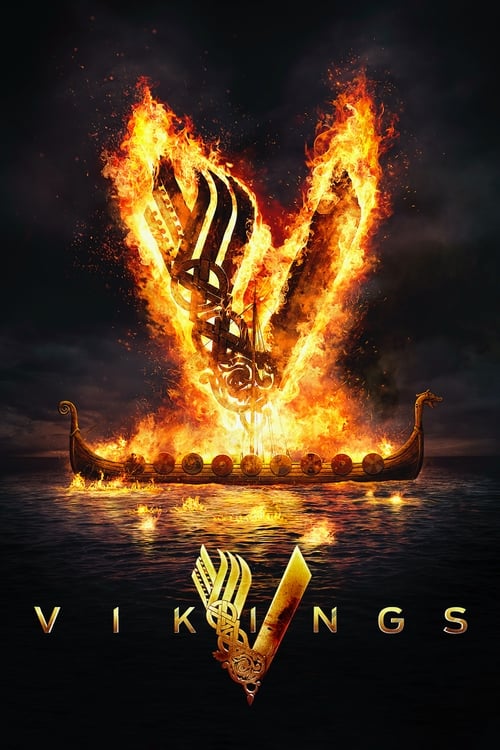
The show's main title logo (the letter 'V') is split into two halves containing detailed iconography: the right side represents a sharp weapon blade (violence/conflict), while the left side features runic branches, leaves, and weaves symbolizing life, family, growth, and longship sails.

T.S. Eliot References

Michael Hirst embedded subtle thematic lines and concepts from poet T.S. Eliot's Four Quartets into Ragnar and Ecbert's conversations regarding time, memory, and death.

Historical Time Compression

The show ingeniously condenses roughly a century of historical events into a single generation. For example, the real Rollo (who founded Normandy) and the legendary Ragnar lived decades apart and were not brothers.

Odin's One-Eyed Motif

In multiple episodes, visual framing intentionally hides or casts shadows over Ragnar's left eye, visually linking him to Odin, who sacrificed an eye for wisdom.

Frequently Asked Questions

Explore More About This Movie

Dive deeper into specific aspects of the movie with our detailed analysis pages

Comments (0)

Leave a comment

No comments yet. Be the first to share your thoughts!

Similar Movies