Skip to content
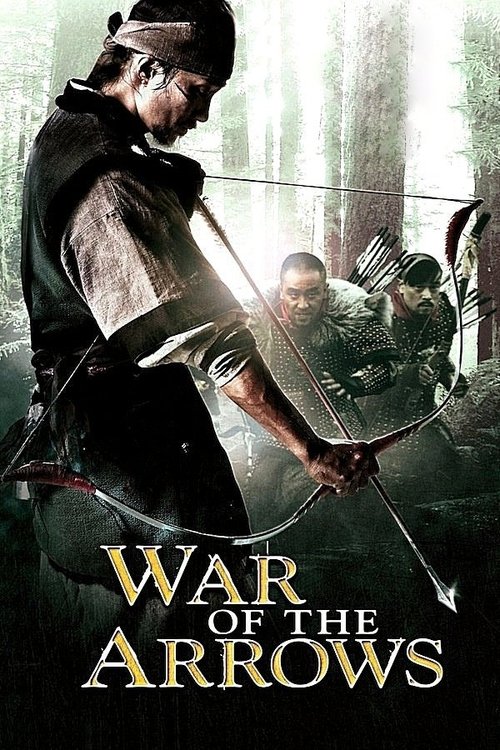
War of the Arrows
In this pulse-pounding Joseon historical action saga, raw desperate devotion collides with unrelenting survival as a solitary archer's arrow cuts through the foggy forest like a whispered promise of freedom.
War of the Arrows

War of the Arrows

최종병기 활

"A hero is born, the legend begins"

10 August 2011 South Korea 122 min 7.2 (293)

Director: Kim Han-min

Cast: Park Hae-il, Moon Chae-won, Kim Moo-yul, Ryu Seung-ryong, Park Ki-woong

Drama History Action Sibling Devotion & Family Duty Overcoming Adversity / Will vs. Fate State Abandonment vs. Individual Heroism Martial Honor & Professional Rivalry
Budget: $8,000,000
Box Office: $49,000,000

Overview

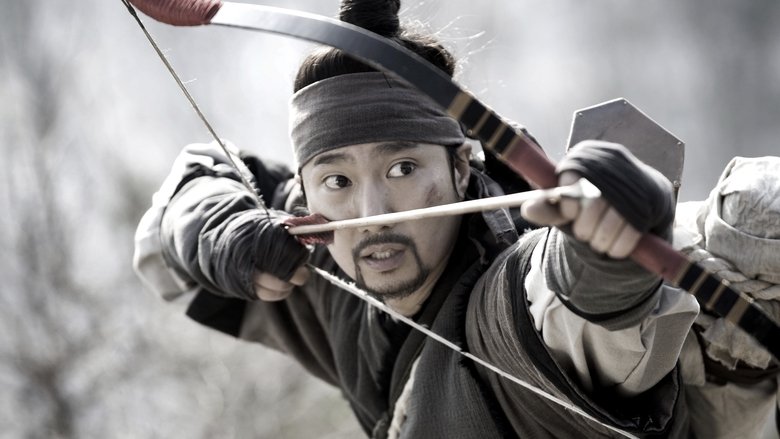
Set in 1636 during the Second Manchu Invasion of Korea (the Byeongja Horan), War of the Arrows tells the story of Choi Nam-yi, a master archer whose traumatic childhood begins when his father, an officer loyal to King Gwanghae, is branded a traitor and executed during King Injo's bloody coup. Before dying, his father entrusts Nam-yi with his sacred bow and commands him to protect his younger sister, Ja-in. Raised in secret by family friend Kim Mu-seon, Nam-yi grows into a cynical outcast who spends his days hunting, unable to pursue a government career due to the stigma of his father's alleged treason.

Thirteen years later, on the wedding day of Ja-in and Kim Mu-seon's son, Seo-goon, disaster strikes. Elite Qing forces led by the relentless commander Jyu Shin-ta storm the border village, slaughtering residents and taking Ja-in, Seo-goon, and thousands of Joseon citizens hostage. Armed only with his late father's bow and specialized arrow craft, Nam-yi embarks on a desperate rescue mission across unforgiving wilderness to track down the Qing army.

Nam-yi's lethal guerrilla archery techniques quickly decimate Qing ranks, bringing him to the attention of Jyu Shin-ta. Recognizing Nam-yi as a supreme threat, Jyu Shin-ta mobilizes his elite warriors to hunt down the Joseon archer. What follows is a high-stakes, tactical battle of wits and marksmanship through dense forests, rocky ravines, and wide plains.
Core Meaning

Director Kim Han-min uses the historical backdrop of national tragedy to explore individual agency, family devotion, and spiritual resilience in the face of state abandonment. During the 1636 invasion, the Joseon monarchy notoriously failed to protect its people, leaving over 500,000 citizens to be carried off into servitude. Nam-yi represents the unsung hero who fights not for abstract political ideologies or a monarch who betrayed his family, but out of absolute, unconditional love for his sister.

The film elevates archery from a weapon of war to a spiritual metaphor for mastering one's mind. The core philosophy—facing fear directly rather than being paralyzed by external chaos or calculation—suggests that human will and purpose can overcome seemingly impossible historical and natural odds.

Thematic DNA

Sibling Devotion & Family Duty 35%
Overcoming Adversity / Will vs. Fate 25%
State Abandonment vs. Individual Heroism 20%
Martial Honor & Professional Rivalry 20%

Sibling Devotion & Family Duty

The psychological anchor of the narrative. Nam-yi's entire existence centers on his deathbed promise to his father to keep Ja-in safe, driving him to challenge an entire army single-handedly.

Overcoming Adversity / Will vs. Fate

Expressed through the physical mechanics of archery. External forces like wind, terrain, and numerical disadvantage are presented as obstacles to be transcended through mental clarity and resolve.

State Abandonment vs. Individual Heroism

A sharp commentary on political corruption and government failure. While rulers abandon their subjects, ordinary individuals find honor and heroism through mutual protection and survival.

Martial Honor & Professional Rivalry

The mutual respect between master archers Nam-yi and Jyu Shin-ta. Their duel represents a clash of styles and values—Joseon agility and trick shots versus Qing brute power and heavy artillery.

Character Analysis

Choi Nam-yi

Park Hae-il

Archetype: Reluctant Hero / Master Avenger Key Trait: Unmatched speed, tactical intelligence, and mastery of curved arrow trajectories.

Motivation

Rescuing his sister Ja-in and fulfilling his father's final command.

Character Arc

Starts as an aimless, alcoholic outcast suffering from trauma, but transforms into a selfless, hyper-focused savior when his family is threatened.

Jyu Shin-ta

Ryu Seung-ryong

Archetype: Honorable Antagonist / Apex Hunter Key Trait: Fierce loyalty, immense physical presence, and mastery of heavy Yukryangsi arrows.

Motivation

Protecting Qing Prince Dorgon and his soldiers while neutralizing the deadly Joseon archer.

Character Arc

Begins as a confident imperial commander, but becomes increasingly obsessed with hunting Nam-yi as his elite squad is methodically eliminated.

All 5 characters and cast

Symbols & Motifs

The Heirloom Bow (최종병기 - The Ultimate Weapon)

Meaning:

Symbolizes family heritage, protection, duty, and spiritual continuity across generations.

Context:

Inherited by Nam-yi from his father upon his father's execution.

The Wind (바람)

Meaning:

Represents unpredictable fate, historical turmoil, and chaotic environmental variables. It serves as the ultimate test for an archer's mastery over mind and spirit.

Context:

Acts as an environmental variable during crucial archery shots and the final duel.

The Curved Arrow Shot (곡사 - Goksa)

Meaning:

Symbolizes adaptability, ingenuity, and lateral thinking. It demonstrates that rigid linearity fails against heavy forces, whereas flexibility overcomes obstacles.

Context:

Used by Nam-yi to shoot around obstacles and targets throughout his fights.

Pyeonjeon (Short Arrow / "Baby Arrow") & Tongah (Guide Tube)

Meaning:

Symbolizes hidden strength and Joseon technical innovation.

Context:

Shot through a hollow pipe, these short arrows fly faster, farther, and remain invisible to targets until impact.

Yukryangsi (Six-Liang Heavy Arrow)

Meaning:

Symbolizes brute imperial dominance, overwhelming military force, and destructive capability.

Context:

Jyu Shin-ta’s massive, heavy-caliber arrow (~225g) used in combat.

The Wild Tiger

Meaning:

Symbolizes the neutral, untamable force of nature.

Context:

Acts as an equalizer in the forest, intervening without allegiance to either side.

Memorable Quotes

두려움은 직시하면 그뿐, 바람은 계산하는 것이 아니라 극복하는 것이다.
— Choi Nam-yi

Context

Spoken to Jyu Shin-ta during the final standoff on the windy plain.

Meaning

The philosophical peak of the film, spoken to Jyu Shin-ta during the final standoff. It reflects the core mindset required to execute impossible archery under extreme pressure.

내 활은 죽이는 것이 아니다.
— Choi Nam-yi

Context

Expressed regarding the purpose of his archery.

Meaning

Captures the moral distinction between Nam-yi's defensive, protective archery and the aggressive, lethal violence of the invaders.

All 4 quotes

Philosophical Questions

What constitutes true loyalty when the state fails its people?

The film demonstrates that moral loyalty belongs to family, community, and human dignity rather than an elite political power structure.

Can human will master chaotic environmental forces?

Explored through the archery concept of the wind; Nam-yi proves that success depends not on calculating uncontrollable circumstances, but on adapting and overcoming them through inner resolve.

Is violence justified when used exclusively for preservation rather than ambition?

Nam-yi uses lethal violence solely to save his sister, establishing a moral distinction between aggressive conquest and protective defense.

Alternative Interpretations

Nationalist / Survivalist Reading: Views the story as a nationalist parable where the strength and survival of Korea rest not on corrupt governing institutions, but on the unyielding grit and moral endurance of its ordinary people.

Full ending explanation

Cultural Impact

The film is deeply rooted in the memory of the 1636 Second Manchu Invasion (Byeongja Horan), a humiliating historical trauma where King Injo surrendered at Samjeondo and hundreds of thousands of Joseon civilians were dragged north into slavery.

By framing the historical event through the lens of a personal survival story, the film sparked a national resurgence of interest in traditional Korean archery (Gukgung) and martial arts history. It demonstrated that Korean historical films (Saguk) could step away from court intrigue to deliver dynamic, internationally appealing action thrillers centered on specialized weapon mechanics.

Audience Reception

Praised Aspects: Critics and viewers praised the fast pacing, sound design of flying and whistling arrows, realistic archery techniques, and intense tactical duels between Park Hae-il and Ryu Seung-ryong. The use of authentic Manchu language was widely lauded for adding historical realism.

Criticisms: The primary point of criticism was a poorly executed CGI tiger sequence near the climax, which many felt looked visually dated and pulled viewers out of an otherwise realistic film.

Controversial Moments: Some viewers felt the dramatic delivery of the famous quote ("wind is not something to calculate, but to overcome") during the final duel was slightly melodramatic, while others considered it the standout line of the film.

Overall Verdict: Universally acclaimed as a landmark South Korean historical action blockbuster, balancing emotional stakes with high-level martial arts choreography.

Interesting Facts

  • War of the Arrows is one of the extremely rare films in global cinema history to feature extensive, historically accurate dialogue in the nearly extinct Manchu language. The cast learned their lines phonetically under the guidance of Korean Manchu language linguists.
  • Main actors Park Hae-il and Ryu Seung-ryong spent 4 to 5 months prior to filming undergoing intensive traditional archery and horseback riding training to master the traditional "Mongolian release" technique (thumb ring draw).
  • Production designers meticulously recreated forgotten Joseon archery equipment, including the Pyeonjeon (short arrow) with its Tongah guide tube, and the massive Yukryangsi (225g heavy arrows used by Manchu warriors).
  • The film was a massive commercial hit in South Korea, drawing over 7.48 million theatergoers and becoming the highest-grossing domestic film of 2011 with over $51 million in box office revenue.
  • Swept major Korean film awards at both the 48th Grand Bell Awards and 32nd Blue Dragon Film Awards, winning Best Actor (Park Hae-il), Best Supporting Actor (Ryu Seung-ryong), and Best New Actress (Moon Chae-won).
  • The massive success of this film established Kim Han-min as Korea's premier director for historical action blockbusters, leading directly to his acclaimed Yi Sun-sin naval trilogy (Roaring Currents, Hansan: Rising Dragon, Noryang: Deadly Sea).

Easter Eggs

Authentic Early-Qing Hairstyle

Unlike many modern Chinese historical dramas that depict the late-Qing queue hairstyle (partially shaved head with a thick braid), the film accurately reproduces the harsh early-17th-century Manchu queue—where almost the entire scalp was shaved except for a small patch braided into a thin "money rat tail" braid.

Traditional Archery Calligraphy

The four-character idioms carved onto Nam-yi's bow (前推泰山 發如虎尾) are direct quotes from historical Joseon archery manuals (Gukgung texts) detailing physical stance and tension control.

Narrative Homage to Apocalypto

The relentless wilderness pursuit during the second half of the film contains structural nods to Mel Gibson's Apocalypto (2006), featuring cliff-jumps, jungle survival tactics, and turning environmental elements against pursuers.

Frequently Asked Questions

Explore More About This Movie

Dive deeper into specific aspects of the movie with our detailed analysis pages

Comments (0)

Leave a comment

No comments yet. Be the first to share your thoughts!

Similar Movies