Skip to content
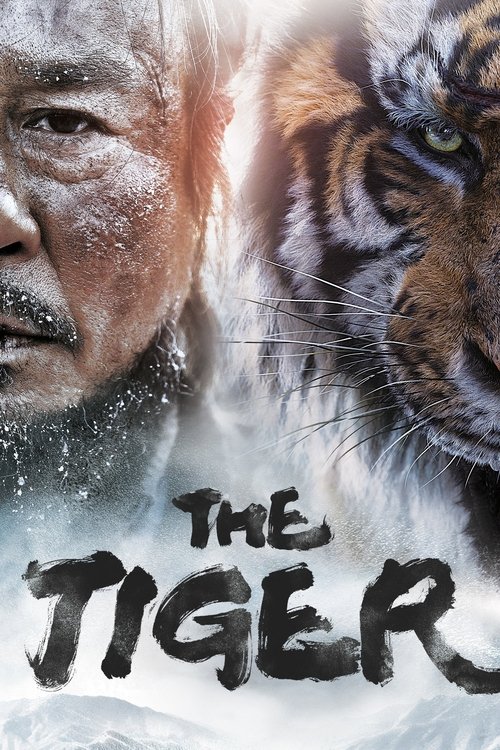
The Tiger
A haunting historical epic steeped in grief and reverence, where a sorrowful hunter and a mythic, one-eyed predator clash amidst blood-soaked snowdrifts as an empire threatens to devour the sacred soul of Joseon.
The Tiger

The Tiger

대호

"A hunter's fight to protect."

16 December 2015 South Korea 139 min 7.7 (296)

Director: Park Hoon-jung

Cast: Choi Min-sik, Jeong Man-sik, Kim Sang-ho, Sung Yu-been, Ren Osugi

Drama History Action Adventure The Devastation of Colonial Subjugation Man, Nature, and the Sacred Balance Grief, Kinship, and Paternal Loss Vengeance versus Honor
Box Office: $11,083,449

Overview

Set in 1925 during the Japanese colonial occupation of Korea, The Tiger centers on the rugged wilderness of Mount Jirisan, the final refuge of the peninsula's apex predators. Japanese military authorities, led by an obsessive Governor-General fixated on accumulating wildlife trophies, launch a massive campaign to exterminate the mountain's wildlife, focusing their full might on hunting down a legendary, scarred one-eyed beast known by local villagers as the Mountain Lord.

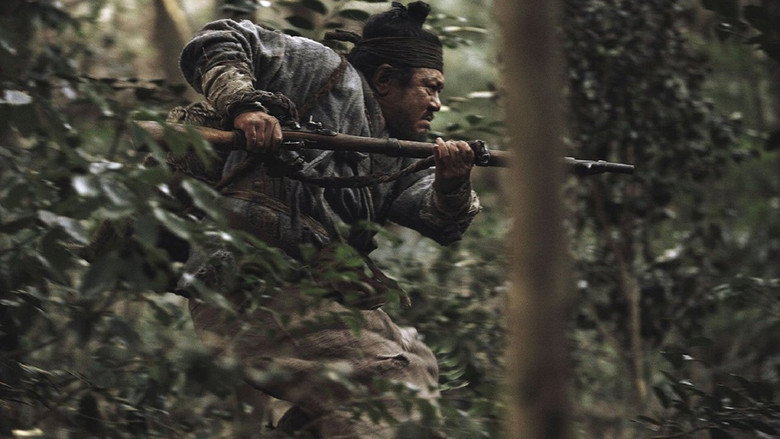
To track down the elusive beast, colonial authorities enlist collaborator hunting bands spearheaded by the vengeful hunter Goo-gyeong. However, the hunters know their quarry is almost invincible without the legendary marksmanship of Chun Man-duk, once revered as Joseon's greatest hunter. Living in an impoverished mountain shack with his impressionable teenage son Seok, Man-duk has long retired his rifle following a tragic past, choosing the quiet life of an herbalist governed by deep respect for the mountain's sacred laws.

As colonial pressure mounts and brutal extermination tactics disturb the ancient peace of Mount Jirisan, youthful ambition and imperial hubris trigger a tragic chain of events. Caught between the relentless imperial war machine and the primal fury of the sovereign beast, Man-duk is inexorably drawn into a fateful reckoning with the creature that mirrors his own battered spirit.

Core Meaning

The core meaning of the film is an elegy for the loss of spiritual harmony, cultural identity, and ecological sanctity under brutal colonial subjugation. Director Park Hoon-jung presents the titular Mountain Lord not as a ravenous monster, but as the living avatar of Joseon's unbroken spirit and dignity. The film contrasts the traditional hunter's ethical code—taking only what nature provides and coexisting with sacred balance—against the greedy, extractive violence of modern imperial forces. In their shared tragedy, the old hunter and the last tiger represent an era and an ethos doomed by imperial modernity, finding dignity only through mutual recognition and autonomous defiance.

Thematic DNA

The Devastation of Colonial Subjugation 30%
Man, Nature, and the Sacred Balance 25%
Grief, Kinship, and Paternal Loss 25%
Vengeance versus Honor 20%

The Devastation of Colonial Subjugation

The Japanese occupation is portrayed as an extractive, desecrating force that seeks to strip Joseon of its natural and cultural soul. Governor-General Maezono's obsession with skinning the Mountain Lord reflects imperial domination and the systematic erasure of Korea's sovereign spirit.

Man, Nature, and the Sacred Balance

Through Chun Man-duk's strict hunter code, the film explores the spiritual equilibrium between humanity and the wilderness. Man-duk respects the mountain's sovereignty and warns that greed disrupts the cosmic balance, contrasting sharply with mercenary hunters who treat animals purely as commodities.

Grief, Kinship, and Paternal Loss

Both Man-duk and the Mountain Lord are defined by harrowing familial bereavement. The narrative mirrors the human father-son dynamic of Man-duk and Seok with the tiger's fierce devotion to its cubs, linking two weary patriarchs through shared sorrow and mutual recognition.

Vengeance versus Honor

Goo-gyeong's consuming vendetta against the beast demonstrates the hollow, destructive spiral of vengeance, which leads his men to catastrophic slaughter. In contrast, Man-duk and the tiger transcend mere retaliation, achieving an honorable communion that rises above malice.

Character Analysis

Chun Man-duk

Choi Min-sik

Archetype: Tragic Hero / Reluctant Master Key Trait: Stoic, reverent, and world-weary

Motivation

To protect his son Seok and live in accordance with the sacred, unwritten laws of Mount Jirisan.

Character Arc

Begins as a grief-stricken, reclusive widower living simply with his son; after losing his boy to the hunt, he fulfills his destiny by confronting the Mountain Lord in a final act of mutual respect.

Goo-gyeong

Jeong Man-sik

Archetype: Obsessive Antihero / Vengeful Hunter Key Trait: Bitter, calculating, and relentless

Motivation

To exact vengeance on the beast that maimed him and claim the massive colonial bounty.

Character Arc

Evolves from a scarred, driven survivor into a ruthless colonial collaborator whose blind obsession with slaying the tiger leads directly to his expedition's doom.

All 4 characters and cast

Symbols & Motifs

The One-Eyed Tiger (The Mountain Lord)

Meaning:

Symbolizes the unconquered spirit, sovereignty, and ancestral identity of Korea resisting foreign subjugation.

Context:

Revered by locals as the divine lord of Mount Jirisan, the creature evades sophisticated imperial traps and decimates hunting parties while defending its ancestral terrain.

The Hunter's Rifle

Meaning:

Represents human violence, guilt, and the disruption of natural harmony.

Context:

Man-duk buries his rifle after it brings accidental death to his wife, only exhuming the weapon when duty and destiny demand a final confrontation.

Mount Jirisan's Snow-Covered Peak

Meaning:

A sacred altar of spiritual reckoning and pristine isolation, detached from colonial reach.

Context:

The blizzard-swept precipice serves as the setting for the climactic standoff between Man-duk and the beast, where blood is cleansed by falling snow.

Taxidermy Pelts

Meaning:

Symbols of colonial vanity, domination, and the commodification of living heritage into lifeless trophies.

Context:

Displayed in the opulent office of the Japanese Governor-General, contrasting starkly with the raw, untamed majesty of the living beast in the wild.

Philosophical Questions

Can humanity ever maintain ethical coexistence with nature without exploitation?

The film explores Man-duk's guiding philosophy of taking only what the mountain provides, contrasting it with colonial industry's desire to subjugate and commodify the natural world.

Does vengeance ever provide closure, or does it inevitably consume the seeker?

Through the destructive quest of Goo-gyeong, the film examines how retributive violence blinds humans to reverence and sacred law, yielding only compounded tragedy.

How It Ends

Alternative Interpretations

Beyond the primary reading of the film as a nationalistic anti-colonial allegory, several alternative interpretations exist:

Full ending explanation

Cultural Impact

The Siberian tiger historically held a revered place in Korean cultural consciousness as San-goon (the Mountain Lord) or an earthly guardian deity. During the Japanese colonial occupation in the early 20th century, the Japanese government instituted the Haesu Guje policy—the systematic elimination of perceived harmful wild beasts—which decimated predator populations and drove the Korean tiger to extinction on the peninsula. The Tiger directly addresses this historical trauma, transforming the extermination campaign into an allegory for the attempted erasure of Joseon's spirit.

Released in December 2015 alongside heavy holiday competitors like The Himalayas, the film achieved significant critical acclaim for its ambitious thematic scope and milestone VFX achievements in Korean cinema. Internationally, the film was commended as a poignant counterpart to classic literary man-versus-nature narratives like Herman Melville's Moby-Dick, revitalized through an anti-colonial and animist lens.

Audience Reception

The Tiger earned substantial praise from critics and viewers for its emotional resonance and technical artistry. Choi Min-sik's understated, deeply moving performance received widespread acclaim, grounding the narrative in authentic grief. Furthermore, the film's visual effects were widely lauded for investing a fully CGI creature with genuine personality, expressiveness, and physical weight.

On the other hand, common criticisms focused on the film's 139-minute running time and pacing inconsistencies, with some viewers finding certain secondary hunting subplots repetitive. While some reviewers noted melodrama in the tiger's humanized reactions and patriotic subtext, the solemn and philosophical conclusion was universally commended as a daring, poetic finale.

Interesting Facts

  • The film reteamed actor Choi Min-sik with writer-director Park Hoon-jung, who previously collaborated on the critically acclaimed 2013 crime thriller 'New World'.
  • Rather than utilizing trained animals or mechanical animatronics, the titular 400-kilogram tiger was completely rendered through digital CGI by South Korean visual effects company 4th Creative Party.
  • Choi Min-sik had to shoot the arduous emotional climax and physical interactions against stunt coordinators in green motion-capture suits or empty snowy landscapes.
  • The production crew endured over six months of filming in freezing winter conditions across rugged mountain ranges to capture practical snowscapes and severe blizzards.
  • Japanese cinema veteran Ren Osugi performed in Korean and brought measured gravitas to the role of Governor-General Maezono, delivering one of his notable late performances in South Korean cinema.

Frequently Asked Questions

Explore More About This Movie

Dive deeper into specific aspects of the movie with our detailed analysis pages

Comments (0)

Leave a comment

No comments yet. Be the first to share your thoughts!

Similar Movies