Skip to content
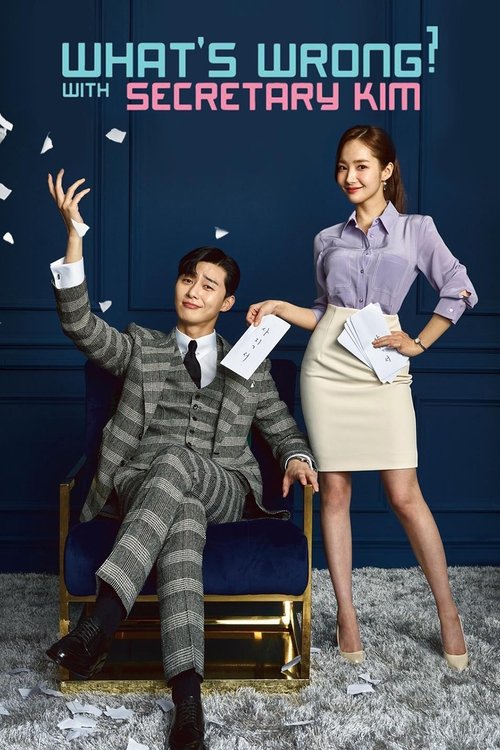
What's Wrong with Secretary Kim
A pastel-toned romantic workplace comedy drenched in opulent humor and tender vulnerability, where two trauma-scarred souls step out of corporate shadows and untangle childhood darkness through the healing warmth of unexpected love.
What's Wrong with Secretary Kim

What's Wrong with Secretary Kim

김비서가 왜 그럴까

"Don't quit your job because I will date you."

06 June 2018 — 26 July 2018 South Korea 1 season 16 episode Ended 8.3 (715)

Cast: Park Seo-jun, Park Min-young, Lee Tae-hwan, Pyo Ye-jin, Kim Hye-ok

Drama Comedy Trauma, Memory, and Shared Healing Self-Discovery vs. Corporate Identity Narcissism as an Emotional Shield Class Dynamics and Gender Autonomy Brotherly Rivalry and Reconciliation

Overview

What's Wrong with Secretary Kim is a 16-episode romantic comedy series adapted from Jung Kyung-yoon's popular 2013 web novel and KakaoPage webtoon. Set within the polished corporate corridors of Yumyung Group, the narrative centers on Lee Young-joon, the narcissistic Vice Chairman of the conglomerate, and Kim Mi-so, his exceptionally competent executive secretary who has anticipated his every whim for nine long years.

The incisive inciting incident occurs when Mi-so suddenly tenders her resignation. Having worked tirelessly to pay off her father's debts and establish financial stability, Mi-so decides it is time to step away from the 24/7 corporate grind to rediscover her identity and pursue personal happiness. Thrown into psychological disarray by the prospect of losing the woman who has been the pillar of his adult existence, Young-joon embarks on an absurdly grandiose, self-centered campaign to keep her—initially offering promotions and even marriage as contractual incentives before confronting his genuine romantic feelings.

As Young-joon attempts to woo Mi-so, the comedic workplace dynamic broadens into a deeper narrative mystery. Both leads harbor buried childhood traumas linked to a harrowing kidnapping incident that occurred decades prior. Across its 16 episodes, the series balances lighthearted workplace antics with an exploration of shared memory, emotional healing, and the transition from a codependent professional partnership into a healthy romance.


Core Meaning

The central thesis of What's Wrong with Secretary Kim is that true intimacy and healing require shedding self-protective facades. Through its dual romantic and psychological storylines, the creators assert that narcissism, hyper-professionalism, and emotional isolation are often defensive shields forged in childhood trauma.

Across the full narrative arc, the series conveys that personal identity is not found by completely casting away one's past or obligations, but by choosing one's path autonomously while allowing oneself to be vulnerable with another person. Young-joon learns that love cannot be controlled or bought like a business transaction, while Mi-so discovers that claiming her own life does not mean abandoning her passion for service, but reclaiming her agency within it. Ultimately, the show argues that past trauma does not have to dictate one's destiny when met with mutual honesty, understanding, and love.

Thematic DNA

Trauma, Memory, and Shared Healing 30%
Self-Discovery vs. Corporate Identity 25%
Narcissism as an Emotional Shield 20%
Class Dynamics and Gender Autonomy 15%
Brotherly Rivalry and Reconciliation 10%

Trauma, Memory, and Shared Healing

Trauma serves as the dramatic backbone of the series. Initially presented as quirky phobias—Young-joon's aversion to cable ties and physical intimacy, and Mi-so's severe spider phobia—these quirks are gradually revealed to stem from a shared childhood kidnapping. As the series progresses, the theme evolves from repressed nightmare fragments to conscious confrontation. Healing occurs not through individual isolation, but through shared confession and emotional support.

Self-Discovery vs. Corporate Identity

Mi-so's resignation begins a journey of personal autonomy. Having spent nine years living strictly as 'Secretary Kim' to support her family, her primary quest is answering who 'Kim Mi-so' is outside of corporate duty. Over the course of the show, this theme shifts from viewing work and selfhood as mutually exclusive to realizing that true identity comes from internal choice rather than job titles.

Narcissism as an Emotional Shield

Young-joon's grandiosity is introduced as a source of comedy, but evolves into a psychological coping mechanism. His self-proclaimed perfectionism and narcissism were built to protect his fragile emotional state and shield his family from the guilt surrounding his childhood trauma. As his love for Mi-so grows, his ego recedes, revealing a selfless man willing to endure pain to protect others.

Class Dynamics and Gender Autonomy

The series engages the classic K-drama 'chaebol/poor girl' trope, but subverts traditional power imbalances. Mi-so maintains equal footing by establishing firm boundaries and demanding respect despite Young-joon's wealth. Her competence makes her indispensable, shifting power dynamics so that the CEO depends far more on the secretary than she does on him.

Brotherly Rivalry and Reconciliation

The hostile dynamic between Young-joon and his older brother, Sung-yeon, stems from guilt, forgotten memories, and false narrative constructs. Their relationship evolves from toxic resentment to bitter confrontation, eventually settling into painful acceptance and forgiveness once the psychological truth of the kidnapping is laid bare.

Character Analysis

Lee Young-joon

Park Seo-jun

Archetype: Romantic Hero / Reformed Egoist Key Trait: Unapologetic self-assurance masking emotional selflessness.

Motivation

Initially driven to maintain his flawless lifestyle and keep Mi-so by his side at all costs; evolves into a desire to protect Mi-so, alleviate her pain, and earn her love as an equal partner.

Character Arc

Begins as an arrogant, hyper-competent corporate Vice Chairman who views human relationships through transactional utility. After facing the threat of Mi-so's resignation, he undergoes an emotional awakening, learning humility, vulnerability, and true empathy as he confronts his suppressed trauma.

Kim Mi-so

Park Min-young

Archetype: Capable Heroine / Self-Made Woman Key Trait: Graceful composure backed by fierce determination.

Motivation

Originally driven by financial responsibility to her family and a quest to find her identity; evolves into pursuing authentic happiness and mutual love without sacrificing her professional identity.

Character Arc

Starts as a tireless, ultra-poised secretary who sacrificed nine years of personal youth to pay off family debts. As she steps toward independence, she learns to voice her own desires, process forgotten childhood horrors, and choose her career and romance on her own terms.

All 4 characters and cast

Symbols & Motifs

The 'Hardworking Cow' Plush Toy

Meaning:

Symbolizes recognition of Mi-so's tireless dedication over nine years and serves as Young-joon's initial surrogate gesture of love and emotional warmth.

Context:

Introduced in Episode 3 when Young-joon wins it at an amusement park claw machine for Mi-so.

Cable Ties / Zip Ties

Meaning:

Represents Young-joon's literal and psychological captivity during the kidnapping, as well as the emotional scars he conceals beneath his tailored suits.

Context:

A recurring visual trigger for Young-joon's Post-Traumatic Stress Disorder throughout the series.

Spiders

Meaning:

Represents buried dread and lost memory, acting as a symbolic trace of the kidnapper who committed suicide in front of young Young-joon.

Context:

Serves as the root of Mi-so's crippling phobia whenever she encounters spiders or spider-like imagery.

Caramels

Meaning:

Symbolizes sweet solace amid horror, innocence preserved through trauma, and the hidden bond linking their pasts.

Context:

Given by young Young-joon to young Mi-so during their captivity to distract and comfort her.

The Necktie

Meaning:

Transitions from a symbol of corporate servitude to a symbol of intimate bonding, boundary-crossing, and tender affection.

Context:

The act of fixing Young-joon's tie is Mi-so's signature professional task throughout their nine years together.

High Heels

Meaning:

Represents the physical strain, high standards, and self-sacrifice demanded by Mi-so's corporate role, contrasted with comfortable attire at home.

Context:

Worn constantly by Mi-so as part of her professional uniform during long workdays.

Memorable Quotes

내가 은혜를 베푸는 거야. 나 이영준이 너와 결혼해 주겠다.
— Lee Young-joon

Context

Season 1, Episode 1; after Mi-so refuses all corporate incentives to stay.

Meaning

Demonstrates Young-joon's absurdly narcissistic starting mindset, believing marriage to him is the ultimate reward that will prevent Mi-so's resignation.

이제 누구의 비서도 아닌, 누구의 가장도 아닌... 그냥 김미소의 삶을 살고 싶어요.
— Kim Mi-so

Context

Season 1, Episode 1; explaining to Young-joon why she is stepping down.

Meaning

The thematic core of Mi-so's character arc—reclaiming agency over her own identity after years of sacrifices.

All 5 quotes

Episode Highlights

I Want to Quit My Job

S1E1

Mi-so's unexpected resignation disrupts Young-joon's world.

Significance:

Sets up the central conflict and establishes the comedic dynamic, workplace environment, and Young-joon's desperate attempts to keep her.

Go on a Date

S1E3

Young-joon organizes a grandiose private date at an amusement park and gives Mi-so the 'Hardworking Cow' plush toy.

Significance:

The first cracks in Young-joon's cold exterior appear when he experiences intense jealousy over Mi-so's blind date.

What's Wrong with Vice Chairman Lee

S1E6

Young-joon genuinely apologizes to Mi-so for his overbearing behavior.

Significance:

Features a major turning point in Young-joon's character development, marking his shift from boss to sincere suitor.

Official Relationship

S1E9

The couple officially begins dating after resolving initial romantic misunderstandings.

Significance:

Deepens the central mystery as Mi-so searches for the real identity of 'Sung-hyun oppa'.

I Remember Everything

S1E11

Mi-so faints at a magic show due to a visual trigger and recovers her repressed memories of the kidnapping.

Significance:

Serves as the series' emotional peak, as Mi-so realizes Young-joon is the boy who saved her.

Overcoming Trauma Together

S1E12

Young-joon confesses the truth about his real name (Lee Sung-hyun), his brother's delusion, and his decision to protect everyone.

Significance:

Resolves the kidnapping plotline and features the famous viral closet kiss scene.

Meeting the Parents

S1E14

Young-joon earns the approval of Mi-so's protective working-class father.

Significance:

Moves the show into its final romance phase, symbolizing the bridging of their social classes.

An Everlasting Love

S1E16

Features a grand wedding where Mi-so decides to remain as Vice Chairman Young-joon's secretary.

Significance:

Serves as the series finale, demonstrating that Mi-so stays not out of obligation, but out of personal choice and love.

Philosophical Questions

What constitutes true personal autonomy?

The series explores whether freedom means cutting away past responsibilities or freely choosing one's commitments regardless of social expectations.

Is it ethical to conceal the truth to protect loved ones from pain?

Through Young-joon's decision to feign amnesia for decades to save his brother from guilt, the series questions whether benevolent deception is protective or ultimately destructive.

Can intimacy exist without absolute vulnerability?

The story shows that despite nine years of close daily contact, Young-joon and Mi-so could not achieve genuine emotional union until both opened up about their deepest fears and hidden pasts.

Alternative Interpretations

Psychological Reading (Narcissism as Trauma Defense): Under a psychological lens, Young-joon's grandiosity is not genuine vanity, but a survival strategy. Having carried the horror of the kidnapping and the burden of faking amnesia to keep his older brother from psychological collapse, his ego became a fortress. His obsession with Mi-so stems from her being the only living witness to his unmasked trauma.

Full ending explanation

Cultural Impact

Released in 2018, What's Wrong with Secretary Kim coincided with a growing social discussion in South Korea around corporate burnout, overwork, and the desire for work-life balance among millennials. Mi-so's desire to quit her job after nine years of relentless service reflected real-world societal fatigue with oppressive corporate cultures.

The show set the modern standard for workplace romantic comedies in the Korean entertainment industry. Its success proved that cable networks like tvN could produce global romantic hits that rivaled main public networks. The series was officially remade internationally, most notably in the Philippines in 2024, starring Kim Chiu and Paulo Avelino, cementing its long-lasting global legacy.

Audience Reception

Overall Audience Rating: 8.5 - 9.0 / 10.

Praise: Audiences and critics praised the electrifying chemistry between Park Seo-jun and Park Min-young, hailing them as one of the best rom-com duos in K-drama history. Kang Ki-young's comedic supporting performance and the show's lighthearted tone were universally lauded.

Criticism: The primary criticism directed at the series centers on its narrative pacing. Many viewers noted that because the central mystery surrounding the kidnapping and childhood trauma was fully resolved by Episode 12, the final four episodes lacked dramatic conflict, relying heavily on wedding preparations and slice-of-life filler.

Interesting Facts

  • The series is adapted from Jung Kyung-yoon's 2013 web novel, which was adapted into a KakaoPage webtoon in 2015 by artist Kim Young-mi.
  • The steamy kissing scene in Episode 12 became a cultural phenomenon online, accumulating hundreds of millions of views on YouTube.
  • Park Seo-jun and Park Min-young exhibited such convincing onscreen chemistry that intense tabloid rumors claimed they had been secretly dating for three years prior to filming.
  • Director Park Joon-hwa brought his trademark comedic sound effects, cartoonish visual overlays, and sharp romantic pacing from his previous hit dramas like 'Because This Is My First Life'.
  • Young-joon's luxurious mansion was shot at the Art Center White Block in Heyri Art Village, Paju, while corporate scenes were filmed at CJ Blossom Park in Suwon.
  • Despite being a seasoned actress in hit dramas like 'City Hunter' and 'Healer', 'What's Wrong with Secretary Kim' marked Park Min-young's official debut as the lead of a traditional romantic comedy series.
  • Airing on cable network tvN, the drama dominated its time slot throughout its 16-episode run, peaking at nationwide ratings of nearly 8.7% to 9.8%.

Easter Eggs

Because This Is My First Life Crossover (Episode 10)

Actors Lee Min-ki and Jung So-min make a special guest appearance as Kim Mi-so's parents in a heartwarming seaside flashback. Directed by Park Joon-hwa (who directed both shows), it played 'Shelter', an iconic song from the Because This Is My First Life OST, in the background.

Youn's Kitchen 2 Reunion (Episode 14)

Actress Jung Yu-mi cameos as Young-joon's childhood female friend and restaurant owner, referencing her real-life friendship with Park Seo-jun from the hit reality variety show Youn's Kitchen 2.

Park Byung-eun's Blind Date Cameo (Episode 3)

Actor Park Byung-eun makes a comedic cameo as Mi-so's awkward, budget-conscious blind date journalist.

K-Drama Tropes Parody

The show frequently parodies classic melodrama clichés, such as sudden rainstorms, dramatic slow-motion falls, and over-the-top corporate arrogance, using exaggerated sound effects like cow moos and aura swooshes.

Frequently Asked Questions

Explore More About This Movie

Dive deeper into specific aspects of the movie with our detailed analysis pages

Comments (0)

Leave a comment

No comments yet. Be the first to share your thoughts!

Similar Movies