Skip to content
Whistle
A grim supernatural thriller steeped in fatalistic dread, where teenage mortality mirrors a ticking clock echoing through fog-shrouded rust-belt corridors as shadows of future decay consume youth.
Whistle

Whistle

"Don't blow it."

20 January 2026 Ireland 100 min 6.3 (644)

Director: Corin Hardy

Cast: Dafne Keen, Sophie Nélisse, Sky Yang, Jhaleil Swaby, Alissa Skovbye

Mystery Horror The Inescapability of Mortality Adolescent Vulnerability vs. Invincibility Trauma, Guilt, and Self-Forgiveness Authenticity and Human Connection
Budget: $2,000,000
Box Office: $4,987,632

Overview

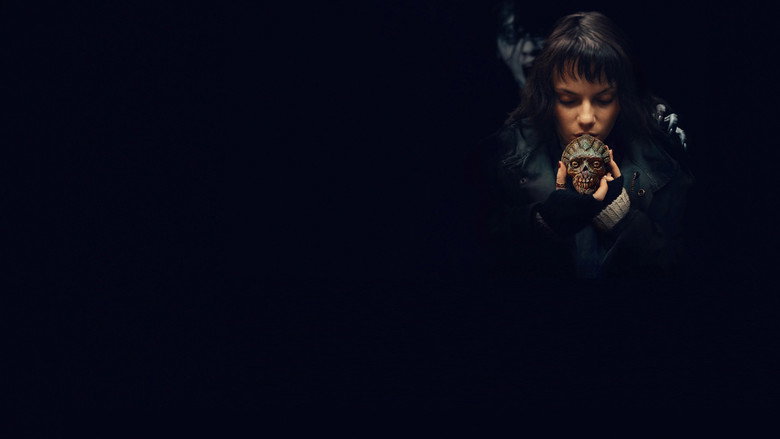
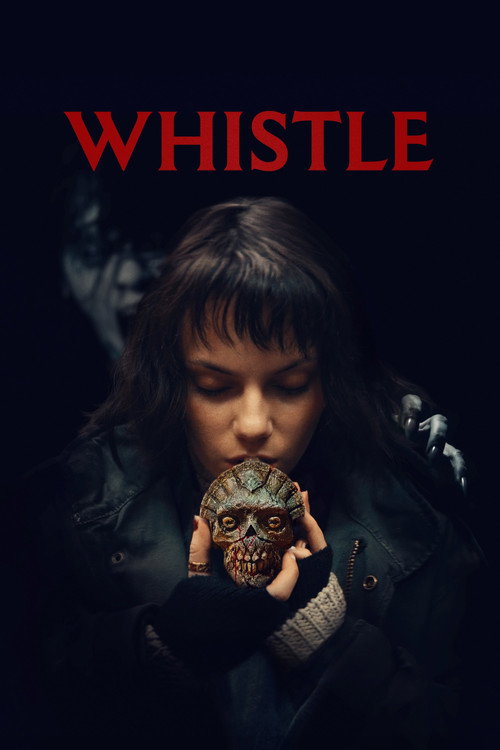
Directed by Corin Hardy (The Nun, The Hallow) and written by Owen Egerton, Whistle centers on a group of high school seniors in a gloomy industrial town. Following the mysterious and gruesome death of star athlete Mason "Horse" Raymore, troubled transfer student Chrysanthemum "Chrys" Willet inherits his old locker. Inside, she discovers an ancient Aztec death whistle shaped like a skull. A hallway altercation lands Chrys, her loyal cousin Rel, aspiring doctor Ellie, athlete Dean, and popular student Grace in detention under their cynical teacher, Mr. Craven.

Curiosity quickly morphs into terror when the artifact is sounded. The piercing, scream-like shriek of the relic unleashes an ancient curse: anyone who blows or hears the whistle summons their destined future death to stalk and slaughter them in the present. Confronted by grotesque apparitions reflecting their eventual demises decades before their natural time, the teenagers must band together to research the artifact's origins and decipher a way to break the supernatural chain before their fate claims them one by one.

Balancing visceral 1980s and 1990s slasher nostalgia with modern character-driven emotional stakes, the film charts a frantic race against the clock as Chrys and Ellie form a deep, romantic bond while confronting inescapable mortality.
Core Meaning

At its core, Whistle is an existential allegory about the inevitability of death and the vital necessity of living authentically in the present. Director Corin Hardy and writer Owen Egerton use the mythological Aztec death whistle as a catalyst to shatter the adolescent illusion of invulnerability. The film asserts that running from mortality or trying to cheat fate through selfishness leads to destruction; true survival and meaning are found in human connection, self-acceptance, and confronting one's deepest traumas.

Thematic DNA

The Inescapability of Mortality 35%
Adolescent Vulnerability vs. Invincibility 25%
Trauma, Guilt, and Self-Forgiveness 20%
Authenticity and Human Connection 20%

The Inescapability of Mortality

Serves as the central mechanical engine of the narrative, depicting death not as an unexpected intruder, but as a destined counterpart born alongside each human being that cannot be outmaneuvered without grave consequences.

Adolescent Vulnerability vs. Invincibility

Highlights the stark contrast between the youthful belief in endless tomorrows and the abrupt confrontation with adult consequences, aging, and fragility.

Trauma, Guilt, and Self-Forgiveness

Explored through Chrys’s past struggle with substance abuse and the lingering guilt surrounding her father’s death, mirroring the physical apparition of death pursuing her.

Authenticity and Human Connection

Revealed through Chrys and Ellie’s budding romance, demonstrating how impending death strips away high school social facades and compels characters to embrace their true identities.

Character Analysis

Chrysanthemum "Chrys" Willet

Dafne Keen

Archetype: The Tortured Hero / Reluctant Final Girl Key Trait: Resilient and fiercely defensive

Motivation

To overcome her suicidal guilt and protect those she cares about.

Character Arc

Begins burdened by the trauma of addiction and her father’s loss; evolves into a courageous protector willing to face her worst fears and embrace love with Ellie.

Ellie Gains

Sophie Nélisse

Archetype: The Brain / Grounding Compass Key Trait: Pragmatic, intelligent, and compassionate

Motivation

To heal others, uncover scientific/medical solutions, and survive alongside Chrys.

Character Arc

An empathetic, diabetic aspiring doctor whose medical knowledge and devotion to Chrys become crucial in decoding and outsmarting the supernatural mechanics.

All 5 characters and cast

Symbols & Motifs

The Aztec Skull Whistle

Meaning:

Represents the call of mortality and forbidden curiosity; an ancient tool whose scream pierces the veil between present vitality and future demise.

Context:

Discovered in Mason's locker and sounded across various locations, unleashing the fatal curse on anyone who hears its shriek.

The Doppelgänger/Aging Reflections

Meaning:

Manifestations of the characters' future dead selves; symbolizes the inescapable decay of the body and the physical reality of time passing.

Context:

Used as the supernatural stalkers that hunt each victim down, mirroring their destined causes of death.

Syringes and Needles

Meaning:

Motifs connecting Chrys’s drug-addicted past to Ellie’s medical ambitions and the climactic subversion of fate.

Context:

Seen in premonitions of Chrys's death and later utilized by Ellie during the clinical resuscitation loophole.

Blood Transfers

Meaning:

Symbolizes sacrifice, ethical choices, and the dark temptation to deflect one’s suffering onto others.

Context:

Introduced by Ivy Raymore as a rule to divert a summoned death onto another person by smearing them with blood.

Locker 73 (Mason's Locker)

Meaning:

A threshold of transition and inherited doom, passing trauma and cursed relics from one student generation to the next.

Context:

The starting point where Chrys inherits the locker and finds the reconstituted Aztec whistle.

Memorable Quotes

The markings don't read 'summon the dead'... they read 'summon your death.'
— Ivy Raymore (Michelle Fairley)

Context

Spoken when explaining the true translation and horrific mechanics of the relic's ancient curse.

Meaning

Marks the central narrative pivot where the characters realize the whistle accelerates their personal fated demise rather than conjuring external spirits.

At the moment you're born, your death is born with you.
— Chrys Willet (Dafne Keen)

Context

Reflected during Chrys's contemplation of mortality and the apparition stalking her.

Meaning

Encapsulates the film's philosophical stance that mortality is a lifelong companion rather than an isolated external event.

All 3 quotes

Philosophical Questions

Can fate be rewritten, or does attempting to avoid it merely fulfill it?

Explored through the characters' frantic attempts to escape their apparitions, culminating in Chrys fulfilling her premonition's imagery through a medical loophole rather than an accidental death.

Is death an external enemy, or an intrinsic part of human existence born alongside us?

Framed by Chrys's realization that mortality is an inherent counterpart tied to life from birth rather than an unexpected external invader.

What constitutes the moral threshold when survival demands the sacrifice of another human being?

Examined through the blood-transfer mechanic, testing whether characters like Rel and Noah are willing to condemn another person to save their own lives.

Does knowing the timing of mortality free an individual to live fully, or does it paralyze them with dread?

Demonstrated by the characters' psychological reactions upon hearing the whistle, shifting from paralyzed terror to authentic, vulnerable connections in their final hours.

Alternative Interpretations

Critics and viewers have offered several interpretations of the narrative:

Full ending explanation

Cultural Impact

Whistle entered the horror landscape amidst a resurgence of "cursed object / viral curse" cinema popularized by titles like Talk to Me (2023) and Smile (2022). It fuses contemporary dread with late-90s/early-2000s slasher nostalgia (such as Final Destination and The Ring). The film reflects modern Gen-Z anxieties regarding uncertain futures, trauma, and bodily autonomy, while normalizing queer central romances without framing sexuality as a source of tragedy or conflict.

Audience Reception

Aggregated reviews and critical commentary praise the film's inventive, brutal death set pieces, the strong on-screen chemistry between leads Dafne Keen and Sophie Nélisse, and Corin Hardy’s confident direction of practical creature effects. Conversely, some reviewers pointed out formulaic genre tropes, exposition-heavy scenes with adult characters, and occasional pacing shifts between romantic drama and horror slaughter. Overall, it was received as a gory, entertaining popcorn chiller that succeeds as a love letter to high school curse cinema.

Interesting Facts

  • Screenwriter Owen Egerton based the script on authentic Mesoamerican skull-shaped death whistles discovered in Mexico/Guatemala, known for producing a sound resembling human screams.
  • Director Corin Hardy leaned into practical gore, body prosthetics, and physical creature performance (featuring renowned contortionist Troy James as 'Dead Dean') rather than relying entirely on CGI.
  • Principal photography took place across Ontario, Canada, utilizing real industrial rust-belt aesthetic backgrounds.
  • Dafne Keen and Sophie Nélisse admitted in interviews that the prop whistle was treated as a 'sacred, spooky object' on set, and the cast refrained from actually blowing into it between takes.
  • The feature originated as an original horror short story by Owen Egerton before being adapted into a feature-length screenplay.

Easter Eggs

Mr. Craven (Nick Frost)

An overt homage to legendary horror filmmaker Wes Craven.

"Muschietti Cigars" & "Verhoeven Steel"

Visible brand names and industrial signage throughout Pellington honoring directors Andy Muschietti and Paul Verhoeven.

The Breakfast Club Homage

The detention sequence deliberately mirrors John Hughes' classic archetypes (the stoner, loner, jock, brain, and beauty queen) within a horror framework.

M.R. James Homage

The premise subtly echoes M.R. James' classic 1904 ghost story 'Oh, Whistle, and I'll Come to You, My Lad', modernizing cursed whistle folklore.

Costume Party Cameos

Background attendees at the harvest festival sport classic horror disguises, including a visible Pennywise costume.

Frequently Asked Questions

Explore More About This Movie

Dive deeper into specific aspects of the movie with our detailed analysis pages

Comments (0)

Leave a comment

No comments yet. Be the first to share your thoughts!

Similar Movies