Skip to content
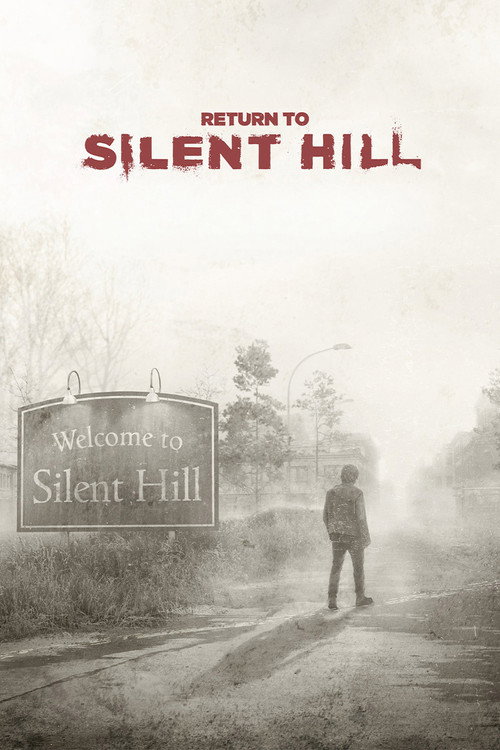
Return to Silent Hill
A descent into ash-laden psychological horror, drowning in the suffocating agony of repressed guilt, where the fractured human soul wanders a misty purgatory of weeping rust and inescapable damnation.
Return to Silent Hill

Return to Silent Hill

"Guilt is a place you can never leave."

21 January 2026 France 106 min 5.4 (781)

Director: Christophe Gans

Cast: Jeremy Irvine, Hannah Emily Anderson, Ljiljana Velimirov, Giulia Pelagatti, Evie Templeton

Mystery Horror Repressed Guilt and Self-Punishment The Agony of Grief and Denial Identity Splintering and Male Idealization Cyclical Trauma and Eternal Loops
Budget: $23,000,000
Box Office: $47,976,996

Overview

Return to Silent Hill (2026) is a psychological horror film directed and co-written by Christophe Gans, marking his return to the franchise twenty years after directing the original 2006 Silent Hill adaptation. Loosely based on Konami’s critically acclaimed 2001 video game Silent Hill 2, the film serves as a standalone reboot detached from the continuity of previous films. It centers on James Sunderland (Jeremy Irvine), a melancholic painter spiraling into severe depression and alcoholism following the traumatic loss of the love of his life, Mary Crane (Hannah Emily Anderson).

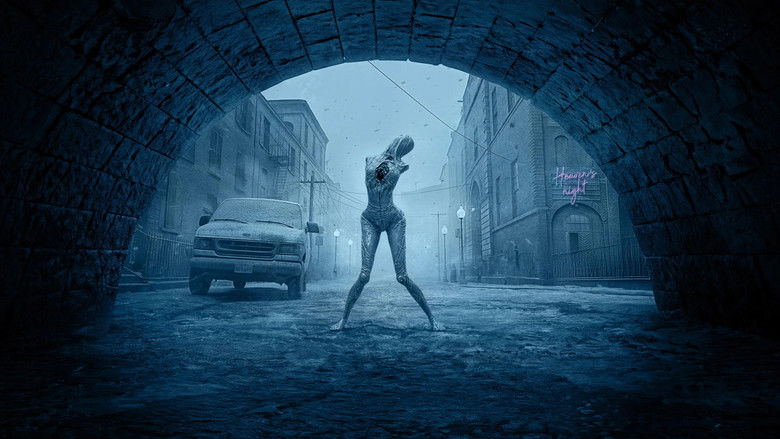
The narrative ignites when James unexpectedly receives a handwritten letter bearing Mary’s signature, pleading with him to return to their "special place" in the foggy, desolate lakeside resort town of Silent Hill. Driven by desperation and the lingering hope of an impossible reunion, James drives into the mist, only to find the idyllic town swallowed by decay, supernatural fog, and malevolent entities.

As James ventures deeper into the labyrinthine town—from dilapidated apartment complexes to eerie hospital corridors—he encounters enigmatic figures who test his perception of reality, including a seductive doppelgänger named Maria and a mysterious young girl named Laura. Surrounded by manifestations of dread and the looming threat of the towering Red Pyramid, James must confront terrifying apparitions while grappling with his disintegrating sanity to discover the true fate of Mary.
Core Meaning

Christophe Gans approaches Return to Silent Hill as an exploration of the myth of Orpheus and Eurydice viewed through modern psychoanalysis. The central idea is that hell is not an external geography but an internal architecture constructed from repressed guilt, unresolved grief, and self-deception. The town of Silent Hill functions as a projection screen for the subconscious mind; its monsters and spatial distortions do not exist merely to terrify, but to compel the protagonist to strip away his illusions and acknowledge the unbearable truths he has buried.

Thematic DNA

Repressed Guilt and Self-Punishment 35%
The Agony of Grief and Denial 25%
Identity Splintering and Male Idealization 20%
Cyclical Trauma and Eternal Loops 20%

Repressed Guilt and Self-Punishment

The town acts as a purgatorial executioner, conjuring physical manifestations—most notably the Red Pyramid—to force James to acknowledge his deepest moral failures.

The Agony of Grief and Denial

James’s journey highlights how refusing to accept death breeds delusion, distorting reality and trapping the grieving individual in stasis.

Identity Splintering and Male Idealization

Explored through Mary and her various aspects (the innocent Laura, the damaged Angela, and the provocative Maria), illustrating how James fragments Mary’s persona into facets of desire, innocence, and victimhood.

Cyclical Trauma and Eternal Loops

The film portrays emotional trauma not as a linear path to resolution, but as an inescapable spiral where denial repeatedly resets the protagonist’s suffering.

Character Analysis

James Sunderland

Jeremy Irvine

Archetype: The Tragic / Broken Antihero Key Trait: Brooding, self-deluding, desperately stubborn

Motivation

To locate and rescue his lost love, Mary.

Character Arc

Begins as an alcoholic, guilt-ridden painter in complete denial; journeys through a nightmare of his own making, culminating in the painful realization of his role in Mary’s demise.

Mary Crane / Maria

Hannah Emily Anderson

Archetype: The Lost Beloved / The Femme Fatale Doppelgänger Key Trait: Duality (vulnerable and gentle as Mary; brazen, seductive, and elusive as Maria)

Motivation

To make James remember the truth and face the reality of his actions.

Character Arc

Seen in flashbacks as James’s afflicted partner bound to town secrets; reappears as Maria, an alluring, defiant version of Mary whose recurring deaths force James to confront reality.

All 4 characters and cast

Symbols & Motifs

The Fog / Mist

Meaning:

Symbolizes James’s clouded perception, denial, and the boundary separating conscious reality from repressed trauma.

Context:

Pervades the exterior environments of Silent Hill, obscuring navigation and separating the outer world from the supernatural town.

The Letter from Mary

Meaning:

Represents impossible hope, delusion, and the catalyst that draws James into the reckoning of his own conscience.

Context:

Introduced at the start as the primary narrative catalyst motivating James to travel to Silent Hill.

The Mirror

Meaning:

Symbolizes self-examination, fractured psyche, and the threshold between the authentic self and suppressed memory.

Context:

Featured prominently in the opening rest-stop scene and throughout the film as James gazes into reflections.

The Red Pyramid (Pyramid Head)

Meaning:

An archetype of judgment and punishment, enacting the violent self-castigation James believes he deserves.

Context:

Wields the Great Blade and stalks James across the Otherworld as an inescapable executioner.

Water and Toluca Lake

Meaning:

Represents emotional drowning, memory storage, baptism/cleansing, and ultimate death/closure.

Context:

Serves as the geographical center of the town and the site for the film's climactic resolution.

Memorable Quotes

I got a letter... from my wife. It says she's waiting for me in Silent Hill.
— James Sunderland

Context

Spoken as James prepares to enter the fog-shrouded town.

Meaning

Sets the entire premise of impossible reunion and psychological delusion in motion.

James, so much time has passed.
— Mary Crane

Context

Heard echoing as voiceover reading the letter when James arrives at the edge of the abandoned town.

Meaning

Highlights the distorted sense of time and memory between the lovers.

All 4 quotes

Philosophical Questions

Can guilt be expiated without self-destruction?

The film asks whether a person burdened by catastrophic moral guilt can ever achieve genuine redemption, or if penance inherently requires total annihilation of the ego.

Where does love end and selfish possession begin?

Through James and Mary's tragic dynamic, the story interrogates whether acts framed as mercy are genuinely compassionate or driven by a desire to end one’s own suffering.

Is perceived reality anything more than a construct of memory?

The fluid changes in Silent Hill challenge the reliability of human perception when memories are clouded by trauma and self-preservation.

Alternative Interpretations

The film invites multiple thematic interpretations:

Full ending explanation

Cultural Impact

Released in January 2026 amid a renaissance of video game adaptations, the film coincided closely with Konami's video game revival initiative, including Bloober Team’s 2024 Silent Hill 2 remake. It received largely negative to mixed reviews from film critics (holding a sub-30% rating on review aggregators) due to a choppy screenplay, uneven pacing, and over-reliance on digital visual effects. The film proved deeply polarizing among purists: some appreciated the visual atmosphere, creature aesthetics, and Yamaoka’s score, while others heavily criticized Gans’ alterations to lore, such as linking Mary to a town cult and merging Angela and Laura into Mary's psyche.

Audience Reception

Critical and audience reception was polarized across several key aspects:

  • Praised Elements: Akira Yamaoka’s atmospheric and evocative musical score, the production design and aesthetic recreation of iconic video game locations, practical monster design, and Hannah Emily Anderson’s versatile dual performance as Mary and Maria.
  • Criticisms: Screenplay script alterations that convoluted the simple, tragic purity of the source game's story, inconsistent CGI visual effects and lighting in several Otherworld sequences, and clunky exposition and dialogue delivery that diluted the psychological dread.
  • Overall Verdict: A visually ambitious but narratively muddled adaptation that works better as a stylistic dreamscape for dedicated franchise enthusiasts than as a coherent psychological thriller for general audiences.

Interesting Facts

  • Christophe Gans originally pitched an adaptation of Silent Hill 2 to Konami in 2002 before making the 2006 film, waiting nearly two decades to bring the story to screen.
  • Akira Yamaoka returned to provide the film's musical score, remixing iconic tracks from the original games alongside new orchestral arrangements.
  • Evie Templeton, who performed the role of Laura in the 2024 Silent Hill 2 video game remake, was cast by Gans to reprise her role in live action.
  • Filming locations spanned Germany (Munich, Penzing studios, Lake Ammer, Nuremberg) and Serbia (Belgrade).
  • Creature performer Robert Strange portrayed the Red Pyramid (Pyramid Head), utilizing physical suits and heavy prop work before digital post-enhancement.
  • Gans deliberately structured the project as a standalone reboot, completely ignoring the events and continuity of Silent Hill: Revelation (2012).

Easter Eggs

Shot-for-Shot Game Recreations

Gans deliberately mirrored exact camera angles and sequences from the 2001 game and 2024 remake, including James staring into the grime-encrusted bathroom mirror, the cemetery path, and the Woodside Apartment stairwells.

Akira Yamaoka’s Classic Motifs

Specific melodic cues—including chords from Theme of Laura and Promise—are subtly weaved into key transition scenes.

The "Mary A.L. Crane" Medical File

In Brookhaven Hospital, a medical folder identifies Mary with the middle initials "A.L.", referencing Angela and Laura to foreshadow Gans' thematic fusion of the three characters.

P.T. Hallway Framing

Gans utilized staging techniques and tight hallway angles inspired by Hideo Kojima’s playable teaser P.T. to induce claustrophobia during apartment hallway sequences.

Frequently Asked Questions

Explore More About This Movie

Dive deeper into specific aspects of the movie with our detailed analysis pages

Comments (0)

Leave a comment

No comments yet. Be the first to share your thoughts!

Similar Movies