Skip to content
WIND BREAKER
A kinetic blend of gritty delinquent action and tender coming-of-age warmth, WIND BREAKER captures the ache of isolation melting into found brotherhood, resembling a bruised, storm-tossed blossom taking resolute root in fertile urban soil.
WIND BREAKER

WIND BREAKER

"Don't underestimate Bofurin."

05 April 2024 — 20 June 2025 Japan 1 season 25 episode Ended 8.1 (194)

Cast: Yuma Uchida, Shoya Chiba, Koki Uchiyama, Nobunaga Shimazaki, Ryota Suzuki

Animation Action & Adventure Redefining Strength: Dominance vs. Protection Healing Ostracization Through Found Family Altruism and Civic Duty Outside Societal Norms The Burden of Leadership and Solitude

Overview

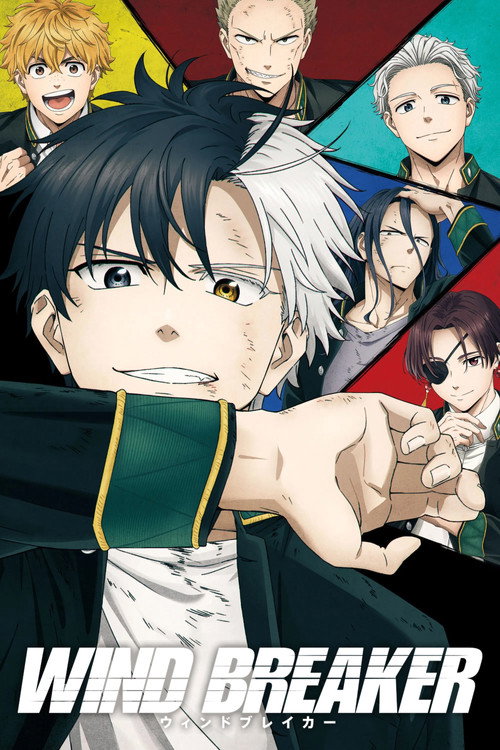
WIND BREAKER redefines traditional juvenile delinquent (yankee) tropes through the journey of Haruka Sakura, a fierce, ostracized loner marked by heterochromia and bicolored hair. Accustomed to prejudice and violence from childhood, Sakura arrives at the notorious Furin High School determined to rely strictly on his martial prowess to brawl his way to the absolute peak of the school's hierarchy. However, upon arriving in Makochi, he discovers that Furin's brawlers have transformed their infamous reputation into a community protection shield called "Bofurin" (the Wind Breakers). Rather than terrorizing the town, these teenagers guard its citizens, patrol the commercial avenues, and defend their neighbors from hostile syndicates.

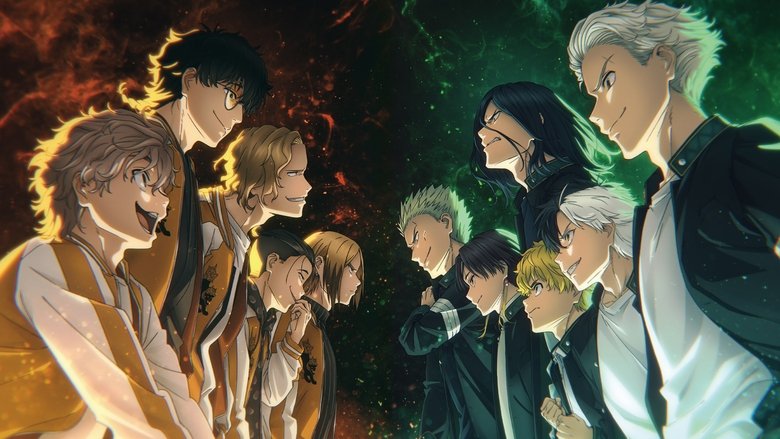
As Sakura enters the school and becomes a First-Year Grade Captain, his solitary worldview is repeatedly challenged by eccentric yet devoted peers—such as the spirited Akihiko Nirei, martial arts savant Hayato Suo, and reclusive powerhouse Kyotaro Sugishita—under the guidance of Bofurin's charismatic supreme leader, Hajime Umemiya. Sakura is thrust into territorial clashes with neighboring factions, notably the authoritarian Shishitoren ("Lion's Head"), and later against internal and external threats like Keel and Gravel.

Across its continuous narrative, the series charts Sakura’s gradual transition from an emotionally guarded fighter who views physical force as his only armor to a mature leader who understands the weight of responsibility. WIND BREAKER examines how violence, when stripped of malice and redirected into mutual defense and communal solidarity, can become a conduit for healing, personal redemption, and genuine kinship.
Core Meaning

The fundamental message of WIND BREAKER is that true strength is defined not by dominance or isolation, but by the purpose behind one's fists and the bonds built to uplift others. Through Haruka Sakura and Hajime Umemiya, creator Satoru Nii and director Toshifumi Akai deconstruct the classic hyper-masculine power fantasy. The series posits that individuals who have been discarded, misjudged, or alienated by conventional society do not have to internalize their trauma as bitter aggression. By choosing empathy, accountability, and community guardianship over selfish supremacy, one discovers that "standing at the top" is meaningless if no one is standing beside you.

Thematic DNA

Redefining Strength: Dominance vs. Protection 30%
Healing Ostracization Through Found Family 25%
Altruism and Civic Duty Outside Societal Norms 25%
The Burden of Leadership and Solitude 20%

Redefining Strength: Dominance vs. Protection

Physical violence in WIND BREAKER serves as an expressive language rather than mere brutality. Early in the series, strength is pursued as personal armor against social rejection. As Sakura engages in combat against opponents like Shishitoren’s Jo Togame and Choji Tomiyama, the narrative contrasts Shishitoren's coercive, fear-driven hierarchy with Bofurin's protective, service-oriented ethos. True power is shown to reside in emotional resilience and the desire to safeguard others.

Healing Ostracization Through Found Family

Sakura’s bicolored hair and eyes made him a target of revulsion, breeding severe defensive cynicism. In Makochi, however, the townspeople respond to his bruises with bowls of rice and words of gratitude rather than fear or scorn. The series tracks how communal kindness slowly breaks down Sakura’s learned emotional defenses, illustrating how belonging and chosen kinship can mend systemic adolescent trauma.

Altruism and Civic Duty Outside Societal Norms

Delinquents in Japanese storytelling are traditionally framed as anti-social disruptors. WIND BREAKER subverts this convention by portraying Bofurin as a grassroots civil defense collective filling institutional voids. The teenagers maintain public order, protect small vendors, and repair infrastructure, demonstrating that moral integrity is independent of institutional validation or academic conformity.

The Burden of Leadership and Solitude

Through the foils of Hajime Umemiya and Choji Tomiyama, the narrative investigates the psychological hazards of leadership. Tomiyama’s pursuit of solitary absolute strength fractures his inner circle, whereas Umemiya tends communal gardens on Furin's rooftop, demonstrating that authentic leadership nurtures growth collectively rather than subjugating peers. Sakura undergoes a parallel journey when entrusted with the role of Grade Captain.

Character Analysis

Haruka Sakura

Yuma Uchida

Archetype: Reluctant Hero / Wounded Outcast Key Trait: Easily flustered by genuine praise and gratitude.

Motivation

Starts with a desperate need to conquer Furin's summit to validate his existence; evolves into fighting selflessly to defend his friends and the community.

Character Arc

Begins as an aggressive, socially clumsy lone wolf seeking self-worth through physical domination. Through Bofurin's warmth and leadership trials, he learns to accept camaraderie, admit vulnerability, and step up as a dependable First-Year Grade Captain.

Hajime Umemiya

Yuichi Nakamura

Archetype: Benevolent Mentor / The Unshakeable Sovereign Key Trait: Absolute serenity paired with monstrous fighting proficiency.

Motivation

Motivated by protecting Makochi and providing an open, judgment-free home for wayward youth.

Character Arc

The supreme leader of Bofurin. Disarmingly cheerful, grounded, and maternal, he commands Furin with an ethos of love and protection. His arc highlights how he bears the emotional weight of an entire town while mentoring emerging fighters like Sakura and redeeming old rivals.

All 5 characters and cast

Symbols & Motifs

Wind Chimes (Furin)

Meaning:

In Japanese culture, wind chimes ward off evil spirits with soothing tones. Bofurin acts as the physical town chime—warding off malice and heralding safety with their presence.

Context:

Serves as the school’s namesake and the enduring symbol of the town of Makochi.

Sakura’s Bicolored Hair and Heterochromia

Meaning:

Visually represents the dualities that define him: outcast versus guardian, violence versus vulnerability, and isolation versus unity. It acts as a mirror of societal prejudice that transforms into a signature badge of honor.

Context:

Natural physical traits present from Sakura's childhood that originally caused him to be alienated and reviled by conventional society.

The Rooftop Vegetable Garden

Meaning:

The soil and flourishing crops symbolize patient nurturing, community nourishment, and the peaceful cultivation of youth, contrasting sharply with the concrete battlegrounds of urban brawls.

Context:

Diligently tended by Bofurin leader Hajime Umemiya atop Furin High School, serving as a sanctuary where he imparts guidance.

The Furin High Uniform (Gakuran Jacket)

Meaning:

Unlike standard delinquent regalia adorned with intimidating gang iconography, the Bofurin uniform functions as a public badge of trust and communal accountability.

Context:

Worn by the students of Furin; when Sakura buttons it up, it shifts from an outfit he intends to boast with into an emblem of duty.

Handshakes, Shared Meals, and Food

Meaning:

Underscores that physical sustenance and unconditional hospitality are the foundational steps of reconciliation, belonging, and emotional recovery.

Context:

Featured prominently at Kotoha Tachibana’s cafe (Cafe Potos) and street stalls where bruised fighters are welcomed and fed.

Memorable Quotes

「人を傷つける者、物を壊す者、悪意を持ち込む者、何人たりともボウフウリンが粛清する」
— Bofurin Charter / Hajime Umemiya

Context

Recited in Season 1, Episode 1 and Episode 3 as the definitive warning to anyone bringing harm into Makochi.

Meaning

The guiding doctrine of Furin High School. Painted across the town borders, it defines Bofurin's role as protectors rather than oppressors.

「俺は、てっぺんを獲りに来た」
— Haruka Sakura

Context

Spoken in Season 1, Episode 1 when declaring his ambition upon arriving at Furin High.

Meaning

Sakura’s opening statement of intent upon arriving at Furin. It serves as the baseline for his character arc, contrasting his early selfish ambition with his eventual understanding of what genuine leadership entails.

All 4 quotes

Episode Highlights

Sakura and Furin

S1E1

Establishes Sakura's isolation, his combat instincts, and his introduction to Kotoha Tachibana and the Makochi shopping street.

Significance:

Upends Sakura's expectations when he sees delinquents celebrated as hometown heroes rather than feared outcasts.

The Man Who Stands at the Top

S1E3

Sakura witnesses Hajime Umemiya address the school via broadcast and meets him in person on the rooftop garden.

Significance:

The contrast between Umemiya's gentle gardener persona and his absolute martial authority fundamentally alters Sakura’s concept of a leader.

A Gentleman

S1E5

Initiates the formal cage-match style battle between Bofurin and Shishitoren, highlighting Hayato Suo’s martial arts prowess.

Significance:

Showcases Suo’s graceful, effortless discipline and establishes the tactical and temperamental variety within the first-year cast.

Step On Up

S1E8

Haruka Sakura confronts Shishitoren’s vice-captain, Jo Togame, exposing Togame's deep-seated disillusionment.

Significance:

Represents Sakura's first breakthrough in using his fists to understand and rescue an adversary's spirit.

Clash of Kings

S1E10

The philosophical and martial climax of the Shishitoren Arc as Umemiya absorbs Tomiyama’s frantic strikes.

Significance:

Delivers a definitive lesson on leadership, friendship, and vulnerability that ends the gang war and restores Shishitoren.

For a Friend

S1E13

Sakura is formally appointed as the First-Year Grade Captain and accepts the collective trust of his classmates.

Significance:

Caps his initial transformation from a hostile runaway into an acknowledged protector, setting up conflicts with looming syndicate Keel.

Prelude to Keel / Class Unity

S2E1

Tests Sakura’s newfound authority as a leader when class peers get caught in extortion rings run by Keel.

Significance:

Establishes the shift in narrative scale from territorial sparring to dealing with grim underground crime syndicates.

The Heavenly Kings Mobilize

S2E6

Features the entrance of Tasuku Tsubakino, one of Furin’s Four Heavenly Kings (Shitennō), during the escalation against Keel.

Significance:

Broadens the scope of Bofurin's elite leadership and showcases vibrant combat choreography outside of Sakura’s immediate circle.

The Wind that Connects Us

S2E12

The conclusive resolution of Bofurin’s large-scale town defense arc as Sakura leads his classmates side-by-side with Furin's upperclassmen.

Significance:

Brings Sakura's inner conflict full circle, solidifying his role as the beating heart and future vanguard of Bofurin.

Philosophical Questions

Can the Tools of Violence Ever Truly Foster Peace?

The series continuously questions whether physical force can sustain peace without inherently breeding cyclical aggression. Bofurin answers this by strictly contextualizing violence as a shield of last resort, paired with community service and deep respect for local inhabitants.

Is Belonging Earned or Freely Given?

Sakura assumes he must fight, conquer, and prove his utility before anyone will accept him. The Makochi community inverts this dynamic by offering him food, shelter, and unconditional warmth before he has proven anything, illustrating that human dignity should not be conditional on strength.

What Constitutes True Solitude vs. Authentic Individuality?

Sakura equates independence with emotional isolation. The story demonstrates that true selfhood is not diminished by joining a collective; rather, authentic individuality flourishes when one has a safe environment in which to stand.

How It Ends

Alternative Interpretations

One widely discussed analytical reading views Bofurin as an allegory for community-based social rehabilitation. The adolescents who enroll at Furin are societal castaways who lack traditional academic prospects. Instead of entering juvenile detention or organized crime, Furin redirects their volatile physical energy into constructive civic protection and civil service.

Full ending explanation

Cultural Impact

Originating in the 1980s and 1990s through titles like Be-Bop High School and Shonan Junai Gumi, the Japanese yankee (delinquent) subculture historically represented working-class adolescent rebellion against Japan’s rigid corporate track and academic pressure. WIND BREAKER represents a modern post-2020 revision of the genre: these delinquents do not rebel against their community; rather, they serve as its vital guardians.

Viewers and critics frequently remarked on the conspicuous absence of police, parents, or active teachers. Rather than a plot oversight, this deliberate genre convention frames Makochi as an autonomous urban micro-society where youth must govern themselves through an honor code and community accountability.

As a result, WIND BREAKER emerged as one of the standout sleeper hits of 2024–2025, praised for elevating the delinquent subgenre through stellar production values, fluid action sequences, and emotionally mature treatments of rejection and male vulnerability.

Audience Reception

WIND BREAKER garnered high praise across domestic and international audiences, holding a strong 7.8/10 rating across platforms like MyAnimeList and IMDb. Reviewers frequently commended CloverWorks for delivering some of the most dynamic, weight-conscious fight choreography in modern television anime.

Character dynamics and emotional resonance formed a central highlight. Sakura's endearing habit of blushing furiously whenever praised by townspeople or peers turned him into an instantly beloved protagonist, preventing him from feeling like a generic brooding antihero. The brotherly chemistry among the first-year core (Sakura, Suo, Nirei, Sugishita) was widely hailed as the heart of the series.

On the critique side, some critics noted that the series peaked emotionally during the early Shishitoren Arc in Season 1, making subsequent transitional episodes feel comparatively familiar or slow. Other viewers pointed out the surreal, fairy-tale nature of a town completely unpoliced by municipal authorities, though most fans embraced this as an established genre convention.

Interesting Facts

  • The series was helmed by director Toshifumi Akai, celebrated for directing Fate/Grand Order -Absolute Demonic Front: Babylonia-.
  • Action director Kazuyuki Asaka spearheaded hand-to-hand fight choreography, deliberately avoiding speedlines in favor of fully animated contact frames, physical weight, authentic footwork, and environmental destruction.
  • Series composition was handled by acclaimed scriptwriter Hiroshi Seko, who brought narrative tightness and grounded emotional dialogue.
  • Taishi Kawakami adapted Satoru Nii's expressive character designs, emphasizing hyper-distinct hair silhouettes, streetwear, and subtle facial tics.
  • The musical score was composed by Ryo Takahashi, blending distorted guitar riffs, hip-hop rhythm tracks, and brass melodies.
  • Due to immediate domestic and international commercial success in Spring 2024, production for the second half was immediately greenlit and announced upon the broadcast of Episode 13.

Easter Eggs

Subversion of Delinquent Visual Tropes

Classic delinquent anime (such as Crows, Yu Yu Hakusho, and Tokyo Revengers) feature modified pompadours, cigarettes, and gang regalia. WIND BREAKER deliberately cleans up the aesthetic: Furin students keep their uniforms clean, refuse cigarettes, avoid gratuitous vandalism, and drink tea or milk.

Four Heavenly Kings (Shitennō) Buddhist Nomenclature

Bofurin’s top commanders (including Toma Hiiragi and Tasuku Tsubakino) are organized under the classical Buddhist mythological concept of the Shitennō (guardians of the four cardinal directions), directly reflecting their function as regional district guardians of Makochi.

Color Psychology in Faction Symbolism

Furin’s palette centers on grounding earthy tones, crisp whites, and deep greens to highlight organic unity and protection. Conversely, Shishitoren wears bright orange, black, and gold lion motifs representing raw sun-scorched pride and volatile aggressive combustion.

Frequently Asked Questions

Explore More About This Movie

Dive deeper into specific aspects of the movie with our detailed analysis pages

Comments (0)

Leave a comment

No comments yet. Be the first to share your thoughts!

Similar Movies