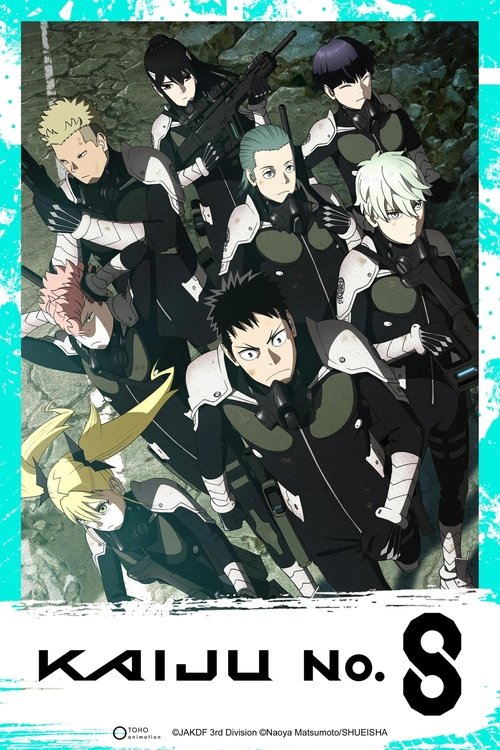
Kaiju No. 8
怪獣8号
Overview
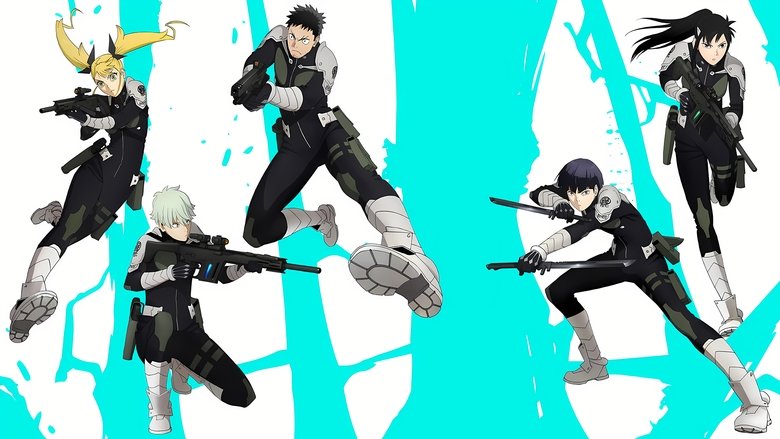
Kaiju No. 8 is set in a version of Japan constantly under siege by monstrous creatures known as Kaiju. To combat this threat, the elite Japan Anti-Kaiju Defense Force was established. The story follows Kafka Hibino, a 32-year-old man working in a clean-up crew that disposes of Kaiju carcasses, a job far from his childhood dream of joining the Defense Force alongside his friend, Mina Ashiro. Mina has since become a celebrated captain, while Kafka has repeatedly failed the entrance exam and given up.
Kafka's life takes a dramatic turn when a younger, ambitious colleague, Reno Ichikawa, inspires him to try for the Defense Force one last time, especially after the age limit is raised. However, a small, parasitic Kaiju unexpectedly enters his body, granting him the ability to transform into a powerful, humanoid Kaiju. Dubbed "Kaiju No. 8" by the authorities, Kafka must now navigate the perilous path of joining the very organization that hunts his kind, all while hiding his monstrous secret and learning to control his newfound abilities to protect humanity.
Core Meaning
The core meaning of Kaiju No. 8 revolves around the themes of perseverance and the pursuit of deferred dreams. It challenges the traditional shonen protagonist mold by featuring a 32-year-old hero, Kafka Hibino, who is grappling with feelings of failure and regret. The series posits that it's never too late to chase one's aspirations and that true strength isn't just about raw power, but about the will to protect others and the courage to face one's own inner 'monsters.' It's a story about second chances, finding one's purpose in unexpected ways, and the idea that heroism is defined by actions and heart, not by age or societal expectations.
Thematic DNA
Pursuit of Deferred Dreams
The central theme is the idea that it's never too late to achieve one's dreams. Kafka Hibino, at 32, has given up on his childhood promise to fight Kaiju alongside Mina Ashiro. His transformation into Kaiju No. 8, while a dangerous secret, becomes the catalyst that reignites his ambition and gives him an unconventional path toward his goal. This subverts the typical shonen trope of a young protagonist, focusing instead on an adult's struggle with past failures and the daunting task of starting over.
Humanity and Monstrosity
The series constantly explores the duality of being human and monster. Kafka must grapple with his new identity, using his monstrous power for good while fearing the loss of his humanity. This internal conflict is the core of his character arc. The series also introduces Kaiju No. 9, a monster that can mimic humans, serving as a dark mirror to Kafka and posing questions about what truly defines a monster—appearance or actions.
Teamwork and Sacrifice
While Kafka possesses immense power, the series emphasizes the importance of the Defense Force as a collective. No single hero can win the war against the Kaiju. Episodes frequently highlight the coordinated efforts of the 3rd Division, where different members' skills are crucial for success. Kafka's initial contributions, even before joining the force, come from his unique knowledge as a cleaner, proving that every role is valuable. The narrative stresses that victory comes from trust, camaraderie, and the willingness to sacrifice for one another.
Redemption and Second Chances
Kafka's journey is a powerful arc of redemption. He is not just seeking to fulfill a dream but also to redeem himself for having given up. His new power is a second chance, albeit a complicated one. This theme extends to other characters as well, who must overcome past failures or self-doubt. The show suggests that one's past does not have to define their future and that everyone is capable of growth and change, regardless of their circumstances.
Character Analysis
Kafka Hibino
Masaya Fukunishi
Motivation
His primary motivation is to fulfill his childhood promise to Mina Ashiro: to stand by her side and fight Kaiju together. Initially, this dream is dormant, buried under years of failure. After gaining his powers, his motivation expands to using his strength to protect people, including his new friends and colleagues in the Defense Force, even if it means exposing his secret.
Character Arc
In Season 1, Kafka begins as a man resigned to mediocrity, having failed to achieve his dream of joining the Defense Force. His accidental transformation into Kaiju No. 8 forces him out of his complacency. His arc is about reclaiming his ambition and learning to wield his dangerous new power responsibly. He evolves from a comical, self-deprecating cleaner into a determined, albeit reckless, protector, struggling to prove his humanity while secretly being the very thing he fights. By the end of the season, his secret is revealed, and he must fight to prove his worthiness to the Defense Force not as a monster, but as an asset and a comrade.
Mina Ashiro
Asami Seto
Motivation
Her core motivation is the eradication of all Kaiju, a vow she made with Kafka after a Kaiju attack destroyed their hometown. As a captain, she is driven by a profound sense of responsibility to protect Japan and the soldiers under her command. She still holds onto the promise she made with Kafka, hoping he will one day stand beside her as an equal.
Character Arc
Mina starts the series as the seemingly perfect hero: the powerful and composed Captain of the 3rd Division, and the living embodiment of the dream Kafka failed to achieve. Throughout Season 1, her professional exterior is subtly chipped away, revealing glimpses of the childhood friend who still cares for Kafka. Her arc involves confronting the reality that her old friend is now one of the monsters she hunts. While she maintains her duty, her belief in Kafka's humanity is a crucial element, showing her capacity for empathy beneath her stoic demeanor.
Reno Ichikawa
Wataru Katoh
Motivation
Reno's motivation is to join the Defense Force and become a powerful soldier capable of protecting others. He is highly driven and admires the strength and dedication of Captain Mina Ashiro. After discovering Kafka's secret, a significant part of his motivation becomes protecting Kafka and helping him achieve his goal, believing in the good that Kafka can do with his power.
Character Arc
Reno is introduced as an ambitious and serious young man who initially looks down on Kafka's resigned attitude. He serves as the catalyst for Kafka's journey, reigniting his dream to join the Defense Force. His arc in Season 1 is one of growth from a talented but straightforward recruit into Kafka's closest confidant and the first person to know his secret. He becomes Kafka's moral anchor, helping him navigate his dual identity and constantly reminding him of his human side. He develops from a rival into a fiercely loyal friend.
Kikoru Shinomiya
Fairouz Ai
Motivation
Kikoru is motivated by a deep-seated need to live up to the immense expectations of her father, the Director General of the Defense Force, Isao Shinomiya. She strives for perfection and to be recognized for her own strength. After being saved by Kafka, her motivations begin to include a genuine desire to protect her fellow soldiers and to understand the true nature of strength, which she sees exemplified in Kafka's selflessness.
Character Arc
Kikoru is introduced as an arrogant and overwhelmingly talented prodigy, expected to be the future of the Defense Force. Her initial interactions with Kafka are dismissive. However, her arc begins when Kafka saves her life during the entrance exam, forcing her to see beyond his apparent incompetence. She becomes the second person to learn his secret. Over the season, she develops from a lone wolf into a more team-oriented player, showing vulnerability and respect for her comrades, especially Kafka, whose courage she comes to admire.
Symbols & Motifs
The Defense Force Uniform
The uniform symbolizes belonging, purpose, and the fulfillment of a dream. For Kafka, it represents everything he has strived for and failed to achieve. Wearing it, even as a cadet, is a tangible sign of his progress and his commitment to protecting others, standing in stark contrast to his Kaiju form.
The uniform is a constant visual motif throughout the series. Kafka's inability to activate his suit initially, showing 0% combat power release, highlights his physical disconnect from the role, forcing him to rely on his knowledge and secret abilities. His eventual acceptance as an official officer is a pivotal moment marked by him rightfully wearing the uniform.
Kafka's Kaiju Form (No. 8)
Kafka's transformation symbolizes his hidden potential and the burden of his secret. It is the physical manifestation of the 'monster' power he needs to achieve his heroic dreams. It represents the idea that strength can come from unexpected, and even frightening, places and challenges the black-and-white perception of 'good guys' versus 'monsters'.
Kafka's transformations are key turning points in the narrative. He first uses it to save Reno, and later to save his fellow recruits during the entrance exam. Each transformation carries the risk of discovery, creating immense tension, particularly when he has to fight in front of his Defense Force comrades.
Kaiju No. 9
Kaiju No. 9 represents an intelligent, insidious form of monstrosity that blurs the lines between human and Kaiju. As a shapeshifting antagonist who operates from the shadows, it symbolizes the hidden threats and the idea that the greatest dangers are not always the most obvious, hulking beasts. It serves as a direct foil to Kafka—a Kaiju trying to be human versus a human who can become a Kaiju.
Kaiju No. 9 is introduced as a humanoid Kaiju that attacks the recruits during their exam. It later appears to assassinate key figures, demonstrating its intelligence and strategic thinking. Its ability to create and command other Kaiju makes it the central antagonist of the first season.
Episode Highlights
The Man Who Became a Kaiju
This episode masterfully sets the stage, introducing 32-year-old Kafka Hibino, a man stuck in a dead-end Kaiju clean-up job, and his unfulfilled dream. It establishes his past with the now-famous Captain Mina Ashiro and introduces the catalyst for his change, Reno Ichikawa. The episode culminates in the shocking and bizarre moment Kafka ingests a parasitic Kaiju and transforms for the first time, kicking off the central conflict of the series.
It's the foundational episode that defines the protagonist's unique circumstances and core motivations. It subverts shonen tropes with an older protagonist and immediately establishes the show's blend of action, comedy, and body horror.
Fortitude 9.8
During the final stage of the Defense Force exam, a powerful Kaiju unexpectedly appears, threatening the lives of the recruits. When prodigy Kikoru Shinomiya is overwhelmed, Kafka makes a critical choice. He transforms into Kaiju No. 8 and defeats the monster with a single, devastating punch, saving everyone. He then makes Kikoru promise to keep his identity a secret.
This is a major turning point for Kafka. It's the first time he consciously uses his power to save others at great personal risk, solidifying his heroic resolve. It also establishes the immense power level (a fortitude of 9.8) of his Kaiju form and forges the crucial secret-keeping alliance between him and Kikoru.
Kaiju No. 9
The team confronts a new, intelligent humanoid Kaiju, later designated Kaiju No. 9. This creature can speak, regenerate, and create other Kaiju. It overwhelms Reno and Iharu, forcing Kafka to transform to save them. The ensuing fight is intense, but Kaiju No. 9 manages to escape after being interrupted by the arrival of Vice-Captain Hoshina.
This episode introduces the primary antagonist of the season, establishing a threat that is not just a mindless beast but a cunning and strategic enemy. It raises the stakes for the entire series and creates a direct rival for Kafka.
Secret Revealed
The Tachikawa Base is under a massive assault by flying Kaiju, culminating in a giant Yoju bomb that threatens to obliterate the entire base. With Captain Mina Ashiro's attack insufficient and Vice-Captain Hoshina pushed to his limit, Kafka has no choice but to transform into Kaiju No. 8 in full view of the entire 3rd Division. He flies into the sky and punches the bomb, saving everyone but exposing his secret.
This is the moment the series builds towards all season. The reveal of Kafka's identity to his comrades completely changes the show's dynamic, moving from a story of secrecy to one of consequence and acceptance. It's a hugely impactful and heroic sacrifice.
Kafka Hibino
In the season finale, Kafka, now captured, must prove his humanity to the Defense Force's Director General, Isao Shinomiya. He engages in a duel with Isao, where a mysterious, more monstrous consciousness within him tries to take over. Recalling his promise to Mina, Kafka regains control and strikes his own Kaiju core to stop his rampage, ultimately proving he is not a mindless monster. Isao acknowledges him by name and allows him to remain in the Defense Force as an asset.
This episode resolves the immediate aftermath of Kafka's reveal. It explores the depths of his transformation, hinting that there is more to his Kaiju form than he understands. His victory is not in defeating Isao, but in conquering his inner beast, solidifying his place as a hero and setting the stage for the next chapter of his journey within the Defense Force.
Philosophical Questions
What is the true measure of a hero: inherent ability or the will to act?
The series explores this question through Kafka. Initially, he has the will but lacks the ability, making him a failure in the eyes of the system. Prodigies like Kikoru Shinomiya are born with immense talent. However, Kafka's transformation grants him overwhelming power, yet his most heroic moments are defined by his choice to use it for others despite immense personal risk. The show consistently argues that Kafka's courage, self-sacrifice, and knowledge from his 'lowly' cleaner job are just as heroic as the combat power of the elite soldiers, suggesting that heroism is ultimately a matter of character and choice, not just talent or power.
Does one's past define their future potential?
Kafka Hibino is the embodiment of this question. At 32, he is defined by his past failures to join the Defense Force. Society, and Kafka himself, has written him off. The narrative systematically deconstructs this notion. His past experiences as a cleaner give him unique insights that prove invaluable, and his unexpected transformation shows that potential can emerge at any stage of life. The series champions the idea that it's never too late to redefine oneself and pursue a dream, directly challenging the idea that youth is the sole prerequisite for greatness in the shonen genre.
Alternative Interpretations
One alternative interpretation views Kafka's transformation not just as a superpower, but as a metaphor for a mid-life crisis. His sudden, uncontrollable change represents the chaotic upheaval many adults face when confronting unfulfilled potential and the desire to break from a mundane existence. His struggle to control his Kaiju form mirrors the difficulty of navigating a new, uncertain identity after a major life change. The Defense Force, in this reading, symbolizes the societal structures and expectations he feels alienated from but desperately wants to join.
Another perspective focuses on the nature of the Kaiju themselves as an environmental or societal allegory. While the series initially presents them as monstrous invaders, the existence of intelligent Kaiju like No. 8 and No. 9 suggests a more complex ecosystem. Some interpretations posit that the Kaiju could be a natural balancing force or a reaction to humanity's impact, making the Defense Force's mission of total eradication morally ambiguous. Kafka, as a bridge between both worlds, could therefore represent a future where coexistence, rather than conflict, is the ultimate solution.
Cultural Impact
Kaiju No. 8 arrived in 2024 as one of the most anticipated anime of the year, building on the massive global popularity of its source manga. Its primary impact lies in its subversion of the standard shonen genre formula. By centering the story on a 32-year-old protagonist, the series tackles themes of adult disillusionment, career stagnation, and the pursuit of second chances, resonating with an older audience while still delivering the high-octane action beloved by younger fans. This has been praised as a refreshing departure from the typical teenage heroes that dominate the genre.
The series firmly plants itself within the rich cultural history of Japanese Kaiju storytelling, heavily influenced by classics like Godzilla and Ultraman. However, it modernizes the genre by blending the classic 'man becomes monster to fight monsters' trope with the structured, military-style action seen in series like Attack on Titan. The anime, animated by the acclaimed Production I.G with monster designs supervised by Studio Khara, received praise for its dynamic animation and cinematic fight sequences, though some critics noted the character art was simplified compared to the manga's detailed style.
Critically, the first season was well-received for its strong character writing, humor, and ability to balance intense action with emotional depth. It successfully attracted both existing manga fans and new viewers, leading to the immediate announcement of a sequel, solidifying its position as a major new franchise in the global anime landscape.
Audience Reception
The audience reception for the first season of Kaiju No. 8 was largely positive, fueled by the pre-existing hype from the popular manga. Viewers praised the series for its engaging and likable protagonist, Kafka Hibino, finding his older age and underdog status a refreshing change of pace for a shonen hero. The blend of high-stakes action, well-timed comedy, and strong character dynamics was frequently highlighted as a key strength. The animation by Production I.G. was lauded, particularly during the dynamic and fluid fight scenes.
Points of criticism were often directed at the anime's art style, with some manga readers feeling it was a simplified and 'cheaper' looking version of Naoya Matsumoto's detailed illustrations. Some also found the plot to follow a standard battle shonen formula, despite the unique protagonist. The pacing of the manga's source material was a point of discussion among fans, with some concerned about how the anime would handle arcs that were perceived as slow. Overall, however, the series was considered a successful and highly enjoyable adaptation that lived up to its anticipation, leaving audiences eager for the announced sequel.
Interesting Facts
- The original manga is created by Naoya Matsumoto. His own struggles and feelings of being left behind in the manga industry served as a basis for the 32-year-old protagonist, Kafka Hibino.
- The anime is produced by Production I.G, a renowned studio famous for works like 'Ghost in the Shell' and 'Haikyuu!!'.
- Studio Khara, founded by 'Evangelion' creator Hideaki Anno, was responsible for the Kaiju designs and artwork, lending the monsters a distinct and formidable aesthetic.
- The series was heavily influenced by Japanese tokusatsu media, particularly 'Ultraman' and 'Godzilla'.
- The manga for Kaiju No. 8 was a massive success on Shueisha's Shōnen Jump+ app, quickly becoming one of its most popular series with millions of copies in circulation even before the anime announcement.
- The anime was streamed live on X (formerly Twitter) worldwide as it aired in Japan, a relatively unique distribution strategy for a major anime series.
⚠️ Spoiler Analysis
Click to reveal detailed analysis with spoilers
Frequently Asked Questions
Explore More About This Movie
Dive deeper into specific aspects of the movie with our detailed analysis pages
Comments (0)
No comments yet. Be the first to share your thoughts!