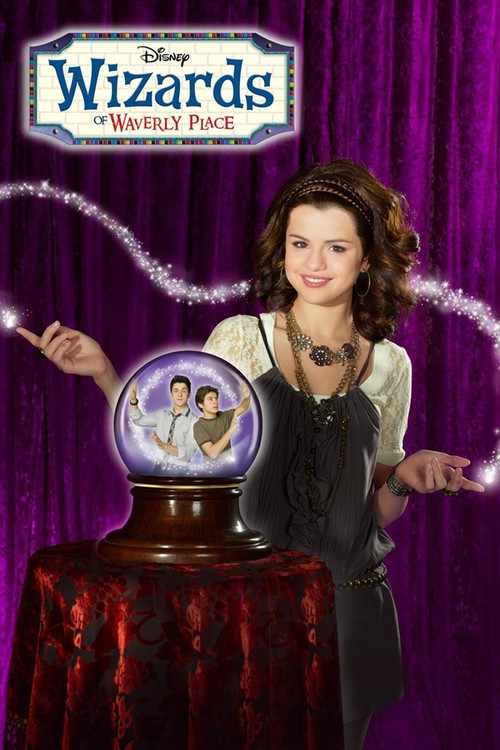
Wizards of Waverly Place
A whimsical fantasy-comedy where teenage life's daily chaos is amplified by magical mishaps, creating a vibrant tapestry of family, rivalry, and heart.
Wizards of Waverly Place

Wizards of Waverly Place

12 October 2007 — 06 January 2012 United States of America 4 season 106 episode Ended ⭐ 8.5 (1,063)
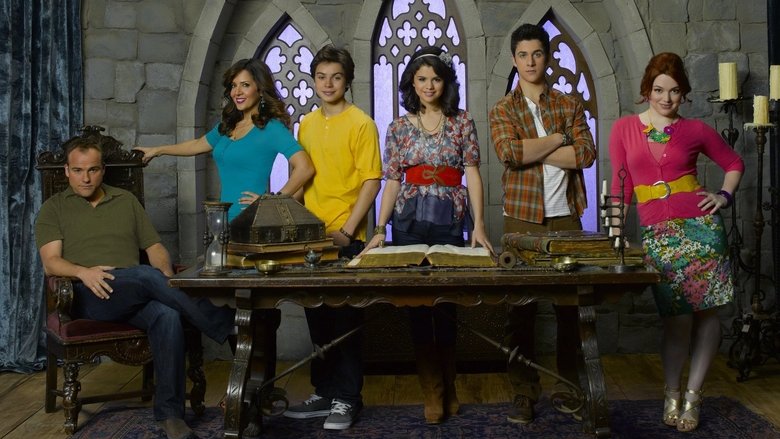
Cast: Selena Gomez, David Henrie, Jake T. Austin, Jennifer Stone, David DeLuise
Sci-Fi & Fantasy Comedy Kids
Family vs. Individual Ambition Responsibility and Consequences The Turmoil of Adolescence The Dual Nature of Identity

Overview

"Wizards of Waverly Place" chronicles the lives of the Russo siblings: the artistically mischievous Alex, the studious and rule-abiding Justin, and their quirky younger brother, Max. Living in Greenwich Village, New York City, they lead a double life. To the outside world, they are a normal family running the Waverly Sub Station, but behind the scenes, they are wizards-in-training. Their father, Jerry, a former wizard who relinquished his powers to marry their mortal mother, Theresa, tutors them in the magical arts.

The central conflict of the series is the impending Family Wizard Competition. According to the laws of the Wizard World, only one child in each generation can retain their full magical abilities into adulthood. This looming contest creates a dynamic of rivalry and alliance among the siblings as they navigate the challenges of high school, friendships, and first loves, all while trying to master their powers and keep their magical identities a secret. Each episode typically involves a problem caused by magic being used irresponsibly—often by Alex—to solve a mundane teenage issue, leading to hilarious complications that ultimately impart a lesson about responsibility, family, and the idea that life can be enjoyable even without magic.
Core Meaning

The core meaning of "Wizards of Waverly Place" is that the strength of family bonds and love is a more powerful and enduring force than any individual ambition or magical ability. Throughout the series, the Russo siblings are pitted against each other in a competition for singular power. However, the ultimate resolution reveals that their success and happiness are not found in individual victory, but in their willingness to sacrifice for one another. The show posits that true power lies in integrity, selflessness, and mutual support. It champions the idea that finding one's unique place within the family, whether magical or not, leads to a more fulfilling outcome than simply winning a predetermined contest.

Thematic DNA

Family vs. Individual Ambition 40%
Responsibility and Consequences 30%
The Turmoil of Adolescence 20%
The Dual Nature of Identity 10%

Family vs. Individual Ambition

This is the central theme of the series, embodied by the Wizard Competition which forces the siblings to compete for a single prize: keeping their powers. Justin's dedication to studying, Alex's latent powerful abilities, and Max's unpredictable nature constantly shift the balance of who is the frontrunner. Episodes frequently test their loyalty, forcing them to choose between gaining a competitive edge or helping a sibling in need. The finale ultimately resolves this theme by showing that their greatest strength is their bond; Alex wins because of an act of familial sacrifice, and Justin is rewarded for his integrity, allowing both to find their powerful places without destroying their relationship.

Responsibility and Consequences

Magic in the Russo household is a metaphor for power and talent, and a recurring theme is the necessity of using it responsibly. Alex, in particular, frequently uses magic as an irresponsible shortcut to solve her problems, which almost always backfires and creates a larger, more complicated issue to solve. Her character arc is defined by her gradual understanding of the consequences of her actions. Jerry's backstory, having given up his powers for love, serves as a constant reminder that with great power comes significant choices and responsibilities.

The Turmoil of Adolescence

At its heart, the show is a coming-of-age story. The magical elements serve to heighten the typical struggles of teenage life. Using a potion to force a crush to like you, duplicating yourself to skip a responsibility, or turning back time to fix a mistake are all fantastical representations of common adolescent desires. The series explores themes of identity, friendship (particularly Alex's relationship with her mortal best friend, Harper), peer pressure, and self-discovery through a comedic, magical lens.

The Dual Nature of Identity

The Russo children constantly struggle to balance their magical and mortal lives. This duality forces them to confront questions of who they are and where they belong. Keeping their powers a secret from the outside world creates conflict and complicates relationships, especially for Alex with her best friend Harper, to whom she eventually reveals her secret. The Waverly Sub Station, their mortal business, stands in direct contrast to the secret wizard lair, symbolizing the two halves of their family's identity that they must learn to integrate.

Character Analysis

Alex Russo

Selena Gomez

Archetype: The Rebel Hero
Key Trait: Mischievous

Motivation

Initially, Alex's motivation is driven by convenience, fun, and a desire to beat her rival, Gigi, and later, to navigate romantic relationships. As the series progresses, her primary motivation shifts to protecting her family and friends. She realizes that her powers are not just for her own benefit but are a part of a larger family dynamic that she ultimately wants to preserve.

Character Arc

Alex begins the series as a talented but lazy and rebellious teenager who frequently uses magic for selfish reasons and to avoid responsibility. Her arc is the most significant in the series. Initially appearing as the least likely to win the Wizard Competition due to her poor work ethic, she slowly reveals a deep-seated loyalty to her family and a powerful, instinctual grasp of magic. Across the seasons, she learns the consequences of her actions, develops a stronger moral compass, and proves that her love for her family outweighs her desire for power. Her victory in the finale is not due to superior knowledge, but to an act of self-sacrifice for her brother, signifying her transformation from a self-centered slacker to a responsible, yet still free-spirited, family wizard.

Justin Russo

David Henrie

Archetype: The Mentor/The Studious Sibling
Key Trait: Diligent

Motivation

Justin is motivated by a deep desire to achieve and be recognized for his hard work and intelligence. He wants to be the family wizard because he believes he has earned it through dedication and study. Over time, his motivation evolves to include not just personal success, but the well-being of the wizarding world and the preservation of his family's honor.

Character Arc

Justin starts as the quintessential older brother: intelligent, responsible, and a stickler for the rules. He is the frontrunner for the Wizard Competition for most of the series, having mastered thousands of spells. His arc involves learning that being the best isn't just about knowing the rules, but about having integrity and understanding the spirit behind them. He often disapproves of Alex's methods but also frequently relies on her creativity to get out of trouble. In the finale, he wins the competition but chooses to cede the victory to Alex, recognizing her act of sacrifice. This decision demonstrates his ultimate growth: he values his relationship with his sister over the title he worked his entire life for. His reward—becoming the headmaster of WizTech—validates his knowledge and newfound wisdom, allowing him to become a mentor to future generations.

Max Russo

Jake T. Austin

Archetype: The Comic Relief/The Underdog
Key Trait: Goofy

Motivation

Max is primarily motivated by simple pleasures, especially food. He is less concerned with the wizard competition than his siblings for much of the show. His motivation is to enjoy life and have fun, often using magic in bizarre and humorous ways. As he gets older, he shows a desire to be taken more seriously, but is ultimately content with a non-magical future that allows him to be in charge of something he loves: the family business.

Character Arc

Max begins the series as the youngest, most carefree, and often dim-witted sibling, serving primarily as comic relief. His magic is unpredictable, and he shows little interest in the rigors of the competition. His character arc is less about magical proficiency and more about finding his own identity outside the shadow of his more powerful siblings. In Season 4, he is temporarily turned into a girl, "Maxine," which forces him to mature slightly. Ultimately, Max loses his powers in the competition, but his genuine happiness at the prospect of inheriting the family's sub shop shows his growth. He finds his own version of success and purpose in the mortal world, demonstrating that there is more to life than magic.

Jerry Russo

David DeLuise

Archetype: The Mentor/The Reluctant Teacher
Key Trait: Protective

Motivation

Jerry's central motivation is to prepare his children for the Wizard Competition while also teaching them not to become overly dependent on magic. He wants to ensure that the two who lose their powers will be able to lead happy, normal lives. He is also motivated by a desire to prevent the kind of familial fallout that occurred between him and his own siblings after their competition.

Character Arc

Jerry is the patriarch of the Russo family and the children's wizardry teacher. His arc is largely explored through his backstory. It's revealed that he was the original winner of his own generation's wizard competition but chose to give up his powers to marry Theresa, a mortal. This past decision informs his entire approach to teaching his children; he is strict about the rules but also deeply understands the sacrifice involved. His development throughout the series is about coming to terms with his children's different paths and learning to trust that the family values he and Theresa instilled in them will guide them to the right outcome, regardless of who wins the competition.

Symbols & Motifs

Magic Wands

Meaning:

A wand symbolizes a wizard's power, control, and identity. It is the primary tool for channeling their abilities. While magic can sometimes be performed without them, wands are essential for focused and complex spellcasting. For the Russo children, their wands are a tangible connection to the magical world and a constant reminder of the power they wield and the competition they face.

Context:

Each of the Russo siblings has their own unique wand, which they are rarely seen without when performing magic. After the series concluded, the three main actors (Selena Gomez, David Henrie, and Jake T. Austin) were allowed to keep their characters' wands as souvenirs, underscoring the item's symbolic importance to their roles.

The Waverly Sub Station

Meaning:

The family's sandwich shop represents their connection to the mortal world, their everyday responsibilities, and the foundation of their family life. It is a place of normalcy amidst their magical chaos. Ultimately, it symbolizes that a fulfilling life can be built without magic, a path that Max embraces when he inherits the shop.

Context:

The Sub Station is the primary setting for the series outside of the wizard lair. The family's initial business was considered to be a magic shop, but was changed to a sub shop to give them a better cover as a normal family. In the series finale, Max losing his powers but gaining ownership of the shop signifies his successful integration into the mortal world, proving that success isn't exclusively defined by magic.

The Family Wizard Robe

Meaning:

The Family Wizard Robe is a powerful symbol of status, legacy, and the ultimate achievement in the Wizard World. Handed down through generations, it represents the power and responsibility that comes with being the sole wizard of the family. Possessing it is a signifier of having won the competition and secured the family's magical lineage.

Context:

The robe is mentioned in the fourth season episode "Lucky Charmed." Jerry explains that the robe is a symbol of power handed down to the next family wizard. He had previously given it to Justin when he was the frontrunner in the competition, causing conflict when Alex's progress suggests she might be more deserving. This highlights the tension and stakes of the ongoing sibling rivalry.

Memorable Quotes

Look, I'll handle it like I handle all of life's problems. Ignore it until it goes away.

— Alex Russo

Context:

This line is from Season 4, Episode 17. After a wizard fortune-teller gives her an ominous prediction to "say goodbye to her life," Harper suggests the situation is serious, to which Alex responds with her classic avoidance strategy.

Meaning:

This quote perfectly encapsulates Alex's early-series personality: her laid-back, avoidant, and often irresponsible approach to dealing with conflict. It's a humorous line that highlights her reliance on shortcuts and her belief that problems can resolve themselves without effort, a mindset that her magical abilities often enable.

I'm not lazy. I'm just resting up for my 30s.

— Alex Russo

Context:

This quote is often cited as a summary of Alex's character. She uses it to rebuff accusations of being lazy, particularly from her more studious brother, Justin.

Meaning:

Another quintessential Alex quote that showcases her witty and nonchalant justification for her lack of effort, particularly in her wizard studies. It reflects her focus on the bigger picture (in her own unique way) rather than the immediate, tedious tasks, humorously framing her idleness as a long-term strategic plan.

Being old is hard. When I get old, I'm just going to sit around and read magazines.

— Alex Russo

Context:

This is from Season 3, Episode 19, after Alex witnesses the complications of her younger brother Max having his first girlfriend and decides she doesn't want the responsibilities of being an adult anytime soon.

Meaning:

This quote reflects Alex's aversion to the responsibilities of adulthood and her interest in fashion and pop culture. When Justin points out that this is what she already does, she replies, "I'm practicing for later." This exchange highlights her clever wit and ability to reframe her perceived flaws as strengths or preparations for the future.

Episode Highlights

Quinceañera

S1E20

Alex is reluctant to have a traditional Quinceañera and magically switches bodies with her mother, Theresa, to avoid it. By living a day in her mother's shoes (literally), Alex gains a profound appreciation for what her mother does for the family and the importance of the tradition. The episode is a key moment for Alex's character development, showing her capacity for empathy and maturity.

Significance:

This is one of the first episodes to deeply explore Alex's character beyond her rebellious exterior. It strengthens her relationship with her mother and shows her beginning to understand selflessness and family heritage, themes that become crucial to her eventual victory as the family wizard.

Harper Knows

S2E8

During a pop-culture convention, Alex is forced to reveal her family's magical secret to her best friend, Harper. This moment fundamentally changes their friendship and the show's dynamic, as Harper is brought into the magical fold.

Significance:

This episode is pivotal as it expands the core group of characters who are 'in the know.' It eliminates the constant strain on Alex of having to hide her true identity from her best friend and allows Harper's character to become more integrated into the magical A-plots of the series.

Wizards vs. Werewolves

S3E9

This two-part episode introduces Alex's new boyfriend, Mason Greyback, and reveals he is a werewolf. The story also brings back Justin's vampire girlfriend, Juliet. The plot culminates in a dramatic confrontation where Juliet is bitten by Mason (in wolf form) and reverts to her true age, and Mason is permanently turned into a wolf.

Significance:

This was one of the most-watched episodes of the series. It significantly raised the emotional stakes of the show, moving beyond simple comedic mishaps into genuine fantasy-drama and heartbreak. It established a major romantic arc for Alex and set up long-running plot points for both Alex and Justin's relationships that would continue into the final season.

Wizards Unleashed

S3E25

Following the events of "Wizards vs. Werewolves," the Russos find a way to restore Mason to his human form. The episode is a testament to Alex's determination and love for Mason, showcasing her willingness to go to great lengths for those she cares about.

Significance:

This episode resolves a major cliffhanger and solidifies Alex and Mason's relationship as a central element of the series. It continues to demonstrate Alex's growing maturity and her ability to use her powers for selfless purposes.

Who Will Be the Family Wizard?

S4E27

The hour-long series finale where the Russo siblings finally compete in the Family Wizard Competition. The competition is structured as a game show and involves multiple rounds, including a trivia section and a labyrinth. During the contest, their friends Harper and Zeke are put in danger, and the siblings pause the competition to save them, leading to their disqualification.

Significance:

This episode is the culmination of the entire series' premise. The disqualification is revealed to be a test of their family bond, which they pass. In the final round, Justin wins but cedes the title to Alex after she sacrificed her lead to save him. Alex becomes the family wizard, Justin is appointed the new headmaster of WizTech (regaining his powers), and Max inherits the Sub Station. It provided a conclusive and satisfying ending for all three main characters, becoming the most-watched finale in Disney Channel history.

Philosophical Questions

Is it ethical to force siblings into a life-altering competition for a birthright?

The series is built around the Wizard Competition, a tradition that dictates only one sibling can retain their powers. This premise raises significant ethical questions about fairness and familial love. The show constantly explores the tension this creates: Should the most studious (Justin) win, or the most naturally powerful (Alex)? The narrative implicitly questions the system's validity, especially when the siblings' love for each other is tested. The finale offers a resolution not by validating the competition itself, but by rewarding the characters who prioritize family over the rules of the contest, suggesting the system is flawed and that true victory lies in transcending it.

Does having an easy solution (magic) hinder personal growth and maturity?

A recurring plot device is Alex using magic as a shortcut to solve her problems, which invariably leads to bigger disasters. This explores the idea that overcoming challenges through effort and learning from mistakes is essential for character development. Jerry's constant warnings against becoming dependent on magic underscore this theme. The show suggests that true maturity isn't about having the power to fix anything instantly, but about developing the wisdom to know when not to use that power and how to solve problems through conventional, non-magical means.

Alternative Interpretations

A prominent alternative interpretation shared by many viewers and critics concerns the morality of the Wizard Competition itself. Many argue that the system, which forces siblings to compete and results in two of them losing a fundamental part of their identity, is inherently cruel and destructive to families. From this perspective, the character Stevie, who is presented as a villain for trying to start a revolution to dismantle the competition, is reinterpreted as a tragic hero with valid motivations. Her 'evil' plan was simply to ensure all wizards could keep their powers, a goal that many viewers found more sympathetic than the established order.

Another popular fan theory posits that the world of 'Wizards of Waverly Place' is a dystopian alternate universe of 'Harry Potter' where Voldemort won. Proponents of this theory point to the Wizard World's harsh rules—such as the 'one wizard per family' quota and severe punishments for magical breaches—as evidence of an oppressive, fear-based magical government, consistent with what a Voldemort-controlled society might look like. Alex's rebellious nature and occasional use of morally ambiguous magic are seen as traits that would allow her to thrive in such a world.

Cultural Impact

"Wizards of Waverly Place" was a cornerstone of Disney Channel's programming in the late 2000s and early 2010s. The series was a ratings success, and its finale became the most-watched in the network's history, demonstrating its significant and dedicated fanbase. The show won two Primetime Emmy Awards for Outstanding Children's Program (in 2009 for the series, and 2010 for the movie), a critical validation of its quality and impact.

Perhaps its most significant cultural legacy is launching the career of Selena Gomez, who became a global superstar in music and acting following her role as Alex Russo. The show was praised for featuring a mixed-heritage family (Italian and Mexican) in leading roles. It stood out from other Disney sitcoms of its era, like 'Hannah Montana' and 'The Suite Life of Zack & Cody', by integrating a continuous, high-stakes fantasy plot—the Wizard Competition—into its episodic comedy structure. This blend of family sitcom and fantasy drama influenced subsequent shows and demonstrated an appetite for more serialized storytelling in children's programming. The show's enduring popularity led to a sequel series, 'Wizards Beyond Waverly Place', which premiered in 2024, cementing the original series' lasting legacy.

Audience Reception

"Wizards of Waverly Place" was met with widespread popularity and positive reception from its target audience throughout its run. It consistently garnered high ratings for Disney Channel, culminating in its series finale becoming the most-watched in the network's history with nearly 10 million viewers, a testament to its strong and loyal fanbase. The show was praised for its humor, the strength of its cast, and particularly the breakout performance of Selena Gomez as the witty and relatable Alex Russo.

The central premise of the Wizard Competition was a major point of discussion among viewers. While it provided the series with high stakes and a compelling overarching plot, it was also a source of criticism. Many fans found the rule that only one sibling could keep their powers to be unfair and cruel, generating extensive online debates about the ethics of the Wizard World. The internal logic and consistency of the magical rules were also frequently cited as a point of contention, with viewers pointing out numerous plot holes and contradictions across the seasons. Despite these criticisms, the overall verdict from the audience was overwhelmingly positive, with the show remembered as a beloved classic of its era.

Interesting Facts

  • The series finale, "Who Will Be the Family Wizard?", was the most-watched finale in Disney Channel's history at the time of its airing.
  • The show was originally titled "The Amazing O'Malley's," and Selena Gomez's character was almost named Julia or Brooke. The family name was changed to Russo later in production.
  • David Henrie, who played Justin Russo, wrote two episodes of the series: "Alex's Logo" and "Meet the Werewolves".
  • After the series wrapped, the three Russo actors—Selena Gomez, David Henrie, and Jake T. Austin—were all allowed to keep their characters' wands as mementos.
  • Several of the spell names in the show are references to the producers and writers. For example, "Murrieta-Animata" is named after executive producer Peter Murrieta, and "McCreary-Time-Reary" references producer Gigi McCreery.
  • The hardware store seen across from the Waverly Sub Station is named "Greenwald's Hardware," a nod to the series' creator, Todd J. Greenwald.
  • The show was originally going to be set in Ireland and the Russo family was going to own a magic shop instead of a sub station.
  • With 106 episodes, "Wizards of Waverly Place" was Disney Channel's longest-running series, surpassing "That's So Raven" at the time.
  • Both Selena Gomez and her character Alex Russo are of Mexican and Italian descent.

Easter Eggs

Many of the spells used in the show are named after members of the production crew.

This is a recurring inside joke throughout the series. The spell to animate objects, Murrieta-Animata, is a tribute to executive producer Peter Murrieta. The time-rewinding spell, McCreary-Time-Reary, is named for producer Gigi McCreery. These names serve as a fun nod to the creative team behind the show.

The wizarding school, WizTech, and its headmaster, Professor Crumbs, are direct parodies of Hogwarts and Albus Dumbledore from the 'Harry Potter' series.

The show openly and humorously references its famous magical predecessor. WizTech features school robes, students wear Harry Potter-style glasses, and Justin's rival, Jerko Phoenix, is a clear parallel to Draco Malfoy. This self-aware humor acknowledges the massive influence of 'Harry Potter' on the fantasy genre and engages with it playfully.

In the episode "Paint by Committee", Alex paints a large anarchy symbol.

In the episode, Alex paints a large letter 'A' inside a circle. When asked what it is, she claims it's just her initial. However, the symbol is an unmistakable reference to the symbol for anarchy. This serves as a visual gag that perfectly represents Alex's rebellious, anti-authoritarian personality in a way that would likely go over the heads of the younger audience but be noticed by older viewers.

A poster for the Broadway musical 'Rent' is visible in the Waverly Sub Station.

The poster for 'Rent', a musical famous for its bohemian and mature themes set in New York's East Village, is an interesting and slightly edgy choice for a Disney Channel show's set dressing. It helps ground the Russo family's Greenwich Village setting in a more authentic, artistic, and less sanitized version of New York City.

⚠️ Spoiler Analysis

Click to reveal detailed analysis with spoilers

Frequently Asked Questions

Explore More About This Movie

Dive deeper into specific aspects of the movie with our detailed analysis pages

Comments (0)

Leave a comment

No comments yet. Be the first to share your thoughts!