Skip to content
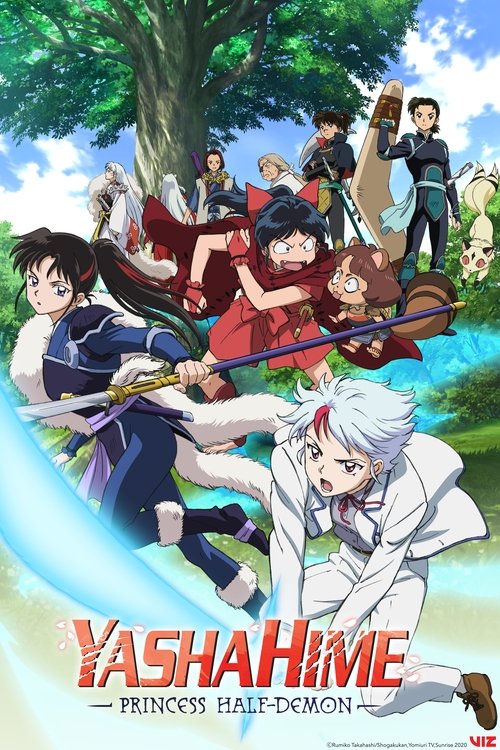
Yashahime: Princess Half-Demon
A moonlit feudal tapestry woven with nostalgic yearning, where fractured threads of bloodline, stolen dreams, and sisterly devotion ignite against an ancient, celestial tempest.
Yashahime: Princess Half-Demon

Yashahime: Princess Half-Demon

半妖の夜叉姫

03 October 2020 — 26 March 2022 Japan 1 season 48 episode Ended 8.3 (170)

Cast: Sara Matsumoto, Mikako Komatsu, Azusa Tadokoro, Ryohei Kimura, Takehiro Urao

Animation Action & Adventure Generational Legacy and Heritage Sisterhood, Empathy, and Reconnection Grief, Obsession, and the Release of Regret Dual Identity and Belonging Defying Prophecy and Choosing Destiny

Overview

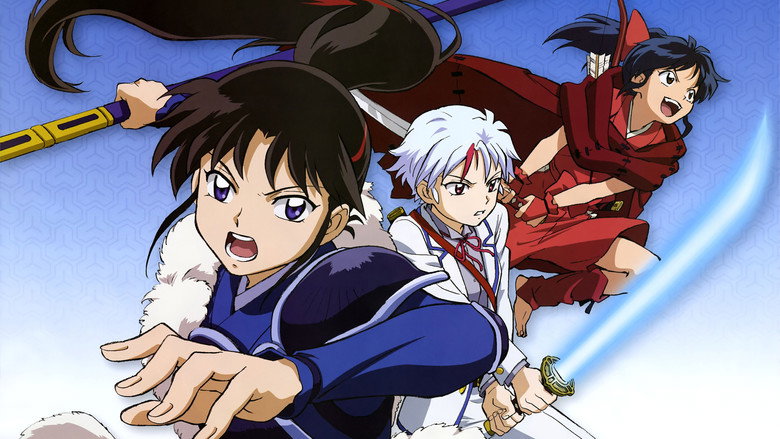
Yashahime: Princess Half-Demon is an anime sequel to Rumiko Takahashi’s classic InuYasha. Set across feudal Japan (the Sengoku period) and modern-day Tokyo, the story centers on three young girls of mixed demon and human lineage: the twin daughters of Sesshomaru, Towa and Setsuna, and Moroha, the spirited daughter of Inuyasha and Kagome Higurashi. Separated in childhood during a forest fire, Towa is transported through the Sacred Tree of Ages into the modern world, where she is raised by Kagome's younger brother, Sota Higurashi. Setsuna remains behind in the feudal era, growing into a demon slayer under Kohaku’s tutelage, but has her memories and ability to sleep stolen by a mystical entity.

Ten years later, the portal between both eras reopens. Reunited in the past alongside Moroha—who works as an independent demon bounty hunter—the three half-demon princesses embark on an expansive journey across feudal Japan. Their overarching mission involves tracking down the Dream Butterfly to restore Setsuna’s lost dreams, uncovering why their parents vanished from the world, and confronting the cosmic threat posed by the Beast King of the East, Kirinmaru, and his grief-stricken elder sister, Zero.

Across its 48-episode run (split into Season 1 and Season 2: The Second Act), the series bridges the generational gap between the legendary heroes of the original franchise and their daughters. As the young heroines unravel the tragic history of the Great Dog Demon’s legacy and the seven magical Rainbow Pearls, they fight to reconcile divided families, confront fate, and prevent a cataclysmic cosmic collision threatening both time periods.
Core Meaning

The fundamental message of Yashahime: Princess Half-Demon centers on the power of familial connection and self-forged identity overcoming inherited trauma and sorrow. Through the journeys of Towa, Setsuna, and Moroha, the series conveys that children are not merely destined to repeat the struggles or bear the burdens of their forebears; rather, mutual empathy, unwavering loyalty, and emotional openness can heal long-festering wounds that power and isolation never could. While ancient conflicts between humans, demons, and half-demons stem from fear and unaddressed grief, genuine bonds cross time, species, and generations.

Thematic DNA

Generational Legacy and Heritage 30%
Sisterhood, Empathy, and Reconnection 25%
Grief, Obsession, and the Release of Regret 20%
Dual Identity and Belonging 15%
Defying Prophecy and Choosing Destiny 10%

Generational Legacy and Heritage

The shadow and expectations of parents loom over Towa, Setsuna, and Moroha. The narrative constantly tests whether the new generation will be defined solely by their legendary bloodlines or forge their own heroic paths.

Sisterhood, Empathy, and Reconnection

The relationship between twin sisters Towa and Setsuna serves as the emotional backbone. Their journey highlights how distance and trauma can create barriers, but emotional perseverance and shared sacrifice can bridge any divide.

Grief, Obsession, and the Release of Regret

Personified by Zero and Kirinmaru, the destructive nature of unhealed loss is placed front and center. Zero's refusal to mourn cleanly births the cursed Rainbow Pearls, illustrating how bitterness curdles into villainy.

Dual Identity and Belonging

As half-demons (hanyō) and quarter-demons, the protagonists navigate alienation from both human and demon societies, turning their hybrid identities into a unique source of resilience.

Defying Prophecy and Choosing Destiny

Prophecies foretell the downfall of Kirinmaru at the hands of a half-demon. Rather than surrendering to fatalistic destruction, the protagonists seek understanding and redemption over mere slaughter.

Character Analysis

Towa Higurashi

Sara Matsumoto

Archetype: Reluctant Hero / Idealist Key Trait: Gentle-hearted, protective, fiercely loyal

Motivation

Driven to protect Setsuna, restore her sister's lost dreams and memories, and find peaceful resolutions whenever possible.

Character Arc

Evolves from a modern fish-out-of-water to a resolute demon warrior, learning to channel her demonic inherited powers (such as Sōryūha and Kikujumonji energy constructs) not out of hatred, but out of unwavering love for her sister.

Setsuna

Mikako Komatsu

Archetype: Stoic Warrior / Loner Key Trait: Pragmatic, disciplined, sharp-edged demon slayer

Motivation

Driven by duty to slay demons and uncover her lost past while severing the karmic ties that threaten her family.

Character Arc

Transforms from an emotionless loner and hardened demon slayer into an emotionally expressive, caring sister who regains her memories, masters the Yukari no Tachikiri, and accepts her vulnerability and musical passion.

All 4 characters and cast

Symbols & Motifs

The Rainbow Pearls (虹色真珠)

Meaning:

Seven jewel fragments born from Zero’s tears and sorrow after the death of the Great Dog Demon. They symbolize crystallised emotional trauma, regret, and false empowerment, magnifying the darker impulses of those who wield them.

Context:

Scattered across feudal Japan, these pearls are sought by demons and the protagonists throughout their journey as key conduits of demonic power.

The Dream Butterfly (夢の胡蝶)

Meaning:

A supernatural insect representing shared sacrifice, stolen innocence, and the fragile bridge between a mother and her daughters.

Context:

Siphons Setsuna’s dreams and ability to sleep, channeling them to keep Rin in suspended animation and stall the progression of Zero’s silver-scale curse.

Yukari no Tachikiri (縁の断ち切り)

Meaning:

Setsuna’s forged naginata blade crafted by Tōtōsai, symbolizing emotional clarity and liberation.

Context:

Possesses the unique power to cut the intangible red threads of karmic grudges, curses, and malicious bonds without physically harming the person.

The Tree of Ages (時代樹 - Goshinboku)

Meaning:

Serves as a motif for historical continuity, ancestral memory, and the intersecting timelines of the Takahashi universe.

Context:

A timeless cosmic entity bridging feudal Japan and modern Tokyo through which time-travel occurs.

Moroha’s Rouge Clam Shell (紅)

Meaning:

Symbolizes dormant ancestral pride, fierce independence, and the hidden fire within her lineage.

Context:

Inherited from Kagome and Inuyasha’s lineage (echoing the rouge given by Izayoi/Inu no Taisho), applying the rouge allows Moroha to temporarily awaken her full demonic power as "Beniyasha, Destroyer of Lands".

Memorable Quotes

私は私のやり方で、絶対にせつなを助ける!
— Towa Higurashi

Context

Season 1, Episode 4. Towa asserts her personal ethos when preparing to aid Setsuna.

Meaning

Highlights Towa's determination to remain true to her modern moral code without resorting to brutal feudal violence.

国崩しの紅夜叉、討ち取ったり!
— Moroha

Context

Season 1, Episode 5. Moroha unleashes her demonic rouge-fueled state during battle.

Meaning

Showcases Moroha's heritage, pride, and energetic confidence as a warrior.

All 5 quotes

Episode Highlights

Inuyasha: Since Then (あれからの犬夜叉)

S1E1

Acts as the bridge from the original series finale, depicting Kagome, Inuyasha, Miroku, and Sango defending the village before introducing the new era.

Significance:

Establishes continuity with the classic franchise and grounds the transition into the next generation's story.

The Gateway Through Time (時を越えた通路)

S1E4

Establishes the connection between modern Tokyo and feudal Japan as the portal reopens.

Significance:

Sets the primary quest in motion as Towa returns to the Sengoku period alongside Moroha and Setsuna.

Farewell Under the Lunar Eclipse (月蝕、運命の惜別)

S1E15

A major flashback turning point uncovering the events surrounding the birth of the twins.

Significance:

Reveals why Inuyasha and Kagome were sealed inside the Black Pearl and the truth behind Rin’s slumber in the Tree of Ages.

Sesshomaru's Daughter (殺生丸の娘)

S1E24

The dramatic Season 1 finale where the three princesses battle Kirinmaru, leading to Tenseiga being snapped and Setsuna being struck down.

Significance:

Concludes the first season on a high-stakes cliffhanger, forcing Towa to confront her limits and inherited power.

Wielding the Tenseiga (天生牙を持つということ)

S2E1

Towa channels her demonic energy through the broken Tenseiga to revive Setsuna, and Tōtōsai arrives to forge a new weapon.

Significance:

Initiates Setsuna's acquisition of the fate-severing weapon Yukari no Tachikiri, defining the trajectory of Season 2.

The Severing of Ties (東雲の麒麟丸)

S2E14

Climactic confrontation where Setsuna cuts the thread of Zero's grief using Yukari no Tachikiri.

Significance:

Resolves Zero's tragic hatred and lifts the silver-scale curse from Rin, freeing her from dormant slumber.

Moroha and Her Parents (親子の再会)

S2E15

Moroha frees Inuyasha and Kagome from the Black Pearl borderland.

Significance:

Delivers the long-awaited emotional reunion between Moroha and her parents after a lifetime of separation.

A Never-Ending Future (永遠に続く未来)

S2E24

The grand series finale where the threat of the Grim Comet is permanently neutralized and Kirinmaru and Rion find peace.

Significance:

Brings full closure to the overarching cosmic conflict and sees the three princesses embrace their continuing lives together.

Philosophical Questions

Can inherited sins and ancestral debts truly be severed?

Explored through the mystical swords Tenseiga and Yukari no Tachikiri, examining whether younger generations must remain bound to ancient clan feuds and past grievances.

Is pain an essential component of emotional existence?

Explored through Zero's decision to wish away her emotions using the Shikon Jewel to escape grief, resulting in apathy and cruelty, demonstrating that sorrow is inseparable from genuine love.

Does knowing one's destiny invalidate moral agency?

Explored via Kirinmaru’s fixation on the prophecy foretelling his defeat by a half-demon, which spirals into a self-fulfilling cycle of paranoia and conflict.

Alternative Interpretations

The series offers multiple interpretive angles:

Full ending explanation

Cultural Impact

Yashahime debuted in Autumn 2020 amid an industry-wide resurgence of late 1990s and early 2000s anime franchises targeting adult millennial nostalgia (such as Boruto, Dragon Ball Super, and the Shaman King reboot). In Japan, the series scored high television ratings in the Saturday evening 5:30 PM time slot on Yomiuri TV/NNS.

Culturally, the series navigated delicate waters by confirming the Sesshomaru and Rin relationship, which sparked extensive international discourse around anime relationship dynamics and age gaps. Critical and fan reception evolved over time, celebrating Moroha's energy and heartfelt family reunions while navigating early narrative debates.

Audience Reception

Reception across the series' broadcast followed distinct phases:

  • Season 1 Reaction: Mixed-to-positive. Fans praised the nostalgic atmosphere, Kaoru Wada's musical score, and Moroha’s charismatic charm, but criticized the slow drip-feed of information regarding the original cast's fate.
  • Season 2 (The Second Act) Reaction: Well-received for narrative momentum and emotional catharsis. Resolving Zero’s grudge, lifting Rin’s slumber, and reuniting Inuyasha, Kagome, and Moroha delivered strong emotional highs that satisfied long-term fans.
  • Overall Consensus: Yashahime stands as an engaging, nostalgic, and heartfelt continuation that succeeds on the strength of its charismatic lead trio, even if it wrestled with pacing shifts across its dual seasons.

Interesting Facts

  • Rumiko Takahashi personally created the main character concept designs for Towa, Setsuna, and Moroha.
  • Series composition was led by Katsuyuki Sumisawa, with legendary composer Kaoru Wada returning to provide the orchestral score.
  • Season 1 was directed by Teruo Sato, while Season 2 (The Second Act) was helmed by Masakazu Hishida.
  • Voice actresses Mikako Komatsu, Sara Matsumoto, and Azusa Tadokoro grew up as passionate InuYasha fans, with Komatsu famously stating that InuYasha opened her personal 'Wind Scar' during childhood.
  • A companion manga adaptation illustrated by Takashi Shiina (Ghost Sweeper Mikami) was serialized in Shōnen Sunday S with an alternative plot restructuring.

Easter Eggs

Ranma ½ Pancake Homage

In Episode 11, when Moroha fumbles cooking instant pancakes, Towa takes over using spatulas in a direct martial-arts cooking stance referencing Ukyo Kuonji from Rumiko Takahashi’s Ranma ½.

Modern Pop Culture in Sota's House

Background scenes in Sota’s apartment and Kagome’s family shrine feature subtle nods to modern Japanese pop culture, school uniforms, and detective manga aesthetics.

Iron Reaver Soul Stealer Framing

In Episode 5, Moroha’s execution of Sankon Tessō (Iron Reaver Soul Stealer) against Jakotsumaru is framed as an exact shot-for-shot tribute to Inuyasha’s battle against Mistress Centipede in Episode 1 of the original 2000 anime.

Familiar Demon Artifacts and Lore

Includes re-appearances of classic lore elements such as the Meidō Zangetsuha resonance, Hosenki’s pearls, and Myoga the flea delivering humorous ancestral exposition.

Frequently Asked Questions

Explore More About This Movie

Dive deeper into specific aspects of the movie with our detailed analysis pages

Comments (0)

Leave a comment

No comments yet. Be the first to share your thoughts!

Similar Movies