Skip to content
Yellowstone
Set against the majestic, blood-stained valleys of modern Montana, this neo-Western tragedy turns ruthless land warfare into a visceral family melodrama where legacy is defended like an empire on the brink of extinction.
Yellowstone

Yellowstone

"My land, my rules."

20 June 2018 — 15 December 2024 United States of America 5 season 53 episode Ended 8.3 (3,281)

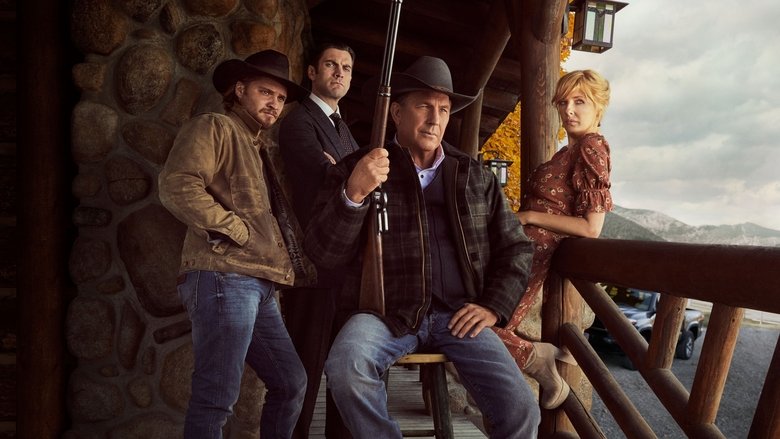
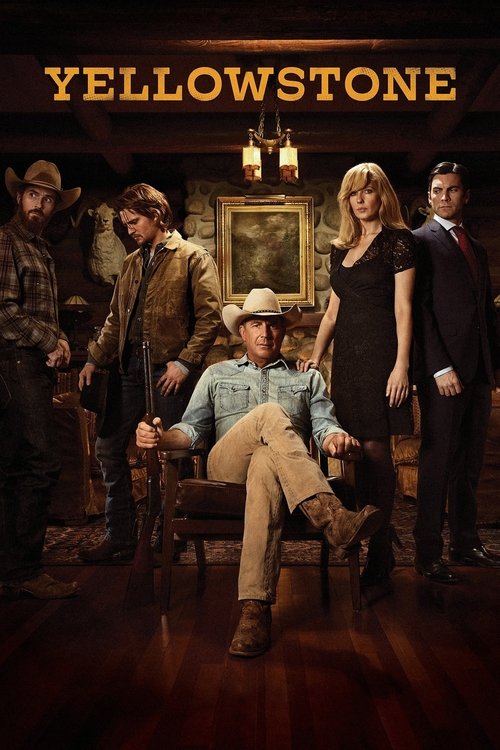
Cast: Kevin Costner, Luke Grimes, Kelly Reilly, Wes Bentley, Cole Hauser

Drama Western Land Ownership, Legacy, and Corporate Greed Toxic Family Loyalty and Patriarchal Control Modernity vs. Frontier Preservation Morality, Vigilantism, and "Being Meaner Than Evil" Indigenous Sovereignty and Cultural Reclamation

Overview

Yellowstone is a modern neo-Western epic that chronicles the volatile struggles of the Dutton family, owners of the largest contiguous cattle ranch in the United States. Led by uncompromising patriarch John Dutton III, the family is locked in a perpetual multi-front war to maintain control of their ancestral land against powerful land developers, an expanding Native American reservation, and the federal government. Across its five-season arc, the narrative examines how far a dynasty will go to preserve its kingdom in an era that seeks to eradicate its way of life.

Rather than focusing merely on external threats, the series digs deeply into the toxic internal dynamics of the Dutton clan. John’s children—fierce corporate operative Beth, traumatized former Navy SEAL Kayce, and politically ambitious attorney Jamie—are dragged into an unending cycle of violence, emotional manipulation, and moral compromise. The ranch hands, bound to the land through literal physical branding, form a fiercely loyal paramilitary unit willing to cross legal and ethical boundaries to protect the ranch.

Across 53 episodes, Yellowstone evolves from a localized turf battle into a high-stakes political and cultural reckoning. The series juxtaposes the rugged, dying ethos of the American frontier with the unstoppable march of 21st-century corporate expansion, political corruption, and shifting social values. It traces how a family's desperate refusal to adapt ultimately costs them their souls, even as they fight to keep their soil.
Core Meaning

Through its complete five-season narrative, creators Taylor Sheridan and John Linson explore the ultimate cost of preserving the American frontier myth. The central thesis of Yellowstone is that unchecked devotion to legacy, land, and power—when divorced from empathy and adaptability—becomes a destructive force that consumes everything it seeks to protect. The show demonstrates that the romanticized Western way of life cannot survive unchanged in modern America, and attempting to defend it through feudal violence only accelerates its moral decay and eventual displacement.

Thematic DNA

Land Ownership, Legacy, and Corporate Greed 30%
Toxic Family Loyalty and Patriarchal Control 25%
Modernity vs. Frontier Preservation 20%
Morality, Vigilantism, and "Being Meaner Than Evil" 15%
Indigenous Sovereignty and Cultural Reclamation 10%

Land Ownership, Legacy, and Corporate Greed

The central narrative engine of Yellowstone is the conflict over who owns, manages, and profits from the West. Across all seasons, the Dutton ranch is besieged by developers (Dan Jenkins, Market Equities) and corporate interests wanting to build airports and luxury resorts. John views the land as a sacred trust, while developers see it as liquid capital. The theme evolves from corporate intimidation in early seasons to state-level political warfare, illustrating that land in modern America is never truly safe from capital.

Toxic Family Loyalty and Patriarchal Control

John Dutton treats his family like weapons and the ranch like a religion. Loyalty is non-negotiable, and independence is treated as treason. Over five seasons, this dynamic destroys his children: Beth becomes a ruthlessly devoted enforcer, Kayce is torn between his wife and father, and Jamie is driven into self-loathing and betrayal. The theme highlights how abusive parental control passed down through generations ruins personal autonomy.

Modernity vs. Frontier Preservation

The show constantly contrasts the traditional cowboy way of life—cattle drives, branding, self-reliance—with the encroaching modern world of suburban sprawl, federal regulation, and tourism. As the seasons progress, the cost of operating a traditional cattle ranch becomes economically unfeasible, transforming John's fight from a defense of property into an elegy for a dying culture.

Morality, Vigilantism, and "Being Meaner Than Evil"

Yellowstone presents a world where legal systems are corrupt or ineffective, forcing characters to rely on frontier justice. The Duttons operate outside the law, employing murder, intimidation, and cover-ups. John's philosophy—that to defeat evil, one must be "meaner than evil"—devolves over the show's run into outright criminality, challenging the audience to question where self-defense ends and tyranny begins.

Indigenous Sovereignty and Cultural Reclamation

Represented by Chief Thomas Rainwater and the Broken Rock Reservation, this theme examines the historical theft of Native lands and the modern struggle for tribal sovereignty. Rainwater's objective contrasts with both John Dutton and corporate developers: he seeks to reclaim the land for his people to restore its original heritage. Over the series, this relationship evolves from direct hostility to an uneasy tactical alliance against corporate exploiters.

Character Analysis

John Dutton III

Kevin Costner

Archetype: Patriarch / Feudal King / Antihero Key Trait: Uncompromising stoicism.

Motivation

Keeping his promise to his father to preserve the Yellowstone Dutton Ranch intact at any cost.

Character Arc

Begins as an untouchable, stern monarch willing to use violence to protect his land. Over five seasons, health scares, loss, and economic pressure force him into political office as Governor of Montana. Despite rising to public power, his rigid refusal to modernize leaves him isolated and vulnerable, culminating in his tragic demise engineered by enemies within and outside his family.

Beth Dutton

Kelly Reilly

Archetype: The Enforcer / Femme Fatale / Fierce Loyalist Key Trait: Unfiltered, terrifying aggression.

Motivation

Fierce, absolute love for her father, John, and protecting Rip.

Character Arc

Starts as a ruthless corporate raider using financial warfare to protect her father. Her arc unearths traumatic childhood wounds—specifically her forced sterilization, for which she blames Jamie. She evolves from a chaotic force of destruction into a devoted wife to Rip Wheeler while waging a war against Jamie that concludes with lethal consequences.

All 5 characters and cast

Symbols & Motifs

The Hooked Rocking Y Brand

Meaning:

Symbolizes permanent ownership, feudal allegiance, and a second chance for criminals who give up their freedom.

Context:

A literal mark burned into the chests of cowboys who pledge lifelong, unconditional devotion to the ranch.

The Train Station

Meaning:

Symbolizes the dark, illegal underbelly of frontier justice and the erased sins of the Dutton empire.

Context:

An isolated cliff face over the Wyoming border where no jury can be empaneled, used by the Duttons as a dumping ground for murder victims.

Wolves and Predators

Meaning:

Represent both nature's raw balance and the existential threats encircling the ranch, mirroring the Duttons as protective of their pack and targeted by modern society.

Context:

Frequently appearing visually and metaphorically throughout the series.

Horses and Cutting Competitions

Meaning:

Represent the authentic spirit of cowboy culture and freedom, symbolizing control, grace under pressure, and the triumph of human willpower over wild nature.

Context:

Displayed prominently through cutting horses and riding throughout later seasons.

Fire and Ashes

Meaning:

Represent both destruction and purification, signaling points where characters burn away their past identities.

Context:

Used in flashback sequences and major plot turns such as arson and branding.

Memorable Quotes

You are the trailer park. I am the tornado.
— Beth Dutton

Context

Season 3, Episode 5 ("Cowboys and Dreamers"). Beth confronts hedge fund manager Roarke Morris, establishing that she will completely destroy corporate threats without playing by their corporate rules.

Meaning

Highlights Beth’s chaotic, unstoppable nature as the ranch’s primary defender.

A brand isn't something you earn. It's something you live up to.
— John Dutton

Context

Season 1, Episode 4 ("The Long Black Train"). John explains the deeper responsibility of wearing the Yellowstone brand to a newly branded ranch hand.

Meaning

Encapsulates the ranch’s feudal philosophy of loyalty, sacrifice, and lifelong commitment.

All 5 quotes

Episode Highlights

Daybreak

S1E1

The pilot episode introduces the world, establishes land conflicts, and ends with the shocking death of eldest son Lee Dutton.

Significance:

Sets the entire series in motion, forcing Kayce back into the family fold.

Sins of the Father

S2E10

The bloody climax of the war with the Beck brothers, featuring the rescue of Kayce’s kidnapped son Tate and a rare, tender flashback between John and his dying father.

Significance:

Cements Rip's place in the family and deepens the dark lengths the Duttons will go to protect their bloodline.

The World Is Purple

S3E10

Features a coordinated, explosive multi-target attack against John, Beth, and Kayce simultaneously.

Significance:

The show’s biggest cliffhanger, shifting the series into an all-out war for survival.

Half the Money

S4E1

A high-octane aftermath episode depicting the Duttons' immediate survival and brutal retaliatory strike against their attackers.

Significance:

Reveals the mastermind connections and sets up Jamie's ultimate alienation from the family.

Cigarettes, Whiskey, a Meadow and You

S5E6

Captures a multi-day cattle roundup and the quiet, peaceful death of old cowboy Emmett Walsh under the Montana stars.

Significance:

Widely considered the most evocative episode of the series, showing the true beauty and dignity of the cowboy life John fights to protect.

Desire Is All You Need

S5E9

The mid-season premiere following Kevin Costner's exit, dealing with the sudden off-screen murder of John Dutton staged as a suicide.

Significance:

Fundamentally alters the show's dynamic, driving Beth and Kayce toward absolute revenge against Jamie and Sarah Atwood.

Life Is a Promise

S5E14

The definitive series conclusion featuring the violent death of Jamie at Beth's hands and Kayce's sacrifice of the ranch land.

Significance:

Resolves the five-season saga, fulfilling the long-standing historical prophecy regarding the land.

Philosophical Questions

Is legacy worth destroying the lives of those who inherit it?

The show constantly asks whether fighting to pass land to the next generation justifies abusing and emotionally damaging them along the way.

Can moral integrity survive extrajudicial violence?

Through John Dutton's doctrine of being "meaner than evil," the series explores whether using illegal methods to defend what you love permanently destroys your soul.

Is human ownership of nature an illusion?

Yellowstone questions whether any human entity—corporate, private, or governmental—can truly "own" the wild frontier, or if nature simply tolerates occupants temporarily.

Alternative Interpretations

Yellowstone can be interpreted through multiple distinct lenses:

Full ending explanation

Cultural Impact

Yellowstone debuted in 2018 during a polarized American cultural landscape and unexpectedly grew into a rating juggernaut, regularly pulling over 15 million live viewers and earning the label "heartland phenomenon" or "red state Game of Thrones". It single-handedly revitalized the neo-Western genre across television, launching an entire franchise empire including hit prequels (1883, 1923) and multiple spin-offs (The Madison, 6666).

The show had a massive real-world impact on fashion, interior design, and tourism, driving record influxes of tourists and land buyers to Montana (often referred to as "The Yellowstone Effect"). Critically, early seasons received mixed reviews for soapy melodramatics, but later seasons won widespread praise for visual majesty and powerhouse performances, particularly from Kevin Costner and Kelly Reilly.

Audience Reception

Audience and critical reception evolved significantly over the five seasons:

  • Season 1: Mixed to moderate reception. Slow build as the world and premise were established. Strengths included visual scope and Kevin Costner's presence, while criticisms focused on soapy dialogue and jarring jumps in violence.
  • Seasons 2–3: Peak critical and audience acclaim; viewership exploded into a cultural event. Strengths included the Beth-Rip romance, Beck Brothers storyline, and high stakes, though some criticized unrealistic villain resolutions.
  • Season 4: Record-shattering ratings, though audience reviews grew slightly divided. Highlights included action sequences and 1883 tie-ins, with criticism directed at slower pacing and extended promos for spin-offs.
  • Season 5: Highly controversial finish with divided reactions to off-screen lead exit and finale pacing. Praised for emotional acting and resolution of long-standing thematic arcs, but criticized for the abrupt write-off of John Dutton and rushed resolution for Jamie.

Interesting Facts

  • Creator Taylor Sheridan wrote every single episode of the series from Season 2 through Season 5 himself, an unprecedented solo workload for a modern flagship television drama.
  • The Yellowstone Dutton Ranch is shot on location at Chief Joseph Ranch in Darby, Montana, a real working cattle ranch with a 6,000-square-foot log mansion built in 1920.
  • Before each season, Sheridan subjected the main cast to an intensive multi-day "Cowboy Camp" in the wilderness to teach authentic horseback riding, roping, and cattle driving.
  • Several cast members are authentic cowboys in real life: Forrie J. Smith (Lloyd) was a professional rodeo cowboy, Ryan Bingham (Walker) is a rodeo trick rider and Oscar-winning musician, and Taylor Sheridan plays high-end horse trainer Travis Wheatley.
  • Kevin Costner was the very first actor to receive the pilot script; his immediate commitment allowed Viacom to greenlight Paramount Network’s scripted television expansion.
  • The younger version of Lloyd Pierce seen in bunkhouse flashbacks is played by Forest Smith, the real-life son of actor Forrie J. Smith.
  • Despite playing quintessential Montana native Beth Dutton with a sharp Western drawl, actress Kelly Reilly is English, born and raised in London.

Easter Eggs

The 7-Generations Prophecy (1883 Connection)

In the prequel series 1883, Indigenous leader Spotted Eagle tells James Dutton that after seven generations, his people will take the land back. In Yellowstone, John Dutton III is the 5th generation, Kayce is the 6th, and Tate (who is half-Indigenous) represents the 7th generation, directly mirroring the land's return in the finale.

Taylor Sheridan Cameo

Sheridan appears regularly as Travis Wheatley, a cocky horse trainer who displays real-life elite reining and cutting horse techniques.

Wyatt Earp Link

Ian Bohen, who plays ranch hand Ryan, previously played the young Wyatt Earp in Kevin Costner's 1994 feature film Wyatt Earp.

Country Music Cameos

Country superstar Lainey Wilson stars as musician Abby in Season 5, while real bands like Shane Smith & the Saints perform live during key scenes.

Hollywood Heritage Cameos

Mia is played by Eden Brolin, daughter of actor Josh Brolin; Teeter is played by Jennifer Landon, daughter of Little House on the Prairie star Michael Landon.

Frequently Asked Questions

Explore More About This Movie

Dive deeper into specific aspects of the movie with our detailed analysis pages

Comments (0)

Leave a comment

No comments yet. Be the first to share your thoughts!

Similar Movies