Skip to content
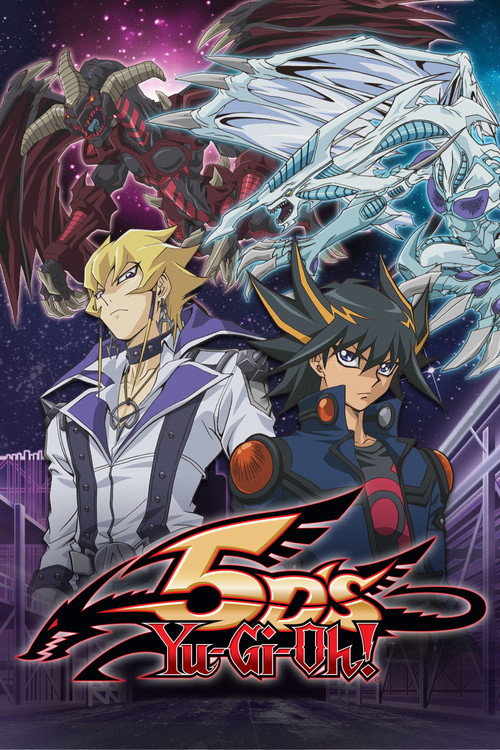
Yu-Gi-Oh! 5D's
In a dystopian cyberpunk metropolis split by inequality, high-speed card duels burn through neon-lit highways as desperate bonds ignite against apocalyptic destiny—a soaring engine of hope racing through dark, shattered ruins.
Yu-Gi-Oh! 5D's

Yu-Gi-Oh! 5D's

遊☆戯☆王5D's

02 April 2008 — 30 March 2011 Japan 1 season 154 episode Ended 8.1 (196)

Cast: Yuya Miyashita, Takanori Hoshino, Shintaro Asanuma, Ayumi Kinoshita, Ai Horanai

Animation Sci-Fi & Fantasy Action & Adventure The Power of Bonds (Kizuna) and Unity Technological Progress vs. Human Morality Overcoming Fate and Free Will Redemption and Forgiveness Class Structure and Social Inequality

Overview

Set decades after the events of Yu-Gi-Oh! Duel Monsters and GX, Yu-Gi-Oh! 5D’s takes place in Neo Domino City—a futuristic metropolis divided into a wealthy, technologically advanced upper city and "Satellite," an impoverished island slum used as the city’s garbage dump and prison. Dueling has evolved into "Riding Duels" (Turbo Duels), high-speed competitions played on specialized motorcycles known as D-Wheels (Duel Runners) using Speed World field spells and Synchro Summoning.

The overall story arc follows Yusei Fudo, a brilliant mechanic and duelist from Satellite, who builds his own Duel Runner to venture into Neo Domino City and retrieve his stolen card and bike from his former friend turned Champion, Jack Atlas. However, their reunion triggers the birthmark of the legendary Crimson Dragon, entangling Yusei, Jack, and four other chosen duelists in an ancient cosmic war. Together, they discover that their destinies are tied to the energy reactor "Ener-D" (Momentum) powering the city.

As the narrative progresses across five seasons, the conflict expands from localized socio-economic struggles into supernatural battles against resurrected ancient entities and, ultimately, a high-stakes sci-fi battle against time-traveling agents from an apocalyptic future. The core narrative tracks how this group of disparate individuals evolves into "Team 5D's," standing as humanity’s last shield against total extinction.
Core Meaning

The central thesis of Yu-Gi-Oh! 5D’s is that human connection (kizuna / bonds) and collective responsibility possess the power to alter a seemingly predetermined catastrophic fate. Through the dual symbolism of Ener-D—an infinite energy source driven by human emotions—the creators emphasize that technological progress is inherently neutral; it becomes destructive only when fueled by human selfishness, greed, and despair. Conversely, when humanity unites through empathy, selflessness, and mutual trust, even the most apocalyptic future can be rewritten.

Thematic DNA

The Power of Bonds (Kizuna) and Unity 30%
Technological Progress vs. Human Morality 25%
Overcoming Fate and Free Will 20%
Redemption and Forgiveness 15%
Class Structure and Social Inequality 10%

The Power of Bonds (Kizuna) and Unity

Introduced as Yusei’s core belief in Satellite, where friendship keeps disenfranchised orphans alive. It expands into the bond of the six Signers and culminates in Team 5D's combining their collective hopes to unlock "Limit Over Accel Synchro" to defeat an existential threat.

Technological Progress vs. Human Morality

Explored through Ener-D / Momentum. Initially presented as a clean energy miracle, it is revealed to mirror human hearts—spinning backward when consumed by dark thoughts, causing catastrophic disaster (Zero Reverse) and bringing about the Meklord invasion in the future.

Overcoming Fate and Free Will

Characters constantly fight against preordained tragedy—whether it is the cursed marks of the Dark Signers or an apocalyptic timeline recorded in history. The series argues that the future is never set in stone as long as humans retain hope and the willpower to change.

Redemption and Forgiveness

Almost every antagonist—from Jack Atlas, Akiza, and Kalin Kessler to the Dark Signers and Aporia—undergoes a painful journey of confronting their past trauma, seeking atonement, and being integrated back into society.

Class Structure and Social Inequality

Prominent in Seasons 1 and 2, depicting the harsh divide between the elite Topsiders and the oppressed Satellite residents. The narrative resolves this divide when Yusei’s team builds the Daedalus Bridge, physically and symbolically reuniting the fractured society.

Character Analysis

Yusei Fudo

Yuya Miyashita

Archetype: Stoic Hero / Savior Key Trait: Unshakeable composure and deep ingenuity

Motivation

Protecting his friends (kizuna) and creating a world where no person or card is considered "trash".

Character Arc

Begins as a silent, selfless outcast fighting for his friends in Satellite. He evolves into Neo Domino City’s ultimate champion and a bridge builder who shoulders the heavy burden of his father’s legacy (Zero Reverse) to lead humanity into a hopeful future.

Jack Atlas

Takanori Hoshino

Archetype: Arrogant Rival → Honorable King Key Trait: Prideful passion and dramatic flare

Motivation

Seeking absolute strength and proving his worth as the one true King.

Character Arc

Starts as an ambitious, self-centered "King of Turbo Duels" who betrayed Yusei for power. After suffering defeat, he learns true humility through his relationship with Carly Carmine, shedding his false ego to become a genuine hero who duels with true power and soul.

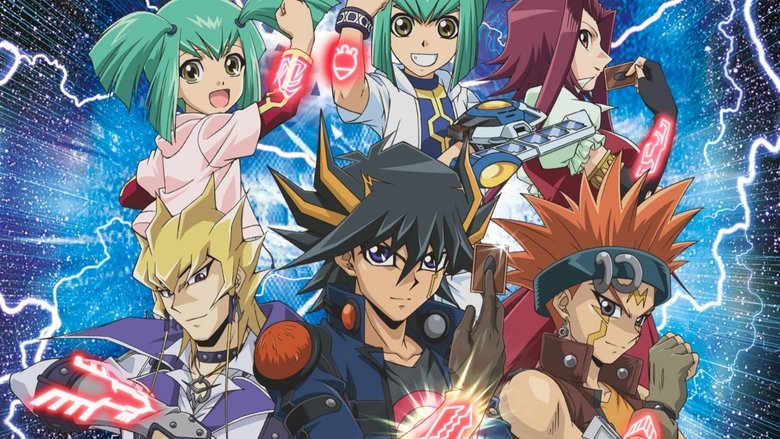
All 5 characters and cast

Symbols & Motifs

The Crimson Dragon & Signer Marks

Meaning:

Symbolizes divine connection, cosmic destiny, and unity among the chosen duelists.

Context:

The mark splits among six individuals, signifying that strength comes from completion through others.

Ener-D / Momentum Reactor

Meaning:

Symbolizes human potential, scientific ambition, and the mirror of the human collective consciousness.

Context:

Used as the energy source powering Neo Domino City, reacting directly to the emotional state and moral alignment of humanity.

Duel Runners (D-Wheels)

Meaning:

Represent momentum, freedom, personal independence, and moving forward toward the future despite obstacles.

Context:

Specialized motorcycles utilized during high-speed Riding Duels (Turbo Duels) throughout the series.

The Infinity Symbol (∞ / Möbius Loop)

Meaning:

Symbolizes the endless loop of time, destiny, and destruction that humanity is trapped in unless broken through enlightenment ("Clear Mind").

Context:

Associated with temporal dynamics and the existential crisis caused by Ener-D in the timeline.

Satellite Stigma / Marker

Meaning:

Symbolizes systemic oppression, prejudice, and societal rejection.

Context:

A physical tattoo branded onto criminals and Satellite residents by Security in Neo Domino City.

Memorable Quotes

「捨て札ではない。どのカードにも存在する意味がある。」 (Sutefuda de wa nai. Dono kādo ni mo sonzai suru imi ga aru.) / "It is not trash. Every single card has a reason to exist."
— Yusei Fudo

Context

Season 1, Episode 3. Spoken to opponents who discard lower-tier cards.

Meaning

Establishes Yusei’s core philosophy regarding human and card value.

「王者の鼓動、今ここに列を成す! 天地鳴動の力を見るがいい! シンクロ召喚! 我が魂、レッド・デーモンズ・ドラゴン!」 (Ōja no kodō, ima koko ni retsu o nasu! Tenchimeidō no chikara o miru ga ii! Shinkuro Shōkan! Waga tamashii, Reddo Dēmonzu Doragon!) / "The pulse of the King forms a line right here! Behold the power that shakes heaven and earth! Synchro Summon! My very soul, Red Demons Dragon!"
— Jack Atlas

Context

Season 1, Episode 5 & throughout the series. Iconic summoning chant for Jack’s ace monster.

Meaning

Showcases Jack's dramatic pride and signature dueling style.

All 5 quotes

Episode Highlights

The Final Match! Jack vs. Yusei

S1E26

Climax of the Fortune Cup where Yusei and Jack duel for the title.

Significance:

The confrontation between Yusei and Jack triggers the summoning of the Crimson Dragon, revealing all Signer marks and exposing Neo Domino City to the truth of Satellite.

The Dragon Mark's Miracle! Savior Star Dragon

S2E55

Yusei faces Dark Signer Kalin Kessler in a high-stakes duel.

Significance:

Serves as the emotional peak of their past as the Enforcers, leading to Yusei unlocking Savior Star Dragon and redeeming Kalin.

To Our Future!

S2E64

Yusei, Jack, and Crow engage in a triple Turbo Duel against Dark Signer Rex Godwin.

Significance:

Season 2 finale where Team 5D's unites to prevent the destruction of the world.

Crash Town: Satisfied Dueling!

S3E92

Yusei and Kalin team up to defeat Lotton in a Spaghetti-Western inspired setting.

Significance:

Climax of the Crash Town arc, freeing the mining town and granting Kalin a new lease on life.

Clear Mind! Accel Synchro! Shooting Star Dragon

S4E108

Yusei achieves "Clear Mind" to counter the Meklords, inventing Accel Synchro summoning mid-race.

Significance:

Marks a pivotal shift in the series from occult magic to high-tech cosmic dueling.

The Binding Ties of Team 5D's!

S4E130

The WRGP Grand Finale against Team New World (Jose).

Significance:

Team 5D's demonstrates ultimate teamwork, passing their hopes and momentum through consecutive duelists.

Shattered Bonds! Antinomy vs. Yusei

S5E144

Bruno reveals his identity as Antinomy inside a dying star and battles Yusei.

Significance:

Antinomy teaches Yusei Delta Accel Synchro before sacrificing his life to save Yusei from a black hole.

Over the Limit! Shooting Quasar Dragon

S5E150

Yusei combines all six Signer dragons to summon Shooting Quasar Dragon via Limit Over Accel Synchro against Z-ONE.

Significance:

Defeats Z-ONE and breaks the apocalyptic temporal loop.

Shining Forth To The Future

S5E154

Features a farewell exhibition duel between Yusei and Jack, followed by an epilogue.

Significance:

Series finale showing Team 5D's disbanding to pursue their individual adult paths.

Philosophical Questions

Does technological advancement outpace human moral evolution?

Explored through Ener-D reacting directly to human emotional polarity.

Is it ethical to sacrifice a smaller population today to guarantee the survival of humanity tomorrow?

Explored through Z-ONE’s mission to destroy Neo Domino City to prevent the future apocalypse.

Is an individual defined by their birthplace and past mistakes, or by their capacity to rebuild?

Explored through the character arcs of Yusei, Jack, and Akiza.

Alternative Interpretations

Socio-Political Critique: A commentary on capitalist class structures, illustrating how elite societies build wealth on top of the trash and labor of exploited lower classes (Satellite), with Ener-D representing the dangers of unethical nuclear power.Fatalism vs. Human Agency: Z-ONE represents a tragic fatalist who believes humanity is fundamentally incapable of self-regulation and must be forcibl...

Full ending explanation

Cultural Impact

Yu-Gi-Oh! 5D’s premiered in 2008 during a period of global economic anxiety, which heavily influenced its grim, post-apocalyptic narrative tone and focus on socio-economic segregation. It broke the tradition of younger protagonists by featuring an 18-year-old street hero (Yusei) who had served time in detention.

The series dramatically shifted the real-world Yu-Gi-Oh! Trading Card Game by introducing Synchro Summoning and Tuner Monsters, speeding up competitive gameplay and forever changing the meta-structure of TCG mechanics. It is widely celebrated as the darkest and most narrative-driven entry in the original continuity (DM → GX → 5D's).

Audience Reception

Seasons 1 & 2 (Fortune Cup & Dark Signers): Widely lauded by fans and critics as peak Yu-Gi-Oh!, praising the mature tone, complex characters, dark occult fantasy, and brilliant pacing.

Seasons 3 & 4 (Pre-WRGP & Filler): Received mixed reviews due to filler episodes, lighthearted comedic shifts, and the transition from supernatural magic to futuristic sci-fi robots. However, specific sub-arcs like Crash Town remain fan favorites.

Season 5 (Ark Cradle & Finale): High critical acclaim for its emotional stakes, dramatic sacrifices (Antinomy), deep villain writing (Z-ONE), and satisfying resolution.

Overall Verdict: Regarded by the community as one of the best anime series in the franchise, celebrated for taking risks with its premise and delivering a powerful, adult storyline.

Interesting Facts

  • Series creator Kazuki Takahashi conceptualized Turbo Duels on motorcycles as a narrative solution to physically bring characters together across vast distances in a fragmented city.
  • Studio Gallop introduced CGI models for the D-Wheels and high-speed race sequences, marking the first time in the franchise's history that heavy 3D graphics were integrated alongside traditional 2D animation.
  • Crow Hogan was originally designed as a minor character and was planned to become the final Dark Signer, but due to his deck's popularity, he was made a primary hero and the 5th Signer.
  • Carly Carmine’s Japanese voice actress stepped down after a cult investigation, creating an urban legend about plot changes, though the transition to Meklords was planned in advance; Aki Kanada took over from episode 130 onward.
  • 4Kids Entertainment did not dub the final season (Ark Cradle Arc, episodes 137–154) due to lawsuits with TV Tokyo and low ratings, leaving Western audiences with an incomplete dub.

Easter Eggs

KaibaCorp Legacy

KaibaCorp's logo appears on modern structures, confirming Seto Kaiba’s company built the technology behind Ener-D reactors and modern D-Wheels.

Nazca Lines

The Earthbound Immortals used by the Dark Signers are directly based on the real-world Nazca Lines in Peru (the Spider, Hummingbird, Monkey, Lizard, Condor, Killer Whale, and Giant).

Kabbalah Tree of Life

Z-ONE’s "Timelord" monsters are based on the ten Sephirot of the Kabbalistic Tree of Life, representing divine attributes leading to the infinite (Da'at/Saphir).

Spaghetti Western Homage

The Crash Town arc (Episodes 86–92) explicitly parodies classic Western films like A Fistful of Dollars, complete with duelists drawing cards at sundown from gun-shaped holsters.

Frequently Asked Questions

Explore More About This Movie

Dive deeper into specific aspects of the movie with our detailed analysis pages

Comments (0)

Leave a comment

No comments yet. Be the first to share your thoughts!

Similar Movies