Skip to content
86 EIGHTY-SIX
A suffocating symphony of rusted armor, mechanical sorrow, and blooming red spider lilies, 86 EIGHTY-SIX captures the agonizing beauty of condemned youth carving their names into oblivion just to prove they were once alive.
86 EIGHTY-SIX

86 EIGHTY-SIX

86―エイティシックス―

"Will you remember me?"

11 April 2021 — 20 March 2022 Japan 1 season 23 episode Ended 8.1 (265)

Cast: Ikumi Hasegawa, Shoya Chiba, Natsumi Fujiwara, Seiichiro Yamashita, Saori Hayami

Animation Sci-Fi & Fantasy Action & Adventure War & Politics Systemic Discrimination, Apartheid, and Denial Trauma, Survivor’s Guilt, and the Reclamation of Life Memory, Legacy, and the Duty to Remember The Brutality of War and Technological Alienation

Overview

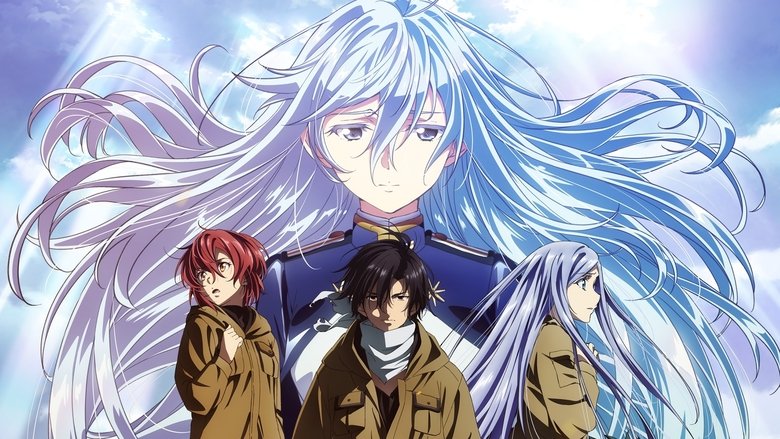
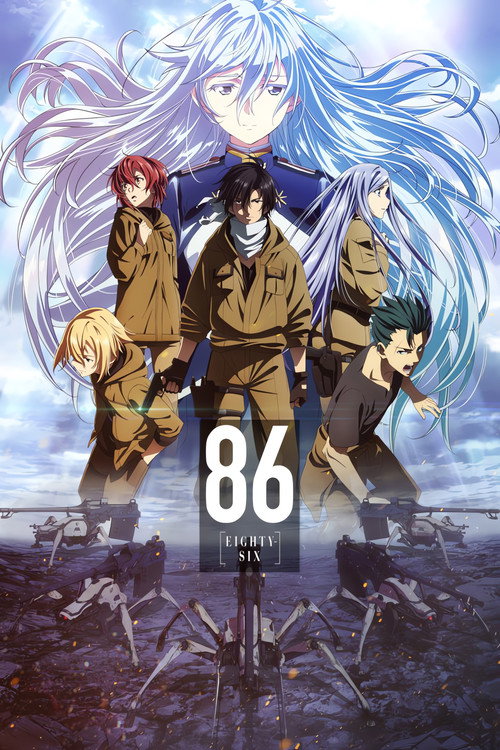
86 EIGHTY-SIX is set on the continent of a dystopian, war-torn world dominated by an unrelenting conflict. The Republic of San Magnolia presents itself as an enlightened, utopian civilization fighting an entirely automated, "bloodless" war against the Legion—a self-propagating artificial intelligence army originally engineered by the neighboring Empire of Giad. According to Republican state propaganda, the frontline is maintained solely by unmanned drones known as "Juggernauts". In reality, the Republic stripped its non-Alba minority citizens (the Colorata) of their human rights, labeled them subhuman "pigs" designated by the number "86," and interned them in the undeclared 86th District, forcing them to pilot these frail, poorly shielded death machines.

The narrative unfolds from two split, parallel perspectives: Vladilena "Lena" Milizé, an elite Alba military officer and idealistic "Handler" directing operations from the luxury and safety of the capital, and Shinei "Shin" Nouzen, callsign "Undertaker," the battle-hardened commander of the elite Spearhead Squadron stationed on the eastern lethal front. As Lena communicates with the squadron via the sensory Para-RAID device, the superficial illusion of Republican virtue crumbles before her eyes. She is confronted by the visceral realities of state-sponsored genocide, while Shin and his squadmates fight not for the corrupt nation that enslaved them, but to preserve their personal dignity and guide the souls of their fallen comrades to rest.

Across its 23-episode run, the series traces the physical and psychological journey of these soldiers beyond the borders of the Republic. After surviving the Republic's systemic death sentence, the core survivors navigate the contrasting political landscape of the Federal Republic of Giad—a democratic society that offers them asylum, yet struggles to rehabilitate child soldiers conditioned solely for warfare. The overarching story charts an emotional collision course between Lena's struggle to dismantle institutional complicity and Shin's journey away from nihilistic suicide missions toward discovering a genuine reason to live.
Core Meaning

The fundamental thesis of 86 EIGHTY-SIX is that human dignity and moral agency are defined not by survival under oppressive structures, but by how one chooses to live, fight, and treat others in the face of inevitable mortality. Through the contrast between the Republic’s self-deceiving populace and the Eighty-Six soldiers in the field, the show condemns societal apathy, systemic dehumanization, and institutional scapegoating. The creators demonstrate that denial of another group’s humanity ultimately destroys the soul and survival capacity of the oppressor, while reclaiming one's identity—refusing to hate, despair, or forget the dead—is the ultimate act of human resistance.

Thematic DNA

Systemic Discrimination, Apartheid, and Denial 25%
Trauma, Survivor’s Guilt, and the Reclamation of Life 30%
Memory, Legacy, and the Duty to Remember 25%
The Brutality of War and Technological Alienation 20%

Systemic Discrimination, Apartheid, and Denial

The series rigorously unpacks how an entire civilization rationalizes genocide by reclassifying humans as subhuman livestock. Across the narrative, the Republic's citizens bask in consumerist decadence behind the Gran Mur walls, entirely indifferent to the massacre beyond. In the second half, the theme deepens as the Giad Federacy reveals the subtler condescension of paternalistic pity, proving that dismantling racial trauma requires far more than passive benevolence.

Trauma, Survivor’s Guilt, and the Reclamation of Life

Shin exemplifies the paralyzing burden of outliving everyone around him, taking on the role of the "Reaper" who must mercifully execute his doomed squadmates to prevent their consciousness from being harvested by the Legion. The series questions what happens when a warrior whose entire identity is defined by dying is suddenly granted peace and freedom. It explores the agonizing transition from merely "not wanting to die" to actively finding a future worth fighting to see.

Memory, Legacy, and the Duty to Remember

The Eighty-Six are denied names, tombs, and family records. Shin physically engraves the names of the 576 dead comrades on metal scraps taken from broken Juggernauts, bearing their weight until someone can relieve him. Lena evolves from a passive listener into their living archive, inheriting their names and vowing to carry their memory forward, demonstrating that remembering the marginalized is the only antidote to historical erasure.

The Brutality of War and Technological Alienation

Contrasting classic mecha power fantasies, 86 portrays armored combat as terrifying, claustrophobic, and unglamorous. The Juggernauts are "aluminum coffins" designed with thin armor and mechanical faults, highlighting how states commodify human youth into cheap, replaceable computer processing chips.

Character Analysis

Shinei "Shin" Nouzen

Shoya Chiba

Archetype: The Tragic Hero / The Fallen Reaper Key Trait: Unflinching resolve veiled beneath devastating survivor's guilt

Motivation

Initially driven to hunt down and mercy-kill his brother Shourei, bearing the burden of remembering fallen comrades, and ultimately discovering a genuine reason to live.
Character Arc

Beginning as a stoic, emotionally detached processor burdened with the telepathic curse of hearing the Legion’s ghostly voices, Shin lives solely to hunt down and mercy-kill his zombified brother. After achieving that goal, he falls into a profound existential vacuum in the Federacy, seeking death against Kiriya Nouzen’s Morpho. Through Lena's voice reaching him on the battlefield, he finally acknowledges his desire to live and envision a future.

Vladilena "Lena" Milizé

Ikumi Hasegawa

Archetype: The Idealistic Catalyst / The Defiant Commander Key Trait: Uncompromising moral integrity forged into tactical ruthlessness

Motivation

Driven by an unwavering need to uphold human dignity, atone for Republican complicity, and survive to catch up to the Spearhead Squadron.

Character Arc

Starts as an earnest, naive Major within the San Magnolia military who attempts to bridge racial divides with superficial politeness. Shattered by the squad's harsh rebukes and the reality of the Republic’s deliberate genocide, she sheds her aristocratic naivety. She steals military codes, uses artillery against orders, dyes a red streak into her hair, earns the moniker "Bloody Reina," and fights on the front lines when the Republic falls, ultimately uniting with Shin as an equal.

All 4 characters and cast

Symbols & Motifs

The Red Spider Lily (Lycoris radiata / Higanbana)

Meaning:

Symbolizes death, irrevocable goodbyes, the boundary between this world and the afterlife, and the blood shed across the Republic’s forgotten frontiers.

Context:

Ubiquitous throughout the visual direction and opening/ending sequences of the series.

The Aluminum Plates / Dog Tags

Meaning:

They symbolize the crushing weight of memory, human identity recovered from bureaucratic anonymity, and the solemn covenant between the living and the fallen.

Context:

Scrapped from destroyed Juggernauts and carried by Shin, these crude metal fragments hold the carved names of the dead comrades.

The Headless Horseman / The Reaper Emblem

Meaning:

Represents Shin's burden: a headless wanderer seeking his brother’s decapitated ghost and his role as the squad's executioner and grave-digger.

Context:

Painted onto the chassis of Shin’s Juggernaut (Undertaker), depicting a headless skeletal knight holding a shovel and a sword.

Fido (The Scavenger Drone)

Meaning:

Represents unwavering loyalty, innocence amidst slaughter, and pure mechanical memory.

Context:

Initially appearing as a utilitarian logistical drone collecting ammo and scrap; Episode 10’s montage reveals Fido as a silent chronicler documenting the daily laughter, intimacy, and tragic ends of Spearhead’s soldiers.

The Gran Mur and the White Palette

Meaning:

Symbolize ideological sterilization, moral cowardice, and an ivory tower constructed to shut out uncomfortable truths.

Context:

Reflected in the pristine white architecture of San Magnolia and the uniform silver hair of the Alba population.

Memorable Quotes

いつか、あなたが私たちの最後の場所にたどり着いたら、花を手向けてくれますか?
— Shinei Nouzen

Context

Cour 1, Episode 9 ("Goodbye"). Before departing on what the Republic meant to be a fatal reconnaissance mission into deep Legion territory, Shin asks Lena to honor their memory.

Meaning

Shin asks Lena to honor their memory, symbolizing the solemn bond between the 86 and their Handler, passing on the duty of remembrance.

死にたくない…
— Kaie Taniya

Context

Cour 1, Episode 3 ("I Don't Want to Die"). Kaie's Juggernaut sinks into a swamp ambush, and her severed consciousness is captured by the Legion, repeating this haunting plea through the Para-RAID.

Meaning

Strips away romanticized notions of noble war sacrifice, exposing the terrifying reality of death and the horror of the Legion harvesting human minds.

All 4 quotes

Episode Highlights

Undertaker

S1E1

Masterfully introduces the bifurcated narrative. Through ingenious split editing, it contrasts the decadent, pastel-hued dining rooms of San Magnolia with the dirty, lethal, and fragile reality of the Spearhead Squadron’s Juggernauts.

Significance:

Establishes the stark moral and systemic duality at the core of the series.

I Don't Want to Die

S1E3

The shocking death of fan-favorite Kaie strips Lena—and the audience—of romanticized notions of noble war sacrifice. The subsequent outburst by Theo exposes Lena’s hollow empathy and forces her to confront her complicity.

Significance:

Serves as the catalyst for Lena's character growth, shattering her naivety regarding the war.

Goodbye

S1E9

Shin confronts the Legion unit housing the preserved cerebral data of his elder brother, Shourei Nouzen. Shin finally frees Shourei's soul from the machine, paying an immense emotional toll while Spearhead prepares for their final exile.

Significance:

Resolves Shin's primary initial driving motivation while pushing the survivors toward their impending suicide mission.

Thank You

S1E10

Told almost entirely through the perspective of the scavenger drone Fido. The episode compiles silent visual recordings of the Spearhead members during their fleeting moments of peace, turning an AI into a profoundly heartbreaking emotional record of lost comrades.

Significance:

Provides an intimate, poignant tribute to the fallen squad members and humanizes their brief moments of happiness.

Here We Go

S1E11

The climax of the first cour. The five survivors march beyond Republic territory into the deep frontier, accepting their apparent deaths with heads held high while Lena is left behind in tears.

Significance:

Transforms Lena into a dedicated resistance commander and marks the conclusion of the Spearhead Squadron's service under the Republic.

Shin

S1E22

Shin, crushed inside his wrecked Reginleif after defeating the Morpho, is saved from his suicidal despair by an unidentified Republic commander (Lena), whose voice reminds him why he must move forward.

Significance:

Acts as the emotional and psychological climax of Shin's arc, pulling him back from suicidal resignation.

Handler One

S1E23

The finale ties together every narrative and emotional thread. Lena arrives in the Giad Federacy and formally meets Shin and his surviving squadmates face-to-face in a brilliantly composed reunion set to Hiroyuki Sawano's song "LilaS".

Significance:

Concludes the prologue of Shin and Lena's relationship, bringing their parallel narratives together into a shared future.

Philosophical Questions

What constitutes humanity when institutions strip away all civil rights?

The show explores whether one's humanity is granted by society's recognition or forged through individual dignity and moral conduct under pressure.

Is it ethical to allow traumatized veterans self-determination if their choice is suicidal warfare?

Explored in Cour 2 through Ernst Zimmermann’s dilemma: allowing the 86 to return to combat out of respect for their agency, despite knowing they are psychologically crippled minors.

Can an oppressor ever genuinely bridge the chasm of privilege and atone for ancestral guilt?

Interrogated through Lena's difficult journey to earn the respect of the 86, proving that atonement demands shared vulnerability rather than patronizing sympathy.

Alternative Interpretations

The series invites multiple critical perspectives:

Full ending explanation

Cultural Impact

86 EIGHTY-SIX was released during an era when the anime landscape was dominated by escapist isekai and action shonen fantasy. The series boldly revived the serious, socio-political military sci-fi subgenre reminiscent of Mobile Suit Gundam: Iron-Blooded Orphans, Code Geass, and Legend of the Galactic Heroes.

Culturally, the series draws explicit parallels to the internment of Japanese Americans during World War II (Executive Order 9066), the racial apartheid of Nazi-occupied Europe, and modern drone warfare. The Republic’s reliance on "unmanned" warfare mirrors modern military anxieties where remote drone operators disconnect emotionally from the lethal reality on the ground.

The critical reception was overwhelmingly positive, earning numerous accolades in anime awards communities for Ishii's direction, screenplay pacing, and vocal performances. Furthermore, the handling of its production delay set a new precedent in the anime industry: fans and critics overwhelmingly supported the choice to postpone episodes rather than release an unpolished product.

Audience Reception

Cour 1 (Spring 2021): Met with critical praise for its exceptional artistic direction, emotional weight, and atmospheric sound design. The pacing of Lena and Shin’s parallel telephone-style communications over Para-RAID was widely lauded, with minor critiques noting that the Republic’s villainous politicians were somewhat one-dimensionally evil.

Cour 2 (Fall 2021 – Winter 2022): Praised for broadening world-building with the Giad Federacy and diving into the psychological trauma of child veterans. However, schedule delays forced recap episodes and the eventual postponement of the final two episodes, causing temporary viewer frustration.

The March 2022 Climax: When Episodes 22 and 23 finally aired, audience opinion reached near-universal acclaim. The final episodes shot to the top of weekly anime ratings across MyAnimeList and Reddit, cementing 86 as one of the standout modern anime adaptations of the decade.

Interesting Facts

  • 86 EIGHTY-SIX was Toshimasa Ishii's first major project as a full series director after working under Mamoru Hosoda and Tomohiko Ito.
  • The broadcast of Episodes 22 and 23 was delayed for almost three months (from late December 2021 to mid-March 2022) to prevent compromising artistic standards.
  • Visual effects house Shirogumi handled the 3D CGI modeling and animation for the mechanical units, deliberately shading them to blend with 2D character art.
  • In Episode 23, the chalkboard graffiti and doodles were drawn personally by the voice actors and production staff so they would appear raw, sincere, and human.
  • Composer Hiroyuki Sawano teamed up with longtime collaborator Kohta Yamamoto to produce the series' sweeping dual score.

Easter Eggs

The "86" Hand Sign in the Finale

In the closing sequence of Episode 23, as Shin and Lena reach out to shake hands, the framing, fingers, and negative space between their arms subtly create the shape of the number "86," symbolizing their shared heritage and the invisible bond uniting them.

Aspect Ratio Compression in Shin’s Psyche

Throughout Cour 2, whenever Shin enters severe depressive dissociation or faces near-fatal combat, the 16:9 frame subtly shrinks with black letterboxing, squeezing him visually to reflect his claustrophobic mental state and near-blindness to the future.

Matched Audio-Visual Cuts

Rhythmic match-cuts, such as a guillotine chopping vegetables in a San Magnolia kitchen hard-cut to an artillery round decapitating a Juggernaut on the frontline, underscore the casual relationship between civilian decadence and brutal frontline death.

Literature Allusions

Names, callsigns, and world elements heavily reference Western history and literature: Vladilena is drawn from Vladimir Lenin, the Republic's motto mirrors the French Revolution, and Legion unit classifications utilize German martial nomenclature.

Frequently Asked Questions

Explore More About This Movie

Dive deeper into specific aspects of the movie with our detailed analysis pages

Comments (0)

Leave a comment

No comments yet. Be the first to share your thoughts!

Similar Movies