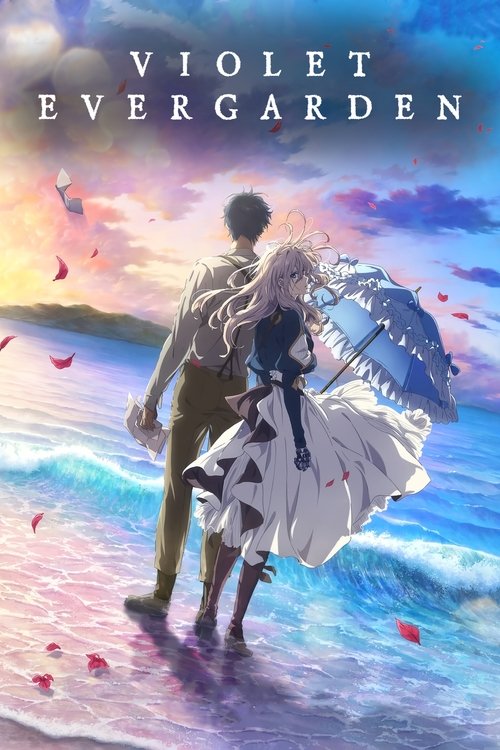
Violet Evergarden: The Movie
劇場版 ヴァイオレット・エヴァーガーデン
Overview
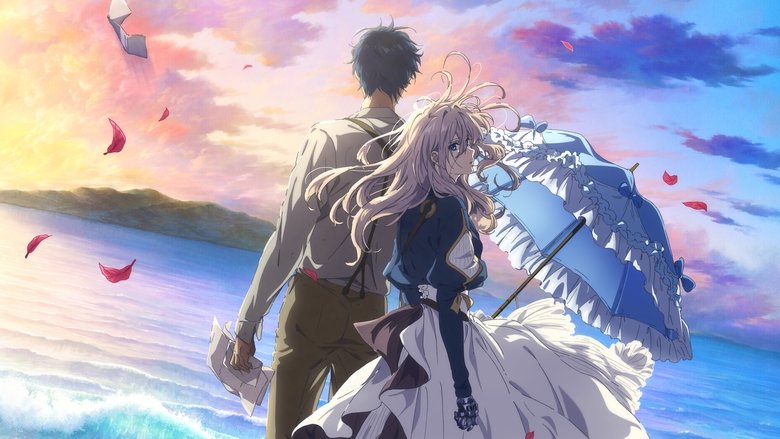
Serving as the finale to the anime series, Violet Evergarden: The Movie follows the titular character, an ex-soldier turned renowned "Auto Memory Doll" who transcribes people's deepest emotions into letters. While the world is healing from a great war and embracing new technologies like the telephone that threaten her profession, Violet still clings to the memory of her commanding officer, Major Gilbert Bougainvillea, and his last words to her: "I love you."
The narrative is framed by a story set in the future, where a young woman named Daisy, the granddaughter of a past client, discovers a series of letters penned by Violet and becomes fascinated by her legacy. In the main timeline, Violet takes on a poignant new client: a terminally ill boy named Yuris who wants her to write final letters to his family. This task coincides with a discovery by Violet's guardian, Claudia Hodgins, of a letter with handwriting identical to Gilbert's, leading them to a remote island and the possibility that he may still be alive.
Core Meaning
The core meaning of Violet Evergarden: The Movie is a profound exploration of love's endurance and the healing power of communication. Director Taichi Ishidate intended the film to be about "Violet's road"—the culmination of her journey from an emotionless "tool" of war to a person who fully comprehends and can express love. The film posits that expressing heartfelt emotions, whether through traditional letters or new technology, is essential for human connection and provides closure. It's a message about confronting past trauma and guilt to move forward, as both Violet and Gilbert must do. Ultimately, the film is a testament to the idea that even if people are gone, the love they shared and the messages they left behind create a lasting legacy that inspires future generations.
Thematic DNA
The Enduring Power of Words and Letters
The film serves as a love letter to the written word itself. In an era where technology like the telephone is making the Auto Memory Doll profession obsolete, the story emphasizes that the deliberate act of writing a letter carries a unique emotional weight. Violet's work with Yuris, crafting letters to be read after his death, mirrors the famous episode from the series about Anne Magnolia, showing how written words can transcend time and mortality to deliver love. The final, pivotal communication between Violet and Gilbert is also a letter, proving that even when face-to-face conversation fails, a letter can bridge the deepest emotional chasm.
Healing from Trauma and Guilt
Both Violet and Gilbert are deeply scarred by the war. Violet carries the weight of the lives she took, while Gilbert is consumed by guilt for having used her as a "tool" and robbing her of a childhood. His refusal to see her stems from a belief that she would be happier without him, the source of her misery. Their reunion is only possible after they both confront their pasts. Violet's journey as a Doll has been one of atonement and understanding, while Gilbert must accept her forgiveness and forgive himself to finally move on and accept a future with her.
Love and Self-Discovery
The entire franchise revolves around Violet's quest to understand the meaning of "I love you." The movie is the final chapter of this journey. Having learned about the many forms of love through her clients, she is no longer just deciphering Gilbert's words; she is now able to understand and articulate her own love for him. The film argues that understanding love is integral to understanding oneself. Violet's final choice to leave her job and live with Gilbert signifies the completion of her arc from a dependent soldier awaiting orders to an independent woman making a choice based on her own free will and desires.
Progress vs. Tradition
The film is set against a backdrop of societal change. The rise of the telephone signifies a move towards faster, more impersonal communication, threatening the slower, more intimate tradition of letter writing. While the film is nostalgic for the old ways, it doesn't entirely condemn progress. In a key moment, the telephone is used to connect Yuris with his friend for a final, crucial conversation, demonstrating that the medium is less important than the sincerity of the message. This theme highlights that while methods change, the fundamental human need to connect remains constant.
Character Analysis
Violet Evergarden
Yui Ishikawa
Motivation
Her primary motivation remains to fully understand the meaning of Gilbert's last words, "I love you." This evolves into a desire to express her own love for him and find closure after years of uncertainty and hope.
Character Arc
Violet completes her transformation from an emotionally detached child soldier into a fully realized human being. Having learned the mechanics of empathy throughout the series, the film sees her internalize these lessons. She is no longer just performing a job; she understands the weight of the emotions she conveys. Her arc culminates in her being able to articulate her own love and make a life-altering choice for herself, not out of duty, but from personal desire, finally leaving her past behind to embrace a future with Gilbert.
Gilbert Bougainvillea
Daisuke Namikawa
Motivation
His motivation is rooted in self-punishment and a misguided desire to protect Violet from his own perceived toxicity. He believes that staying away is the greatest act of love he can offer her.
Character Arc
Gilbert's arc is one of overcoming profound guilt and self-loathing. Believing he ruined Violet's life by involving her in the war, he isolates himself on a remote island, punishing himself by refusing to see her. He acts as a teacher and protector for the island's children, attempting to atone for his past. Through the encouragement of his brother Dietfried and, most importantly, Violet's final, heartfelt letter, he learns to forgive himself and accept the love he feels he doesn't deserve, allowing him to finally reunite with her.
Claudia Hodgins
Takehito Koyasu
Motivation
His motivation is to protect Violet and honor his friend Gilbert's wish for her to live and be free. He acts as a bridge between Violet's past and her potential future.
Character Arc
Hodgins continues his role as Violet's steadfast guardian and employer. His arc in the film is about letting go. He has watched over Violet as a promise to Gilbert, guiding her integration into civilian life. Finding Gilbert alive presents him with a dilemma. His journey culminates in him facilitating their reunion and accepting Violet's decision to resign from the postal company and live her own life, completing his duty to his friend and his ward.
Dietfried Bougainvillea
Hidenobu Kiuchi
Motivation
His motivation is to help his brother, Gilbert, find peace and to fully atone for his own past cruelty toward Violet. He seeks to mend the broken relationships he had a hand in creating.
Character Arc
Dietfried, who once saw Violet as nothing more than a tool and blamed her for his brother's 'death', shows significant growth. Having reconciled with Violet in the series, he now actively works to heal his family's wounds. He urges Gilbert to face his past and see Violet, acknowledging the profound bond they share and accepting her as family. His arc is one of redemption and reconciliation, moving from resentment to compassionate understanding.
Symbols & Motifs
Letters and Typewriters
They symbolize the deliberate and tangible expression of human emotion. A letter is a physical vessel for feelings, capable of crossing time and distance to deliver a message. The typewriter is the tool that gives these feelings form, turning unspoken thoughts into lasting records.
Used throughout the film, from the letters Daisy discovers from the past to the ones Yuris dictates for the future. Violet's own final letter to Gilbert is the ultimate example, containing all the feelings she's learned to understand and finally allowing him to overcome his guilt.
The Emerald Brooch
The brooch, the color of Gilbert's eyes, symbolizes Violet's enduring love and unwavering hope for his return. It is a constant, physical reminder of the person who gave her a name and a future, representing the connection she has cherished even in his absence.
Violet wears the brooch throughout the film, just as she has since receiving it. It's a key part of her design and character, visually representing her core motivation: her bond with Gilbert.
Water (The Sea and Rain)
Water often symbolizes emotion, release, and purification. The sea separates Violet and Gilbert, representing both the distance between them and the depth of their feelings. Rain and tears represent emotional release and cleansing.
Gilbert lives on a remote island, Ekarte, separated from the world by the sea. Violet breaks down in despair on the island's shore. Their final, climactic reunion happens in the ocean, a powerful image of them washing away the past and embracing under the moonlight.
Prosthetic Arms
Violet's silver, mechanical arms are a symbol of her past as a weapon and the trauma she endured, having lost her original arms in the war. However, as she becomes an Auto Memory Doll, they are transformed into tools for connection and healing, symbolizing her journey of redemption. They are the very instruments she uses to type letters that mend hearts, turning a symbol of violence into one of love and empathy.
The arms are a constant visual element. The film shows how she uses these once-destructive appendages with grace and precision to type letters, bridging emotional distances for her clients and, ultimately, for herself.
Memorable Quotes
生きて、自由になりなさい。心から、愛してる。
— Gilbert Bougainvillea
Context:
This quote is heard in flashbacks to the final battle of the war. Its meaning and Violet's quest to understand it are the central premise of the story, finally resolved in the movie's conclusion.
Meaning:
"Live... and be free. From the bottom of my heart, I love you." These are Gilbert's last words to Violet from the war, the driving force behind the entire series. They represent his deepest wish for her to escape her life as a tool and find her own identity and happiness. The film is the ultimate fulfillment of this command.
「愛してる」を、知りたいのです。
— Violet Evergarden
Context:
This is Violet's core motivation stated early in the anime series and is the thematic foundation for the film, which provides the final answer to her question.
Meaning:
"I want to know what 'I love you' means." This line encapsulates Violet's journey of self-discovery. It is the question that propels her to become an Auto Memory Doll, as she believes that by understanding the feelings of others, she can decipher the meaning of the most important words ever said to her.
届けたい想いは、ありませんか?
— Violet Evergarden
Context:
Violet says this to Gilbert on the island of Ekarte after he has refused to see her. It is a poignant role-reversal where she, the former student of emotion, now urges her teacher to communicate his true feelings.
Meaning:
"Are there no feelings you wish to deliver?" This question, which Violet poses to a hesitant Gilbert through a closed door, represents the essence of her growth and profession. She is no longer just a scribe; she is an advocate for emotional expression, understanding its vital importance for healing and connection.
Philosophical Questions
Can a person's purpose be redefined from destruction to creation?
The film explores this through Violet's very existence. Raised as a weapon, her identity was solely tied to war and destruction. Her prosthetic arms are a permanent reminder of this violent past. However, her journey as an Auto Memory Doll sees her using these same hands to create letters that foster love, understanding, and reconciliation. The film shows that one's past actions, no matter how painful, do not have to define their future. Purpose is not static; it can be actively reshaped through new choices and a commitment to healing both oneself and others.
What is the relationship between technological progress and genuine human connection?
The film sets the impending obsolescence of letter writing against the rise of the telephone. This raises questions about whether new, faster technologies enhance or diminish the quality of our emotional expression. While the film shows nostalgia for the heartfelt, deliberate nature of letters, it also presents technology as a neutral tool. The telephone, in a critical moment, allows a dying boy to convey his final, urgent feelings to a friend. The film suggests that the medium of communication is secondary to the intention and sincerity behind the message, arguing that genuine connection will always find a way to manifest, regardless of the technology used.
Is it more loving to hold on or to let go?
This question is central to the conflict between Violet and Gilbert. Violet's journey is one of holding on—to hope, to memory, and to the belief that Gilbert is alive. Conversely, Gilbert believes the most loving act he can perform is to let her go, freeing her from the painful memories associated with him. The film resolves this by showing that neither extreme is the answer. Gilbert's self-imposed exile only causes more pain, while Violet's hope is what ultimately leads to their reunion. The resolution suggests that true love involves confronting the past together rather than trying to erase it through separation.
Alternative Interpretations
While the film's ending is quite direct, a major point of discussion among viewers revolves around whether Gilbert's return was necessary for Violet's character arc. One perspective is that the reunion provides a perfect, emotionally fulfilling conclusion to her journey, finally allowing her to answer the question that started it all and act on her own feelings. From this viewpoint, the happy ending is earned and thematically completes her story of understanding and expressing love.
An alternative interpretation, however, argues that Gilbert's survival slightly undermines the series' powerful themes of moving on from loss. Some viewers felt that Violet's growth into an independent person, capable of living on her own while cherishing his memory, was the true culmination of her journey. In this view, bringing Gilbert back shifts the focus from a story about overcoming grief to a more conventional romance, potentially cheapening the lessons she learned about the permanence of loss. Director Taichi Ishidate himself initially felt the story could end without their reunion, lending weight to the idea that her continued life was the core message, though he was ultimately convinced by the script's handling of Gilbert's return.
Cultural Impact
Violet Evergarden: The Movie holds a significant place in anime history, not only as the conclusion to a beloved series but also as a symbol of resilience and artistic dedication. It was the first feature film fully developed and released by Kyoto Animation following the devastating 2019 arson attack. This context imbued the film's themes of grief, healing, and the importance of expressing love with an added layer of real-world poignancy for both the creators and the audience. The film's message of overcoming trauma resonated deeply, serving as an act of closure for the characters and a powerful statement of return for one of Japan's most revered animation studios.
Critically, the film was lauded for its breathtaking visual fidelity, a hallmark of Kyoto Animation's work, with many reviewers noting that every frame could be a work of art. It was praised as a deeply emotional and cathartic experience, a "three-hanky weeper" that provided a satisfying, albeit tear-jerking, finale for fans. While some critics found the plot's emotional beats predictable, the sincerity and masterful execution were widely acknowledged. The movie performed strongly at the Japanese box office and received multiple prestigious awards, solidifying the franchise's legacy as a modern classic in the drama and animation genres.
Audience Reception
Audience reception for Violet Evergarden: The Movie was overwhelmingly positive, with many fans hailing it as a beautiful and emotionally satisfying conclusion to the series. Viewers consistently praised Kyoto Animation's stunning, art-gallery-worthy visuals and the powerful musical score by Evan Call. The emotional payoff of Violet and Gilbert's reunion was a major highlight for most, who felt it was an earned and cathartic end to Violet's long journey of understanding love. Many reviews and comments advise viewers to bring tissues, calling it an unforgettable "tearjerker."
Points of minor criticism occasionally centered on the pacing, with some finding it slow in parts, similar to the TV series. A more significant point of debate within the fanbase was the decision to have Gilbert survive. While many loved the romantic ending, a portion of the audience felt it detracted from the powerful theme of coping with loss that had been so central to the series. Despite this, the overall verdict from audiences is that the film is a masterpiece and a perfect send-off for a beloved character, essential viewing for anyone who followed the series.
Interesting Facts
- The film serves as the definitive finale to the 2018 anime series.
- Production was tragically impacted by the July 2019 arson attack on Kyoto Animation's Studio 1, which destroyed materials and claimed the lives of many staff members. The film's completion is a testament to the studio's resilience.
- The film's release was delayed twice, first due to the arson attack and then due to the COVID-19 pandemic, eventually premiering in Japan on September 18, 2020.
- Director Taichi Ishidate was initially hesitant to create a sequel, feeling Violet's story was complete even if she never met Gilbert again. He was convinced by the powerful script written by Reiko Yoshida.
- The film was shot in a 2.31:1 widescreen aspect ratio, continuing the cinematic style used in the side-story film 'Eternity and the Auto Memory Doll'.
- The movie won several awards, including the Grand Prize for Theatrical Animation Film at the Tokyo Anime Award Festival 2021 and an Excellence Award at the 24th Japan Media Arts Festival.
- Evan Call, who composed the music for the series, returned to score the film, creating a powerful and emotional soundtrack.
⚠️ Spoiler Analysis
Click to reveal detailed analysis with spoilers
Frequently Asked Questions
Explore More About This Movie
Dive deeper into specific aspects of the movie with our detailed analysis pages
Comments (0)
No comments yet. Be the first to share your thoughts!