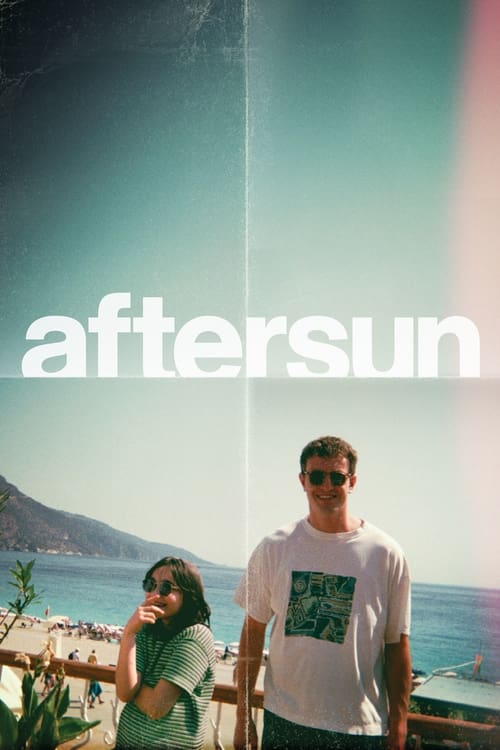
Aftersun
"Memory burns."
Overview
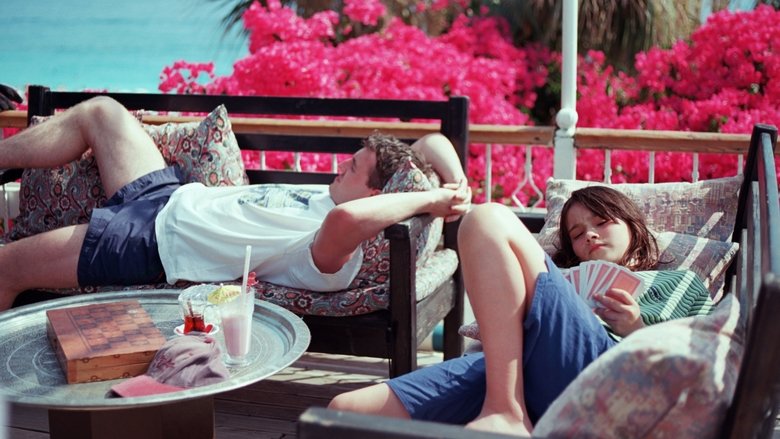
Set in the late 1990s, Aftersun follows 11-year-old Sophie and her 30-year-old father, Calum, on a package holiday to a sun-drenched resort in Turkey. On the surface, the trip is an idyllic coming-of-age experience filled with lazy afternoons by the pool, scuba diving, and karaoke. Calum is affectionate and deeply invested in his daughter's happiness, while Sophie is beginning to navigate the awkward transition between childhood innocence and teenage awareness.
However, an undercurrent of profound melancholy runs beneath the holiday cheer. The narrative is framed through a dual timeline, frequently intercut with grainy MiniDV camcorder footage and flashes of a strobe-lit rave. We soon realize that an adult Sophie is looking back at these recordings years later, desperately trying to reconcile the warm, loving father she remembers with a man who was quietly drowning in his own mind.
As the vacation progresses, subtle cracks in Calum's facade begin to show, revealing his hidden battle with severe depression and feelings of inadequacy. Without relying on heavy exposition, the film paints a deeply human portrait of parental love and the tragedy of realizing—too late—the silent burdens carried by those closest to us.

Core Meaning
At its core, Aftersun is a devastating meditation on the unreliability of memory and the painful realization that our parents are complex, flawed individuals who carry invisible burdens.
Director Charlotte Wells conveys the tragic message that as children, we are inherently incapable of seeing our parents' inner turmoil. Only through the retrospective lens of adulthood can Sophie finally recognize the severe depression her father masked with love. The film ultimately asks whether we can ever truly bridge the gap between the people we love and the inner darkness that consumes them, highlighting the profound ache of retroactive empathy.
Thematic DNA
Memory and Retrospection
The film explores how memories are fragmented, subjective, and often inadequate. Through the contrast of objective MiniDV footage and subjective flashes of a rave, the film shows how adult Sophie struggles to piece together the truth of the past, realizing that memory is an incomplete archive.
Hidden Depression and Mental Illness
Calum's depression is never explicitly diagnosed or heavily dramatized. Instead, it is shown in quiet moments of isolation—practicing Tai Chi to ground himself, reading self-help books, quietly sobbing in a hotel room, and engaging in subtle reckless behavior. It portrays how deeply mental illness can be masked to protect loved ones.
The Parent-Child Bond
The genuine, easy chemistry between Calum and Sophie drives the emotional core of the film. It highlights a father trying desperately to leave a positive lasting impression on his daughter, even as he feels entirely unmoored from his own life.
Coming of Age and Loss of Innocence
As Sophie hangs around older teenagers at the resort, she is on the precipice of adulthood. Her nascent understanding of the adult world runs parallel to her slow realization that her father is fundamentally broken, marking the tragic end of her childhood innocence.
Character Analysis
Calum
Paul Mescal
Motivation
To give Sophie a joyful, lasting memory of him before his mental health completely breaks him.
Character Arc
Calum tries to provide a perfect holiday and emotional foundation for his daughter, even as he privately succumbs to an overwhelming depression that ultimately consumes him.
Young Sophie
Frankie Corio
Motivation
To connect with her father, capture their time together on video, and begin understanding the older teenagers around her.
Character Arc
Sophie transitions from a state of innocent childhood bliss to a nascent, confusing awareness of adult complexities and sadness.
Adult Sophie
Celia Rowlson-Hall
Motivation
To find clues in the archival footage that explain her father's tragic fate and process her unresolved grief.
Character Arc
She journeys through the fragmented footage of her own past, moving from a state of longing to a heart-wrenching acceptance of the unknown.
Symbols & Motifs
The MiniDV Camcorder
It symbolizes the preservation of memory and the limited, framed perspective of a child trying to capture reality.
Throughout the holiday, young Sophie films her father. Years later, adult Sophie watches the footage, looking for the nuances of his pain that the camera lens failed to capture in the moment.
The Strobe-Lit Rave
The rave represents the void of the unknown, the distorted nature of trauma, and the mental space where adult Sophie attempts to reconnect with her father.
It appears in brief, flashing cuts throughout the film. Adult Sophie physically fights through the crowd to reach the 30-year-old version of her father, symbolizing her desperate, impossible attempt to save him retroactively.
The Turkish Rug
It stands as a physical manifestation of Calum's lasting love and his unspoken final legacy.
During the trip, Calum struggles to afford the rug but sneaks back to buy it. In the present timeline, it lies beneath adult Sophie's bed, confirming she inherited it and implicitly suggesting he is no longer alive.
Water and the Ocean
Water represents both cleansing peace and the terrifying, overwhelming depths of Calum's depression.
Calum is frequently seen submerged or standing near the dark ocean at night. He spits on his reflection in the bathroom mirror and disappears into the ocean depths, visually echoing his sensation of drowning in life.
Memorable Quotes
I think it's nice that we share the same sky. So even though we're not actually in the same place and we're not actually together, we kind of are in a way.
— Young Sophie
Context:
Sophie says this to Calum while they are lounging by the pool, innocently reflecting on their physical distance when she lives with her mother in Scotland.
Meaning:
A devastatingly beautiful summary of their bond that takes on profound tragic irony given their later, permanent separation.
When you were 11, what did you think you would be doing now?
— Young Sophie
Context:
Sophie asks this while holding the camcorder. Calum becomes visibly uncomfortable, his face turning cold, and he abruptly cuts off the conversation.
Meaning:
An innocent question that forces Calum to confront his unmet expectations, his failures, and the heavy burden of his current reality.
I'm surprised I made it to 30.
— Calum
Context:
Calum casually mentions this to a scuba diving instructor while discussing his upcoming 31st birthday, completely masking the darkness of the statement with a polite tone.
Meaning:
A stark, deeply troubling confession of his long-standing battle with severe depression and passive suicidal ideation.
Philosophical Questions
Can we ever truly know our parents as individuals?
The film highlights the massive disconnect between a child's perception of a parent and the parent's internal reality. It asks whether the roles of 'mother' or 'father' inherently blind us to the flawed, struggling human being beneath the title.
Is memory a reliable tool for finding the truth?
By contrasting objective video recordings with subjective, emotional flashes of memory, the film questions if revisiting the past can ever provide closure, or if it merely amplifies the things we failed to notice.
Do we inevitably inherit the emotional trauma of our parents?
Seeing adult Sophie deeply melancholic at the exact age her father was forces the audience to ponder whether trauma and depression are cyclical, and if recognizing it is enough to break the cycle.
Alternative Interpretations
While the most widely accepted interpretation is that Calum died by suicide shortly after the holiday, some viewers suggest his exact fate is deliberately ambiguous. He may have succumbed to a reckless accident or simply abandoned his family entirely, disappearing into his depression.
Another profound interpretation centers on adult Sophie. Some critics argue that the rave sequence is not just a void of memory, but a representation of adult Sophie's own current struggles with depression. As a 31-year-old—the exact age her father was on the trip—she may be experiencing the same existential dread he felt, highlighting a tragic generational inheritance of mental illness.
Cultural Impact
Aftersun emerged as one of the most critically acclaimed independent films of 2022, placing director Charlotte Wells on the map as a formidable cinematic voice. It earned Paul Mescal a Best Actor nomination at the Academy Awards, cementing his status as a leading talent. Culturally, the film sparked widespread discussions about mental health, particularly the invisible struggles of young parents and 'millennial' nostalgia. Audiences and critics resonated deeply with the film's portrayal of how children re-evaluate their parents through the lens of adulthood, turning the movie into a viral touchstone on platforms like TikTok and Twitter for its emotionally devastating ending.
Audience Reception
Audiences overwhelmingly praised Aftersun for its staggering emotional power, naturalistic performances, and masterfully subtle storytelling. Viewers were particularly captivated by the organic chemistry between Paul Mescal and Frankie Corio. While some audiences found the film's 'slice-of-life' pacing incredibly slow or lacking in traditional plot structure during the first two acts, most agreed that the devastating emotional payoff of the final 15 minutes retroactively justified the slow burn. The ending, set to 'Under Pressure', is frequently cited by viewers as one of the most heartbreaking sequences in modern cinema.
Interesting Facts
- Director Charlotte Wells used her own childhood holiday photos to pitch the visual style of the film, as the story is semi-autobiographical and deeply personal.
- Paul Mescal and Frankie Corio spent two weeks together in Turkey before filming began, mostly hanging out and playing pool, to organically build a genuine father-daughter dynamic.
- Despite pushback from producers about shooting on expensive 35mm film with a debuting child actor, cinematographer Gregory Oke and Wells fought for it to capture the unique, nostalgic 'memory' aesthetic.
- The poignant scene where young Sophie says she will use her 'mind camera' was actually improvised by Frankie Corio when the 20-year-old battery of the prop MiniDV camera legitimately died on set.
- The final dance sequence set to the Queen and David Bowie song 'Under Pressure' was carefully designed so the strobe lighting matched the tempo, creating an overwhelming climax of grief.
Easter Eggs
The Turkish Rug continuity
In the 1990s timeline, Calum struggles to afford an £850 rug but sneaks back to purchase it. In the present timeline, the exact same rug lies beneath adult Sophie's bed, confirming she inherited it and implicitly verifying that Calum is gone.
Calum's Airport Clothes in the Rave
During the strobe-lit rave sequences, Calum is wearing the exact same polo shirt he wore at the airport when he waved goodbye to Sophie. This reveals that the rave is entirely in Sophie's mind—her memory of him is permanently frozen at the exact moment they parted ways.
Calum's unexplained cast
Calum wears a cast on his arm but claims to the children that he doesn't know how he broke it. This subtle detail hints at reckless, self-destructive behavior happening off-screen or during blackouts, pointing to his underlying mental health crisis.
⚠️ Spoiler Analysis
Click to reveal detailed analysis with spoilers
Frequently Asked Questions
Explore More About This Movie
Dive deeper into specific aspects of the movie with our detailed analysis pages
Comments (0)
No comments yet. Be the first to share your thoughts!