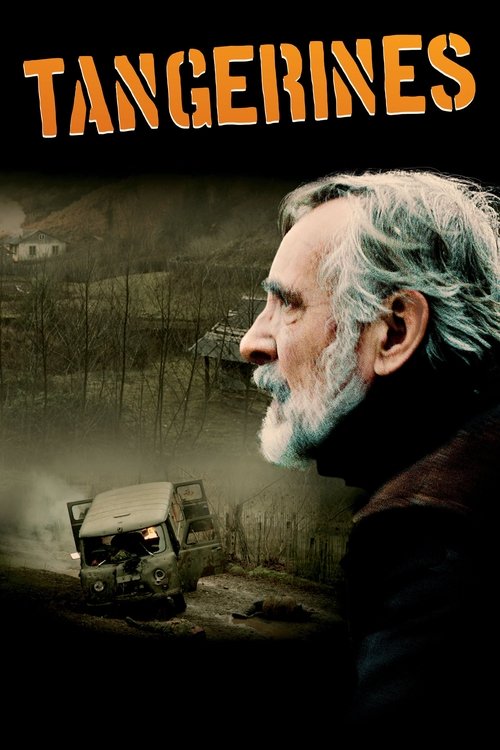
Tangerines
A chamber-like anti-war drama that cultivates profound empathy and quiet tragedy. Against the grim, grey backdrop of the Caucasian conflict, bright orange tangerines glow as a poignant metaphor for fragile humanity and senseless loss.
Tangerines

Tangerines

Mandariinid

17 October 2013 Estonia 87 min ⭐ 7.7 (577)
Director: Zaza Urushadze
Cast: Lembit Ulfsak, Giorgi Nakashidze, Elmo Nüganen, Misha Meskhi, Raivo Trass
Drama War
The Absurdity and Futility of War Shared Humanity and Empathy Sacred Hospitality and Moral Integrity Identity and Nationalism

Overview

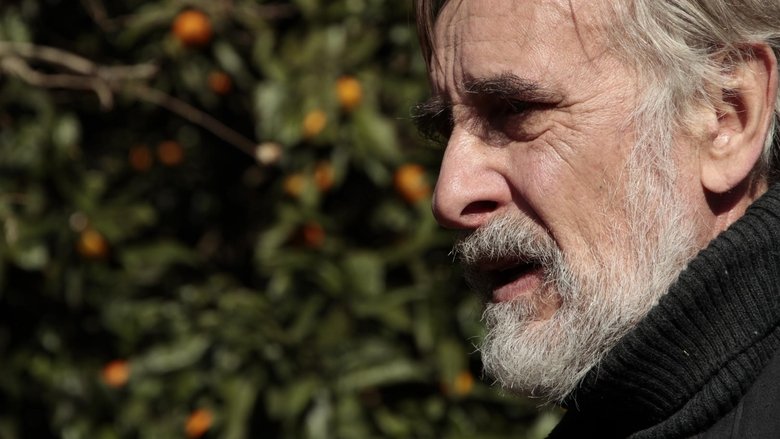
Set in 1992 during the bloody conflict between Georgia and Russian-backed Abkhazian separatists, Tangerines centers on Ivo, an elderly ethnic Estonian carpenter who has chosen to remain in his Abkhazian village. While most of his community has fled the impending war, Ivo stays behind to help his neighbor, Margus, harvest a lucrative and beautiful crop of tangerines. Their peaceful, routine-driven lives are violently interrupted when a deadly firefight erupts right outside their homes.

Surviving the crossfire are two severely wounded soldiers from opposing sides: Ahmed, a Chechen mercenary fighting for Abkhazia, and Nika, a Georgian volunteer. Ivo brings both men into his home, nursing them back to health. Bound by the sacred rules of hospitality, the two sworn enemies agree to a fragile truce under Ivo's roof.

What follows is a tense, claustrophobic psychological drama where the men are forced to confront their prejudices. Under Ivo's stoic moral guidance, the soldiers slowly discover their shared humanity as the absurdities of war close in around them, challenging everything they thought they knew about their enemies.

Core Meaning

Director Zaza Urushadze's central message is a profound meditation on the futility and absurdity of war. By stripping away the grandeur of epic battlefield movies, the film isolates the conflict to a single, intimate setting. The director emphasizes that beneath tribal allegiances, ethnic divisions, and religious differences, people share a fundamental humanity.

Through Ivo's unwavering morality, the film posits that true bravery is not found in killing one's enemies, but in retaining one's compassion and refusing to let war strip away basic human decency. The core meaning is that war is a senseless destruction of life's "beautiful crops"—both literally and metaphorically—and that healing begins with recognizing the person behind the enemy uniform.

Thematic DNA

The Absurdity and Futility of War 35%
Shared Humanity and Empathy 35%
Sacred Hospitality and Moral Integrity 15%
Identity and Nationalism 15%

The Absurdity and Futility of War

This theme is revealed through the localized, personal scale of the conflict. The soldiers fight over land that isn't even theirs, bringing violence that destroys the simple, fruitful lives of innocent civilians like Margus. The contrast between the life-giving tangerine harvest and the death-dealing war highlights how combat senselessly ruins human potential.

Shared Humanity and Empathy

As Ahmed and Nika recover in adjacent rooms, their bitter hatred gradually dissolves. Forced proximity and Ivo's guidance allow them to see each other not as faceless targets, but as men with families, passions (like Nika's acting career), and honor. The film demonstrates that empathy can overcome deep-seated prejudice.

Sacred Hospitality and Moral Integrity

Ivo represents an unwavering moral compass. He extends hospitality to killers without taking sides, commanding respect through his stoic kindness. His house serves as a sanctuary and demilitarized zone where the ancient Caucasian code of the guest supersedes the contemporary code of war.

Identity and Nationalism

The film deconstructs ethnic and nationalistic identities. The Chechen mercenary and the Georgian soldier argue about the land they fight on, yet neither truly understands the history or the tragedy as deeply as the Estonian outsider who has buried his own son there, rendering their nationalistic borders meaningless.

Character Analysis

Ivo

Lembit Ulfsak

Archetype: The Mentor / Peacemaker
Key Trait: Stoic and compassionate

Motivation

To preserve life, uphold hospitality, and help his friend Margus harvest the tangerines before leaving the war zone.

Character Arc

Ivo remains a stoic, unchanging moral anchor throughout the film. He holds onto his humanity and acts as a father figure, refusing to let the hatred of the war dictate his actions, even though the war took his own son.

Ahmed

Giorgi Nakashidze

Archetype: The Warrior / Enemy-turned-Ally
Key Trait: Proud and hot-headed

Motivation

Initially driven by money and military duty; later motivated by personal honor, gratitude toward Ivo, and a newfound sense of brotherhood.

Character Arc

Ahmed begins as a hostile, hardened Chechen mercenary driven by a rigid code of honor and revenge. Over time, he learns to respect and ultimately care for his sworn enemy, Nika, fighting to protect him by the film's end.

Nika

Misha Meskhi

Archetype: The Idealist / Volunteer
Key Trait: Artistic and defiant

Motivation

Defending what he believes to be his rightful homeland from foreign invasion.

Character Arc

Nika transforms from a nationalistic Georgian actor who views the opposing side as pure evil into a man who can laugh and connect with his Chechen counterpart, realizing their shared humanity.

Margus

Elmo Nüganen

Archetype: The Innocent / Everyman
Key Trait: Pragmatic and fretful

Motivation

To successfully harvest his beautiful tangerine crop so it doesn't go to waste, and then flee to safety in Estonia.

Character Arc

Margus stubbornly clings to the hope of a normal harvest in the face of impending doom. Tragically, his optimism is shattered when he witnesses the total destruction of his livelihood and ultimately loses his life to the violence.

Symbols & Motifs

The Tangerines

Meaning:

They symbolize life, peace, and the fragile beauty of normal human existence. Their vibrant orange color represents the innocent things that are senselessly destroyed by conflict.

Context:

The tangerines are a constant visual presence, waiting to be harvested. They contrast with the bleak, grey reality of the war and serve as Margus's sole motivation for staying in the dangerous region.

Ivo's House

Meaning:

It symbolizes a microcosm of peace, a sanctuary, and a demilitarized zone. It stands as a beacon of civilization and morality amidst the chaos.

Context:

The majority of the film takes place within its walls. The house physically separates the warring factions from the battlefield, forcing them to interact as guests rather than combatants.

Wooden Crates and Coffins

Meaning:

They highlight the tragic transformation of daily labor brought about by violence, showing how war repurposes the tools of life for death.

Context:

In a visual bookend, Ivo starts the film making wooden crates to hold tangerines (fruitfulness/life) and ends up making wooden coffins to hold the dead soldiers.

The Audiocassette Tape

Meaning:

It symbolizes memory, home, and the promise of return, as well as the bridging of the cultural divide between the enemies.

Context:

Nika is frequently seen trying to fix the tape. At the end of the film, Ahmed plays the tape in his jeep as he drives away, acting as a tragic keepsake of his fallen Georgian friend.

Memorable Quotes

Cinema is a big fraud.

— Ivo

Context:

Said to Margus and Juhan after they push a shot-up military van down a ravine, and they are disappointed that it fails to explode like it would in the movies.

Meaning:

A meta-commentary on how war films often romanticize violence with fiery explosions and glory, whereas real violence is dull, heavy, and tragic.

To kill a person who is sleeping, even if he is unconscious? This is holy for you as well? I didn't know.

— Ivo

Context:

Ivo challenges Ahmed's assertion that it is his "holy" duty to murder the vulnerable, unconscious Georgian soldier sleeping in the next room.

Meaning:

Ivo calmly dismantles the religious and nationalistic justifications for violence, exposing the inherent cowardice in revenge.

It's a war over my tangerines.

— Margus

Context:

Margus grimly jokes about the nature of the "Citrus War" going on around them, lamenting that the conflict will destroy his crop.

Meaning:

Highlights the absurdity of the conflict. The soldiers fight over abstract concepts of land, while the actual, physical fruits of that land are left to rot or be destroyed by the fighting.

No, I have to kill him myself.

— Ahmed

Context:

Ahmed tells Ivo he won't give Nika up to passing Abkhazian troops, using his "vow" of personal revenge to hide the fact that he no longer wants Nika dead.

Meaning:

Initially spoken out of vengeance, the phrase takes on an ironic meaning as it becomes Ahmed's excuse to protect Nika from other soldiers, showing his shift from enemy to protector.

Philosophical Questions

Is violence ever justifiable, or does it inherently corrupt those who wield it?

The film explores this by showing the exhaustion and ultimate futility of revenge. Ahmed and Nika both believe their violence is justified by patriotism or honor, but under Ivo's calm questioning, these justifications sound increasingly hollow, illogical, and childish.

Does national identity divide us or give us meaning?

Through the constant questioning of who is Georgian, Chechen, or Estonian, the film interrogates how national identities are constructed to create enemies out of equals. Ultimately, Ivo strips them of these labels, reducing them to their core status as vulnerable human beings.

What constitutes true bravery in the face of conflict?

While the soldiers believe bravery is dying or killing for their land, the film posits that Ivo is the truly brave character. His courage lies in remaining compassionate, maintaining his humanity, and refusing to succumb to the surrounding hatred despite his own personal losses.

Alternative Interpretations

While the film is widely viewed as a straightforward humanist and pacifist narrative, critics offer alternative readings regarding its political neutrality and allegorical meaning.

The Illusion of Neutrality: Some analysts argue that Ivo's stance of total neutrality is inherently fragile and ultimately impossible. Despite his best efforts to stay out of the war and simply harvest tangerines, violence forces its way onto his porch. In this reading, the film suggests that in modern warfare, the "neutral observer" is a myth, and isolationism inevitably fails.

A Microcosm of Post-Soviet Collapse: Another interpretation views the film as an allegory for the collapse of the Soviet Union. Ivo's house represents the crumbling remnants of a unified, multi-ethnic society. The men fighting inside it (a Georgian, a Chechen) are the fractured states turning on one another, while the Estonian (representing the Baltics, which successfully broke away) acts as a weary, detached observer watching the empire devour itself.

Religious and Cultural Allegory: The film can also be read through the lens of spiritual reconciliation. Ahmed (Muslim) and Nika (Christian) are forced to coexist under the roof of an older, wiser patriarch (Ivo). The garden and the tangerine crop echo the Garden of Eden—a paradise lost to the sins of men who choose fratricide over cultivation.

Cultural Impact

Tangerines stands as a monumental achievement in both Estonian and Georgian cinema. It put both nations on the global cinematic map by securing unprecedented nominations at the 87th Academy Awards and the 72nd Golden Globes. Released in 2013, the film arrived just before a period of renewed geopolitical tension in Eastern Europe. Many critics drew powerful parallels between the 1992-1993 War in Abkhazia depicted in the film and the 2014 Russian-Ukrainian conflict, giving the movie an urgent, contemporary resonance.

Culturally, the film resonated as a potent anti-war statement, praised for stripping the geopolitical complexities of the post-Soviet Caucasus down to a deeply human level. It has been lauded by critics worldwide for its rejection of Hollywood's sensationalized violence, offering instead a localized, chamber-piece perspective on the psychological toll of conflict. By focusing on the concept of "sacred hospitality" and portraying an Estonian protagonist as a neutral moral anchor, the film transcends tribalism. It continues to be studied in film courses and international relations circles as a masterclass in conflict-sensitive storytelling and pacifist philosophy.

Audience Reception

Universal Praise: Audiences and critics overwhelmingly praised Tangerines for its profound emotional impact and intimate scale. Viewers highlighted the magnificent, understated performance of Lembit Ulfsak as Ivo, whose stoic presence anchored the film. The movie was heavily commended for its humanist message, effectively portraying the senselessness of war without relying on excessive gore or melodramatic battlefield speeches.

Points of Criticism: Some viewers and critics pointed out that the narrative structure is somewhat conventional, even predictable. The "enemies forced to live together and become friends" trope has been utilized in cinema before, and a few reviews felt the transition from mortal enemies to mutual respect was slightly idealized given the deep-seated ethnic hatreds of the region.

Overall Verdict: Despite minor structural critiques, Tangerines maintains exceptionally high ratings across platforms. It is widely regarded as a masterful, beautifully shot chamber drama that offers a desperately needed message of peace, leaving a lasting, melancholic impression on its audience.

Interesting Facts

  • Tangerines was the first Estonian film to be nominated for the Academy Award for Best Foreign Language Film.
  • The film was shot in the Guria region of Georgia, which stood in for the conflict zone of Abkhazia.
  • The cast features absolutely no female actors onscreen; the only female presence is a photograph of Ivo's granddaughter, highlighting the hyper-masculine, desolate environment of the war.
  • Despite having a very low budget of approximately €650,000, the film achieved massive critical success, including a Golden Globe nomination.
  • Director Zaza Urushadze used a neorealist approach with very small camera pans and little movement, creating a chamber-like flow that enhances the claustrophobic intimacy of the house.

Easter Eggs

The song "Qavagadi Navi" (A Paper Boat) by Irakli Charkviani

The song playing on Nika's cassette tape was highly popular among actual fighters during the 1992 war. Its lyrics about a promise to return home act as a poignant, haunting contrast to the tragic reality that many soldiers never made it back.

The broken van failing to explode

When the men push the van off the cliff, they expect it to explode. When it doesn't, Ivo remarks on cinema being a "fraud." This subtly breaks the fourth wall, criticizing Hollywood's glorification of war and establishing the film's grounded realism.

Crates to Coffins

The film features a subtle visual bookend. In the opening scene, Ivo is sawing wood to make crates for the tangerines; in the climax, he is sawing wood to make coffins for the dead, emphasizing how war repurposes the tools of life for death.

⚠️ Spoiler Analysis

Click to reveal detailed analysis with spoilers

Frequently Asked Questions

Explore More About This Movie

Dive deeper into specific aspects of the movie with our detailed analysis pages

Comments (0)

Leave a comment

No comments yet. Be the first to share your thoughts!