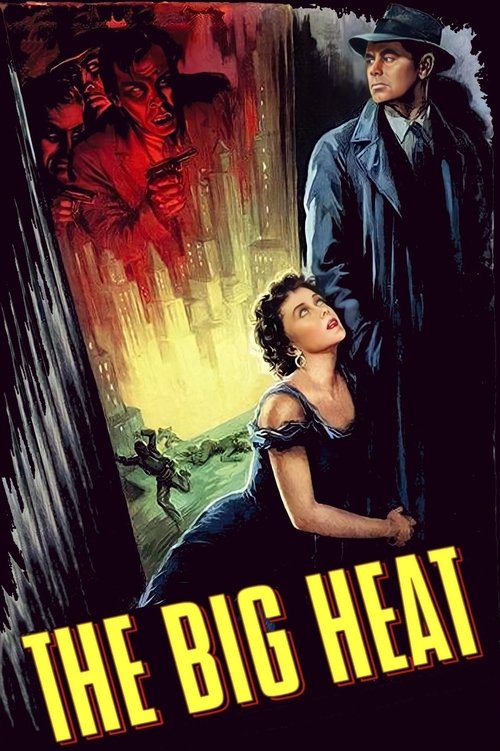
The Big Heat
"A hard cop and a soft dame."
Overview
The Big Heat is a seminal American film noir that begins with the apparent suicide of a corrupt police officer, Tom Duncan. He leaves behind a damning letter exposing a massive crime syndicate that effectively controls the city. When idealistic Homicide Detective Dave Bannion begins investigating the suspicious circumstances surrounding the death and a subsequent murder of a barfly, he encounters a wall of silence and resistance from both the criminal underworld and his own compromised police superiors.
As Bannion stubbornly digs deeper, refusing to be intimidated, a tragic act of retaliation shatters his personal life, transforming the devoted family man into an uncompromising, vengeful force. Stripped of his badge and isolated, Bannion launches a relentless one-man crusade against the untouchable local mob boss, Mike Lagana, and his sadistic enforcer, Vince Stone.
The narrative intricately weaves through the lives of the women affected by the city's rot, most notably Debby Marsh, a mobster's moll who pays a horrific physical price for her association with Bannion. Their intertwined destinies culminate in a brutal and iconic climax, cementing the film's reputation as a tightly wound, unapologetic exploration of crime, retribution, and the fragile veneer of 1950s American society.
Core Meaning
At its heart, The Big Heat is a blistering critique of systemic corruption and the fragility of post-war American domesticity. Director Fritz Lang portrays a cynical, fatalistic universe where evil is not confined to dark alleyways, but operates comfortably in brightly lit mansions and police headquarters. The film suggests that society's institutions are fundamentally compromised, and that maintaining the status quo requires a collective willingness to turn a blind eye to pervasive rot.
Furthermore, Lang explores the corrupting nature of vengeance and the steep moral cost of seeking justice. To defeat a monstrous system, the hero is pushed to descend to its level, abandoning the protections of the law. The film powerfully underscores that true sacrifice often falls on the marginalized—specifically women—who bear the brunt of male violence, highlighting the devastating collateral damage left in the wake of an individual's self-righteous crusade.
Thematic DNA
Systemic Corruption
The film depicts a society thoroughly infested by organized crime, from the local precinct up to city politicians. Mike Lagana operates his syndicate not from the shadows, but from a well-lit, heavily guarded suburban mansion. The police force is largely paralyzed or complicit, forcing the protagonist to operate outside the law to achieve any semblance of justice.
The Corrupting Nature of Vengeance
When tragedy strikes, Bannion transforms from a by-the-book, loving family man into an obsessive, alienated avenger. His righteous fury blinds him to the collateral damage he causes, effectively turning him into a fatal presence who brings death and suffering to the women who cross his path, illustrating how the pursuit of retribution erodes one's humanity.
The Fragility of Domestic Safety
Lang contrasts the idyllic, almost overly perfect domestic life of the Bannion family with the violent, treacherous world of the mob. The sudden, explosive destruction of this safe haven serves as a stark reminder that the post-war American Dream is vulnerable, and that ordinary life can be obliterated in an instant by the underlying evil of the modern city.
Violence Against Women and Female Agency
The film is notable for its unflinching portrayal of brutality against women. However, it subverts traditional noir tropes by giving these women ultimate agency. Rather than being passive victims or traditional femmes fatales, characters like Debby Marsh become the true catalysts for justice, striking back against their abusers to tip the scales.
Character Analysis
Dave Bannion
Glenn Ford
Motivation
Driven by a singular, obsessive need to avenge his wife's murder and dismantle the crime syndicate that destroyed his perfect life.
Character Arc
Bannion transforms from an idealistic, loving family man and dedicated police officer into a grim, relentless vigilante. Driven by grief, he abandons protocol and operates outside the law, bringing unintentional ruin to those around him before pulling back from the brink of total moral darkness at the very end.
Debby Marsh
Gloria Grahame
Motivation
Initially motivated by greed and comfort, her motivation shifts entirely to visceral vengeance and a desire to redeem her compromised life.
Character Arc
Initially a shallow, materialistic gangster's moll who enjoys luxury and looks away from violence, Debby undergoes a profound transformation. After being brutally disfigured by her lover, she finds her conscience and turns into an avenging angel, sacrificing herself to finish the job Bannion's moral code prevents him from doing.
Vince Stone
Lee Marvin
Motivation
Motivated by a desire to maintain power and control through physical intimidation, violence, and loyalty to the syndicate.
Character Arc
Stone remains a static embodiment of pure, unbridled cruelty throughout the film. He acts as the mob's attack dog, deriving perverse pleasure from inflicting pain until his arrogance and sadism ultimately lead to his downfall at the hands of his own victim.
Mike Lagana
Alexander Scourby
Motivation
To protect his criminal enterprise, his immense wealth, and his socially respectable reputation at all costs.
Character Arc
Lagana presents a facade of sophisticated respectability, contrasting with the crude violence of his underlings. His arc revolves around his desperate attempts to maintain the veneer of high society while his criminal empire is slowly dismantled by Bannion's relentless crusade.
Symbols & Motifs
The Scalding Coffee
It symbolizes the sudden, unpredictable eruption of sadistic cruelty, the destruction of superficial beauty, and ultimately, the burning sting of poetic justice and retribution.
A domestic beverage is transformed into an instrument of horrific violence when Vince Stone throws a boiling pot into Debby's face. Later, Debby returns the favor, using the exact same method to exact her revenge.
The Suicide Letter
The letter represents the hidden sins of the city's power structure, institutional rot, and the concept of mutually assured destruction.
Left by the corrupt officer Tom Duncan and held for blackmail by his widow Bertha, it acts as the film's central MacGuffin, driving the plot and keeping the mob's fragile ecosystem in check.
The Mink Coat
A symbol of ill-gotten wealth, moral complicity, and the trading of one's soul for material comfort.
Worn by both the 'respectable' mob widow Bertha Duncan and the gangster's moll Debby Marsh. Debby explicitly uses it to compare the two women, pointing out that despite their different social standings, they are 'sisters under the mink.'
Memorable Quotes
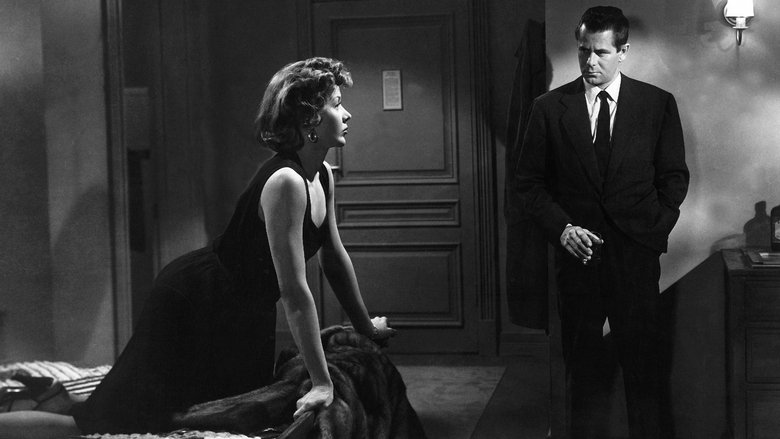
The main thing is to have the money. I've been rich and I've been poor. Believe me, rich is better.
— Debby Marsh
Context:
Spoken by Debby to Bannion in his hotel room, as she tries to justify her relationship with the brutal mobster Vince Stone and her lavish lifestyle.
Meaning:
This quote perfectly encapsulates Debby's initial materialism and the overarching theme of systemic greed. It highlights the cynical reality of the noir world, where moral compromises are routinely made for financial comfort.
We're sisters under the mink.
— Debby Marsh
Context:
Spoken by Debby to Bertha Duncan right before Debby shoots her, condemning the widow's complicity in the city's corruption.
Meaning:
A brilliant realization of the film's moral equivalence. Debby strips away the illusion of respectability, equating the 'respectable' widow Bertha with herself, a gangster's girlfriend, as both are bought and paid for by blood money.
I guess a scar isn't so bad, not if it's only on one side. I can always go through life sideways.
— Debby Marsh
Context:
Debby says this to Bannion while recovering in a hotel room from the horrific coffee burns inflicted by Vince Stone.
Meaning:
This line underscores Debby's tragic resilience and dark humor. It reflects her physical disfigurement as a metaphor for her permanently damaged soul and her stark realization of the life she can no longer lead.
It was bad judgment to bother a cop's widow about the love life of her husband. / Good or bad, it was my judgment.
— Lt. Ted Wilks / Dave Bannion
Context:
An early argument between Bannion and his superior, Lt. Wilks, who is feeling pressure from the corrupt higher-ups to drop the investigation into Tom Duncan's suicide.
Meaning:
This exchange establishes Bannion's unyielding moral compass and stubbornness, which sets him apart from the politically compromised police force willing to overlook the truth.
Philosophical Questions
Does the pursuit of righteous justice justify the collateral damage inflicted along the way?
The film aggressively questions the morality of Bannion's crusade. While his goal to dismantle the mob is just, his relentless, obsessive methods indirectly cause the deaths of several innocent or vulnerable women. The narrative asks whether a man can remain morally pure when his 'righteousness' demands such a high human cost.
Can true justice be achieved within a fundamentally corrupt system?
By showing a police force and city government entirely bought by the mob, the film explores the limits of institutional justice. Bannion must resign and step outside the law to be effective, raising the question of whether a broken system can ever be reformed from within, or if it requires extrajudicial destruction.
Are complicity and active malice morally equivalent?
Through the character of Bertha Duncan, who uses the mob's secrets to enrich herself without pulling a trigger, and Debby Marsh, who enjoys the fruits of Vince's violence, the film interrogates the guilt of bystanders. Debby's realization that they are 'sisters under the mink' asserts that turning a blind eye for personal gain is just as damning as committing the crimes.
Alternative Interpretations
A prominent alternative reading of The Big Heat focuses on Dave Bannion not as a traditional hero, but as an homme fatale. Critics have pointed out that Bannion's obsessive 'hate binge' leaves a trail of dead women in his wake. In this interpretation, his rigid morality is actually a destructive force; he uses the vulnerable women around him (Lucy, his wife Katie, Debby) as collateral damage in his personal vendetta. He keeps his own hands clean only because Debby does the actual killing for him at the climax.
Another analytical perspective explores the film as a veiled commentary on McCarthyism and the anti-Communist witch hunts of the 1950s. Director Fritz Lang, himself a refugee from fascism, crafted a narrative about the dangers of institutional rot and the paranoia of a society where neighbors and colleagues cannot be trusted, and where 'the system' is inherently predatory.
Additionally, some scholars view the film's neat resolution—where Bannion is reinstated to his job and the syndicate is dismantled—as an ironic, studio-mandated facade. Given Lang's deeply cynical worldview, the ending can be read as a hollow victory; the structural rot of the city is too deep to be permanently excised by one man, and Bannion's return to normalcy is a fragile illusion that cannot erase the horrific trauma he has experienced.
Cultural Impact
Upon its release in 1953, The Big Heat was recognized for its uncompromising brutality. Historically, the film emerged during the height of the Kefauver Committee hearings on organized crime, making its depiction of a syndicate controlling an American city deeply resonant with contemporary anxieties. It stood in stark contrast to the sanitized, optimistic portrayals of post-war domesticity, instead exposing a cynical, corrupted society.
The film's influence on cinema, particularly the crime and noir genres, is monumental. It effectively pushed the boundaries of the Production Code regarding on-screen violence. The coffee-scalding scene became a legendary cinematic moment, referenced and imitated in countless subsequent films and television shows. The trope of the rogue cop turning in his badge to fight a corrupt system became a staple of the police thriller, heavily influencing the gritty neo-noirs and action films of the 1970s, such as Dirty Harry.
Critically acclaimed over the decades, the film was labeled by Pauline Kael as the 'definitive film noir.' It inverted the traditional femme fatale archetype, offering a more complex, sympathetic view of its female characters. Its legacy was cemented in 2011 when its cultural and aesthetic significance was formally recognized via induction into the National Film Registry.
Audience Reception
Modern and contemporary audiences alike have praised The Big Heat for its taut pacing, economical direction, and relentless tension. Viewers frequently highlight the electric performances, particularly Lee Marvin's terrifying portrayal of Vince Stone and Gloria Grahame's heartbreaking, complex turn as Debby Marsh. The film is widely celebrated as a masterful, lean thriller that wastes not a single frame.
Historically, the film's intense, sadistic violence was a major point of controversy. The scenes of women being burned with cigars and scalded with boiling coffee shocked 1953 audiences and tested the limits of the Production Code. Even today, viewers note that the violence, while largely implied or swift, carries a profound, visceral sting due to Lang's brilliant staging and the psychological cruelty involved.
The main points of criticism from some viewers center on the somewhat abrupt and traditional 'happy' ending, which feels at odds with the bleak, cynical tone of the preceding narrative. Nevertheless, the overall verdict remains overwhelmingly positive. The Big Heat is widely regarded as a pinnacle of the film noir genre, a raw and potent revenge story that continues to resonate with its dark exploration of human nature.
Interesting Facts
- Marilyn Monroe was originally considered for the role of Debby Marsh, but Columbia Pictures balked at the fee demanded by her studio, 20th Century Fox, leading to the casting of Gloria Grahame.
- The infamous scene where Vince Stone throws scalding coffee in Debby's face was considered incredibly shocking for 1953 and remains one of the most iconic acts of violence in film noir history.
- Director Fritz Lang, who fled Nazi Germany, stated that he identified with Bannion's character because Bannion was a man who stood up to a corrupt, dictatorial regime—something Lang wished more people had done against Hitler.
- The film was based on a serialized story by William P. McGivern that was first published in The Saturday Evening Post.
- In 2011, The Big Heat was selected for preservation in the United States National Film Registry by the Library of Congress for being culturally, historically, or aesthetically significant.
Easter Eggs
Opening shot reference to Metropolis
The film begins with an extreme close-up of a revolver on a desk before it is picked up to commit suicide. This tightly framed shot is almost identical to a scene in director Fritz Lang's earlier sci-fi masterpiece, Metropolis (1927), serving as a subtle visual callback to his German Expressionist roots.
⚠️ Spoiler Analysis
Click to reveal detailed analysis with spoilers
Frequently Asked Questions
Explore More About This Movie
Dive deeper into specific aspects of the movie with our detailed analysis pages
Comments (0)
No comments yet. Be the first to share your thoughts!