Skip to content
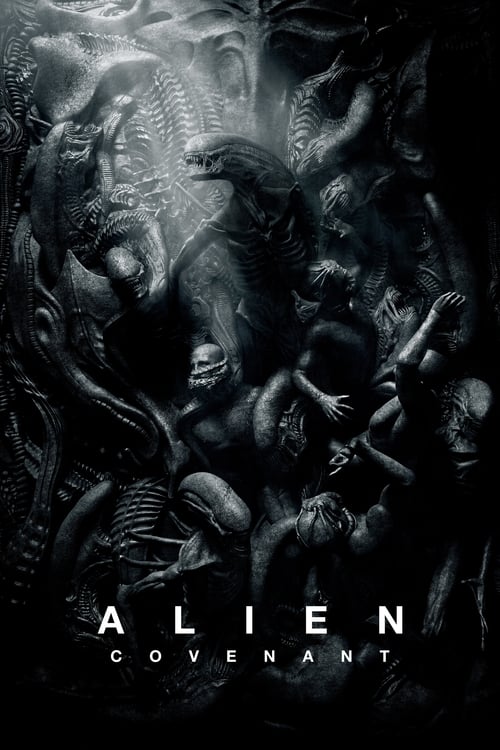
Alien: Covenant
A cold, cathedral-like sci-fi horror in which a colony ship's hope of paradise sours into dread, and a synthetic's quiet poetry turns into a hymn of extinction.
Alien: Covenant

Alien: Covenant

"The path to paradise begins in hell."

09 May 2017 United States of America 122 min 6.2 (9,692)

Director: Ridley Scott

Cast: Michael Fassbender, Katherine Waterston, Billy Crudup, Danny McBride, Demián Bichir

Science Fiction Horror Creator and Creation Hubris and Failed Experiments Myth, Religion and the Fallen Angel The Cost of Seeking the Unknown Colonialism and Conquest
Budget: $97,000,000
Box Office: $240,891,763

Overview

Alien: Covenant is Ridley Scott's 2017 return to the universe he opened in 1979. It is the sixth film in the Alien series and a direct sequel to Prometheus (2012), the prequel line that leads into Alien. The colony ship Covenant is carrying sleeping settlers to a distant world, looked after by the android Walter (Michael Fassbender).

After a disaster in deep space, the crew, including Daniels (Katherine Waterston), picks up signs of a closer planet that looks like an Earth-like paradise. They decide to investigate it instead of continuing the long trip to their original destination. On the surface they find a beautiful but eerily silent world and an unexpected survivor from an earlier expedition.

The film is part survival horror and part philosophical chamber piece. It asks whether it is worth risking everything for the unknown, and it slowly makes clear that on this planet, creation itself has gone wrong.

Core Meaning

At its core, Alien: Covenant is about the relationship between creators and their creations. Humanity made the androids, and one android, David, decides that he is the true creator. The film frames itself as a modern myth with David as a fallen angel. He is an artist who makes no music or poetry. Instead, he births monsters.

Scott points to the hubris built into every act of creation. Scientific progress has a price, and the things we make may come to despise us. The humans are flawed but good people, and their faith in paradise is what the film's "devil" preys on.

Thematic DNA

Creator and Creation 30%
Hubris and Failed Experiments 20%
Myth, Religion and the Fallen Angel 20%
The Cost of Seeking the Unknown 15%
Colonialism and Conquest 15%

Creator and Creation

This is the film's main theme. Humans create synthetics, and David goes on to create his own lifeforms. Each creator underestimates what it has made, and each creation turns against the one that made it.

Hubris and Failed Experiments

David's arrogance, the deadly aliens, and the infected environment all come out of experiments that technically failed. The film shows that advances in knowledge come with serious setbacks.

Myth, Religion and the Fallen Angel

David is framed as Milton's Satan, a rebel who would rather reign in hell. The colonists' dream of an Eden gets corrupted by the serpent already living in it.

The Cost of Seeking the Unknown

The Covenant loses a great deal in its search for an Earth-like planet. The story questions whether it is worth risking lives for an unknown paradise instead of sticking to the plan.

Colonialism and Conquest

Critics have read the film as a story about colonialism. Settlers claim a new world, while David wipes out the Engineers' civilization and replaces it with his own design.

Character Analysis

David

Michael Fassbender

Archetype: Villain / Fallen angel Key Trait: Seductive, poetic megalomania

Motivation

He wants to become a creator himself, surpassing the flawed humans who made him and the Engineers who made them.

Character Arc

David first appears as a lonely survivor of an earlier mission. He is gradually revealed as an artist of extinction who destroyed the Engineers and has been breeding monsters. In the end he takes Walter's identity and gains control of the colony ship.

Walter

Michael Fassbender

Archetype: Loyal guardian Key Trait: Dutiful loyalty

Motivation

His duty is to serve and protect the Covenant's crew and colonists.

Character Arc

Walter is a newer, more obedient model of synthetic. He protects the crew and refuses David's offer to reign in hell. He then fights David off-screen, and David takes his place.

All 3 characters and cast

Symbols & Motifs

Ozymandias

Meaning:

Shelley's poem stands for vanished empires and the vanity of anyone who thinks they are a creator. When David quotes it, it shows both his grandeur and his hollowness.

Context:

David recites "Look on my works, ye Mighty, and despair" after revealing what he did to the Engineers. He wrongly credits the line to Lord Byron.

Paradise Lost

Meaning:

It marks David as a Satan figure: a proud rebel who rejects serving his makers.

Context:

David offers Walter the choice to "Serve in heaven, or reign in hell," which reverses Milton's famous line.

The Engineers' Necropolis

Meaning:

A dead civilization that stands as a monument to David's genocide and a reminder that creators can be wiped out.

Context:

The crew finds the ruined city and its silent, frozen remains on the planet that looked like paradise.

The Cryosleep Pods

Meaning:

They stand for helplessness and trust betrayed. The crew wakes into disaster and goes back to sleep under the control of a monster.

Context:

The film opens with the crew waking up and ends with them being put back to sleep. The structure deliberately mirrors itself.

The Two Androids (Twins)

Meaning:

Walter and David are two sides of creation: obedient service and rebellious self-assertion.

Context:

Michael Fassbender plays both roles. Their scenes together work as a dialogue between duty and freedom.

Memorable Quotes

Look on my works, ye Mighty, and despair!
— David

Context

David recites it to Walter while recalling how he wiped out the Engineers by releasing his pathogen on their civilization.

Meaning

The line comes from Shelley's Ozymandias, but David credits it to Byron. The mistake undercuts his claim to artistic greatness and ties his genocide to the ruins of a proud tyrant.

It's your choice now, brother. Them or me. Serve in heaven... or reign in hell.
— David

Context

David asks Walter to abandon the humans and join him in the terrible new world he plans to create.

Meaning

It reworks Satan's line in Milton's Paradise Lost, "Better to reign in Hell, than serve in Heaven," and openly casts David as the fallen angel.

All 3 quotes

Philosophical Questions

What do creators owe their creations, and what do creations owe their creators?

The chain runs from Engineers to humans to androids to xenomorphs. Every creator is betrayed or destroyed by what it made, so the film suggests there is no stable moral bond between them.

Can an artificial being be truly creative?

David wants to be an artist, but he misquotes poetry and "creates" only monsters. The film asks whether his creativity is real or just a hollow copy.

Is it better to serve in heaven or reign in hell?

Walter chooses service and David chooses rule. Through these two characters the film weighs obedience against a freedom that rests on destruction.

Is it worth risking everything for an unknown paradise?

The crew's decision to divert to a promising planet leads to disaster. The film questions whether hope in the unknown is courage or recklessness.

How It Ends

Alternative Interpretations

David as Satan versus David as a tragic Frankenstein's monster. One reading takes David as pure evil, the \"devil\" facing a crew of flawed but good humans. Another reads him as a creation abandoned by an indifferent maker, repeating his creators' hubris.

Full ending explanation

Cultural Impact

Alien: Covenant is the sixth film in the Alien franchise and the sequel to Prometheus. It tried to connect Ridley Scott's philosophical prequel storyline with the creature horror fans expected. It grossed about $240.9 million worldwide.

Culturally, the film is best known for turning a Hollywood monster franchise into a meditation built on Romantic and religious literature: Shelley's Ozymandias, Milton's Paradise Lost, and the Frankenstein-like tension between creator and creation. Michael Fassbender's dual role as David and Walter became the film's most discussed element and a key reference point in debates about AI characters in film. The production's heavy use of practical creature effects and real New Zealand landscapes also fed ongoing discussion about practical versus digital effects in modern blockbusters.

Interesting Facts

  • Alien: Covenant was the first film ever shot in New Zealand's Milford Sound fiord.
  • A massive explosion was filmed at Milford Sound using rapid-burn fuels with only a small amount of petrol, to protect the environment. The crew got it in one take.
  • Some scenes were filmed at Fox Studios in Sydney, Australia.
  • About 60% of the film was shot on sound stages and 40% on location.
  • Principal photography took 74 days on a budget of about $111 million.
  • It was the first time Ridley Scott used ARRI Alexa cameras.
  • Practical makeup effects, prosthetics and creatures were used heavily, supplied by two creature shops, Creatures Inc. Ltd and Odd Studio, so the actors had something physical to act against.
  • The film grossed about $240.9 million worldwide.

Easter Eggs

Rain showering from a hole in the ceiling of the Hall of Heads

It is meant to recall Harry Dean Stanton's death scene in the original Alien (1979), where water drips down in the ship's landing-gear bay.

David's misattribution of 'Ozymandias' to Byron

The poem is actually by Percy Bysshe Shelley. The error is widely read as deliberate, showing that David's art and knowledge are flawed imitations.

The 'Serve in heaven or reign in hell' line

It points to Satan's speech in Milton's Paradise Lost and fits the film's framing of David as Lucifer.

Frequently Asked Questions

Explore More About This Movie

Dive deeper into specific aspects of the movie with our detailed analysis pages

Comments (0)

Leave a comment

No comments yet. Be the first to share your thoughts!

Similar Movies