The film's climax delivers some of the most profound, lore-altering twists in the franchise. The three-front war between the Sullys, the RDA, and Varang's Mangkwan clan ends with devastating consequences. The most critical spoiler occurs when Spider, trapped during a desperate escape, loses power to his oxygen mask and begins to asphyxiate. In a moment of sheer desperation, Kiri connects her queue to the ground, entering a deep trance. She channels Eywa's power, using a vast network of mycelia to infuse Spider's body, fundamentally altering his human biology and miraculously granting him the ability to breathe Pandora's air. This twist shatters the status quo: the RDA quickly realizes that humans can be biologically adapted to the planet without avatars, unlocking their biggest limitation to total colonization. Furthermore, Varang's survival and Quaritch's narrow escape set up a dangerous alliance for the future. The ending serves as a massive primer for a significant time jump leading into Avatar 4.

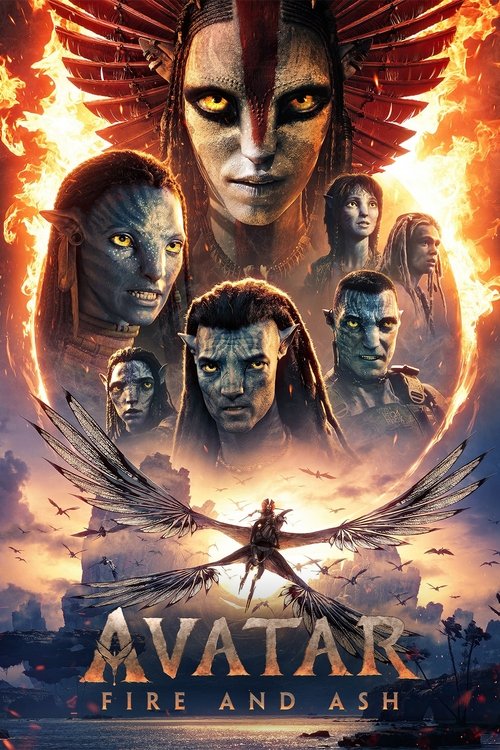
"The world of Pandora will change forever."
Director: James Cameron
Cast: Sam Worthington, Zoe Saldaña, Sigourney Weaver, Stephen Lang, Oona Chaplin
Avatar: Fire and Ash — Ending Explained
⚠️ Spoiler Analysis
Alternative Interpretations
A major point of analytical divergence among critics and fans is Kiri's climatic act of altering Spider's biology. On the surface, it is viewed as a miraculous, benevolent act of salvation by Eywa. However, an alternative interpretation suggests a more sinister or utilitarian reading of Eywa's motives. Some theorists argue that Eywa is acting as a self-preserving planetary immune system; by allowing humans to breathe the air, Eywa might be attempting to assimilate the Sky People into Pandora's natural equilibrium rather than fighting them, potentially pacifying the human threat through biological assimilation. Another interpretation focuses on Varang's rejection of Eywa, positing that the Ash People are not inherently evil villains, but rational survivors of natural disasters that the "benevolent" Eywa ignored, framing the film as a critique of blind religious devotion.
Explore More About This Movie
Dive deeper into specific aspects of the movie with our detailed analysis pages