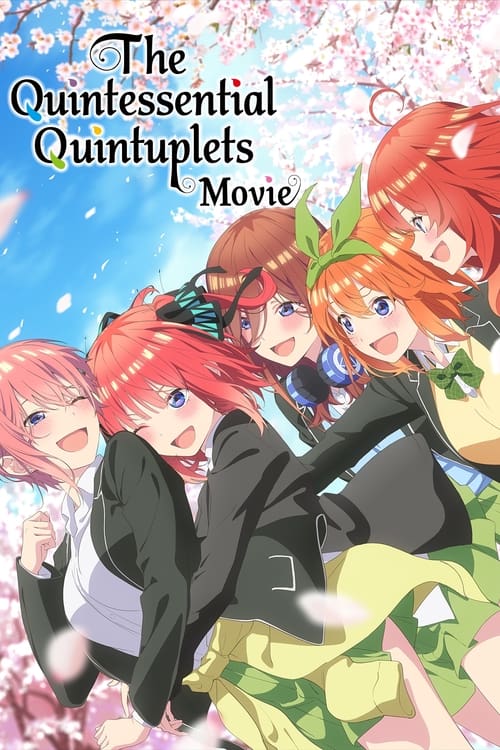
The Quintessential Quintuplets Movie
映画 五等分の花嫁
Overview
Serving as the grand finale to the popular anime series, The Quintessential Quintuplets Movie picks up as Futaro Uesugi and the five Nakano sisters—Ichika, Nino, Miku, Yotsuba, and Itsuki—prepare for their last high school cultural festival. The event becomes the backdrop for the resolution of the long-standing romantic tension that has defined their relationships. Futaro, having successfully tutored the quintuplets and helped them grow as students and individuals, decides he must finally choose which of the sisters he has fallen in love with.
The film cleverly structures its narrative by dedicating segments to each of the five sisters, showcasing their individual perspectives and final moments with Futaro during the festival. This approach allows for a deep dive into each character's emotional journey, resolving personal conflicts and tying up loose ends from the series. As Futaro spends time with each quintuplet, he reflects on their shared past and his feelings, leading up to the emotional climax where he makes his long-awaited confession, forever changing the dynamic of their unique family.

Core Meaning
The core meaning of The Quintessential Quintuplets Movie transcends the typical harem genre's focus on "who wins." At its heart, the film is a celebration of individual growth, the enduring strength of sibling bonds, and the difficult but necessary act of making life-altering choices. It posits that the journey of self-discovery and mutual support is more significant than the romantic outcome. Each sister's development into an independent person with her own dreams is the true victory. The film conveys that love is not just about a single choice, but also about respecting the feelings of others, finding personal happiness, and maintaining cherished relationships even when paths diverge.
Thematic DNA
Individual Growth and Self-Realization
A central theme is the quintuplets' journey from being a collective unit to becoming distinct individuals. The movie culminates in each sister finding her own dream and path, whether it's Ichika's acting career, Miku's passion for cooking, or Itsuki's ambition to become a teacher. Their relationship with Futaro acts as a catalyst, but their growth is ultimately their own, marking their maturation into adulthood.
The Complexity of Sisterhood
The film deeply explores the bond between the five sisters. Their relationship is a complex mix of love, rivalry, and profound support. Even as they compete for Futaro's affection, their ultimate priority is each other's happiness. The movie emphasizes that their connection as a family is the foundation that allows them to navigate romantic conflict and personal challenges, ultimately remaining united despite the outcome.
Love and Choice
The entire narrative builds towards Futaro's final choice. The film treats this decision not as a simple romantic resolution but as a weighty, difficult process. It explores the idea that love isn't always logical and that making a choice inevitably means not choosing others, causing a bittersweet emotional fallout. The focus is less on the "why" of the final pairing and more on the emotional maturity required to make and accept such a definitive decision.
Moving on from the Past
Several characters must confront their pasts to move forward. Itsuki deals with the legacy of her mother and the appearance of her biological father, while Yotsuba grapples with past actions and feelings of inadequacy. The film illustrates that acknowledging and reconciling with the past is a crucial step toward embracing the future and finding personal happiness.
Character Analysis
Futaro Uesugi
Yoshitsugu Matsuoka
Motivation
His primary motivation evolves from wanting to get paid for tutoring to a genuine desire to see the sisters succeed and find their own paths. In the film, his motivation is to find emotional clarity and give a sincere answer to the girls' feelings for him.
Character Arc
Futaro transforms from a cynical, socially awkward student focused solely on academics and money into someone who genuinely cares for the quintuplets' well-being and happiness. The movie shows the culmination of his journey as he finally confronts his own emotions, acknowledging he has fallen in love and making the difficult choice to act on his feelings, accepting the responsibilities that come with it.
Ichika Nakano
Kana Hanazawa
Motivation
Her motivation is to succeed in her acting career while also mending any rifts her past actions may have caused with her sisters, ensuring their bond remains strong regardless of Futaro's choice.
Character Arc
Ichika's arc in the movie is one of maturation and reconciliation. Having previously acted selfishly in her pursuit of Futaro, she now takes on a more supportive, elder-sister role. She focuses on her dream of becoming an actress, demonstrating that she has grown beyond the romantic rivalry and found her own sense of purpose.
Nino Nakano
Ayana Taketatsu
Motivation
To be true to her own feelings while fiercely protecting her family. She wants Futaro to acknowledge her love but also prioritizes her sisters' happiness and their future together, as seen when she opens a cafe with Miku.
Character Arc
Nino, having evolved from hostile to fiercely passionate and honest about her feelings, reaches a point of acceptance. Her arc in the film is about understanding that her love might not be reciprocated, but her feelings were genuine and important for her own growth. She remains bold and supportive of her sisters, showcasing her emotional strength.
Miku Nakano
Miku Ito
Motivation
To gain self-confidence and pursue her dream of becoming a chef. She wants to be seen and valued for who she is, particularly by Futaro, but learns to value herself first.
Character Arc
Miku's journey is one of blossoming confidence. Initially timid and insecure, the movie shows her fully embracing her passion for cooking and making decisive steps toward her future. She learns that self-worth isn't dependent on being chosen, but on pursuing her own dreams. Her confession to Futaro is a final, brave step in her development, regardless of the outcome.
Yotsuba Nakano
Ayane Sakura
Motivation
Her primary motivation has always been to support her sisters and ensure they are happy, often hiding her own pain and desires. Her arc in the movie is about overcoming her self-sacrificing nature to finally accept love for herself.
Character Arc
Yotsuba's arc is the central emotional core of the film's climax. It's revealed that her selfless desire for her sisters' happiness has often come at the expense of her own feelings. Her journey is about learning to accept that she, too, deserves happiness and to be selfish for once. The film delves into her backstory with Futaro, justifying her deep-seated feelings and her reluctance to act on them.
Itsuki Nakano
Inori Minase
Motivation
To find her own path and live up to the memory of her mother. She seeks to understand her family's past and use that knowledge to build her own future as an educator.
Character Arc
Itsuki's arc focuses on her future and family legacy. She confronts her estranged biological father and solidifies her dream of becoming a teacher, not just to emulate her late mother, but because it's her own genuine passion. Her relationship with Futaro is explored more as one of deep friendship and mutual respect, providing a different kind of emotional closure.
Symbols & Motifs
The School Festival
The festival symbolizes the culmination of their high school life and the final stage for their shared journey. It represents a crossroads between their past as students under Futaro's tutelage and their future as independent adults. It's the arena where final confessions are made and futures are decided.
The entire first half of the movie is set during the cultural festival. Each sister's individual arc and final romantic appeal to Futaro takes place amidst the festival's various events and attractions, such as food stalls and school plays.
Five Separate Classrooms
At the moment of decision, the five sisters wait in five different classrooms. This symbolizes their individuality and their separate paths. Futaro walking into one specific classroom is the ultimate symbol of his choice, signifying he is choosing not just a quintuplet, but a specific, unique individual.
After the festival, the sisters tell Futaro to choose one of them by going to the classroom she is waiting in. This scene is the dramatic peak of the film, where Futaro makes his confession after navigating the school building to find his chosen one.
The Wedding Chapel / Bell of Vows
The flash-forwards to the wedding and references to the 'Bell of Vows' legend (kissing under it ensures marriage) symbolize destiny and the story's ultimate conclusion. It frames the entire narrative as a journey toward a single, fated romantic union, heightening the mystery of who the bride will be.
The movie, like the series, opens and is interspersed with scenes from the future wedding day, reminding the audience of the central mystery. The Bell of Vows from a previous season is a key plot point, as Futaro tries to remember who he kissed under it.
Philosophical Questions
Does fulfilling a childhood promise justify a lifelong commitment?
The film reveals that Futaro's choice, Yotsuba, is the girl he met years ago in Kyoto. This raises the question of whether their connection is based on their present relationship or the weight of a past promise. The narrative explores whether this shared past creates a unique, foundational bond that transcends the relationships he built with the other sisters, or if it's an idealized memory influencing a major life decision.
Is it possible to love multiple people at once, and how does one ethically navigate that?
Futaro explicitly develops deep, meaningful, and arguably romantic feelings for all five sisters. The film grapples with this through his internal conflict. It poses the question of whether these feelings are all valid forms of love and how a person can ethically resolve a situation where choosing one person will inevitably hurt others who are deeply cared for. The bittersweet resolution suggests that while the feelings may be real, a choice is necessary for anyone to move forward.
To what extent should personal happiness be sacrificed for the sake of others?
This question is central to Yotsuba's character arc. She consistently prioritizes her sisters' happiness to the point of completely suppressing her own desires. The film explores the emotional toll of such selflessness and argues that true happiness cannot be achieved without also valuing oneself. Her journey to accept Futaro's love is a journey toward understanding that her own happiness is not a betrayal of her love for her sisters, but a necessary part of her own growth.
Alternative Interpretations
While the film presents a definitive ending, some viewers and critics have offered alternative interpretations, particularly concerning Futaro's choice. One common interpretation among dissatisfied fans is that the choice of Yotsuba felt underdeveloped within the anime's narrative, suggesting the film had to retroactively justify the decision by heavily focusing on her backstory. This has led to the perspective that the story is less about a natural romantic progression and more about fulfilling a "first girl" trope, as Yotsuba was the quintuplet Futaro met as a child.
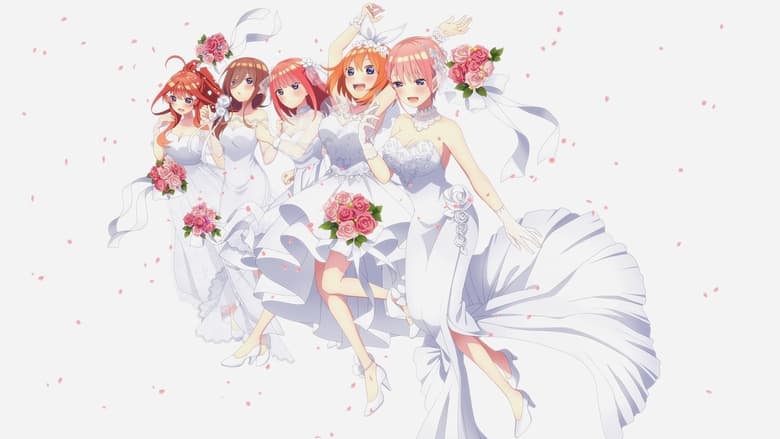
Another interpretation views the ending as a meta-commentary on the harem genre itself. The opening scene, which teases a "harem ending" with all five sisters in wedding dresses, could be seen as a playful nod to the genre's conventions before subverting them. Futaro's final line in the manga, "quintuplets are such a pain," is interpreted by some not as a complaint, but as a loving acceptance of the chaotic, wonderful family he has married into, suggesting that in a way, he has chosen all of them by choosing one.
Cultural Impact
The Quintessential Quintuplets Movie serves as a significant landmark in the modern harem rom-com genre. The original manga and subsequent anime were already praised for developing five distinct and compelling female leads, moving beyond simple tropes. The movie's definitive ending, where the protagonist makes a clear and final choice, is a departure from many harem series that opt for open-ended or ambiguous conclusions to avoid alienating fans of different characters.
The film's commercial success demonstrated the viability of theatrical releases as finales for popular TV anime series. It was one of the highest-grossing anime films of 2022 in Japan. The story's conclusion sparked widespread debate among the global fanbase, particularly regarding the bride's identity, which was a point of contention for some viewers who felt other characters were more developed. This intense fan discussion solidified the series' place in pop culture as a key example of the "waifu wars" phenomenon, where audiences passionately champion their favorite character. Ultimately, the film's impact lies in its commitment to providing a conclusive, character-driven ending that prioritizes emotional growth over pure fan service.
Audience Reception
Audience reception for The Quintessential Quintuplets Movie was generally positive, though notably divided by the film's conclusion. On review aggregator sites like Rotten Tomatoes, it holds a high approval rating. Many viewers praised the film as a beautiful and emotionally satisfying finale to the series. The animation quality by Bibury Animation Studios was frequently cited as a step up from the TV series, offering a more vivid and cinematic experience. The voice acting performances were also lauded as phenomenal.
The primary point of criticism and controversy was Futaro's final choice of a bride. A significant portion of the fanbase felt the decision was rushed or that the chosen sister, Yotsuba, had less romantic development throughout the series compared to others like Miku or Nino. This led to feelings of disappointment and arguments that the ending didn't feel earned. However, other fans defended the choice, pointing to subtle foreshadowing in the series and appreciating the film's effort to flesh out the winner's backstory and justify the decision. Despite the divided opinions on the outcome, most agreed that the film succeeded in giving each of the five sisters a proper spotlight and a sense of closure to their individual character arcs.
Interesting Facts
- The movie serves as the definitive finale to the anime series, adapting the final arcs of the manga.
- It was a major box office success in Japan, grossing over ¥390 million (approx. $2.97 million USD) in its opening weekend.
- The film's total worldwide gross was over $18.4 million.
- Bibury Animation Studios, which animated the second season of the anime, returned to produce the film.
- The voice actresses for the five quintuplets performed the film's theme music, "The Tracks of the Quintuplets" and the ending theme "The Quintessential Quintuplets: Thank You Flowers".
- In Japan, moviegoers in the first week received a special bonus, manga "Volume 14.5," which contained a new chapter.
- The film has a runtime of 136 minutes, making it significantly longer than a standard anime movie and allowing it to cover the perspectives of all five sisters.
⚠️ Spoiler Analysis
Click to reveal detailed analysis with spoilers
Frequently Asked Questions
Explore More About This Movie
Dive deeper into specific aspects of the movie with our detailed analysis pages
Comments (0)
No comments yet. Be the first to share your thoughts!