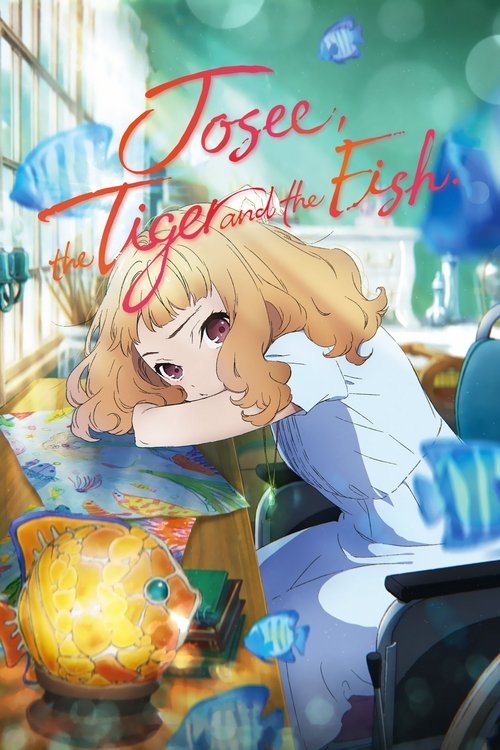
Josee, the Tiger and the Fish
A heartfelt animated romance where the currents of dreams and disabilities converge, painting a story of love that learns to swim against the tide.
Josee, the Tiger and the Fish

Josee, the Tiger and the Fish

ジョゼと虎と魚たち

"Together they can fly."

25 December 2020 Japan 98 min ⭐ 8.3 (540)
Director: Kotaro Tamura
Cast: Taishi Nakagawa, Kaya Kiyohara, Yume Miyamoto, Kazuyuki Okitsu, Lynn
Drama Animation Romance
Overcoming Fear and Self-Imposed Limitations The Pursuit of Dreams Love and Mutual Support Disability and Independence

Overview

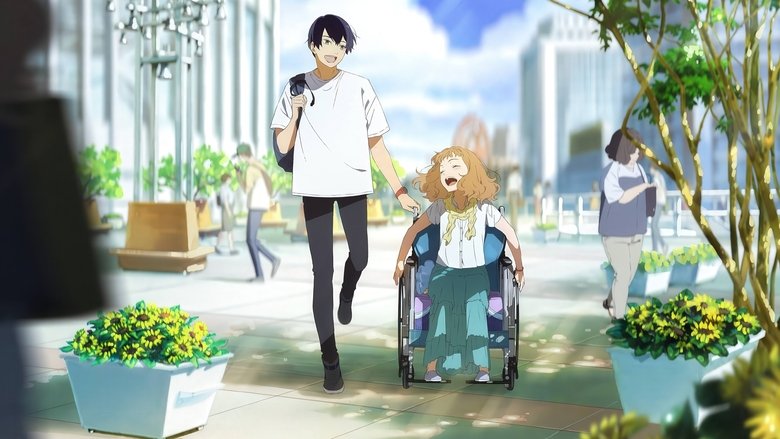
"Josee, the Tiger and the Fish" is a touching animated film that follows the lives of two young adults in Osaka. Tsuneo Suzukawa is a determined university student studying marine biology with a passionate dream of diving in the tropical waters of Mexico. To fund his dream, he takes on a part-time job as a caretaker for a young woman named Kumiko, who insists on being called "Josee."

Josee is a talented artist who is unable to walk and has spent most of her life confined to her home under the care of her protective grandmother. Initially, Josee is abrasive, demanding, and views the outside world as a place filled with fearsome "tigers." However, as Tsuneo patiently opens up the world to her, taking her to the sea and other places she's only dreamed of, a deep bond begins to form between them. They challenge and inspire each other, learning about love, independence, and the courage to pursue their aspirations despite the obstacles they face.

Core Meaning

The core message of "Josee, the Tiger and the Fish" is one of hope, resilience, and the courage to face one's fears to pursue a fulfilling life. Director Kotaro Tamura aimed to create an uplifting and positive story that contrasts with darker narratives about disability. The film posits that while everyone carries their own invisible burdens or "tigers," it is possible to overcome them and step into a wider world of possibilities. It's a story about how human connection can provide the strength to chase dreams, whether it's diving in faraway oceans or sharing one's art with the world. The film emphasizes that dreams can evolve and that true strength lies in supporting one another through life's unpredictable challenges, ultimately finding a future filled with love and shared aspirations.

Thematic DNA

Overcoming Fear and Self-Imposed Limitations 35%
The Pursuit of Dreams 30%
Love and Mutual Support 25%
Disability and Independence 10%

Overcoming Fear and Self-Imposed Limitations

Josee initially perceives the outside world as a dangerous place filled with "tigers," a metaphor for her fears and anxieties. Her physical disability has led to a psychological confinement, reinforced by her grandmother. Tsuneo's arrival acts as a catalyst, encouraging her to venture out and confront these fears. The film beautifully illustrates her journey from isolation to independence, as she learns that the world, while scary, is also full of beauty and opportunity. This theme is mirrored in Tsuneo's arc when he faces his own devastating setback.

The Pursuit of Dreams

Both protagonists are defined by their dreams. Tsuneo is singularly focused on studying abroad in Mexico to become a marine biologist. Josee harbors a hidden passion for art, dreaming of becoming an illustrator. The narrative explores the sacrifices made in pursuit of these dreams and the crushing weight of having them threatened. Ultimately, the film suggests that dreams are not static; they can be rediscovered and reshaped, and the support of a loved one can be the key to reigniting that passion.

Love and Mutual Support

The central romance between Josee and Tsuneo is built on a foundation of mutual support and understanding. Tsuneo helps Josee experience the world, while Josee provides Tsuneo with emotional strength and a new perspective on life, especially after his accident. Their relationship evolves from a caretaker-charge dynamic to a partnership where they empower each other. The film argues that love is not about pity but about seeing and encouraging the best in each other, providing the "wings of the heart" needed to overcome adversity.

Disability and Independence

The film offers a sensitive portrayal of living with a disability. It explores not just the physical limitations but also the societal attitudes and psychological barriers Josee faces. A significant part of Josee's character arc is her journey toward greater independence and agency, moving beyond being solely defined by her wheelchair. The director made a conscious choice to portray her disability as a part of her from birth, focusing on her internal growth rather than an external change.

Character Analysis

Josee (Kumiko Yamamura)

Kaya Kiyohara

Archetype: The Confined Maiden / The Tsundere
Key Trait: Imaginative and Fiercely Guarded

Motivation

Initially, her motivation is simply to navigate her confined existence. After meeting Tsuneo, her motivation shifts to experiencing the world she has only read about in books. Ultimately, her deepest motivation becomes achieving independence and sharing a future with Tsuneo, fueled by her love for him and her passion for art.

Character Arc

Josee begins as a reclusive, abrasive, and demanding young woman who uses her sharp tongue to keep others at a distance. Through her relationship with Tsuneo, she gradually opens herself up to the world, confronting her fears and embracing new experiences. She evolves from being dependent and fearful to a courageous and independent woman who pursues her dream of becoming an illustrator and provides crucial emotional support to Tsuneo when he needs it most.

Tsuneo Suzukawa

Taishi Nakagawa

Archetype: The Hero / The Steadfast Companion
Key Trait: Patient and Passionate

Motivation

His primary motivation is to save enough money to study marine biology in Mexico. This drive is later complemented and ultimately reshaped by his growing love for Josee and his desire to build a life with her, realizing that his happiness is intertwined with hers.

Character Arc

Tsuneo starts as a goal-oriented and hardworking student, singularly focused on his dream of studying abroad. His world is practical and straightforward. Meeting Josee introduces complexity and deep emotional connection into his life, broadening his horizons beyond his personal ambitions. After a tragic accident shatters his own dreams, he experiences a period of despair but, with Josee's help, finds a new path forward, learning that his future can be redefined by love and shared dreams.

Mai Ninomiya

Yume Miyamoto

Archetype: The Romantic Rival
Key Trait: Pragmatic and Caring

Motivation

Her main motivation is her affection for Tsuneo and the hope of winning his love. This evolves into a more selfless desire to see him happy, even if it's with someone else.

Character Arc

Mai is Tsuneo's co-worker at the diving shop and is secretly in love with him. She initially views Josee as a rival for Tsuneo's affection. However, her character shows surprising maturity. In a pivotal moment, she confronts Josee not out of malice, but to push her to support Tsuneo when he is at his lowest point, effectively admitting that Josee is the one who can truly help him. Her arc is one of accepting unrequited love and acting with grace.

Symbols & Motifs

The Tiger

Meaning:

The "tiger" symbolizes the fears and dangers of the outside world that Josee has been taught to believe in. It represents all the potential threats—both real and imagined—that keep her isolated in her home. Facing the tiger is a metaphor for confronting her anxieties and stepping out into the world with courage.

Context:

Josee's grandmother often speaks of the "scary beasts" in the world, solidifying this fear. A pivotal moment is when Josee finally goes to the zoo to see a real tiger, an act that signifies her growing bravery. Director Kotaro Tamura hopes the film inspires audiences to face their own personal "tigers."

The Fish / The Sea

Meaning:

The sea and the fish within it symbolize freedom, dreams, and a world of boundless possibility. For Tsuneo, it is his life's passion and career goal. For Josee, who cannot use her legs, the idea of fish and mermaids represents an ideal form of movement and liberation from her physical constraints. It is a world where she can be free and uninhibited.

Context:

This symbol is central to the connection between Tsuneo and Josee. Their first major bonding experience is a trip to the sea. Josee's artwork frequently features aquatic themes, and she creates a picture book about a mermaid, which is an allegory for her relationship with Tsuneo and her own journey.

Josee's Drawings and Picture Book

Meaning:

Josee's art is the primary expression of her inner world, imagination, and dreams. It is the vehicle through which she processes her emotions and envisions a life beyond her physical reality. Her picture book, "The Mermaid and the Radiant Wings," becomes a powerful symbol of her love for Tsuneo and her own personal growth.

Context:

Throughout the film, we see glimpses of Josee's artistic talent. The climax of her artistic journey is when she reads her completed picture book to a group of children, with Tsuneo in attendance. The story within the book mirrors their own, symbolizing her acceptance of herself and her hope for their shared future.

Memorable Quotes

The world is full of scary beasts.

— Chizu (Josee's Grandmother)

Context:

Josee's grandmother says this to Tsuneo early in the film to explain why they only take walks late at night. It establishes the central conflict of Josee's fear of the world beyond her home.

Meaning:

This line encapsulates the fear and overprotectiveness that has defined Josee's upbringing. It represents the worldview that Josee must overcome—the idea that the outside world is too dangerous for her to navigate, which has kept her isolated.

It really is salty!

— Josee

Context:

Upon being taken to the sea for the first time by Tsuneo, Josee insists on tasting the water. After Tsuneo helps her to the shore, she crawls to the water's edge to experience it herself, a powerful scene highlighting her determination.

Meaning:

This simple, joyous exclamation signifies Josee's first true taste of freedom and the real world. It's a moment of pure, unadulterated discovery that marks the beginning of her transformation and her deepening bond with Tsuneo.

I can do it, because you gave me wings of the heart.

— Tsuneo

Context:

This line is spoken towards the end of the film, likely after Tsuneo has recovered from his injury and is reaffirming his commitment to Josee. It beautifully ties into the theme of Josee's allegorical picture book.

Meaning:

This quote is the culmination of their journey of mutual support. It's Tsuneo's acknowledgment that Josee's love and belief in him are what give him the strength to overcome his own physical and emotional trauma, just as he helped her overcome hers. The "wings" are a direct reference to the picture book Josee wrote for him.

Philosophical Questions

What defines a 'disability,' and are physical limitations the only true barriers we face?

The film explores this question by contrasting Josee's physical inability to walk with the emotional and psychological barriers faced by both characters. Josee's initial confinement is as much a product of her fear (the "tigers") as it is her physical condition. Later, after his accident, Tsuneo faces a psychological disability—despair and the loss of his dream—that is just as debilitating. The film suggests that the most significant disabilities can be the internal ones, like fear and hopelessness, and that they can be overcome with courage and human connection.

How do dreams shape our identity, and what happens when those dreams are shattered?

Both Josee and Tsuneo are initially defined by their aspirations. Tsuneo's identity is tied to becoming a marine biologist, and Josee's is linked to her secret world of art. When Tsuneo's accident threatens to permanently derail his dream, he loses his sense of self and falls into depression. The film delves into the difficult process of rebuilding one's identity when a lifelong goal is taken away. It proposes that while dreams are vital, our identity is also shaped by our relationships and our resilience, and that new, shared dreams can emerge from the wreckage of old ones.

Alternative Interpretations

While the film's ending is explicitly happy, with Tsuneo returning from Mexico to be with Josee, it's a significant departure from other adaptations of the source material. The 2003 live-action film, for instance, has a more bittersweet and ambiguous ending where the couple breaks up. This has led some viewers familiar with the original short story or the 2003 film to interpret the 2020 version as a more idealized, crowd-pleasing take on the narrative.

Another point of discussion is the nature of Tsuneo's devotion. While the film portrays it as pure love, a more cynical reading could question whether his initial commitment is influenced by a sense of pity or responsibility, a common trope in stories about disability. However, the film actively works to subvert this by having the characters' roles reverse after Tsuneo's accident, forcing him to rely on Josee's strength. This narrative choice reinforces the interpretation that their bond is one of genuine mutual support and respect, not pity.

Cultural Impact

"Josee, the Tiger and the Fish" was praised by critics and audiences for its empathetic and nuanced portrayal of disability, a topic rarely explored in mainstream anime. While other films might use disability as a plot device to be magically cured, this film grounds itself in realism, focusing on the protagonist's internal growth and journey toward independence. Director Kotaro Tamura expressed a hope that the film would help build a foundation for more stories dealing with characters in wheelchairs to be told in animation.

The film's creation stemmed from a trend at the production company Kadokawa to adapt classic Japanese literary works for modern audiences. By adapting Seiko Tanabe's 1984 short story, the film introduced a classic piece of Japanese literature to a new, global generation. It received critical acclaim at international film festivals, including being the closing film at the 25th Busan International Film Festival, and was nominated for Animation of the Year at the Japan Academy Film Prize. Its heartfelt story and beautiful animation by Studio Bones resonated with anime fans worldwide, solidifying its place as a significant romantic drama in recent anime cinema.

Audience Reception

"Josee, the Tiger and the Fish" was met with highly positive reception from audiences and critics. Viewers widely praised the film for its beautiful and expressive animation by Studio Bones, its heartfelt and emotional storytelling, and its charming central romance. Many found the relationship between Josee and Tsuneo to be well-developed and touching, leaving them feeling happy and satisfied by the film's hopeful conclusion.

The main points of criticism, though minor for most, centered on the feeling that the plot follows a somewhat familiar formula for romantic anime dramas, using recognizable character archetypes. Some critics felt the second half of the film veered into melodrama, particularly the subplot involving Tsuneo's accident, which felt overly convenient for creating tension. Despite these critiques, the overall verdict from audiences was overwhelmingly favorable, with many hailing it as a beautiful, charming, and emotionally resonant film.

Interesting Facts

  • The film is based on a 1984 short story of the same name by acclaimed author Seiko Tanabe.
  • This 2020 anime is not the first adaptation; there was a well-regarded live-action Japanese film in 2003 and a South Korean remake also released in 2020.
  • Director Kotaro Tamura intentionally chose to give this adaptation a more hopeful and happy ending compared to previous versions.
  • The film's setting in Osaka is a tribute to author Seiko Tanabe, as most of her work is set there and written in the Osaka dialect.
  • Animating the wheelchair was one of the most technically challenging aspects of production, requiring a mix of hand-drawn animation and 3D CG to realistically portray its movement and interaction with the character.
  • The animation was produced by Studio Bones, a studio more widely known for action-packed shonen series like "My Hero Academia" and "Fullmetal Alchemist Brotherhood."
  • The film's release was delayed from summer to December 25, 2020, due to the COVID-19 pandemic.
  • Director Kotaro Tamura worked as an assistant director on Mamoru Hosoda's acclaimed 2012 film "Wolf Children."

⚠️ Spoiler Analysis

Click to reveal detailed analysis with spoilers

Frequently Asked Questions

Explore More About This Movie

Dive deeper into specific aspects of the movie with our detailed analysis pages

Comments (0)

Leave a comment

No comments yet. Be the first to share your thoughts!