Skip to content
Bakugan Battle Brawlers
A kinetic sci-fi adventure pulsing with defiant optimism, where miniature mechanical spheres erupt into towering cosmic titans against the neon-lit fractures of colliding dimensions.
Bakugan Battle Brawlers

Bakugan Battle Brawlers

爆丸バトルブローラーズ

05 April 2007 — 26 January 2012 Canada 4 season 189 episode Ended 8.3 (393)

Cast: Ayumi Tsunematsu, Yu Kobayashi, Keiji Fujiwara, Ryo Hirohashi, Chihiro Suzuki

Animation Sci-Fi & Fantasy Action & Adventure Kids Coexistence & Interspecies Symbiosis The Illusion of Control vs. Unilateral Power Redemption, Identity, and Dual Realities Maturation, Responsibility, and Stewardship

Overview

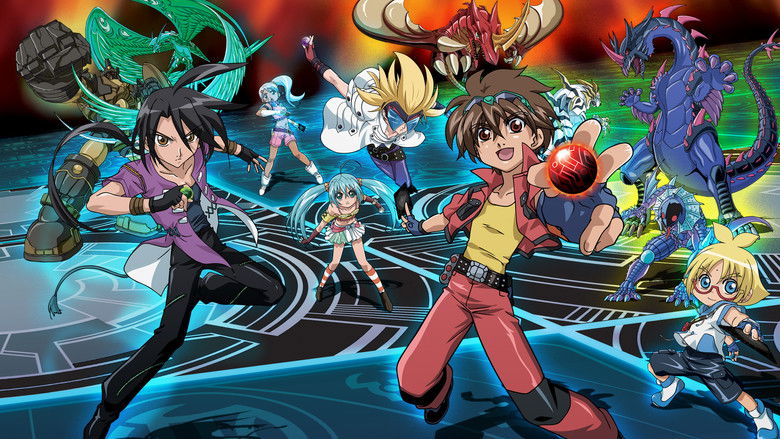
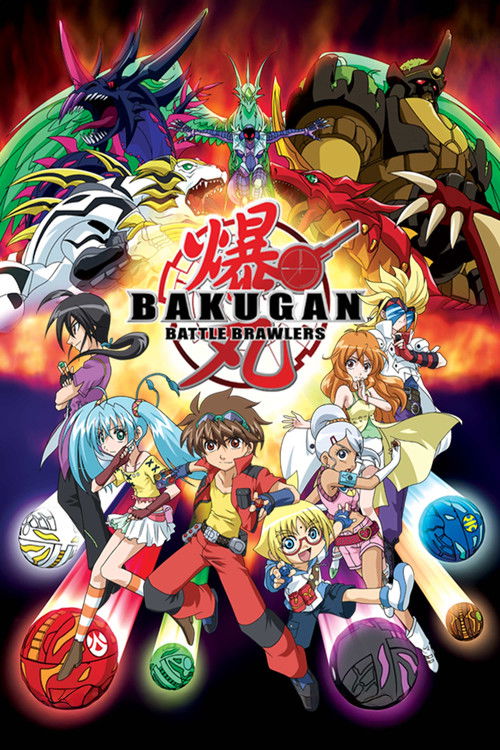
Bakugan Battle Brawlers is a grand science-fantasy epic charting the journey of Dan Kuso and his global alliance of young strategists—the Battle Brawlers—after magical cards and spherical alien entities rain down across Earth. What initially begins as an exhilarating tabletop game turns into an interdimensional struggle when the Brawlers discover that their Bakugan partners are sentient beings hailing from the alternate dimension of Vestroia. Across four distinct eras (Battle Brawlers, New Vestroia, Gundalian Invaders, and Mechtanium Surge), the narrative expands from a local mystery into a massive multi-world conflict.

As the saga unfolds, the scope scales dramatically: from liberating Vestroia from structural collapse to sparking an underground revolution against conquering alien empires, and mediating an interstellar war between Neathia and Gundalia. The final arc confronts the existential consequences of escalating battle power and psychological corruption within digital and physical spaces. Across all 189 episodes, the series chronicles the evolution of adolescent brawlers into seasoned cosmic guardians whose unbreakable partnerships with their Bakugan repeatedly redefine the balance of universal power.
Core Meaning

The central thesis of Bakugan Battle Brawlers is that true strength originates not from unilateral domination or artificial enhancement, but from mutual empathy, coexistence, and an egalitarian bond between distinct species. The overarching message warns against treating living beings as tools or instruments of war, positing that balance—both elemental and philosophical—can only be preserved through trust, redemption, and personal accountability across cultural and galactic divides.

Thematic DNA

Coexistence & Interspecies Symbiosis 30%
The Illusion of Control vs. Unilateral Power 25%
Redemption, Identity, and Dual Realities 25%
Maturation, Responsibility, and Stewardship 20%

Coexistence & Interspecies Symbiosis

Starting with Dan viewing Drago as a gameplay piece before recognizing his sentience, the theme expands as the Brawlers fight to liberate enslaved Bakugan in New Vestroia and bridge the historical hatred between Gundalians and Neathians in Gundalian Invaders.

The Illusion of Control vs. Unilateral Power

Explored through villains who seek pure dominion (Naga, King Zenoheld, Emperor Barodius, Mag Mel), contrasted with Dan and Drago whose organic evolutions succeed because power is shared rather than subjugated.

Redemption, Identity, and Dual Realities

Epitomized by Alice/Masquerade, Spectra Phantom/Keith Clay, and Ren Krawler. Antagonists are rarely purely evil; they are driven by systemic conditioning, trauma, or fractured identity, proving redemption is an active, earned process.

Maturation, Responsibility, and Stewardship

Tracks the journey from impulsive pre-teens seeking leaderboards to responsible young adults managing planetary diplomacy, digital infrastructure (Bakugan Interspace), and universal equilibrium.

Character Analysis

Dan Kuso

Yu Kobayashi (JP) / Scott McCord (EN)

Archetype: The Fiery Hero / The Pioneer Key Trait: Relentless determination backed by fierce loyalty.

Motivation

Initially seeks competitive glory; evolves into protecting the rights, freedom, and universal harmony of all Bakugan.

Character Arc

Begins as a brash, arrogant kid obsessed with being the #1 brawler. Across four seasons, he matures through severe defeats and ethical trials, evolving into a steadfast diplomat-warrior who values his partner Drago above status and victory.

Pyrus Dragonoid / "Drago"

Keiji Fujiwara (JP) / Jason Deline (EN)

Archetype: The Noble Guardian / The Chosen One Key Trait: Regal honor and self-sacrificing courage.

Motivation

Restoring balance to his homeland; later, maintaining intergalactic peace and guiding the next generation of Bakugan.

Character Arc

Starts as a skeptical, prideful dragon warrior from Vestroia. Through his symbiotic partnership with Dan, he repeatedly evolves, absorbing cosmic cores, legendary warrior energies, and the Sacred Orb to become the ultimate guardian of Vestroia and the universe.

All 5 characters and cast

Symbols & Motifs

The Spherical Bakugan (BakuCore/BakuBall)

Meaning:

Symbolizes latent potential and hidden truth; a small, unassuming marble contains an immense, living titan waiting to be awakened by emotional and tactical resonance.

Context:

Utilized continuously across all brawls as the physical transformation vehicle bridging tabletop play with colossal real-world battles.

The Infinity and Silent Cores

Meaning:

The dual heart of Vestroia symbolizing cosmic balance (positive and negative energy).

Context:

Naga's destabilization of these cores represents the catastrophe of disrupting universal equilibrium through greed.

Masquerade’s Mask

Meaning:

A psychological and physical motif representing dissociation, repressed trauma, and the deceptive appeal of authoritarian control.

Context:

Worn by Alice's alter ego; shattering the mask signifies self-actualization and embracing vulnerability.

The Six Attribute Elements (Pyrus, Aquos, Subterra, Haos, Darkus, Ventus)

Meaning:

Beyond game mechanics, the attributes represent philosophical harmony, showing that no single philosophy or power can survive in isolation without its complementary counterparts.

Context:

Represented in elemental attributes, battle cards, and the Six Legendary Soldiers of Vestroia.

Bakugan Interspace

Meaning:

A digital battle arena symbolizing humanity's technological ambition, which becomes a double-edged sword when detachment from real-world consequences leads to hubris and vulnerability to corruption.

Context:

Developed by Marucho as a safe, global virtual platform, which is later infiltrated and compromised by outside forces.

Memorable Quotes

Bakugan Brawl! Bakugan Stand!
— Dan Kuso (and various Brawlers)

Context

Recurring throughout all seasons; first uttered in Season 1, Episode 1 (Bakugan: The Battle Begins).

Meaning

The definitive catchphrase that bridges tactical play with the manifestation of sentient cosmic entities.

I am Pyrus Dragonoid, but you can call me Drago.
— Drago

Context

Spoken during Season 1, Episode 2 (Masquerade Ball).

Meaning

Establishes Drago’s individuality and agency, forcing Dan to realize Bakugan are living beings rather than collectible toys.

All 5 quotes

Episode Highlights

Behind the Mask of Masquerade

S1E38

Dan battles Masquerade in an ultimate showdown; Masquerade’s defeat shatters his mask, revealing his identity as Alice Gehabich.

Significance:

One of the most famous plot twists in children's anime history, fundamentally altering team dynamics.

The Next Journey

S1E52

The final confrontation against Naga concludes as Drago merges with the Silent and Infinity Cores to become the Perfect Core of Vestroia.

Significance:

Requires an emotional farewell between Dan and Drago, successfully concluding the foundational season's arc.

Invasion of the Vestals

S2E1

Soft-reboots the setting with New Vestroia under occupation, introducing the Vestal Resistance, mechanical Gauntlet brawling mechanics, and a darker thematic tone.

Significance:

Establishes the new high-stakes conflict and shifts the narrative into a struggle against imperialist occupation.

Final Countdown

S2E26

The Battle Brawlers destroy the Dimension Controllers, liberating New Vestroia's Bakugan and forcing Prince Hydron and the Vexos into retreat.

Significance:

Culminates the first major narrative arc of Season 2.

Showdown on Wonder Revolution

S2E48

The climactic, definitive battle between Dan/Drago and Spectra/Helios.

Significance:

Concludes Spectra’s ideological arc and permanently turns him into a vital ally.

Destiny Untold

S3E39

The epic confrontation between Dan/Titanium Dragonoid and Emperor Barodius/Phantom Dharak for the Sacred Orb.

Significance:

Establishes Drago and Dharak as descendants of the original progenitor Bakugan and decides the fate of the intergalactic war.

Unfinished Business

S4E26

Dan and Drago defeat Mag Mel and Razenoid, purifying the dark energy link connecting them.

Significance:

Concludes the Gundalian war fallout arc and severs the psychological connection between Dan and Mag Mel.

The End of the Line

S4E46

The series finale showcasing the defeat of the Mechtavius Destroyer and the dawn of universal interspecies peace.

Significance:

Ends the 189-episode saga with Dan and Drago quietly setting off in a wooden rowboat on a new personal journey.

Philosophical Questions

Does the nature of power inherently corrupt its wielder?

Addressed through Naga, Emperor Barodius, and even Dan's temporary struggle with Drago's uncontrollable power in Season 4. The narrative illustrates that pursuing power for control destroys the self, whereas power guided by mutual trust creates stability.

Is identity determined by origin or by choice?

Explored through Alice/Masquerade, Keith/Spectra, and Ren Krawler. Characters born into corrupted lineages or assigned destructive roles actively choose moral redemption over genetic or structural destiny.

Alternative Interpretations

New Vestroia and Gundalian Invaders serve as allegories for technological imperialism and indigenous subjugation. The Vestals and Gundalians exploit native Bakugan populations as raw military assets, framing the Brawlers as anti-colonial partisans fighting for liberation and self-determination.

Full ending explanation

Cultural Impact

Premiering in 2007 during the peak of 'mon' (monster collection/battling) media franchises (Pokémon, Yu-Gi-Oh!, Beyblade), Bakugan distinguished itself through tactile physical toy integration and hybrid marble-action gameplay. It pioneered the modern magnetic mechanical toy sector, paving the way for later interactive transforming physical-to-media franchises.

The original series ran for 189 episodes and generated two major subsequent reboot continuities (Bakugan: Battle Planet in 2018 and the 2023 Generation 3 reboot), cementing the franchise as one of Spin Master's most lucrative entertainment properties.

Audience Reception

Critical and audience reception varied across the series' multi-season run:

  • Season 1 (Battle Brawlers): Highly acclaimed for tactical depth, tight mystery plotting, strong foundational worldbuilding, and the Masquerade identity twist.
  • Season 2 (New Vestroia): Widely considered by the fandom as the pinnacle of the franchise due to darker stakes, compelling villains (Spectra, Keith, the Vexos), and intense mechanical-biological battles.
  • Season 3 (Gundalian Invaders): Received positively for political intrigue and the space-war dynamic, though critiqued for sidelining original cast members like Runo, Julie, and Alice in favor of new characters.
  • Season 4 (Mechtanium Surge): Polarized reception. While praised for high stakes and nostalgic callbacks, it faced criticism for power-scaling bloat (Mechtogan, BakuNano) and frequent partner Bakugan changes for Shun and Marucho.

Overall, the series is regarded as a quintessential late-2000s action anime that successfully combined tabletop strategy with grand space-opera storytelling.

Interesting Facts

  • The series was a joint venture between TMS Entertainment, Dentsu, Japan Vistec, and Canada’s Nelvana, directed by Mitsuo Hashimoto.
  • While the series received moderate ratings in Japan, it became an overwhelming smash hit in North America, Europe, and Australia, leading subsequent seasons to premiere in Canada and the US months before Japan.
  • Season 4 (Mechtanium Surge) was never broadcast on Japanese terrestrial television.
  • Spin Master and Sega Toys' physical Bakugan toys won the prestigious Toy of the Year (TOTY) and Property of the Year awards in 2009, driving multi-billion-dollar global franchise revenue.
  • The physical toys utilized internal magnetic latch mechanisms that instantly unfolded spring-loaded limbs upon contact with metallic Gate Cards—a breakthrough micro-engineering feat designed by Sega Toys and Spin Master.
  • Mechtanium Surge was produced in two distinct 23-episode halves with entirely different villains (Mag Mel/Razenoid in Arc 1; Wiseman/Nonets/Mechtavius Destroyer in Arc 2) to maintain pacing across weekly international broadcasts.

Easter Eggs

Mythological & Astrological Naming

The Six Legendary Soldiers of Vestroia (Apollonir, Lars Lion, Clayf, Exedra, Frosch, Oberus) directly reference Greco-Roman myth (Apollo), astronomical nomenclature, and classic elemental deities.

Gundam & Mecha Homages

Season 2 mechanical Bakugan (Cyber Bakugan like Hades and Altair) feature direct visual and sound effects homaging classic mecha anime like Mobile Suit Gundam and Neon Genesis Evangelion.

Spectra Phantom / Char Aznable Archetype

Spectra's blonde hair, red attire, hidden royal lineage (Keith Clay), and mysterious mask serve as a deliberate tribute to Char Aznable from Mobile Suit Gundam.

Naga and Wavern's Yin-Yang Binary

The twin white Bakugan born without an attribute embody Taoist dualism—Wavern absorbs the Infinity Core (light/order) while Naga absorbs the Silent Core (darkness/chaos).

Frequently Asked Questions

Explore More About This Movie

Dive deeper into specific aspects of the movie with our detailed analysis pages

Comments (0)

Leave a comment

No comments yet. Be the first to share your thoughts!

Similar Movies