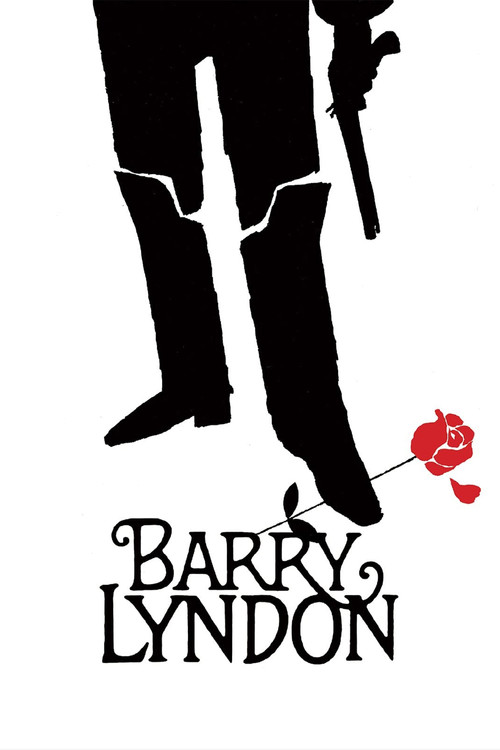
Barry Lyndon
A visually sumptuous and melancholic cinematic painting, chronicling the rise and fall of an 18th-century Irish rogue whose fleeting triumphs are but a flicker against the canvas of an indifferent, fated world.
Barry Lyndon

Barry Lyndon

"At long last Redmond Barry became a gentleman -- and that was his tragedy."

18 December 1975 United Kingdom 185 min ⭐ 8.0 (3,008)
Director: Stanley Kubrick
Cast: Ryan O'Neal, Marisa Berenson, Patrick Magee, Hardy Krüger, Steven Berkoff
Drama War History Romance
Social Mobility and Ambition Fate and Destiny The Father-Son Relationship Illusion vs. Reality
Budget: $11,000,000
Box Office: $31,500,000

Overview

Stanley Kubrick's 1975 masterpiece, Barry Lyndon, is a sprawling and visually breathtaking period drama based on William Makepeace Thackeray's 1844 novel. The film is meticulously crafted to resemble 18th-century paintings, telling the story of Redmond Barry (Ryan O'Neal), a young, ambitious, and somewhat naive Irishman. After a fateful duel forces him to flee his home, Barry embarks on a picaresque journey across Europe.

His adventures see him serving in the British and Prussian armies during the Seven Years' War, working as a spy, and later reinventing himself as a professional gambler alongside the Chevalier de Balibari (Patrick Magee). Driven by a relentless desire for social advancement, Barry sets his sights on the wealthy and beautiful Countess of Lyndon (Marisa Berenson). Through charm and opportunism, he marries her after the death of her elderly husband, adopting her name and fortune.

The second half of the film chronicles Barry's life as a nobleman, a position he struggles to maintain. His profligacy, infidelity, and cruel treatment of his stepson, Lord Bullingdon (Leon Vitali), lead to his social isolation and eventual downfall. The film is narrated by an omniscient, detached narrator (Michael Hordern) who frequently foreshadows the tragic turns of fate that await the protagonist, creating a powerful sense of dramatic irony and fatalism.
Core Meaning

At its core, Barry Lyndon is a profound meditation on the vanity of human ambition and the transient nature of fortune within a deterministic universe. Stanley Kubrick uses the life of Redmond Barry as a canvas to explore the idea that an individual's struggle for status, wealth, and happiness is ultimately insignificant in the grand, indifferent sweep of history. The film suggests that while Barry makes choices that propel his rise and orchestrate his fall, his destiny is largely preordained, a concept underscored by the narrator's fatalistic commentary.

Kubrick's message is crystallized in the film's final epilogue: "It was in the reign of George III that the aforesaid personages lived and quarrelled; good or bad, handsome or ugly, rich or poor, they are all equal now." This serves as the ultimate statement on the futility of worldly concerns. Social hierarchies, personal triumphs, and bitter rivalries are all rendered meaningless by the great equalizer, death. The film is not merely a critique of a specific historical aristocracy but a broader philosophical statement on the human condition, questioning the meaning of a life spent in pursuit of ephemeral gains.

Thematic DNA

Social Mobility and Ambition 35%
Fate and Destiny 30%
The Father-Son Relationship 20%
Illusion vs. Reality 15%

Social Mobility and Ambition

Redmond Barry's entire life is a relentless quest to climb the social ladder of 18th-century European society. Starting as a low-born Irishman, he uses seduction, military service, espionage, and gambling to acquire the wealth and status of an aristocrat. The film meticulously details the manners, protocols, and extravagant expenses required to gain acceptance into high society. However, Barry's tragedy is that he can never truly escape his origins; he is always viewed as an "insolent Irish upstart" by those born into privilege, like his stepson Lord Bullingdon. His ambition, which fuels his rise, ultimately becomes the source of his ruin as his profligacy and arrogance lead to his downfall.

Fate and Destiny

A powerful sense of fatalism pervades the film, largely driven by the omniscient narrator who consistently informs the audience of future events, such as the death of Barry's son. This narrative technique removes suspense and emphasizes the idea that characters are powerless to escape their preordained paths. As critic Roger Ebert noted, Barry is "a man to whom things happen." Events often seem to be the result of chance or luck—both good and bad—reinforcing the theme that human agency is limited in the face of a larger, indifferent destiny. The film's epilogue reinforces this by stating that all the characters' struggles are ultimately equalized by death.

The Father-Son Relationship

The film opens with the death of Barry's father in a duel, establishing a lifelong void. Throughout his journey, Barry seeks out and attaches himself to a series of father figures, including Captain Grogan and the Chevalier de Balibari. This theme becomes central in the second half. Barry dotes on his own son, Bryan, spoiling him excessively, perhaps in an attempt to be the father he never had. In stark contrast, he is cruel and abusive towards his stepson, Lord Bullingdon, whom he sees as an obstacle. This dichotomy fuels the central conflict that leads to Barry's downfall, culminating in a tragic duel where he faces the son he rejected.

Illusion vs. Reality

Kubrick masterfully contrasts the beautiful, orderly facade of 18th-century aristocratic society with the moral decay and emotional emptiness beneath. The painterly compositions and elegant costumes depict a world of refined civilization, but the characters within it are driven by greed, lust, and cruelty. Duels are presented as absurd rituals of honor that mask fragile egos. Barry himself is a master of illusion, crafting a new identity to infiltrate the nobility. His entire life as 'Barry Lyndon' is a performance, one that ultimately collapses because he can never truly embody the role he has usurped.

Character Analysis

Redmond Barry / Barry Lyndon

Ryan O'Neal

Archetype: Antihero / Picaresque Hero
Key Trait: Opportunistic Ambition

Motivation

Barry is primarily motivated by a relentless desire for social advancement and the security of a noble title. Rejected early in life for his lack of wealth and status, he spends the rest of his days trying to overcome his humble origins and secure a permanent place among the aristocracy, a goal he pursues through any means necessary.

Character Arc

Redmond Barry begins as a romantic and ambitious young man from a modest Irish background. Forced to flee his home, his journey through war and deception hardens him into a cunning opportunist. His singular goal becomes the acquisition of wealth and status, which he achieves by marrying Lady Lyndon. However, once at the apex of society, he proves unable to handle his position. His arrogance, cruelty to his stepson, and extravagance lead to his isolation and ultimate downfall. He ends his life as he began: alone and penniless, a tragic figure undone by the very ambition that propelled him.

Lady Honoria Lyndon

Marisa Berenson

Archetype: The Tragic Heiress
Key Trait: Melancholic Grace

Motivation

Lady Lyndon is motivated by a desire for love and companionship. She falls for Barry's charm and seeks happiness outside of her suffocating aristocratic life. After marrying him, her motivation shifts to enduring her unhappy marriage, protecting her children, and preserving what little dignity she has left.

Character Arc

Initially, Lady Lyndon is a beautiful, wealthy, and somewhat melancholic figure, trapped in a loveless marriage to an ailing, older man. She is quickly enchanted by the dashing Redmond Barry and, after her husband's death, marries him for love. Her arc is one of tragic disillusionment. Barry's infidelity, emotional neglect, and squandering of her fortune transform her from a hopeful romantic into a withdrawn, depressed, and powerless victim of her husband's ambition. By the end, she is a broken woman, finding solace only in religion and the return of her son.

Lord Bullingdon

Leon Vitali

Archetype: The Avenger
Key Trait: Vindictive

Motivation

Lord Bullingdon is driven by a fierce, Oedipal devotion to his mother and the memory of his father. His primary motivation is to protect his mother, preserve his family's honor, and expel the "lowbred ruffian" who has usurped his father's position and brought misery to their lives.

Character Arc

As a boy, Lord Bullingdon resents Barry for usurping his late father's place and recognizes him as a manipulative social climber. He endures years of abuse and humiliation at Barry's hands. As a young man, his hatred solidifies into a cold, determined desire for revenge. He publicly denounces Barry, leading to a brutal beating that forces him into self-exile. He returns after the death of his half-brother, Bryan, to finally challenge Barry to a duel. He triumphs, reclaiming his family's name and fortune and exiling his stepfather, completing his arc from a victimized child to the instrument of Barry's downfall.

The Chevalier du Balibari

Patrick Magee

Archetype: The Mentor / The Rogue
Key Trait: Cynical Charm

Motivation

A professional rogue, the Chevalier is motivated by survival and profit. He uses his charm and cunning to exploit the European nobility at the card table. He forms a partnership with Barry out of a mix of kinship (as a fellow Irishman) and practical self-interest, as Barry's skills as an enforcer are useful.

Character Arc

The Chevalier is a fellow Irish exile and professional gambler who takes the young Redmond Barry under his wing after Barry is tasked with spying on him. He serves as a mentor figure, teaching Barry the art of the cardsharp and how to navigate the courts of Europe. Their partnership is successful, but the Chevalier's presence in the narrative is primarily to facilitate Barry's transition from a soldier to a sophisticated confidence man, setting him on the path to meet Lady Lyndon.

Symbols & Motifs

Duels

Meaning:

Duels symbolize the destructive and absurd nature of honor, pride, and social convention in the 18th century. They are pivotal, life-altering events driven by trivial slights, highlighting the fragility of life and the foolishness of the social codes that govern the characters.

Context:

The film is framed by duels. It begins with Barry's father being killed in one over a dispute about horses. Barry's journey starts when he engages in a staged duel with Captain Quin over his cousin Nora. The final, climactic duel is with his stepson, Lord Bullingdon, a somber and pathetic affair in a tithe barn that costs Barry his leg and his position in society, sealing his fate.

Paintings and Tableaux

Meaning:

The film's composition, often resembling 18th-century paintings (notably by artists like William Hogarth), symbolizes the static and fated nature of the characters' lives. The characters appear as figures trapped within a meticulously crafted frame, their actions part of a pre-existing, unchangeable tapestry of history. The painterly aesthetic creates emotional distance, encouraging the viewer to observe the characters' lives as historical artifacts rather than engage with them emotionally.

Context:

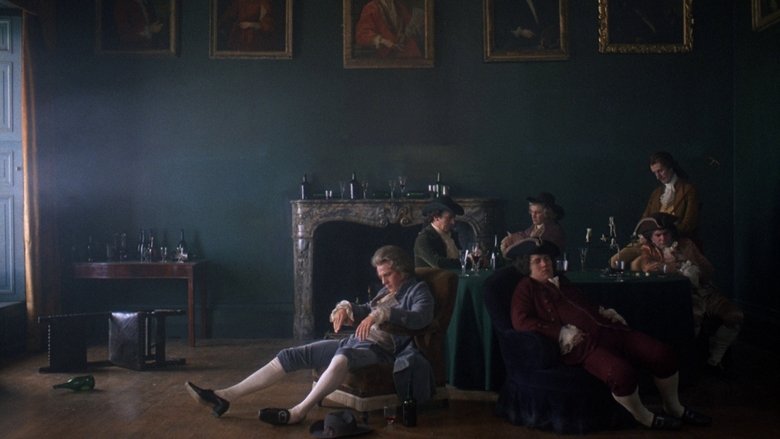
Numerous scenes are deliberately framed as living paintings, with long, static shots and slow, deliberate zooms. From the landscapes of Ireland to the opulent interiors of English manors, the cinematography transforms the settings into works of art. This is particularly evident in the card-playing scenes and formal gatherings, where characters are arranged in carefully composed tableaux.

Candlelight

Meaning:

The extensive use of candlelight symbolizes the fleeting nature of beauty, fortune, and life itself. It represents the pre-electric era's natural, fragile beauty, while also hinting at the darkness and decay that is ever-present just beyond the flickering flame. It underscores the impermanence of Barry's success and the transient world he inhabits.

Context:

Kubrick famously used special, ultra-fast f/0.7 lenses developed for NASA to film entire scenes lit only by candlelight. These scenes, particularly the intimate dinners and gambling sequences with Lady Lyndon, are bathed in a warm, soft, and ephemeral glow that would have been impossible to achieve with conventional lighting, creating a uniquely authentic and symbolic visual texture.

Card Games

Meaning:

Card games are a recurring motif that symbolizes the roles of chance, deception, and social maneuvering in Barry's life. His skill as a gambler, both literally at the card table and metaphorically in his social climbing, is central to his rise. The games represent the high-stakes risks he takes to improve his station, where fortune can turn on the flip of a card.

Context:

Barry's life is punctuated by card games. He flirts with his cousin Nora over cards at the beginning. He hones his skills as a professional gambler with the Chevalier, cheating aristocrats across Europe. It is through gambling that he first encounters and attracts the attention of Lady Lyndon. After his fall, he returns to his old profession, but without his former success.

Memorable Quotes

It was in the reign of George III that the aforesaid personages lived and quarrelled; good or bad, handsome or ugly, rich or poor, they are all equal now.

— Epilogue Title Card

Context:

This quote appears on a title card in the film's final moments, after Barry has been maimed, exiled, and defeated. The camera shows Lady Lyndon, now older, solemnly signing an annuity check for him, solidifying his permanent removal from her life.

Meaning:

This final text encapsulates the film's central theme: the ultimate futility of human ambition, social status, and personal conflict in the face of mortality. It serves as Kubrick's philosophical conclusion, emphasizing that death is the great equalizer, rendering all worldly struggles meaningless.

Don't you think he fits my shoes very well, Your Ladyship?

— Lord Bullingdon

Context:

A young Lord Bullingdon says this to his mother, Lady Lyndon, during a gathering. He is holding his infant half-brother, Bryan, and pointedly comparing the child's legitimacy to Barry's usurped position. This is one of the earliest and most direct confrontations between stepson and stepfather.

Meaning:

This sarcastic and provocative question is a direct challenge to Barry's legitimacy. By pointing out that his own half-brother (Barry's son) is a better fit for the family's legacy, Bullingdon mocks Barry's status as an upstart and underscores that he will never truly belong to the Lyndon family.

Come, come, sir. I'm a man who would rather be known as a cuckold than a fool.

— Sir Charles Lyndon

Context:

The ailing Sir Charles Lyndon confronts Barry directly after witnessing the obvious flirtation between Barry and Lady Lyndon. He is cutting through the pretense and challenging Barry, not on moral grounds, but on the basis of being made to look foolish.

Meaning:

This line reveals Sir Charles's cynical and world-weary nature. He is fully aware of Barry's affair with his wife but is more concerned with the public appearance of being deceived than with the infidelity itself. It's a biting commentary on the superficial nature of honor and reputation in aristocratic society.

I'm not sorry. And I'll not apologize. And I'd as soon go to Dublin as to hell.

— Redmond Barry

Context:

Barry says this after throwing a drink in Captain Quin's face for his engagement to Nora. His family tries to make him apologize to the powerful English captain, but Barry refuses, leading directly to his challenge for a duel.

Meaning:

This quote, uttered by a young Barry, showcases his early defiance, pride, and romantic idealism. It establishes his rebellious character and his willingness to face any consequence for what he believes to be a matter of honor, setting the stage for his tumultuous journey.

Philosophical Questions

To what extent do we control our own destiny, and how much is dictated by fate and chance?

Barry Lyndon relentlessly explores this question through its narrative structure. The omniscient narrator consistently tells the audience what will happen, suggesting a deterministic universe where the characters' struggles are futile. Barry makes active choices to advance his station, but his rise and fall are also punctuated by incredible strokes of luck and misfortune—a staged duel, a chance encounter, a misfired pistol. The film ultimately posits that while individuals strive and make choices, their lives are shaped by forces far beyond their control, with the finality of death rendering all their efforts equal.

What is the true nature of happiness and success?

The film serves as a cautionary tale against defining success purely in terms of wealth and social status. Barry achieves everything he desires: he becomes a nobleman, possesses immense wealth, and lives in luxury. Yet, his marriage is miserable, he is socially ostracized, and he finds no lasting contentment. The only period of genuine, uncomplicated happiness the film shows is the time Barry spends with his young son, Bryan. This suggests that true fulfillment comes from sincere human connection, not from the empty pursuit of ambition and material possessions. Barry's ultimate ruin is a powerful statement on the hollowness of a life spent chasing superficial rewards.

Can a person ever truly escape their origins?

Despite acquiring the name, title, and wealth of an aristocrat, Redmond Barry is never fully accepted. He is consistently viewed as an "Irish upstart" by the established nobility, especially his stepson. His manners, temper, and instincts betray his origins. The film suggests that social class is an almost inescapable construct, defined not just by wealth but by birth, breeding, and an innate understanding of its codes. Barry's failure to maintain his position implies that one cannot simply perform aristocracy; it must be inherent. His journey is a tragic testament to the rigid social structures of the era and the difficulty of transcending one's roots.

Alternative Interpretations

While the dominant interpretation of Barry Lyndon centers on the themes of fate and the futility of ambition, alternative readings offer different perspectives on the protagonist and the film's ending. One interpretation sees Barry's final act in the duel—deliberately firing into the ground rather than shooting Lord Bullingdon—as a moment of genuine moral redemption. After a life of pure opportunism, the loss of his son Bryan may have awakened a paternal instinct or a desire to end the cycle of violence. In this view, losing his leg is the price for this single act of grace, a final, fleeting assertion of honor that ironically costs him everything.

Another perspective views the film as a sharp satire of aristocracy and class structure. Barry is not just a victim of fate but a disrupter who exposes the hypocrisy and emptiness of the upper class. His downfall isn't just personal failure but the system's violent rejection of an outsider who learned to play its games too well. His ambition is a mirror to the established aristocracy's own greed and moral bankruptcy. From this angle, the film is a critique of a social order built on inheritance and exclusion rather than a purely philosophical statement on destiny.

A more cynical interpretation suggests that Barry's decision in the duel is not redemptive but another calculated, albeit failed, gamble. He may believe that showing mercy will win him social favor or a reprieve from Bullingdon's hatred. By firing into the ground, he attempts to perform the role of a magnanimous gentleman, a final play in the social game he has been engaged in his whole life. However, he miscalculates Bullingdon's cold determination, and this final performance fails, leading to his ruin.

Cultural Impact

Upon its release in 1975, Barry Lyndon was met with a mixed critical reception and was a box office disappointment in the U.S., arriving in an era dominated by the gritty, contemporary films of New Hollywood. Critics and audiences were often alienated by its deliberate, slow pace and emotional coldness, with some dismissing it as a beautiful but lifeless "coffee-table movie." However, the film won four Academy Awards for its masterful cinematography, art direction, costume design, and score, recognizing its unparalleled technical and aesthetic achievements.

Over time, the film's reputation has grown exponentially, and it is now widely regarded by filmmakers and critics as one of Stanley Kubrick's masterpieces and one of the greatest films ever made. Its influence on cinematography is profound. The revolutionary use of natural light and the custom-built NASA lenses to shoot scenes by candlelight set a new standard for period filmmaking and has been emulated and referenced by countless directors seeking to achieve a similar level of visual authenticity. The film's 'painterly' aesthetic, mimicking the canvases of 18th-century artists like Hogarth and Gainsborough, has become a benchmark for historical dramas.

Filmmakers like Martin Scorsese have cited Barry Lyndon as a major influence, praising its unique rhythm and visual storytelling. Its daringly slow pace and detached narrative style challenged cinematic conventions and have been re-evaluated as essential to its thematic exploration of time, fate, and the futility of ambition. The film's stature has shifted from being considered one of Kubrick's follies to a cornerstone of his filmography, celebrated for its artistic integrity and philosophical depth.

Audience Reception

Upon its 1975 release, audience reception for Barry Lyndon was largely polarized. Many viewers found the film's deliberate pacing to be excruciatingly slow and its three-hour runtime indulgent. The perceived emotional detachment of the characters, particularly Ryan O'Neal's passive portrayal of Barry, left many feeling cold and unable to connect with the story. It was a commercial failure in the United States, as audiences accustomed to the faster pace of New Hollywood films like Jaws (released the same year) were not receptive to its meditative, painterly style.

However, even at the time, the film garnered a smaller but devoted following who praised its stunning visual beauty and artistic ambition. Over the subsequent decades, audience reception has shifted dramatically. It has developed a strong cult following and is now widely considered by cinephiles to be one of Kubrick's greatest achievements. Modern audiences, often viewing it through home media where its visual splendor can be appreciated in detail, frequently laud its breathtaking cinematography, meticulous production design, and profound thematic depth. While criticisms of its slow pace persist, they are now more often framed as a necessary component of its hypnotic, immersive experience.

Interesting Facts

  • To achieve the unique, painterly look of scenes lit only by candlelight, Stanley Kubrick and cinematographer John Alcott used three ultra-fast 50mm f/0.7 lenses originally developed by Zeiss for NASA's Apollo lunar program to photograph the dark side of the moon.
  • The film had an exceptionally long production schedule, lasting around 300 days, partly due to Kubrick's meticulous perfectionism and the technical challenges of filming with natural light.
  • Ryan O'Neal was not Kubrick's first choice for the lead role; the director had considered actors like Robert Redford and Al Pacino, but they turned the part down.
  • The intense final duel scene between Barry and Lord Bullingdon reportedly took 42 takes to film over three weeks.
  • Kubrick was so concerned with the film's presentation that he sent a detailed letter of instruction to cinema projectionists, specifying the correct aspect ratio and light levels for exhibition.
  • The film's cinematographer, John Alcott, has a cameo as the man sleeping in a chair at the club when Lord Bullingdon challenges Barry.
  • Stanley Kubrick's daughter, Vivian Kubrick, appears in an uncredited role as a guest at Bryan's birthday party.
  • The project was born out of Kubrick's failed attempt to make a grand epic about Napoleon. He repurposed much of his extensive 18th-century research for 'Barry Lyndon'.
  • The film was a commercial disappointment in the United States upon its initial release, though it performed better in Europe. Its critical reputation has grown immensely over the decades.

⚠️ Spoiler Analysis

Click to reveal detailed analysis with spoilers

Frequently Asked Questions

Explore More About This Movie

Dive deeper into specific aspects of the movie with our detailed analysis pages

Comments (0)

Leave a comment

No comments yet. Be the first to share your thoughts!