Jojo Rabbit
An anti-hate satire dancing between childlike innocence and wartime terror, painting a vibrant, poignant portrait of ideological deconstruction through the eyes of a boy.
Jojo Rabbit

Jojo Rabbit

"An anti-hate satire."

18 October 2019 New Zealand 108 min ⭐ 8.0 (9,989)
Director: Taika Waititi
Cast: Roman Griffin Davis, Thomasin McKenzie, Scarlett Johansson, Taika Waititi, Sam Rockwell
Drama War Comedy
The Absurdity of Hate and Fanaticism Loss of Innocence and Coming of Age Love and Empathy vs. Indoctrination The Many Faces of Courage
Budget: $14,000,000
Box Office: $82,468,705

Overview

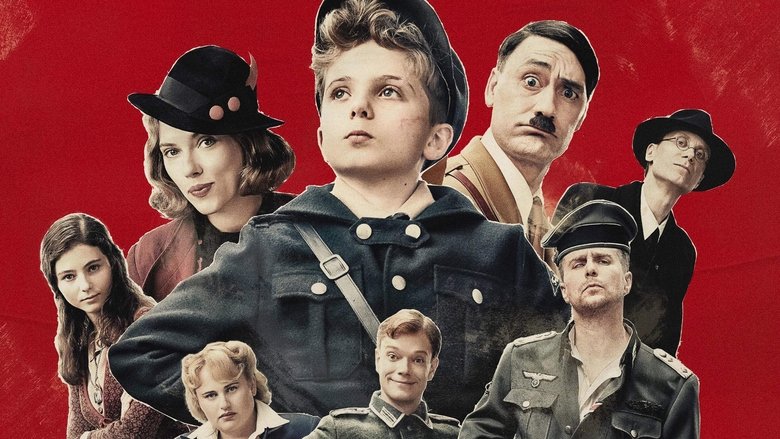
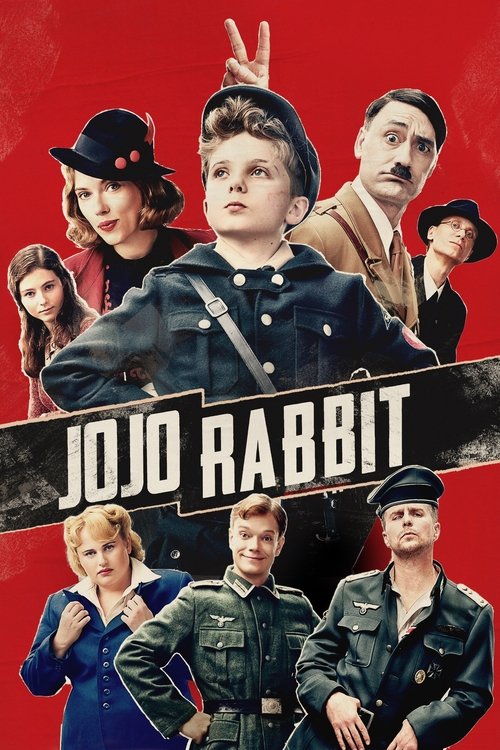
Set during the final stages of World War II, "Jojo Rabbit" follows Johannes "Jojo" Betzler (Roman Griffin Davis), a lonely ten-year-old German boy and an enthusiastic member of the Hitler Youth. His world is shaped by Nazi ideology, so much so that his imaginary friend is a buffoonish, encouraging version of Adolf Hitler (Taika Waititi).

After a mishap at a youth training camp leaves him injured, Jojo is sent home to recover under the care of his vibrant and secretly dissident mother, Rosie (Scarlett Johansson). His fanatical worldview is turned upside down when he discovers his mother is hiding a young Jewish girl named Elsa (Thomasin McKenzie) in their attic. Forced into a reluctant alliance, Jojo begins to question everything he has been taught, leading to a profound internal conflict between his ingrained hatred and his burgeoning humanity.
Core Meaning

"Jojo Rabbit" is a powerful satire that explores the absurdity of hatred and the corrupting influence of ideological indoctrination, particularly on the innocent. Director Taika Waititi uses comedy not to diminish the horrors of Nazism, but to expose its nonsensical and manufactured nature. The core message is a celebration of love, empathy, and critical thinking as the ultimate antidotes to blind fanaticism. It posits that human connection can dismantle the most deeply ingrained prejudice. The film is also framed as a "love letter to all mothers," highlighting the fierce, protective, and life-affirming love that Rosie embodies in the face of overwhelming darkness.

Thematic DNA

The Absurdity of Hate and Fanaticism 35%
Loss of Innocence and Coming of Age 30%
Love and Empathy vs. Indoctrination 25%
The Many Faces of Courage 10%

The Absurdity of Hate and Fanaticism

The film consistently portrays Nazism not as a formidable, monolithic evil, but as a ridiculous and illogical ideology propped up by insecure, flawed individuals. Jojo's imaginary Hitler is a foolish, petulant caricature, a reflection of a 10-year-old's understanding of the Führer. The Hitler Youth camp, run by the flamboyant Captain Klenzendorf (Sam Rockwell) and the zealous Fräulein Rahm (Rebel Wilson), is depicted as a farcical summer camp, exposing the silliness behind the hateful rhetoric. This satirical approach reveals how fanaticism relies on ignorance and childish logic.

Loss of Innocence and Coming of Age

Jojo begins the film as an innocent, albeit one indoctrinated with hate. His journey is a forced maturation process. Discovering Elsa shatters his black-and-white view of the world. Key moments, like the grenade accident that leaves him scarred and the devastating discovery of his mother's fate, strip away his childhood illusions and force him to confront the brutal reality of war and the consequences of the ideology he once championed. His eventual rejection of his imaginary friend symbolizes his graduation from manipulated innocence to independent moral thought.

Love and Empathy vs. Indoctrination

The film's central conflict is the battle between the learned hatred of Nazi propaganda and the innate human capacity for love and connection. Rosie consistently tries to teach Jojo about love, joy, and the importance of dancing, even in dark times. Jojo's relationship with Elsa is the catalyst for his transformation; as he gets to know her, he realizes she is not the monster of propaganda but a human being, which dismantles his prejudice from the inside out. Ultimately, love—for his mother, for Elsa—proves to be a more powerful force than the state-sponsored hate he was taught.

The Many Faces of Courage

"Jojo Rabbit" explores different forms of bravery. Jojo initially believes courage is about being a ruthless Nazi soldier. He soon learns true bravery from his mother, Rosie, who risks everything to fight injustice and protect Elsa. Elsa demonstrates immense courage by surviving in hiding, maintaining her wit and spirit under terrifying circumstances. Even Captain Klenzendorf, a disillusioned Nazi officer, shows a final act of courage by sacrificing himself to save Jojo. The film suggests that true bravery lies in compassion, defiance of evil, and protecting others, not in blind obedience.

Character Analysis

Johannes 'Jojo' Betzler

Roman Griffin Davis

Archetype: Innocent/Hero-in-training
Key Trait: Impressionable

Motivation

Initially, Jojo is motivated by a desperate desire to fit in and be a 'good Nazi.' He is lonely, missing his absent father, and seeks belonging and purpose within the Hitler Youth. As the story progresses, his motivation shifts to protecting Elsa and surviving, driven by his growing affection for her and the harsh realities of the war.

Character Arc

Jojo begins as a naive, lonely boy completely consumed by Nazi propaganda, desperate to belong. His worldview is systematically dismantled through his interactions with Elsa, the Jewish girl hidden in his attic. He transitions from fear and learned hatred to confusion, empathy, and eventually, love. He ultimately rejects his fanatical beliefs, symbolized by kicking his imaginary Hitler out of a window, and embraces a new, uncertain future founded on human connection rather than ideology.

Elsa Korr

Thomasin McKenzie

Archetype: Survivor/Mentor
Key Trait: Resilient

Motivation

Elsa's primary motivation is survival. She endures confinement and fear to escape persecution. She is also driven by the memory of her family and her fiancé, Nathan. Her motivation evolves to include protecting Jojo and finding a way to live again after enduring immense loss.

Character Arc

Elsa is introduced as a hidden, vulnerable figure, but she quickly reveals her strength, intelligence, and sharp wit. She begins by using Jojo's ignorance to her advantage for survival. Over time, she drops her defensive guard and forms a genuine, sibling-like bond with him. She becomes his unwilling teacher, challenging his propaganda-fueled beliefs with reality and humanity. She ends the film stepping out of confinement and into a terrifying but free world.

Rosie Betzler

Scarlett Johansson

Archetype: Mentor/Rebel
Key Trait: Humanist

Motivation

Rosie is motivated by a profound belief in love, kindness, and doing what is right. She wants to create a better world and protect her son from the hateful ideology of Nazism, even while he embraces it. Her actions are driven by a moral imperative to resist evil, no matter the personal cost.

Character Arc

Rosie maintains a vibrant, joyful, and loving demeanor despite the oppressive political climate. She is a secret member of the German resistance, representing a moral compass and a force of life-affirming love. She actively works against the regime while fiercely protecting both her son and Elsa. Her arc is tragically cut short when she is executed for her resistance work, but her influence is the catalyst for Jojo's ultimate transformation.

Adolf (Imaginary Friend)

Taika Waititi

Archetype: Trickster/Shadow Self
Key Trait: Buffoonish

Motivation

As a figment of Jojo's imagination, Adolf's motivation is to reinforce Jojo's indoctrinated beliefs. He exists to validate Jojo's desire to be a Nazi and to keep him from straying from that path. His goal is to maintain control over Jojo's 'brain.'

Character Arc

Adolf begins as Jojo's goofy, encouraging best friend—a manifestation of a 10-year-old's understanding of the Führer, shaped by propaganda and a need for a father figure. As Jojo begins to question Nazism and bond with Elsa, Adolf becomes more petulant, insecure, and eventually menacing, mirroring the true nature of Hitler. His arc concludes when Jojo, having outgrown the need for him, physically kicks him out of a window, symbolizing Jojo's complete rejection of Nazism.

Captain Klenzendorf

Sam Rockwell

Archetype: Disillusioned Soldier
Key Trait: Cynical

Motivation

Klenzendorf seems motivated by a weary sense of self-preservation and a deep-seated disillusionment with the Nazi regime. His affection for Rosie and Jojo, and possibly a hidden moral code, motivate his protective actions. His final sacrifice is driven by a desire to do one good thing and protect the child of the woman he respected.

Character Arc

Captain Klenzendorf is introduced as a cynical, demotivated Nazi officer running a youth camp. He appears to be going through the motions of his duty without any real conviction. Throughout the film, subtle hints suggest his dissent, such as his flamboyant uniform designs and his ambiguous protection of Jojo and Elsa from the Gestapo. His arc culminates in a final, heroic act of sacrifice where he saves Jojo's life by denouncing him as a Jew, leading to his own execution.

Symbols & Motifs

Dancing

Meaning:

Dancing symbolizes freedom, joy, and the defiant celebration of life in the face of oppression and despair. It represents hope for the future and the expression of humanity that fascism seeks to crush.

Context:

Rosie frequently dances and encourages Jojo to do the same, telling him it's a way to "show God we are grateful to be alive." Elsa tells Jojo the first thing she will do when she is free is dance. The film's final, poignant scene shows Jojo and Elsa dancing in the street after the war ends, a powerful affirmation of their newfound freedom and the endurance of the human spirit.

Rosie's Shoes

Meaning:

Rosie's stylish, often red-and-white shoes represent her vibrant, life-affirming spirit, her playfulness, and her quiet rebellion against the drab conformity of the regime. They are a motif for her love of dance and zest for life.

Context:

The camera often focuses on Rosie's shoes as she walks or dances. The motif culminates in one of the film's most heartbreaking scenes: Jojo, chasing a butterfly, looks up to see his mother has been hanged in the public square. The audience, like Jojo, first identifies her only by her distinctive shoes, making the discovery profoundly personal and devastating.

The Rabbit

Meaning:

The rabbit initially symbolizes Jojo's perceived weakness and his inability to conform to the cruel expectations of Nazi masculinity. He earns the mocking nickname "Jojo Rabbit" when he can't bring himself to kill one.

Context:

After being shamed at the Hitler Youth camp, Jojo's imaginary Hitler encourages him to reframe the rabbit as a clever, tricky, and resilient creature. This reinterpretation mirrors Jojo's own journey, where he learns that strength is not about brutality, but about empathy, cleverness, and survival.

The Dagger

Meaning:

The dagger, given to Jojo as part of his Hitler Youth uniform, symbolizes the toxic masculinity and violent ideology of the Nazi regime. It represents a childish conception of power rooted in destruction and hate.

Context:

Jojo proudly carries the dagger, viewing it as a toy and a symbol of his belonging. When he first discovers Elsa, he threatens her with it, but she easily disarms him, symbolically stripping him of his indoctrinated power. Later, after his mother's death, he attempts to stab Elsa in grief and anger but breaks down, choosing connection over violence.

Memorable Quotes

You're not a Nazi, Jojo. You're a 10-year-old kid who likes dressing up in a funny uniform and wants to be part of a club.

— Rosie Betzler

Context:

Rosie says this to Jojo during a tender moment at home. Jojo has been acting out, accusing her of not loving her country because she doesn't share his zealous patriotism. She responds with this line, gently trying to separate her son from the dangerous ideology he has adopted.

Meaning:

This quote cuts through Jojo's ideological fantasy to the core of his childhood innocence. Rosie understands that his fanaticism is not born of true malice but of a boy's simple need for belonging and identity, exposing the way fascism preys on such universal human desires.

Let everything happen to you: beauty and terror. Just keep going. No feeling is final.

— Rainer Maria Rilke (poem quoted in the film)

Context:

The line is from a poem by Rainer Maria Rilke. It appears as on-screen text just before the credits roll, following the final scene where Jojo and Elsa dance in the freed city. It serves as a concluding thought on their journey and the path that lies ahead.

Meaning:

This quote, which appears on screen at the end, encapsulates the film's central message about resilience and the human experience. It acknowledges that life is a mixture of profound joy and unbearable pain, and argues for the courage to embrace it all, with the hopeful reminder that even the worst feelings are temporary.

Love is the strongest thing in the world.

— Rosie Betzler

Context:

Rosie says this to Jojo by the river, trying to explain her worldview and why she continues to have hope and find joy in dark times. It is a key lesson she imparts to him, which resonates throughout his journey and is proven true by the film's end.

Meaning:

This is Rosie's core philosophy and a central theme of the film. It's a simple yet profound statement that directly counters the Nazi ideology of power through hate and fear. It serves as the moral foundation that ultimately guides Jojo's transformation.

What's the first thing you'll do when you're free?

— Jojo Betzler

Context:

Jojo asks Elsa this while they are talking in the attic. He is interviewing her for his 'research' book, but his questions have become more personal. Her simple, joyful answer helps to further humanize her in his eyes and build the foundation for their bond.

Meaning:

This question marks a significant turning point in Jojo and Elsa's relationship. It's the moment he begins to see her not as a 'Jew' but as a person with hopes and dreams for the future, a future beyond the war. Her answer, 'Dance,' sets up the film's symbolic conclusion.

Philosophical Questions

Can innocence and hate coexist within a person?

The film explores this question through its protagonist, Jojo. He is presented as a sweet, caring, and fundamentally innocent child who is also a fervent, swastika-loving Nazi. "Jojo Rabbit" argues that hate is not an inherent trait but a learned behavior, an ideology that can be imprinted upon a blank slate. The film shows how Jojo's 'hate' is superficial, a parroting of propaganda he doesn't fully comprehend. His journey demonstrates that when this indoctrinated hate is confronted with direct human experience (his friendship with Elsa), his innate innocence and capacity for love ultimately win out, suggesting that true innocence is incompatible with sustained, genuine hatred.

Is satire an effective tool for confronting historical atrocities?

By making Nazis, including an imaginary Hitler, into buffoons, the film uses humor to strip them of their power and mystique. The satire is not aimed at the victims but at the perpetrators and the absurdity of their ideology. The film's critical reception was divided on this point: some argued that humor risks trivializing the horror, while others contended that it's a powerful weapon to expose the illogical and banal nature of evil, making its anti-hate message more accessible and potent for a modern audience.

What is the nature of courage in an oppressive society?

The film presents multiple forms of bravery. There is Rosie's active, dangerous resistance work; Elsa's quiet, enduring courage of survival; and Captain Klenzendorf's last-minute, sacrificial courage. Jojo's own journey is one of developing moral courage—the bravery to question everything he has been taught, to reject a powerful ideology, and to choose love and empathy in a world saturated with hate. The film proposes that the greatest courage lies not in conforming to a violent ideal but in daring to be humane against all odds.

Alternative Interpretations

While the film is largely straightforward, some discussions have emerged around its ending and characters. One interpretation of Captain Klenzendorf's character is that he was a secret member of the resistance all along, rather than simply a disillusioned opportunist who performs a single good deed at the end. His flamboyant uniform designs and his decision to protect Elsa from the Gestapo are cited as evidence of a deeper, more consistent opposition to the regime.

A more speculative fan theory suggests that the final scenes with Elsa could be a figment of Jojo's imagination. This interpretation posits that Elsa, in her despair after being told Germany won the war, might have taken her own life. The Elsa who emerges from the attic, tells Jojo what he wants to hear about her fiancé, and dances with him could be another imaginary companion Jojo creates to cope with his immense loss and loneliness. This reading casts the hopeful ending in a much darker, more tragic light, though it is not widely supported by the film's overall tone.

Cultural Impact

"Jojo Rabbit" was released into a global political climate marked by rising nationalism and divisive rhetoric, making its "anti-hate satire" particularly timely. The film generated significant discussion and controversy for its comedic portrayal of Nazi Germany, with some critics finding the tone inappropriate while others praised it as a daring and effective way to condemn fascism. It drew comparisons to other Nazi-era comedies like Charlie Chaplin's "The Great Dictator" and Mel Brooks' "The Producers," as well as Roberto Benigni's "Life is Beautiful," which also blended comedy with the tragedy of the Holocaust.

Critically, the reception was polarized but generally positive, with many reviewers lauding its heart, humor, and originality, while a minority found it played its risky premise too safely. The film went on to win the People's Choice Award at the Toronto International Film Festival and earned Taika Waititi an Academy Award for Best Adapted Screenplay. Its success helped solidify Waititi's reputation as a unique auteur capable of balancing mainstream blockbusters with deeply personal, quirky films. For audiences, it provided a more accessible, emotional entry point into understanding the mechanisms of indoctrination and the power of empathy, becoming a celebrated work for its hopeful message in dark times.

Audience Reception

Audience reception for "Jojo Rabbit" was largely positive, often more so than with professional critics. Viewers praised the film's unique blend of humor and pathos, finding it both hilarious and deeply moving. Many connected strongly with the emotional core of the story, particularly the relationship between Jojo and his mother, Rosie, and the transformative friendship between Jojo and Elsa. The performances of the cast, especially newcomer Roman Griffin Davis and Scarlett Johansson, were widely acclaimed.

The main points of criticism from some audience members mirrored those of some critics: that the film's comedic take on Nazism was inappropriate or that it didn't feel 'dangerous' enough given its subject matter. The character of Captain Klenzendorf and his perceived redemption arc was also a point of debate. However, the overwhelming verdict from the public was that the film was a heartfelt, poignant, and timely "anti-hate satire" with a powerful and necessary message of hope and love.

Interesting Facts

  • The screenplay, written by Taika Waititi in 2011, was on the Hollywood 'Black List' (a list of the best-unproduced screenplays) in 2012.
  • The film is adapted from the 2008 book "Caging Skies" by Christine Leunens, though the book has a much darker tone and does not include the character of the imaginary Adolf Hitler.
  • Taika Waititi, who is of Jewish and Māori descent, was reluctant to play Hitler but ultimately decided it would be the least offensive way to portray the character in the comedic tone he envisioned.
  • Roman Griffin Davis, who plays Jojo, makes his feature film debut. His younger identical twin brothers play the 'clones' in a brief scene.
  • The vibrant color palette was a deliberate choice by Waititi and cinematographer Mihai Mălaimare Jr. to reflect Jojo's childlike perspective and to counter the typically desaturated look of WWII films, inspired by old color documentaries of the era.
  • Scarlett Johansson based her portrayal of Rosie on her own mother, seeing the film as a story about a single mother's determination to bring joy into her child's life during dark times.
  • The real-life assassination attempt on Hitler by Stauffenberg is mentioned by the imaginary Hitler, who claims he survived because he has 'bomb-proof legs'.

Easter Eggs

The film ends with the German-language version of David Bowie's song "Heroes" ('Helden').

Taika Waititi planned to use the song from the very beginning. The song, about two lovers meeting by the Berlin Wall, carries powerful themes of love and defiance in the face of division and oppression, perfectly mirroring the film's conclusion of Jojo and Elsa finding freedom together.

The film quotes extensively from the poet Rainer Maria Rilke.

Rosie quotes Rilke to Jojo, and the film concludes with his lines on screen. Rilke was a German-language poet whose work often explored themes of love, life, and finding hope amid suffering. Using his words grounds the film's fantastical elements in a deeper, humanist, and philosophical tradition that was important to German culture, offering an alternative to the Nazi ideology.

Imaginary Hitler wears a Native American headdress in one scene.

This is a reference to the real Adolf Hitler's fascination with the American Old West, particularly the stories of German author Karl May, which often featured Native American characters. It's a surreal and comedic detail that also underscores the childish, fantasy-based nature of Jojo's imaginary friend.

⚠️ Spoiler Analysis

Click to reveal detailed analysis with spoilers

Frequently Asked Questions

Explore More About This Movie

Dive deeper into specific aspects of the movie with our detailed analysis pages

Comments (0)

Leave a comment

No comments yet. Be the first to share your thoughts!