The Secret World of Arrietty
借りぐらしのアリエッティ
"Do not be seen by humans. That's been the law of children of the underfloor."
Overview
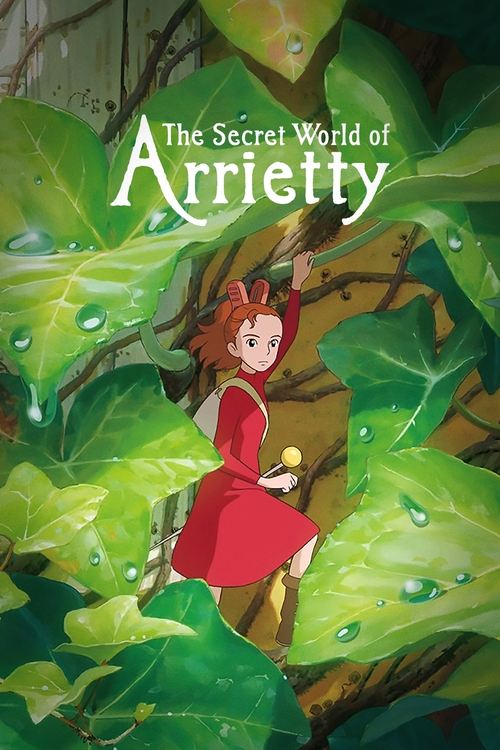
In a hidden world beneath the floorboards of a sprawling country home, lives a family of miniature people known as Borrowers. Fourteen-year-old Arrietty and her parents, Pod and Homily, survive by quietly borrowing tiny items from the human inhabitants—a single sugar cube or a solitary tissue—careful never to be seen. Their peaceful, stealthy existence is governed by one absolute rule: if they are discovered by humans, they must leave their home forever.
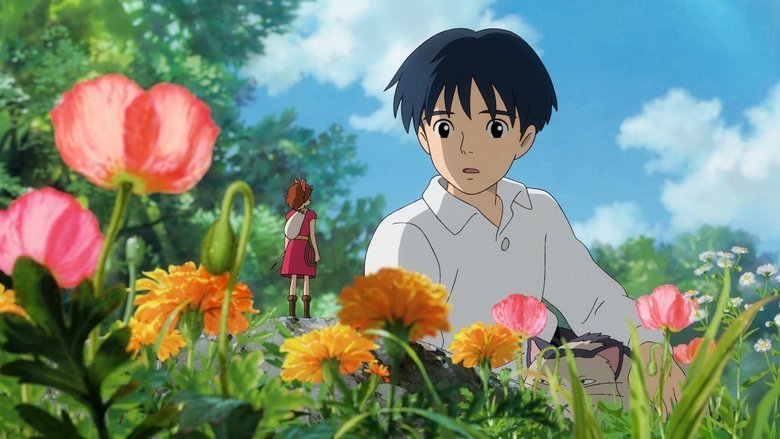
Their delicate world is turned upside down with the arrival of Shō, a gentle but melancholic twelve-year-old human boy who has come to the countryside to rest before undergoing a dangerous heart surgery. During Arrietty's very first borrowing mission, Shō spots her. Despite the terrifying size difference and the inherent danger, Shō seeks to connect with the tiny girl, leaving gifts and trying to communicate.
As an unlikely and poignant friendship blossoms between the two, their bond unwittingly sets off a chain of events that threatens the Borrowers' survival. The suspicious and meddlesome housekeeper, Haru, becomes obsessed with proving the existence of the little people, forcing Arrietty to summon immense courage to protect her family while simultaneously giving Shō the strength he needs to face his own life-threatening trials.
Core Meaning
At its core, the film is a profound meditation on the will to survive and the interconnectedness of different lives. Director Hiromasa Yonebayashi and writer Hayao Miyazaki use the vast contrast in scale to explore how fragile existence can be. The film suggests that courage is not always about grand, world-saving adventures; sometimes, it is the quiet, everyday determination to keep living despite overwhelming odds. Through the brief but life-changing friendship between a dying human boy and a girl whose entire species is fading into extinction, the film communicates that even the most fleeting connections can provide us with the strength and purpose needed to endure our darkest moments.
Thematic DNA
Survival and Extinction
Both the Borrowers and Shō are facing the looming threat of extinction. The Borrowers believe they might be the last of their kind, hiding from a dangerous world, while Shō is facing a potentially fatal heart surgery. Through their friendship, they both discover a renewed resilience and the fierce will to survive against the odds.
The Boundaries Between Worlds
The film highlights the impossibility of true coexistence between the macrocosm (humans) and the microcosm (Borrowers). Even Shō's well-intentioned attempts to help Arrietty's family bring them immense danger, illustrating how interfering with nature or different cultures, even out of kindness, can be destructive.
Coming of Age and Responsibility
Arrietty's journey begins with her first borrowing, a rite of passage into adulthood. Her transition from a curious, sheltered child to a brave protector who negotiates with a human and rescues her mother serves as the central coming-of-age arc.
Empathy vs. Destructive Curiosity
The film contrasts Shō's gentle, empathetic curiosity with the housekeeper Haru's destructive, pest-control mentality. Haru represents the selfish, consumerist aspect of humanity that seeks to capture and control nature, whereas Shō learns to respect the Borrowers' need for independence.
Character Analysis
Arrietty
Mirai Shida (Japanese) / Bridgit Mendler (US Dub) / Saoirse Ronan (UK Dub)
Motivation
To prove herself as a capable Borrower, protect her family's secret, and understand the vast world above the floorboards.
Character Arc
Arrietty begins as an eager, slightly naive teenager excited for her first borrowing. After accidentally exposing her family, she takes responsibility for her mistake, maturing into a fierce, capable protector who rescues her mother and secures her family's future.
Shō (Shawn)
Ryunosuke Kamiki (Japanese) / David Henrie (US Dub) / Tom Holland (UK Dub)
Motivation
To forge a meaningful connection with the magical beings his family always talked about before he undergoes a life-threatening surgery.
Character Arc
Introduced as a lonely, sickly boy resigned to dying from his heart condition, Shō's encounter with the brave, tiny Borrowers awakens a desire to protect them, which ultimately reignites his own will to live.
Haru (Hara)
Kirin Kiki (Japanese) / Carol Burnett (US Dub) / Olivia Colman (UK Dub)
Motivation
To prove she isn't crazy to her employers and to exterminate or capture the Borrowers as if they were common household pests.
Character Arc
Haru remains a static character, serving as the catalyst for the climax. Her long-standing suspicion of little thieves turns into triumphant malice when she finally discovers them.
Pod
Tomokazu Miura (Japanese) / Will Arnett (US Dub) / Mark Strong (UK Dub)
Motivation
To ensure the survival, safety, and absolute secrecy of his family.
Character Arc
Pod is a rigid, rule-abiding father who views humans strictly as a threat. Over the film, he learns to trust Arrietty's growing independence and respects the unexpected help they receive from Shō.
Symbols & Motifs
The Sugar Cube
It symbolizes the delicate nature of communication and trust between two different worlds. Initially a sign of a failed mission, it becomes an olive branch and a bridge of goodwill.
Dropped by Arrietty when she is first startled by Shō, the boy later leaves it by an air vent for her. Though her father warns her not to take it, it serves as Shō's first attempt to initiate a peaceful friendship.
The Dollhouse
The dollhouse represents an idealized, forced assimilation and the illusion of a perfect life. It signifies humanity's well-intentioned but misguided desire to control and tame nature and those smaller than them.
Built by Shō's ancestors for the Borrowers, Shō later tears out the floorboards to install the dollhouse kitchen into the Borrowers' actual home. This act of forced charity destroys their secrecy and forces them to move.
The Clothespin (Hairclip)
It is a symbol of Arrietty's resourcefulness, individuality, and warrior spirit. Later, it becomes a talisman of luck, courage, and enduring memory.
Arrietty uses a small plastic clothespin to tie her hair back, and she wears a pin like a sword. At the end of the film, she gifts the clothespin to Shō as a final token of their friendship to give him courage for his surgery.
The River and Teapot
They symbolize the unpredictable flow of life, the continuation of the Borrowers' journey, and hope for the future.
In the final sequence, Arrietty's family escapes down the river inside a floating human teapot guided by the wild Borrower, Spiller, drifting toward an uncertain but hopeful new beginning.
Memorable Quotes
Sometimes you have to fight for the things that are worth fighting for.
— Arrietty
Context:
Arrietty says this to Shō during an emotional conversation where he mentions that the Borrowers are a dying race and expresses his own hopelessness regarding his heart condition.
Meaning:
This line encapsulates the core theme of the film: the necessity of resilience. It serves to challenge Shō's fatalistic acceptance of his impending death.
You gave me the courage to live.
— Shō
Context:
Spoken during their bittersweet, tearful farewell at the fence as the sun rises, just before Arrietty gives him her hairclip.
Meaning:
This reveals the profound impact Arrietty had on Shō. Despite her tiny size, her fierce determination to survive transferred to him, giving him the mental fortitude to face his surgery.
My mother, father and I are all borrowers. We borrow things like soap and cookies and sugar - things that beans don't miss if they're gone.
— Arrietty
Context:
Arrietty explaining her family's existence and way of life to Shō during their hidden conversation.
Meaning:
This quote establishes the unique philosophy and moral code of the Borrowers. They do not view themselves as thieves; they live sustainably, taking only the bare minimum required to survive.
Philosophical Questions
Can true coexistence exist between the powerful and the vulnerable without causing harm?
The film explores this through Shō's interactions with Arrietty's family. Despite his pure intentions and desire to help, his interference (removing the floorboards, gifting the dollhouse kitchen) exposes them to mortal danger. It raises the question of whether true harmony is possible when a massive power imbalance exists.
What gives life meaning when facing the inevitability of death or extinction?
Both the Borrowers (who believe their race is dying out) and Shō (who believes his heart will fail) are confronted with their own mortality. The film suggests that meaning is found in connection, empathy, and the courage to fight for the present moment, rather than surrendering to a fatalistic future.
Alternative Interpretations
An Environmental Metaphor: Many critics interpret the film as a critique of modern consumerism and environmental destruction. The Borrowers represent sustainable living—taking only what they need and leaving no trace—while the humans (particularly the housekeeper Haru) represent a society that hoards, destroys, and attempts to control nature.
A Representation of Marginalized Peoples: The film can be read as an allegory for indigenous or marginalized communities surviving on the fringes of a dominant, destructive culture. Shō's attempt to give the Borrowers the dollhouse mirrors historical instances of forced assimilation or the creation of reservations—well-intentioned but ultimately patronizing and devastating to their way of life.
A Tragic Romance: Some audiences view the story as a star-crossed romance. Arrietty and Shō develop deep feelings for one another, but they are forced to accept that their physical realities and species make coexistence impossible. Their separation is seen not just as a survival tactic, but as the ultimate act of selfless love.
Cultural Impact
The Secret World of Arrietty successfully continued Studio Ghibli's tradition of blending Western literature with Japanese animation sensibilities, translating a classic British children's book into a distinctly Japanese context. Grossing over $145 million worldwide, it demonstrated that quieter, intimate, slice-of-life narratives could achieve massive global success without relying on epic battles or high-stakes magic. Culturally, the film has been praised for its immersive sound design and visual representation of scale; the meticulous depiction of how water forms heavy droplets or how a ticking clock sounds like a booming drum from a miniature perspective set a new benchmark for macro-animation. It also served as a successful passing of the torch, proving that the next generation of Ghibli animators, led by Hiromasa Yonebayashi, could uphold the studio's legendary emotional and visual standards.
Audience Reception
Audience and critical reception for The Secret World of Arrietty was overwhelmingly positive. Viewers universally praised the breathtaking, meticulous animation—especially the lush, warm color palettes of the sunlit gardens and the incredibly detailed, cluttered coziness of the Borrowers' home. The sound design, which amplified everyday noises to emphasize the characters' tiny scale, was highlighted as a masterful touch, alongside Cécile Corbel's enchanting Celtic score. Some criticism was directed at the film's gentle, languid pacing and the lack of a grand, climactic resolution, with a few viewers wishing for a more definitive happy ending. However, the overall verdict is that the film is a beautiful, deeply touching, and visually stunning masterpiece that perfectly captures the bittersweet nostalgia of a fleeting summer.
Interesting Facts
- The film marked the directorial debut of Hiromasa Yonebayashi, who, at the time, became the youngest director ever to helm a Studio Ghibli film.
- Although based on Mary Norton's 1952 British children's novel 'The Borrowers', Studio Ghibli shifted the setting to the modern-day Koganei neighborhood in western Tokyo.
- Instead of the usual orchestral score typical of Ghibli films, the soundtrack was composed by French singer and harpist Cécile Corbel, giving the film a distinct, Celtic-inspired folk aesthetic.
- The film has two entirely different English language dubs: a US version produced by Disney starring Bridgit Mendler and David Henrie, and a UK version produced by Studio Canal starring Saoirse Ronan and Tom Holland.
- It was the highest-grossing Japanese film at the Japanese box office in the year 2010, proving Studio Ghibli's continued success with new directors.
Easter Eggs
The Ghibli Cat Archetype
Shō's cat, Niya, starts off as a mean, predatory threat but eventually softens and guides Shō to Arrietty. This mirrors the behavior of iconic, fat, grumpy-but-helpful felines in other Ghibli films, such as Moon in Whisper of the Heart and Muta in The Cat Returns.
Ingenious Repurposing of Human Objects
While not a traditional pop-culture cameo, the animators hid brilliant visual details in the background of the Borrowers' home: postage stamps are framed as wall paintings, staples are used as ladders, sewing needles act as swords, and double-sided tape is used for climbing.
⚠️ Spoiler Analysis
Click to reveal detailed analysis with spoilers
Frequently Asked Questions
Explore More About This Movie
Dive deeper into specific aspects of the movie with our detailed analysis pages
Comments (0)
No comments yet. Be the first to share your thoughts!