Scooby-Doo on Zombie Island
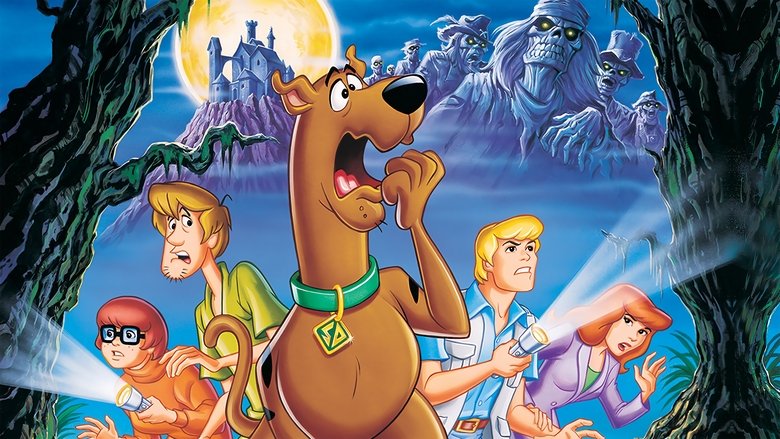
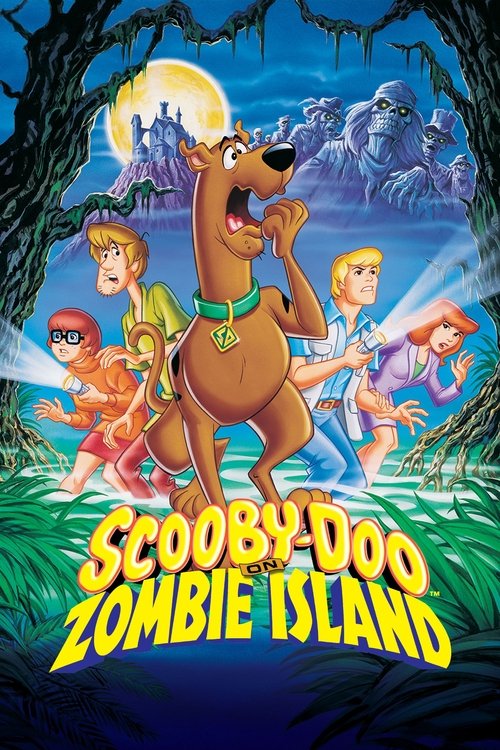
An atmospheric Southern Gothic mystery where childhood nostalgia meets genuine terror, shattering the safety of a classic formula by plunging beloved characters into a dark, shadowy bayou where the monsters are terrifyingly real.
Scooby-Doo on Zombie Island

Scooby-Doo on Zombie Island

"This time, the monsters are real!"

22 September 1998 United States of America 77 min ⭐ 7.7 (827)
Director: Jim Stenstrum
Cast: Scott Innes, Billy West, Mary Kay Bergman, Frank Welker, B.J. Ward
Animation Family Mystery Horror
Subversion of Expectations and the Loss of Innocence Skepticism vs. Belief The Corrupting Power of Vengeance Misjudging Appearances

Overview

After years of unmasking greedy real estate developers and smugglers disguised as ghouls, the members of Mystery Inc. have grown weary and disbanded. Daphne Blake, now the host of a successful investigative television show, yearns to find a genuine supernatural phenomenon for her viewers. To celebrate her birthday, Fred reunites the gang for a road trip across America to hunt down real ghosts, though their initial stops only yield the same mundane criminals in rubber masks.

Their luck changes in New Orleans when they meet Lena Dupree, a young woman who invites them to Moonscar Island, a secluded bayou estate owned by the gracious Simone Lenoir. The island is reportedly haunted by the ghost of the infamous pirate Morgan Moonscar. As the gang settles in, they soon discover that the island holds dark secrets, and the supernatural occurrences cannot be easily explained away by logic or science.

When the dead begin to rise from their graves, the gang is forced to confront a horrifying reality: the safety net of their childhood mysteries is gone. Trapped on the island with genuine walking corpses and a far more sinister ancient evil lurking in the shadows, Mystery Inc. must survive a night where their trademark skepticism could be their fatal downfall.

Core Meaning

The core meaning of Scooby-Doo on Zombie Island is a meta-textual exploration of maturation and the collision between comforting childhood formulas and the harsh, unpredictable realities of the adult world. By stripping away the predictable safety of the "guy in a mask" trope, the filmmakers challenge both the characters and the audience to face the genuinely unknown.

Furthermore, the film delves into the cyclical nature of violence, trauma, and vengeance. It illustrates how victims can become perpetrators when consumed by the desire for revenge and survival, ultimately suggesting that holding onto the past only breeds more monstrosity. It teaches that while critical thinking and skepticism are valuable tools, one must also remain humble and open to the inexplicable mysteries of the universe.

Thematic DNA

Subversion of Expectations and the Loss of Innocence 35%
Skepticism vs. Belief 25%
The Corrupting Power of Vengeance 25%
Misjudging Appearances 15%

Subversion of Expectations and the Loss of Innocence

The film deliberately deconstructs the classic Scooby-Doo formula [1.6]. For decades, the franchise taught children that monsters were just greedy humans in costumes. By making the zombies and werecats real, the film forces the characters to abandon their safe, childlike worldview and face genuine, mortal peril, serving as a coming-of-age metaphor.

Skepticism vs. Belief

Throughout the film, Fred and Velma act as avatars of rigid rationality. They continually attempt to force logical explanations onto illogical events. The theme explores the psychological friction that occurs when empirical thinkers are confronted with undeniable supernatural truths, highlighting the limitations of human logic.

The Corrupting Power of Vengeance

Simone and Lena begin their story as innocent victims fleeing violent pirates. However, their invocation of a dark cat god for revenge turns them into immortal monsters who must endlessly consume innocent lives. The film highlights how the pursuit of vengeance can transform the oppressed into the oppressors.

Misjudging Appearances

The film plays with visual biases. The grotesque, rotting zombies are actually the victims trying to warn the gang, while the beautiful, hospitable Southern women are the true demonic threats. It serves as a grim reminder that true evil often hides behind a pleasant facade.

Character Analysis

DaphneBlake

MaryKayBergman

Archetype: TheSeeker
Key Trait: Driven and fearless

Motivation

To find a genuinely haunted location and a real ghost to feature on her investigative television show, Coast to Coast with Daphne Blake.

Character Arc

Daphneevolvesfromasomewhatjaded, successfulTVhostlookingforratingstoaterrifiedsurvivor[1.2]. She gets exactly what she wished for, but realizes the horrific cost of uncovering true supernatural phenomena.

Fred Jones

Frank Welker

Archetype: The Skeptic Leader
Key Trait: Stubbornly rational

Motivation

To protect his friends, rekindle the gang's glory days, and prove that every mystery has a logical, human explanation.

Character Arc

Fred begins as the confident leader who refuses to believe in the supernatural. His worldview is violently shattered when he tries to unmask a zombie, forcing him to adapt to a reality where he is not in control.

Velma Dinkley

B.J. Ward

Archetype: The Rational Analyst
Key Trait: Highly intelligent and observant

Motivation

To solve the puzzle using science, deductive reasoning, and empirical evidence.

Character Arc

Like Fred, Velma clings to logic, initially suspecting Detective Beau Neville of orchestrating a hoax. She desperately looks for physical clues but eventually must accept the existence of curses, magic, and ghosts.

Shaggy Rogers

Billy West

Archetype: The Reluctant Hero / Comic Relief
Key Trait: Cowardly but loyal

Motivation

Self-preservation, avoiding danger, and finding food.

Character Arc

Despite serving as the primary comic relief, Shaggy and Scooby are the first to encounter the real monsters. Their chaotic survival instincts ultimately save the group when they accidentally interrupt the werecats' draining ceremony.

Simone Lenoir

Adrienne Barbeau

Archetype: The Tragic Villain / Wolf in Sheep's Clothing
Key Trait: Deceptively gracious and ruthless

Motivation

To lure unsuspecting victims to Moonscar Island every harvest moon to drain their life force and preserve her immortality.

Character Arc

Introduced as a hospitable and charming Southern aristocrat, she is eventually revealed to be a centuries-old werecat. Her tragic backstory of fleeing pirates turns into a horrific reality of her becoming a mass murderer to maintain her immortality.

Symbols & Motifs

TheRubberMask

Meaning:

Itsymbolizesthemundanityofhumangreed, predictablesafety, andtherationalworld[1.6].

Context:

Fred constantly expects to pull a mask off the monsters. When he physically tears a zombie's head off and realizes there is no mask, it signifies the death of the old franchise formula and the entry into true horror.

The Video Camera

Meaning:

It represents the quest for objective truth, media exploitation, and the desire to control the narrative.

Context:

Daphne relies on the camera to capture a "real ghost" for her television show. When it is lost in the quicksand, the gang is stripped of their modern technology and forced to experience the horror without the detached lens of the media, leaving them with no proof of their ordeal.

The Voodoo Dolls

Meaning:

They symbolize helplessness, loss of bodily autonomy, and ancient magical consequences.

Context:

Shaggy and Scooby inadvertently find the dolls in a cave and play with them, unknowingly controlling their friends' bodies. This emphasizes how out of their depth the gang truly is against ancient supernatural forces.

Memorable Quotes

I've got a show to do. I need a real live ghost.

— Daphne Blake

Context:

Spoken early in the film as Daphne expresses her frustration with finding yet another fake monster in a mask.

Meaning:

This line highlights Daphne's core motivation and perfectly sets up the film's ironic premise: she will get exactly what she asked for, but it will be far more dangerous than she anticipated [1.7].

That's an oxymoron, Daph.

— Velma Dinkley

Context:

Velma's immediate response to Daphne's demand for a "real live ghost".

Meaning:

This perfectly captures Velma's logical, literal-minded approach to the world, establishing the baseline skepticism that the film will soon shatter.

The zombies are the good guys!

— Daphne Blake

Context:

Daphne realizes the truth during the climax, shouting it to Shaggy who is entirely bewildered by the concept.

Meaning:

This quote represents the ultimate subversion of the horror tropes present in the film. The terrifying undead are actually victims, completely flipping the audience's understanding of the conflict.

Like, are you out of your mind?!

— Shaggy Rogers

Context:

Shaggy's frantic response to Daphne telling him that the terrifying zombies chasing them are actually on their side.

Meaning:

Shaggy voices the audience's natural, rational fear. Despite the plot twist, a zombie is still a terrifying walking corpse, and his reaction provides excellent comic relief grounded in common sense.

Their spirits have been avenged, Shaggy. So, they can finally rest in peace.

— Velma Dinkley

Context:

Spoken at the very end of the film as the gang watches the zombies crumble into dust and peacefully fade away after the werecats are defeated.

Meaning:

This quote signifies Velma's complete acceptance of the supernatural. The franchise's biggest skeptic finally acknowledges the existence of souls, curses, and the afterlife.

Philosophical Questions

Isthepursuitofvengeanceaself-destructiveact?

ThefilmusesSimoneandLena'sbackstorytoexplorehowseekingviolentretributionagainstoppressors(thepirates)caninadvertentlyturnthevictimsintomonstersthemselves[2.1]. Their curse of immortality forces them to perpetually inflict the trauma they originally suffered onto innocent people, suggesting that vengeance is a cyclical trap.

How do we cope when our fundamental understanding of reality is proven false?

Fred and Velma base their entire identities on empiricism, logic, and the scientific method. When confronted with undeniable proof of the supernatural (a real zombie head, levitation, werecats), they experience profound cognitive dissonance. The film asks how humans can adapt and find courage when the comforting rules of their universe are suddenly rewritten.

Is survival justified if it requires the sacrifice of others?

To maintain their immortality and avoid succumbing to the curse, the werecats must drain the life force of innocent visitors every harvest moon. This raises a dark ethical dilemma: to what lengths is an individual allowed to go to preserve their own existence?.

Alternative Interpretations

One prevalent alternative interpretation revolves around the morality of Simone and Lena. Some fans and critics argue that the werecats are not purely evil, but rather tragic victims of circumstance. Originally, they only invoked their cat god to save themselves from being slaughtered by Morgan Moonscar's pirates. Their initial act of vengeance is understandable; it was the unforeseen curse of immortality that forced them into becoming mass murderers to survive. This raises the question of whether they were inherently evil, or simply corrupted by a dark magic they couldn't comprehend.

Another interpretation views the entire film as a meta-commentary on media consumption and artistic stagnation. The gang's weariness at the beginning of the film mirrors the audience's fatigue with the repetitive 1970s and 1980s cartoon formulas. Fred's violent denial when the zombie's head comes off can be seen as the studio or the purist fans refusing to accept that the medium must evolve and embrace real stakes to remain relevant.

Cultural Impact

Scooby-Doo on Zombie Island is widely regarded as a watershed moment for the franchise and a defining piece of late-90s children's media. Released in 1998, when the property had largely stagnated in endless reruns and increasingly goofy spin-offs like A Pup Named Scooby-Doo, the film single-handedly revitalized the brand. By daring to break the cardinal rule of the franchise—making the monsters real—it introduced a generation of children to the horror genre, acting as a gateway into scary movies.

Its darker, more mature tone, combined with the exquisite, shadow-heavy art style from Mook Animation, earned immense critical and fan acclaim. It proved that legacy cartoons could evolve, age up with their audience, and tackle genuine stakes without losing their core identity. The film's massive success directly spawned an ongoing, decades-long series of direct-to-video Scooby-Doo films. Furthermore, its narrative ambition and willingness to explore genuine supernatural threats heavily influenced later, highly acclaimed iterations of the property, most notably the serialized television show Scooby-Doo! Mystery Incorporated.

Audience Reception

Audience and critical reception for Scooby-Doo on Zombie Island has been overwhelmingly positive since its release, and it has cultivated a massive legacy as a cult classic. Viewers consistently praise the film's bold decision to feature real monsters, noting that the genuine stakes and surprisingly intense scares make it a standout entry in the franchise. The animation by Mook Animation is frequently highlighted as top-tier, with fans loving the moody, dark atmosphere and fluid character movements.

The soundtrack, particularly the song "It's Terror Time Again," is widely celebrated as an iconic piece of 90s nostalgia. While there is minor criticism from some purists who prefer the traditional "guy in a mask" mystery format, the vast majority of fans consider Zombie Island to be the zenith of Scooby-Doo media. Retrospective reviews often label it a masterpiece of children's horror that respects its audience's intelligence and ability to handle darker themes.

Interesting Facts

  • Itwasthefirstdirect-to-videoanimatedfilmintheScooby-Doofranchise, pavingthewayfordozensoffutureDTVmoviesandrevitalizingthepropertyinthelate1990s[1.2].
  • The film features a significantly darker tone and is the first time in the animated franchise that the monsters are undeniably real and characters actually die on-screen.
  • The animation was outsourced to Mook Animation, a Japanese studio known for its work on Aeon Flux and SWAT Kats, which gave the film its distinct heavy shadows and hyper-realistic, anime-influenced visual style.
  • Frank Welker, the voice of Fred Jones, was the only original voice actor from the 1969 series to reprise his role for this specific film.
  • The film was dedicated to the memory of Don Messick, the original voice of Scooby-Doo, who passed away in October 1997.
  • The film's iconic chase song, 'It's Terror Time Again', was written and performed by the rock band Skycycle, marking a shift toward alternative rock in the franchise's soundtracks.

Easter Eggs

MarkHamillasSnakebiteScruggs

LegendaryactorMarkHamill, famousforplayingLukeSkywalkerandvoicingtheJoker, providesthevoiceforthefierce, pig-owningfishermanSnakebiteScruggs, addingprestigetothevoicecast[1.2].

The Helpful Zombie Vine Gag

During the "It's Terror Time Again" musical chase sequence, Shaggy blindly accepts a vine from an off-screen character to help pull Scooby out of quicksand. When he realizes a zombie handed it to him, he panics. While seemingly just a classic cartoon double-take gag, it acts as brilliant early foreshadowing that the zombies mean them no harm and are actually trying to help them.

Chronological Zombie Wardrobes

The horde of zombies consists of characters wearing varied attire: pirate garb, Confederate uniforms, 1920s flapper dresses, and modern tourist clothes. This is a subtle visual clue hinting at the long, 200-year timeline of the werecats' victims before the exposition dump explains their immortality.

The Unmasking Montage

The opening scenes feature a montage of classic villains being unmasked, serving as a nostalgic homage to the original 1969 Scooby-Doo, Where Are You! series while simultaneously establishing the tropes the film is about to violently deconstruct.

⚠️ Spoiler Analysis

Click to reveal detailed analysis with spoilers

Frequently Asked Questions

Explore More About This Movie

Dive deeper into specific aspects of the movie with our detailed analysis pages

Comments (0)

Leave a comment

No comments yet. Be the first to share your thoughts!