Bleach
BLEACH
Overview
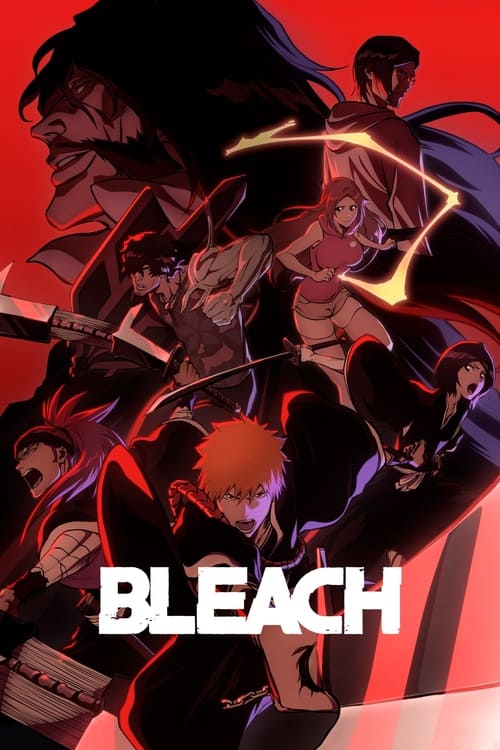
Bleach follows the journey of Ichigo Kurosaki, a teenager with the ability to see ghosts, whose life is irrevocably changed when he meets Rukia Kuchiki, a Soul Reaper. After inheriting her powers to save his family from a malevolent spirit known as a Hollow, Ichigo becomes a substitute Soul Reaper, tasked with guiding souls to the afterlife and protecting humanity from evil spirits. The narrative expands from monster-of-the-week battles to grand political intrigues within the Soul Society, the spirit world's military organization.
As the series progresses, Ichigo and his friends—Orihime, Chad, and Uryū—are drawn into ancient wars involving the Arrancars (Hollows with Reaper powers) led by the traitorous Sōsuke Aizen, and later the Quincies, a faction of human mediums believed to be extinct. The story creates a vast mythology involving different realms of existence, including Hueco Mundo and the Wandenreich, challenging Ichigo to master his hybrid nature.
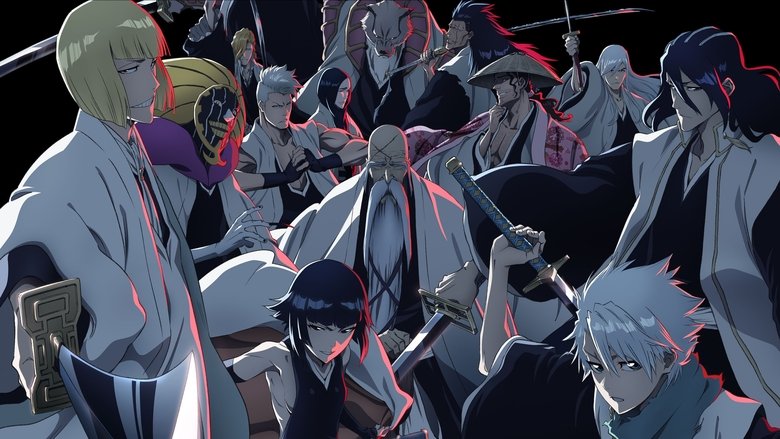
The saga culminates in the Thousand-Year Blood War, where the true history of the Soul Reapers and Quincies is revealed. Ichigo must confront his own origins and the terrifying Yhwach, the father of all Quincies, in a battle that threatens the balance of life and death itself. The series is renowned for its large ensemble cast, intricate power systems (Bankai), and Tite Kubo's distinct fashion-forward art style.
Core Meaning
At its heart, Bleach is a Nietzschean exploration of overcoming self and the conquest of fear. It posits that true strength comes not from the weapon one wields, but from the acceptance of one's own shadow—the grief, fear, and instinct that we try to repress. The central philosophy is encapsulated in the concept of "The Blade is Me": the realization that one must harmonize with their inner demons rather than subjugate them.
The series also meditates on the necessity of death to give meaning to life. Unlike other shonen that seek immortality or absolute peace, Bleach embraces conflict and mortality as essential drivers of evolution. It argues that the desire to protect others is the ultimate defiance against the crushing nihilism of a universe that offers no easy answers.
Thematic DNA
The Burden of Protection
The protagonist's name, Ichigo, can be read as "one who protects." Throughout the series, his motivation shifts from a reactive need to save those in front of him to a proactive resolve to bear the weight of the world. This theme evolves from simple physical defense to emotional guardianship, exploring how the desire to protect can become a heavy shackle if not balanced with trust in others' strength.
Identity and Self-Acceptance
Ichigo's journey is fundamentally an internal war to define who he is. He battles his inner Hollow (instinct/id) and later his Quincy heritage. The series visualizes this internal conflict through his literal battles within his inner world. The theme suggests that wholeness is only achieved when one accepts all facets of their identity, including the monstrous and the contradictory.
Despair vs. Resolve (Rain vs. Sun)
Emotional states are often reflected in the weather of the characters' inner worlds. "Rain" symbolizes despair, trauma, and the cessation of progress, while the sun represents resolve. The narrative constantly challenges characters to stop the "rain" in their hearts by finding the resolve to move forward despite past tragedies.
The Duality of Law and Chaos
The Soul Society represents rigid order, tradition, and stagnation, while the Hollows and Arrancars represent chaotic evolution and instinct. The series explores the friction between these forces, ultimately suggesting that a balance—represented by Ichigo's hybrid nature—is necessary for true justice and survival.
Character Analysis
Ichigo Kurosaki
Masakazu Morita
Motivation
To protect his friends and family; later, to protect the world that houses them. "I want to protect a mountain-load of people."
Character Arc
Ichigo begins as a delinquent teenager traumatized by his mother's death, hiding his kindness behind a scowl. His arc is one of self-discovery: initially rejecting his powers, then fearing his inner Hollow, and finally accepting that he is a convergence of all factions (Soul Reaper, Hollow, Quincy, Human). His journey concludes with the realization "The Blade Is Me," transcending the need for external validation to become a true guardian.
Rukia Kuchiki
Fumiko Orikasa
Motivation
To uphold her duty as a Soul Reaper and repay the kindness Ichigo showed her by standing strong on her own.
Character Arc
Rukia starts as a duty-bound soldier weighed down by survivor's guilt over the death of her lieutenant, Kaien Shiba. Through her bond with Ichigo, she learns to forgive herself. Her arc transforms her from a damsel awaiting execution (Soul Society arc) to a powerful captain who masters the most beautiful and deadly ice-type Zanpakutō, Hakka no Togame, symbolizing her complete self-actualization.
Sōsuke Aizen
Shō Hayami
Motivation
To transcend the boundaries of Soul Reapers and Hollows and replace the "passive" Soul King to create a world of his own design.
Character Arc
Aizen is the series' primary antagonist for the first half, a charismatic leader who fakes his death to overthrow the Soul King. He believes the world's current order is built on a lie and seeks to become a god to reshape reality. His arc is one of tragic isolation; his immense power alienated him, leading to a subconscious desire for defeat, which the Hōgyoku eventually grants him.
Orihime Inoue
Yuki Matsuoka
Motivation
To not be left behind and to protect Ichigo's smile and well-being.
Character Arc
Initially a damsel figure often sidelined, Orihime possesses the god-like power of "phenomena rejection." Her arc is about finding the resolve to use this power not just to heal, but to deny the reality of despair itself. She moves from feeling like a burden to becoming the emotional anchor of the group, standing on the front lines against Yhwach.
Symbols & Motifs
Zanpakutō (Soul Cutter Sword)
The Zanpakutō is not just a weapon but a literal reflection of the wielder's soul. Its shape and abilities manifest the user's true personality and inner conflicts.
Used by every Soul Reaper. The process of learning its name (Shikai) and subjugating it (Bankai) serves as a metaphor for self-discovery and mastery over one's own ego.
Hollow Masks
Masks represent the persona or shield one wears to hide their true instincts and vulnerability. Breaking the mask symbolizes facing the raw truth underneath.
Visoreds and Arrancars wear masks or remnants of them. Ichigo's struggle to control his mask represents his battle to control his darker, more violent impulses without being consumed by them.
Rain
Rain symbolizes grief, depression, and the loss of will. It is the physical manifestation of a crying heart.
It rains in Ichigo's inner world when he is depressed or losing hope. The stoppage of rain marks his return to confidence. Grand Fisher, the hollow who killed his mother, attacked during the rain.
Hell Butterfly (Jigokuchō)
These black butterflies guide souls between worlds, symbolizing the fragile and transformative nature of the soul's journey and the link between life and death.
Seen frequently when Soul Reapers open the Senkaimon gates. They serve as a visual motif connecting the bureaucratic Soul Society with the spiritual cycle.
The Moon
The moon represents mystery, change, and the deceptive nature of reality. It is often associated with Ichigo's power (Getsuga Tenshō - Moon Fang Heaven-Piercer) and Aizen's illusions.
Visuals often frame characters against a giant moon. Aizen's Zanpakutō, Kyōka Suigetsu (Mirror Flower, Water Moon), directly references the moon's ungraspable nature.
Memorable Quotes
Since when were you under the impression that I wasn't using Kyōka Suigetsu?
— Sōsuke Aizen
Context:
Fake Karakura Town Arc: Spoken to Captain Hitsugaya and the other captains after they believe they have successfully struck Aizen down, only to realize they were fighting an illusion.
Meaning:
The ultimate declaration of dominance and manipulation. It signifies that the characters' perception of reality has been entirely under Aizen's control, shattering their confidence and trust in their own senses.
If I don't wield the sword, I can't protect you. If I keep wielding the sword, I can't embrace you.
— Tite Kubo (Volume 5 Poem)
Context:
Volume 5 / Chad's Introduction: Often associated with Yasutora "Chad" Sado's gentle nature contrasting with his immense strength, but serves as a thesis for Ichigo's struggle as well.
Meaning:
This poem encapsulates the central paradox of the series: the necessity of violence to preserve peace, and how that violence alienates the protector from those they love.
I hate perfection. To be perfect is to be unable to improve any further.
— Mayuri Kurotsuchi
Context:
Hueco Mundo Arc: Spoken during his battle with the Espada Szayelaporro Granz, criticizing the villain's belief that he had achieved a perfect form.
Meaning:
A philosophical rebuttal to the idea of a perfect being. It champions endless evolution and the scientific drive to always seek the unknown, contrasting with Szayelaporro's stagnation.
The blade is me.
— Ichigo Kurosaki
Context:
Thousand-Year Blood War Arc: Spoken when Ichigo forges his true dual Zanpakutō, finally accepting both his Quincy and Hollow/Shinigami sides.
Meaning:
The moment of true enlightenment. Ichigo stops seeing his powers (Zangetsu and his Hollow) as separate entities or tools to be used, accepting them as integral parts of his own soul.
Episode Highlights
The Day I Became a Shinigami
The pilot introduces the high-contrast urban fantasy world. Ichigo meets Rukia, and in a desperate act to save his family from the Hollow "Fishbone D," absorbs her powers. This decision sets the entire wheel of fate in motion.
Establishes the core premise and Ichigo's defining trait: self-sacrifice for the sake of protection.
Black & White
The climax of the Soul Society arc. Ichigo reveals his Bankai, Tensa Zangetsu, for the first time to battle Byakuya Kuchiki. The fast-paced battle redefines anime sword fighting with its focus on speed and style.
Marks Ichigo's ascent to Captain-level power and solidifies his ideology of fighting against the law to save a friend.
Ichigo vs. Ulquiorra, Conclusion
After being killed by Ulquiorra, Ichigo undergoes a terrifying transformation into his Vasto Lorde Hollow form. He completely overwhelms the Espada with brutal, animalistic power, losing all reason.
A pivotal moment showing the danger of Ichigo's power consuming him. It explores the theme of what it means to be a monster versus a human with a heart.
The Final Getsuga Tenshō
Ichigo confronts the transcendent Aizen. He sacrifices his Soul Reaper powers to become the Getsuga itself (Mugetsu), delivering a melancholy, silent final attack that splits the sky.
The conclusion of the Aizen saga. It represents the ultimate sacrifice: giving up one's identity to protect the world.
The Blood Warfare
The premiere of the Thousand-Year Blood War arc (Episode 1 of the new series). The Wandenreich invades, bringing a darker, more cinematic tone and vastly improved animation.
revitalized the franchise after a decade-long hiatus, signaling the beginning of the end and introducing the terrifying threat of the Quincies.
Philosophical Questions
Is a stagnant peace better than a chaotic evolution?
The Soul Society maintains balance through rigid, often cruel tradition (the original sin of the Soul King). Aizen and later Yhwach seek to break this cycle to create new worlds—one of dominance, one without death. The series questions whether preserving a flawed status quo is moral when the foundation is built on a lie.
Does death give life its meaning?
Yhwach's goal is to merge life and death, eliminating the fear of death. The series concludes that a world without death would be a world without hope, courage, or progress, positing that mortality is the necessary crucible for the human spirit.
Alternative Interpretations
The Aizen as Hero Theory: Some critics argue that Aizen was arguably right; the Soul King is a mutilated corpse holding reality together in a stagnant limbo, and Aizen's rebellion was a necessary attempt to overthrow a corrupt system, making him a tragic revolutionary rather than a villain.
The Depression Allegory: The "Lost Agent" (Fullbring) arc is often interpreted as a metaphor for depression and loss of purpose. Ichigo's powerlessness and desperation to regain his abilities mirror the struggle of an athlete or artist losing their talent, emphasizing that his self-worth was dangerously tied to his utility as a protector.
Cultural Impact
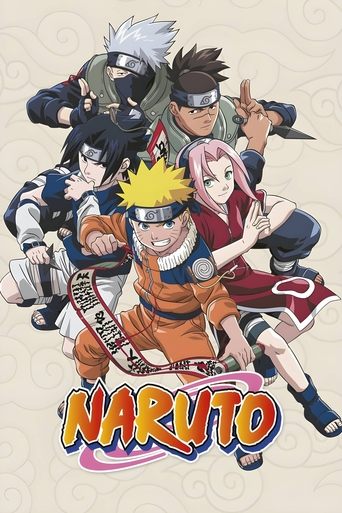
Bleach is recognized as one of the "Big Three" of 2000s shonen anime, alongside Naruto and One Piece, instrumental in popularizing anime globally during that decade. Its influence is profound in its aesthetic legacy; Tite Kubo's sharp, angular character designs and emphasis on "cool" factor (modern street fashion mixed with traditional samurai attire) influenced a generation of artists, including the creator of Jujutsu Kaisen.
Musically, Shiro Sagisu's eclectic soundtrack—blending rock, techno, choir, and Spanish flamenco—set a new standard for anime scoring. While the series suffered a dip in popularity due to filler arcs and a rushed ending to the original anime run, its 2022 return with Thousand-Year Blood War broke streaming records, proving the enduring loyalty of its fanbase and validating its status as a titan of the genre.
Audience Reception
Bleach has had a polarized reception history. The Soul Society Arc (Season 2-3) is universally acclaimed as a masterpiece of shonen storytelling, praised for its pacing, stakes, and the iconic Bankai reveals. However, the subsequent Arrancar Arc faced criticism for repetitive fight structures and pacing issues.
The anime was notoriously plagued by frequent, long filler arcs (The Bount Arc, The New Captain Shūsuke Amagai Arc) which frustrated live viewers and damaged its ratings, leading to its cancellation in 2012. However, the 2022 revival, Thousand-Year Blood War, has been met with overwhelming acclaim, with audiences praising the movie-quality animation, lack of censorship, and tighter pacing, effectively redeeming the franchise's reputation in the modern era.
Interesting Facts
- The title 'Bleach' was chosen because Tite Kubo wanted to suggest the idea of 'cleansing' souls, contrasting with the black robes of the Soul Reapers. He originally considered 'Black' and 'White' but found them too generic.
- Tite Kubo is a huge music fan and assigns specific theme songs to characters; for example, he associated Nirvana's 'Smells Like Teen Spirit' with the series' vibe.
- The character of Ichigo was originally designed with glasses and dark hair, but Kubo changed it to orange hair to make him stand out as a punk/delinquent figure.
- The Spanish motifs for the Arrancars (names like Espada, technique names) and German motifs for the Quincies (Sternritter, Vandenreich) were chosen to give each faction a distinct cultural flavor.
- Bleach was almost rejected by Shonen Jump, but Akira Toriyama (creator of Dragon Ball) sent Kubo a letter encouraging him to continue, which saved the series.
Easter Eggs
Zombie Powder References
Ichigo's substitute badge design and elements of the art style reference Tite Kubo's previous, short-lived manga Zombie Powder.
Fashion Brand Logos
In color spreads and opening sequences, characters often wear real-world street fashion. Kubo includes nods to brands and styles he personally enjoys, making Bleach characters the most fashionable in anime.
Pierrot Logo
The logo of Studio Pierrot (the production studio) occasionally appears in the background of scenes in the Human World as a meta-joke.
⚠️ Spoiler Analysis
Click to reveal detailed analysis with spoilers
Frequently Asked Questions
Explore More About This Movie
Dive deeper into specific aspects of the movie with our detailed analysis pages
Comments (0)
No comments yet. Be the first to share your thoughts!