Naruto
A vibrant shonen epic blending kinetic ninja action with a poignant coming-of-age tale. Amidst a world of mystical jutsus and hidden villages, a lonely outcast paints his dreams in bright orange, fighting to turn rejection into recognition and forge bonds that transcend destiny.
Naruto

Naruto

ナルト

03 October 2002 — 08 February 2007 Japan 4 season 220 episode Ended ⭐ 8.4 (5,862)
Cast: Junko Takeuchi, Noriaki Sugiyama, Chie Nakamura, Kazuhiko Inoue, Hidekatsu Shibata
Animation Sci-Fi & Fantasy Action & Adventure
Loneliness and Acknowledgment Hard Work vs. Genius The Will of Fire (Legacy) Destiny vs. Self-Determination

Overview

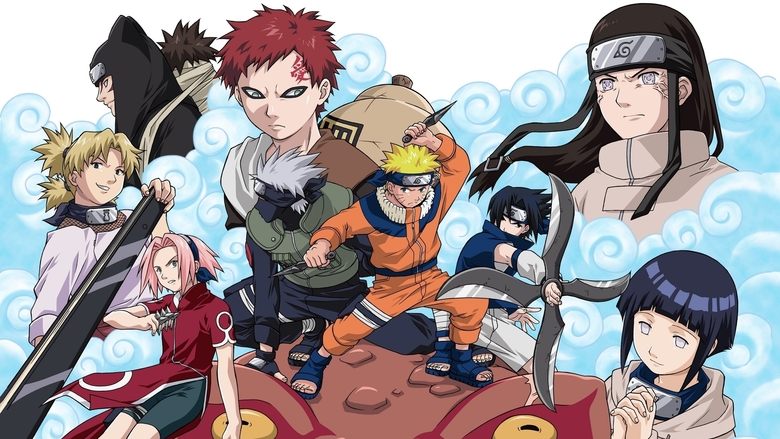
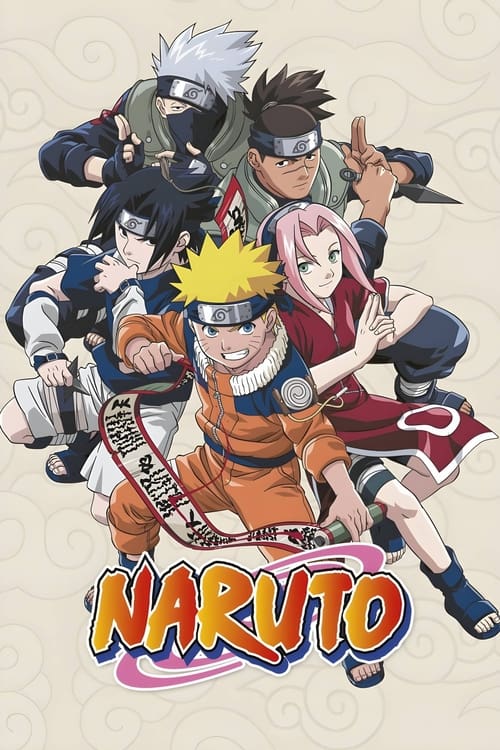
Based on Masashi Kishimoto's manga, Naruto follows the journey of Naruto Uzumaki, a boisterous and ostracized orphan in the Hidden Leaf Village (Konoha). Unbeknownst to him, he harbors the Nine-Tailed Fox, a malevolent beast that nearly destroyed the village years ago. Desperate for acknowledgment, Naruto joins Team 7 alongside his rival, the brooding genius Sasuke Uchiha, and his crush, Sakura Haruno, under the tutelage of the mysterious Kakashi Hatake.

The series chronicles their growth from novice genin to capable warriors through a series of escalating conflicts. From the emotional life-and-death stakes in the Land of Waves to the deadly Chunin Exams tournament, the team faces powerful foes like the Sannin Orochimaru and the sand-controlling Gaara. As the plot progresses, the bonds within Team 7 fracture, leading to a dramatic ideological and physical clash between Naruto and Sasuke that defines the series' emotional core.

Following the climactic battle between the two friends, the narrative shifts into a long series of standalone missions (fillers) that explore the wider ninja world and supporting cast. The series concludes with Naruto departing the village to train with the legendary sage Jiraiya, vowing to become strong enough to save his friend and protect his home, setting the stage for the sequel, Shippuden.
Core Meaning

At its heart, Naruto is a story about the struggle for recognition and the power of human connection to heal trauma. It posits that no one can exist in solitude; identity is forged through the bonds we make with others.

The series contrasts two paths to strength: the path of solitude and hatred (represented by Sasuke and Gaara) versus the path of shared burden and love (represented by Naruto and the Will of Fire). Ultimately, it conveys that true strength comes not from innate talent or destiny, but from the refusal to give up and the desire to protect those precious to you.

Thematic DNA

Loneliness and Acknowledgment 30%
Hard Work vs. Genius 25%
The Will of Fire (Legacy) 25%
Destiny vs. Self-Determination 20%

Loneliness and Acknowledgment

The series opens with Naruto's profound isolation, using his pranks as a cry for attention. This theme mirrors Sasuke's loss and Gaara's monstrous existence. As the show progresses, it explores how different characters cope with loneliness—some through bitterness, others through seeking bonds. Naruto's rise from a pariah to a hero is measured not just in power, but in the number of people who acknowledge his existence.

Hard Work vs. Genius

A central conflict in the Chunin Exams arc, personified by Rock Lee and Naruto against 'geniuses' like Neji and Sasuke. The series champions the idea that unwavering effort ('Guts') can challenge predetermined fate. While later revelations complicate this, the 2002 series heavily leans into the inspiring notion that a 'dropout' can surpass a master through sheer grit.

The Will of Fire (Legacy)

The Will of Fire is the spiritual heritage of the Hidden Leaf Village, passed from generation to generation. It emphasizes that the village is a family and that the old must sacrifice to protect the young. The death of the Third Hokage and the growth of the Konoha 11 exemplify this transfer of hope and responsibility to the next generation.

Destiny vs. Self-Determination

Throughout the Neji fight and the Tsunade arc, characters wrestle with the idea of a fixed fate. Neji believes losers always remain losers, while Naruto fights to prove that one's path is not written in stone. This theme evolves into a struggle against the 'curse' of hatred that plagues the ninja world.

Character Analysis

Naruto Uzumaki

Junko Takeuchi (JP) / Maile Flanagan (EN)

Archetype: The Underdog / The Shonen Hero
Key Trait: Unbreakable resilience

Motivation

To become Hokage and force the village to acknowledge his worth; later, to save Sasuke from darkness.

Character Arc

Naruto starts as a bratty, attention-seeking prankster who is despised by the village. Through the Land of Waves and Chunin Exams, he learns the weight of a ninja's life and gains the respect of his peers. His arc in Part 1 culminates in a desperate failure to save his friend Sasuke, teaching him the harsh reality of the ninja world and hardening his resolve to grow stronger for the future.

Sasuke Uchiha

Noriaki Sugiyama (JP) / Yuri Lowenthal (EN)

Archetype: The Avenger / The Rival
Key Trait: Genius fueled by hatred

Motivation

To kill his brother Itachi and avenge the Uchiha clan.

Character Arc

Initially the cool, talented foil to Naruto, Sasuke is driven by the trauma of his clan's massacre. He warms up to Team 7, finding a new family, but his encounter with Itachi and Orochimaru's curse mark reawaken his thirst for power. He ultimately chooses revenge over bonds, defecting from the village and descending into darkness.

Sakura Haruno

Chie Nakamura (JP) / Kate Higgins (EN)

Archetype: The Heart / The Strategist
Key Trait: Inner strength

Motivation

To be with Sasuke and not be a burden to her team.

Character Arc

Sakura begins as an insecure girl focused more on romance than training. While she often stands on the sidelines in early combat, her intelligence shines. The events of the Chunin Exams and Sasuke's defection shatter her innocence, leading her to realize her own weakness and resolve to become a medic ninja under Tsunade to stand as an equal to her teammates.

Kakashi Hatake

Kazuhiko Inoue (JP) / Dave Wittenberg (EN)

Archetype: The Mentor / The Masked Enigma
Key Trait: Cool competence

Motivation

To protect his students and uphold the philosophy that those who abandon friends are 'scum'.

Character Arc

A laid-back but legendary elite ninja who values teamwork above all else. He guides Team 7, seeing reflections of his own tragic past in them. He struggles with his failure to keep the team together when Sasuke leaves, highlighting the limitations of a teacher's protection.

Gaara

Akira Ishida (JP) / Liam O'Brien (EN)

Archetype: The Dark Reflection
Key Trait: Bloodlust turned to wisdom

Motivation

To validate his own existence (initially through murder, later through connection).

Character Arc

Introduced as a psychotic killer who loves only himself, Gaara mirrors Naruto's jinchuriki status but without any bonds. After being defeated and empathized with by Naruto, his worldview shatters, leading to his redemption and desire to become a leader who protects others.

Symbols & Motifs

The Ninja Headband (Hitai-ate)

Meaning:

It symbolizes maturity, allegiance, and the acknowledgment of becoming a full-fledged ninja. A slash across the symbol represents the severing of ties and rebellion.

Context:

Naruto cries when Iruka first gives him his headband, signifying his acceptance. Later, Sasuke leaves his headband behind (or scratches it) to symbolize his defection from the village.

The Swing

Meaning:

A visual motif for Naruto's loneliness and childhood trauma.

Context:

Frequently shown in flashbacks whenever Naruto feels isolated or reflects on his painful past, contrasting his solitude with the groups of happy families nearby.

Ramen

Meaning:

Comfort, home, and unconditional acceptance.

Context:

Ichiraku Ramen is one of the few places where Naruto was never judged. Eating ramen there with Iruka or friends represents a safe haven and the warmth of bonding.

The Hokage Rock

Meaning:

Ambition, history, and the desire to be 'seen' by the entire village.

Context:

Naruto vandalizes it in the first episode to force people to look at him. It looms over the village constantly as a reminder of his ultimate goal and the weight of leadership.

Memorable Quotes

I'm going to be Hokage! Believe it!

— Naruto Uzumaki

Context:

Spoken repeatedly throughout the series, often to enemies who mock him or when introducing himself.

Meaning:

Naruto's signature catchphrase (Dattebayo in Japanese). It represents his unwavering determination and his mechanism for coping with doubt—speaking his dream into existence until it becomes true.

In the ninja world, those who break the rules are scum, that's true, but those who abandon their friends are worse than scum.

— Kakashi Hatake

Context:

Spoken to Team 7 during the Bell Test (Episode 5) and later revealed to be a lesson Kakashi learned from his old friend Obito.

Meaning:

The moral compass of the entire series. It redefines what it means to be a 'good' ninja, prioritizing human life and loyalty over blind obedience to the mission.

When a person has something important they want to protect... that's when they can become truly strong.

— Haku

Context:

Spoken to Naruto in the forest during the Land of Waves arc (Episode 12), foreshadowing Haku's sacrifice for Zabuza.

Meaning:

A pivotal philosophy that challenges the idea of ninjas as emotionless tools. It teaches Naruto that love is a source of power, not weakness.

I never go back on my word. That is my way of the ninja!

— Naruto Uzumaki

Context:

Declared during his fight with Neji in the Chunin Exams (Episode 62) when challenged about his destiny to lose.

Meaning:

Naruto's personal nindo (ninja creed). It signifies his integrity and stubborn refusal to accept failure or injustice, even when the odds are impossible.

Episode Highlights

Enter: Naruto Uzumaki!

S1E1

Naruto steals the Forbidden Scroll and learns the Shadow Clone Jutsu. Iruka Sensei risks his life to save Naruto, becoming the first person to acknowledge him.

Significance:

Establishes the core theme of acknowledgment and Naruto's first step from a lonely prankster to a capable ninja.

The Demon in the Snow

S1E19

The conclusion of the Land of Waves arc. Haku sacrifices himself for Zabuza, and Zabuza, moved by Naruto's tears, dies fighting for Haku, realizing his own humanity.

Significance:

The first major emotional climax that teaches Team 7 the complexity of the ninja world and the 'Way of Ninja'—fighting for those you love.

Gaara vs. Rock Lee: The Power of Youth Explodes!

S2E48

Rock Lee drops his weights and opens the Inner Gates to fight Gaara's sand defense. Despite his crushing defeat, Lee's effort becomes legendary.

Significance:

Widely considered one of the best fights in anime history. It perfectly encapsulates the 'Hard Work vs. Talent' theme and raises the stakes of the Chunin Exams.

Beyond the Limit of Darkness and Light

S3E79

Naruto summons Gamabunta and fights the transformed Gaara. Naruto headbutts Gaara, forcing him to wake up and empathize with his pain.

Significance:

Naruto saves the village and redeems Gaara, proving that shared pain can create understanding. It marks Naruto's transition to a village hero.

The End of Tears

S3E134

The climax of the battle at the Valley of the End. Naruto (One-Tailed Cloak) and Sasuke (Curse Mark Level 2) clash with Rasengan and Chidori.

Significance:

The tragic turning point of the series. Sasuke defeats Naruto but chooses not to kill him, severing their bond and leaving the village, setting the stage for the rest of the franchise.

Philosophical Questions

Is destiny predetermined or forged?

The series ostensibly champions self-determination through Naruto's fight against Neji. However, this is complicated by later revelations about lineage and prophecy, asking viewers to question if 'hard work' can truly beat 'destiny' or if Naruto was destined to succeed all along.

How do you break the cycle of hatred?

Through the conflict between the Hidden Villages and characters like Gaara and Sasuke, the show asks if peace is possible in a world built on vengeance. It proposes that empathy (understanding another's pain) is the only solution, rather than military might.

Alternative Interpretations

The Failure of the System: Some critics interpret the series not just as a hero's journey, but as a critique of the military-industrial complex (the Ninja Villages). The 'peace' they fight for is maintained by child soldiers and endless cycles of retaliation.

Naruto as a Tragic Figure: While framed as optimistic, an alternative reading suggests Naruto's loyalty to a village that ostracized him acts as a form of Stockholm Syndrome, where he seeks validation from his abusers rather than finding his own path.

Cultural Impact

Naruto became a global phenomenon, forming the 'Big Three' of shonen anime alongside One Piece and Bleach in the 2000s. It served as a gateway series for an entire generation of Western fans, popularizing anime on networks like Cartoon Network's Toonami.

Culturally, it introduced ninja concepts (chakra, hand signs, kunai) into the global mainstream. The 'Naruto Run' became a recognizable internet meme, culminating in the 'Storm Area 51' event in 2019. The series' themes of overcoming loneliness resonated deeply with young audiences, creating a massive, dedicated fanbase. Critics praised its intricate combat system and emotional depth, though the excessive filler episodes in the latter half of the 2002 series are historically criticized for pacing issues.

Audience Reception

Upon release, Naruto was a critical and commercial smash hit. Audiences fell in love with the underdog protagonist and the strategic, high-stakes battles (particularly the Chunin Exams). The animation quality of key fights like Lee vs. Gaara and Naruto vs. Sasuke is still revered today.

However, the reception dipped significantly after the Sasuke Retrieval Arc (around episode 135). The following ~85 episodes were almost entirely 'filler' (non-canon stories not in the manga), leading to frustration among fans who wanted the main plot to continue. despite this, the series remains beloved for its emotional highs, iconic soundtrack (flutes and taiko drums), and character designs.

Interesting Facts

  • The name 'Naruto' refers to a fish cake with a pink swirl found in ramen, but it is also the name of a famous whirlpools city in Japan, linking to the 'Uzumaki' (spiral) surname.
  • Creator Masashi Kishimoto delayed the introduction of Sasuke because he hadn't created him yet; his editor suggested adding a rival to make the story more interesting.
  • The iconic 'Naruto Run' (arms trailing behind the back) was chosen because it was easier to animate than realistic running.
  • The series contains numerous references to Japanese mythology, such as the legendary Sannin (Jiraiya, Tsunade, Orochimaru) being from the folklore tale 'The Tale of the Gallant Jiraiya'.
  • Naruto's goggles were replaced by the forehead protector (headband) early on because drawing the goggles every time was too time-consuming for Kishimoto.
  • The anime is infamous for its high amount of 'filler' episodes; after episode 135, the series is almost entirely original content until the final episode to allow the manga to get ahead.

Easter Eggs

Pakkun's Keychain

In episode 20, Pakkun (Kakashi's summon dog) is seen on a keychain attached to Naruto's wallet, foreshadowing the character's appearance much later in the series.

Rock Lee / Bruce Lee

Rock Lee is a direct homage to Bruce Lee. He shares the same birthday, similar hairstyle, and uses the 'drunken fist' style, referencing Bruce Lee's movies.

Movie Posters in Background

Throughout the series (especially in later filler arcs), posters for actual Naruto theatrical movies can be seen on walls in the background of scenes, breaking the fourth wall.

Son Goku Reference

The Four-Tailed Beast is named Son Goku (revealed fully in Shippuden but rooted in lore), a direct reference to the Monkey King from Journey to the West and a nod to Dragon Ball, which heavily inspired Kishimoto.

⚠️ Spoiler Analysis

Click to reveal detailed analysis with spoilers

Frequently Asked Questions

Explore More About This Movie

Dive deeper into specific aspects of the movie with our detailed analysis pages

Comments (0)

Leave a comment

No comments yet. Be the first to share your thoughts!