The Best Offer
A sophisticated psychological thriller where an ivory-tower art auctioneer is seduced by a reclusive heiress, trading his meticulously curated isolation for a hauntingly beautiful, yet potentially catastrophic, emotional masterpiece.
The Best Offer

The Best Offer

La migliore offerta

"A master of possession. A crime of obsession."

01 January 2013 Italy 131 min ⭐ 7.8 (2,972)
Director: Giuseppe Tornatore
Cast: Geoffrey Rush, Jim Sturgess, Sylvia Hoeks, Donald Sutherland, Maximilian Dirr
Drama Crime Romance
The Duality of Authenticity and Forgery Isolation and Human Connection Obsession and Voyeurism Betrayal and Revenge
Budget: $13,500,000
Box Office: $19,255,873

Overview

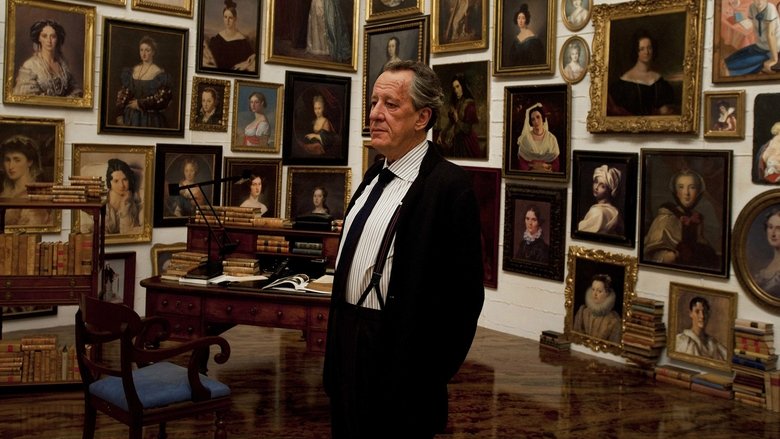
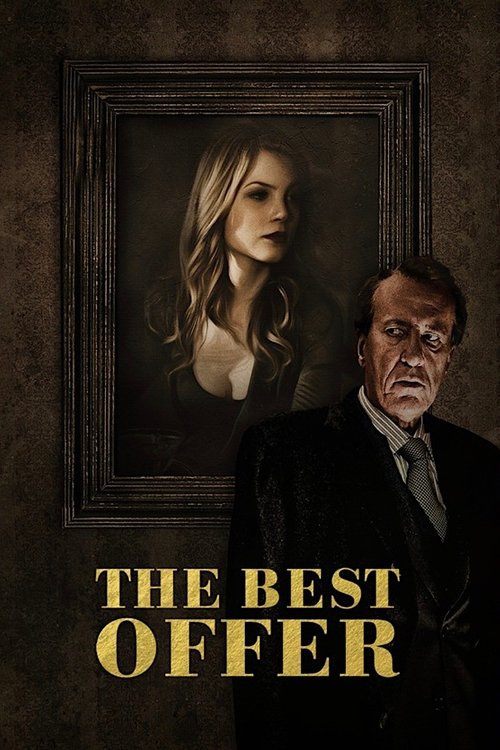
Virgil Oldman (Geoffrey Rush) is a world-renowned but eccentric art auctioneer and appraiser, living a life of fastidious isolation and luxury. His only emotional outlets are his vast secret collection of female portraits and his periodic fraudulent schemes with his friend Billy (Donald Sutherland). His rigid routine is shattered when he is contacted by Claire Ibbetson (Sylvia Hoeks), a mysterious young heiress who suffers from severe agoraphobia and refuses to be seen in person. She tasks him with auctioning her parents' extensive collection of antiques and art, drawing him into the decaying elegance of her family villa.

As Virgil spends more time at the villa, communicating with Claire through walls and hidden doors, he finds himself increasingly obsessed with her. Aided by Robert (Jim Sturgess), a charming mechanical expert who helps him piece together parts of a rare 18th-century automaton found in the villa, Virgil begins to emerge from his shell. The film follows Virgil's emotional awakening as he attempts to 'cure' Claire of her phobia, leading him down a path where the distinction between an authentic life and a masterfully crafted forgery becomes dangerously blurred.
Core Meaning

The core message of The Best Offer is an exploration of authenticity in human experience versus the safety of idealized isolation. Director Giuseppe Tornatore examines how we assign value to things—be they paintings or people—and the inherent risk of vulnerability. The film suggests that while life and love can be faked as masterfully as a Renaissance painting, the 'forger' almost always leaves behind a trace of their own truth. Ultimately, it posits that the experience of a 'genuine' emotion, even if provoked by a lie, may be worth more than a lifetime of sterile, authentic loneliness.

Thematic DNA

The Duality of Authenticity and Forgery 35%
Isolation and Human Connection 25%
Obsession and Voyeurism 20%
Betrayal and Revenge 20%

The Duality of Authenticity and Forgery

The film constantly parallels art restoration with human relationships. Virgil’s mantra, "In every forgery, there is always something authentic," serves as the backbone of the narrative. It explores how emotions can be simulated to achieve a goal, yet the act of simulation itself requires a piece of the simulator's true self.

Isolation and Human Connection

Virgil’s germaphobia and his use of gloves symbolize his fear of being 'contaminated' by human contact. His journey represents a tragic attempt to transition from a world of sterile perfection (art) to the chaotic, messy reality of human intimacy.

Obsession and Voyeurism

The camera often acts as a voyeur, mirroring Virgil’s own behavior. His secret vault of female portraits shows a man who prefers the 'image' of a woman to the person. This obsession makes him susceptible to the mystery of Claire, who is effectively an 'unseen' artwork for much of the film.

Betrayal and Revenge

A subtext of professional jealousy and long-term resentment drives the plot. The film examines the 'long game' of revenge, where characters use Virgil's own expertise and psychological weaknesses to dismantle his carefully constructed world.

Character Analysis

Virgil Oldman

Geoffrey Rush

Archetype: Antihero / Tragic Hero
Key Trait: Meticulousness and emotional sterility

Motivation

Initially motivated by professional excellence and a secret greed for art; later driven by a desperate need for a real human connection he never knew he lacked.

Character Arc

Transitions from a fastidious, controlling misanthrope to a vulnerable man in love, eventually ending as a broken figure clinging to a sliver of hope in a world of clocks.

Claire Ibbetson

Sylvia Hoeks

Archetype: Femme Fatale / Damsel in Distress (Deceptive)
Key Trait: Enigmatic vulnerability

Motivation

Participating in a grand heist, though the film leaves a small window of ambiguity regarding whether she developed real feelings for Virgil.

Character Arc

Portrays herself as a fragile, agoraphobic victim to lure Virgil into her world, only to be revealed as a primary actor in a high-stakes robbery.

Billy Whistler

Donald Sutherland

Archetype: Shadow / False Mentor
Key Trait: Patient vengefulness

Motivation

Driven by decades of resentment over Virgil's dismissal of his own artistic talent and his desire to finally 'beat' the master of authentication.

Character Arc

Maintains a front of a loyal, mediocre artist and partner-in-crime until his true nature as a vengeful mastermind is revealed.

Robert

Jim Sturgess

Archetype: Trickster / Sidekick
Key Trait: Charming technical brilliance

Motivation

Technical challenge and financial gain, though he leaves a message of genuine respect/regret for Virgil.

Character Arc

Appears as a brilliant, helpful mechanic and romantic advisor to Virgil, but is ultimately revealed as the technical architect of the deception.

Symbols & Motifs

The Automaton

Meaning:

Symbolizes the deception itself—an intricate mechanism built piece by piece. It also represents Virgil, a man who is 'mechanical' and heartless until he is 'wound up' and given a voice by the presence of a woman.

Context:

Found in pieces throughout the villa, Robert gradually reassembles it for Virgil. Its completion coincides with the final reveal of the con.

Gloves

Meaning:

Represent emotional barriers and Virgil's refusal to touch reality. They signify his control over his environment and his detachment from human emotion.

Context:

Virgil wears them everywhere, only removing them when he is alone with his art or, eventually, when he feels truly intimate with Claire.

Female Portraits

Meaning:

Symbolize idealized, non-interactive love. They are the 'perfect' women who never age, never argue, and never leave—a safety net that prevents Virgil from seeking a real partner.

Context:

Stored in a secret vault behind Virgil's closet, which he visits to find solace.

The 'Night and Day' Cafe in Prague

Meaning:

Symbolizes liminality and waiting. It represents Virgil's hope for the 'authentic' part of the forgery—waiting in a place of constant ticking (clocks) for a love that may never return.

Context:

The setting of the final scene, which Claire mentioned was the only place she ever felt safe.

The Dwarf Woman in the Bar

Meaning:

Symbolizes raw, mathematical truth and reality (Science) as a contrast to Virgil's world of subjective beauty (Art). She is the literal 'real' Claire Ibbetson, providing the objective facts that debunk the illusion.

Context:

A woman with a photographic memory who sits in the cafe across from the villa, counting and recording everything.

Memorable Quotes

There's always something authentic concealed in every forgery.

— Virgil Oldman

Context:

Virgil explains his philosophy on art, which later becomes the thin reed of hope he clings to at the end.

Meaning:

The film's central thesis. It suggests that a forger cannot help but put their own soul into their work, which mirrors how even in a fake relationship, real emotions might leak through.

Human emotions are like works of art. They can be forged. They seem just like the original, but they are a forgery.

— Billy Whistler

Context:

Billy speaks to Virgil early in the film, foreshadowing the betrayal that Virgil is too blind to see.

Meaning:

A direct warning to Virgil and a statement of Billy's cynical worldview. It highlights the theme of emotional manipulation.

What's it like living with a woman? Like taking part in an auction sale. You never know if yours will be the best offer.

— Lambert

Context:

An exchange between Virgil and his assistant, reflecting Virgil's total lack of experience with women.

Meaning:

Links the film's title to its romantic themes, suggesting that love is a competitive and uncertain market where value is relative.

Philosophical Questions

Is a perfect forgery as valuable as the original if the observer cannot tell the difference?

The film asks if the *experience* of the art is what matters rather than its provenance. Virgil finds genuine emotional growth through a fake relationship, suggesting the subjective experience has its own intrinsic value.

Can human emotion ever be truly simulated without a kernel of truth?

Through the automaton and Claire's performance, the film explores whether a lie requires the liar to tap into their own authentic feelings, making the deception a 'half-truth' of sorts.

Alternative Interpretations

There are several ways to interpret the film's haunting conclusion in Prague:

  • The Hopeful Reading: Virgil waits at the 'Night and Day' cafe because he truly believes that Claire loved him. He is following the 'something authentic' theory, hoping that her confession of love was the one part of the scam that was real.
  • The Delusional Reading: Some viewers interpret the final sequence as a hallucination or a manifestation of Virgil's mental breakdown while in the asylum. The sterile, white, rotating environment of the asylum early in the ending sequence suggests he may never have left.
  • The Purgatory Reading: The cafe represents a personal purgatory where Virgil is trapped in time (surrounded by clocks), unable to return to his old life of art or move forward into a new one.

Cultural Impact

The Best Offer is seen as a major late-career work for Giuseppe Tornatore, marking a departure from his more nostalgic themes (like Cinema Paradiso) toward a darker, Hitchcockian thriller style. Critically, it was praised for its 'old-world' cinematic elegance and Geoffrey Rush's commanding performance, though some critics found the script's symbolism a bit heavy-handed. It had a significant impact on Italian cinema of the decade, sweeping the David di Donatello Awards and proving that Italian directors could successfully produce high-budget, English-language thrillers with international appeal. Philosophically, it contributed to a wider cultural conversation about the value of the 'copy' in an era of digital reproduction and AI, echoing themes found in Walter Benjamin’s work.

Audience Reception

Audience reception of The Best Offer is generally polarized but leans positive. Viewers often praise the film for its sumptuous production design, Ennio Morricone's score, and the heart-wrenching twist. Many find the slow-burn mystery and the psychological profile of Virgil Oldman to be deeply engaging. However, some audiences and critics (resulting in a 55% Rotten Tomatoes score) criticized the film for being 'overheated,' 'melodramatic,' and for having a twist that becomes predictable for seasoned thriller fans. The 'skeevy' nature of the age-gap relationship was also a point of contention for some viewers.

Interesting Facts

  • The film was shot in multiple European cities including Trieste, Vienna, Prague, and Bolzano.
  • The legendary Ennio Morricone composed the score, recording it with the Czech National Symphony Orchestra.
  • The automaton in the film was created by the contemporary British artist and 'mechanical maverick' Rob Higgs.
  • The film won 6 David di Donatello awards, including Best Film and Best Director for Giuseppe Tornatore.
  • Director Giuseppe Tornatore originally wrote the script with an alternate ending set in a Rome restaurant but chose the Prague ending for its atmospheric impact.
  • The film was titled 'Deception' for its UK release.
  • Geoffrey Rush studied the mannerisms of real auctioneers at Sotheby's to prepare for the role.

Easter Eggs

The identity of the 'real' Claire Ibbetson

The dwarf woman in the bar who constantly recites numbers is actually named Claire. She owns the villa and is the 'real' person behind the name, having rented the property to the scammers.

Hidden 'V' in the forgeries

Virgil mentions a 16th-century forger who hid a 'V' in her work. This mirrors Virgil's own name (Virgil) and his role as both a discoverer and a victim of forgeries.

The Portrait Gallery

The vault contains several actual masterpieces, including Petrus Christus's 'Portrait of a Young Girl' and Raphael's 'La Fornarina,' which are famous for their enigmatic subjects.

⚠️ Spoiler Analysis

Click to reveal detailed analysis with spoilers

Frequently Asked Questions

Explore More About This Movie

Dive deeper into specific aspects of the movie with our detailed analysis pages

Comments (0)

Leave a comment

No comments yet. Be the first to share your thoughts!