Skip to content
Nouvelle Vague
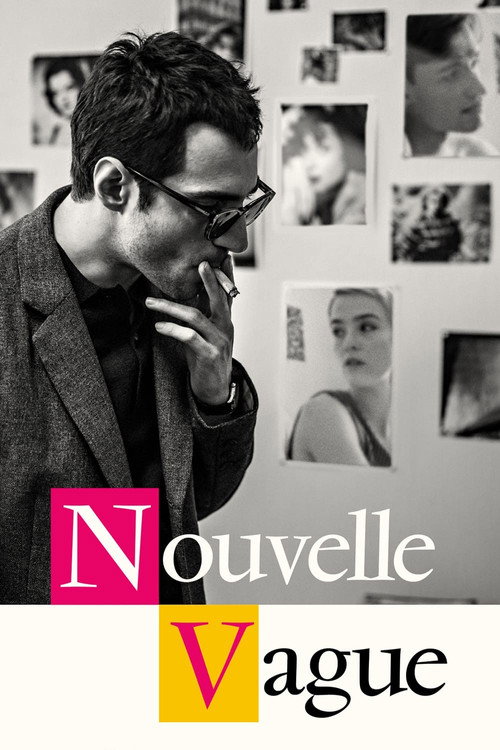
A sun-drenched, smoky monochrome reverie of late-1950s Paris that captures the electric, anxious audacity of youth turning life into cinema—a poetic collision of cigarettes, kinetic streets, and radical creative freedom.
Nouvelle Vague

Nouvelle Vague

"Everyone loves the new wave."

08 October 2025 France 106 min 7.2 (260)

Director: Richard Linklater

Cast: Guillaume Marbeck, Zoey Deutch, Aubry Dullin, Adrien Rouyard, Antoine Besson

Drama History Comedy Artistic Rebellion vs. Institutional Conformity The Creative Process and Improvisation as Discovery The Burden and Drive of Peer Rivalry Cross-Cultural Dialogue & Alienation The Fleeting Nature of Youth and Time
Budget: $9,900,000

Overview

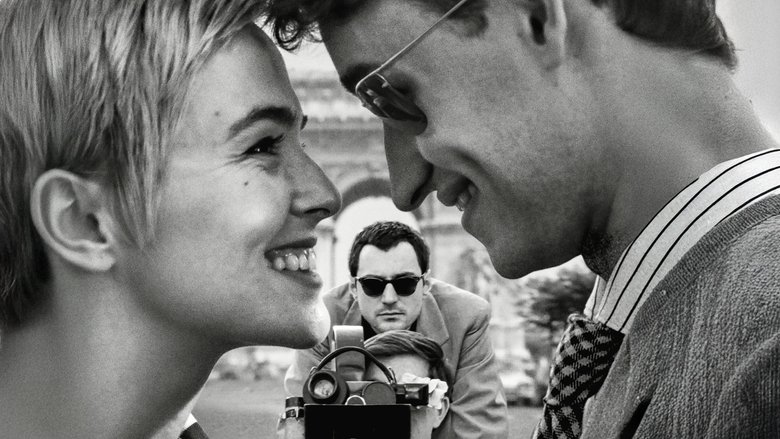
Set in the vibrant creative cauldron of Paris in 1959, Nouvelle Vague follows young, eccentric film critic Jean-Luc Godard. Feeling left behind and quietly envious as his Cahiers du Cinéma comrades—François Truffaut and Claude Chabrol—achieve major cinematic breakthroughs with The 400 Blows and Le Beau Serge, Godard decides that the ultimate form of film criticism is to make a film himself.

Scraping together a shoestring budget from skeptical producer Georges de Beauregard and working from an outline drafted with Truffaut, Godard plunges into the guerrilla production of À bout de souffle (Breathless). He casts Jean-Paul Belmondo, an unpolished stage actor with boxer charm, and lures American Hollywood expat Jean Seberg, who is recovering from commercial and critical setbacks in American studio productions.

With a bare-bones crew featuring documentary combat cameraman Raoul Coutard, Godard takes to the streets without official permits, a conventional script, or industry lighting. What begins as a chaotic, unpredictable shoot marked by daily improvisation, clashes over artistic direction, and financial tightropes gradually crystallizes into a historic movement that forever shatters the conventions of classical cinema.
Core Meaning

Richard Linklater’s primary thesis in Nouvelle Vague is that artistic revolutions are rarely born from grand, calculated manifestos or lavish institutional support; they emerge from the raw impatience of youth, tight constraints, accidental discoveries, and the passionate impulse to strip away stale tradition.

Linklater demystifies the myth of Jean-Luc Godard without diminishing the genius of Breathless, illustrating that cinema is an evolving, living organism captured in the present tense. By treating Godard’s production as a signature Linklater "hangout" dynamic, the film celebrates the communal camaraderie, naive courage, and pure joy of creating something revolutionary simply because the existing rules no longer feel true to life.

Thematic DNA

Artistic Rebellion vs. Institutional Conformity 30%
The Creative Process and Improvisation as Discovery 25%
The Burden and Drive of Peer Rivalry 20%
Cross-Cultural Dialogue & Alienation 15%
The Fleeting Nature of Youth and Time 10%

Artistic Rebellion vs. Institutional Conformity

Explored through the clash between the ossified Tradition de Qualité of French studio filmmaking and the raw, spontaneous energy of the New Wave. Godard rejects static cameras, studio sets, and artificial polish in favor of raw street reality.

The Creative Process and Improvisation as Discovery

Revealed by capturing Godard's radical process—writing dialogue minutes before shooting, embracing technical mistakes, and inventing grammar on the fly rather than executing pre-planned storyboards.

The Burden and Drive of Peer Rivalry

Shown through the complex dynamics within the Cahiers du Cinéma collective—mutual admiration laced with fierce insecurity and competitiveness, pushing Godard to prove himself alongside Truffaut and Chabrol.

Cross-Cultural Dialogue & Alienation

Explored through Jean Seberg’s perspective as an American in Paris navigating linguistic misunderstandings, differing acting techniques, and Hollywood precision versus European avant-garde chaos.

The Fleeting Nature of Youth and Time

A hallmark of Linklater’s filmography, reflecting on how historical milestones feel ordinary, messy, and humorous while they are being lived in real time.

Character Analysis

Jean-Luc Godard

Guillaume Marbeck

Archetype: The Rebel Visionary / Reluctant Auteur Key Trait: Enigmatic, brooding, and relentlessly uncompromising.

Motivation

To revolutionize cinematic form, prove his artistic worth to his Cahiers peers, and capture reality unburdened by studio artifice.

Character Arc

Starts as an anxious, acerbic critic insecure about falling behind his friends; through trial, conflict, and sheer stubbornness, he trusts his instincts and finds his distinct visual voice.

Jean Seberg

Zoey Deutch

Archetype: The Fish Out of Water / The Inquisitive Star Key Trait: Luminous, intelligent, culturally conflicted, and adaptable.

Motivation

To break free of Hollywood's rigid star system and prove her artistic depth as an actress abroad.

Character Arc

Initially bewildered and skeptical of Godard’s lack of preparation and cryptic direction, she gradually embraces the vulnerability and improvisational freedom of the shoot.

All 4 characters and cast

Symbols & Motifs

Godard’s Dark Sunglasses

Meaning:

Symbolizes Godard’s enigmatic persona, his intellectual barrier against vulnerability, and his deliberate gaze, filtering and reframing reality through cinematic lenses.

Context:

Worn constantly by Godard throughout the production and in personal confrontations, acting as a personal shield and stylistic signature.

The Handheld Caméflex / Post Office Cart

Meaning:

Symbolizes liberation from heavy studio tripods and the democratization of the filmmaking medium.

Context:

Used by cinematographer Raoul Coutard, who is pushed inside a postal cart or wheelchair down Parisian streets to shoot guerrilla tracking shots without permits.

Mirrors and Reflected Gazes

Meaning:

Symbolizes dual identities—actors confronting their characters, self-awareness, and cinema observing itself.

Context:

Prominently featured during Seberg and Belmondo’s extended rehearsals and intimate conversations in the Hotel de Suède bedroom scene.

The Herald Tribune Newspaper & T-Shirt

Meaning:

Serves as an emblem of mid-century modernity, transatlantic culture, and the collision between consumerism and street-level art.

Context:

Worn and sold by Jean Seberg while walking along the Champs-Élysées during the production scenes.

Cigarette Smoke

Meaning:

Represents the existential French intellectual milieu, the ephemeral passage of time, and the relaxed tempo of spontaneous collaboration.

Context:

Permeating Parisian cafes, editing rooms, and cramped hotel spaces throughout the entirety of the production.

Memorable Quotes

La meilleure façon de critiquer un film, c’est d’en faire un.
— Jean-Luc Godard

Context

Godard argues with fellow Cahiers du Cinéma writers about film theory in a Parisian café, laying down the gauntlet for his transition from critic to director.

Meaning

Encapsulates the core philosophy that true cinematic understanding comes from direct creative action rather than detached intellectual theory.

Tout ce dont vous avez besoin pour faire un film, c'est d'une fille et d'un pistolet.
— Jean-Luc Godard

Context

Godard pitching his stripped-down premise of Breathless to producer Georges de Beauregard.

Meaning

Summarizes Godard's minimalist, pulp-inspired cinematic ethos, rejecting overly bloated and complex studio productions.

All 4 quotes

Philosophical Questions

Can rules only be broken once they are understood?

The film demonstrates how Godard's deep critical literacy and theory at Cahiers du Cinéma allowed him to deconstruct classical continuity deliberately rather than accidentally.

What constitutes 'authenticity' in filmed fiction?

By utilizing street noise, natural light, and spontaneous dialogue dubbed in post-production, the film explores whether raw imperfection captures higher truth than technical perfection.

Is cinema an individual auteur's vision or an accidental communal alchemy?

The friction among Godard's vision, Coutard’s camera ingenuity, Beauregard’s financing, and the actors’ charisma directly questions the myth of the solitary genius.

Alternative Interpretations

Several alternative readings have emerged from the film:

Full ending explanation

Cultural Impact

Nouvelle Vague arrived at a moment of deep reflection in contemporary cinema concerning the loss of independent theatrical culture and the shift toward digital homogeneity. Godard’s original Breathless in 1960 dismantled academic French film conventions and inspired generations of international auteurs such as Martin Scorsese, Quentin Tarantino, and Wong Kar-wai.

Linklater bridges American indie sensibility with French cinephilia. Premiering at Cannes 2025 in the Main Competition, the film received widespread critical acclaim across Europe and North America for its warmth, historical fidelity, and buoyant energy, earning Linklater historic recognition in France as a César-winning American director.

Audience Reception

Audience and critical reception has been overwhelmingly positive, celebrating the film as one of Richard Linklater’s most charming late-career achievements.

Critical Praise: Reviewers widely praised the uncanny performances of Guillaume Marbeck, Zoey Deutch, and Aubry Dullin, as well as David Chambille’s luminous black-and-white cinematography and the vibrant, nostalgic recreation of 1959 Paris. Critics also lauded Linklater’s light, affectionate comic tone and avoidance of stuffy biopic conventions.

Points of Criticism: Some hardline Godard purists felt the film leaned too heavily into comfortable, breezy nostalgia rather than capturing Godard's caustic, prickly, and radical political edge. Others noted minor critiques that the film functions primarily for cinephiles who already know the behind-the-scenes lore of Breathless.

Interesting Facts

  • Although directed by American auteur Richard Linklater, the film is predominantly in French and was shot entirely on location in Paris.
  • Richard Linklater became only the second American filmmaker in history to win the César Award for Best Director for this film.
  • Cinematographer David Chambille used vintage 1950s lenses and real black-and-white 35mm film stock formatted in the classical 1.37:1 Academy aspect ratio to faithfully emulate Raoul Coutard’s original lighting-free cinematography.
  • Zoey Deutch learned to speak French with Jean Seberg’s distinct Midwestern-American cadence and was nominated for Best Supporting Performance at the Independent Spirit Awards.
  • Linklater cast theatre newcomers Guillaume Marbeck and Aubry Dullin after extensive casting calls across France to avoid recognizable star baggage obscuring Godard and Belmondo.
  • At the 2025 Cannes Film Festival premiere, Quentin Tarantino was reportedly so enamored by the recreation of New Wave history that he watched the film twice within eight hours.
  • Linklater spent over a decade developing the script alongside Holly Gent, Vincent Palmo Jr., and French screenwriters Michèle Halberstadt and Laetitia Masson.

Easter Eggs

Cannes 1959 Opening

The film opens at the 1959 Cannes Film Festival during the premiere of François Truffaut's The 400 Blows, directly mirroring its real-world festival debut and setting the historical timeline.

Cameos of French New Wave Luminaries

Brief appearances and vignettes feature iconic figures of the era, including Agnès Varda, Jacques Rivette, Éric Rohmer, and Suzanne Schiffman.

Humphrey Bogart Poster Reflection

Recreates the famous shot of Belmondo gazing at a poster of Humphrey Bogart while rubbing his lips, referencing American cinema's profound influence on French cinephiles.

Faux Reel Change Cues

Subtle optical cigarette burns and film-grain scratches are integrated into the frame as a stylistic homage to mid-century celluloid projection.

Frequently Asked Questions

Explore More About This Movie

Dive deeper into specific aspects of the movie with our detailed analysis pages

Comments (0)

Leave a comment

No comments yet. Be the first to share your thoughts!

Similar Movies