Skip to content
Broker
A tender, sun-dappled road drama that replaces societal condemnation with profound empathetic warmth, evoking the feeling of a sudden sunbeam breaking through the mist on a rainy highway.
Broker

Broker

브로커

"Some leave. Some retrieve."

08 June 2022 South Korea 129 min 7.2 (560)

Director: Hirokazu Kore-eda

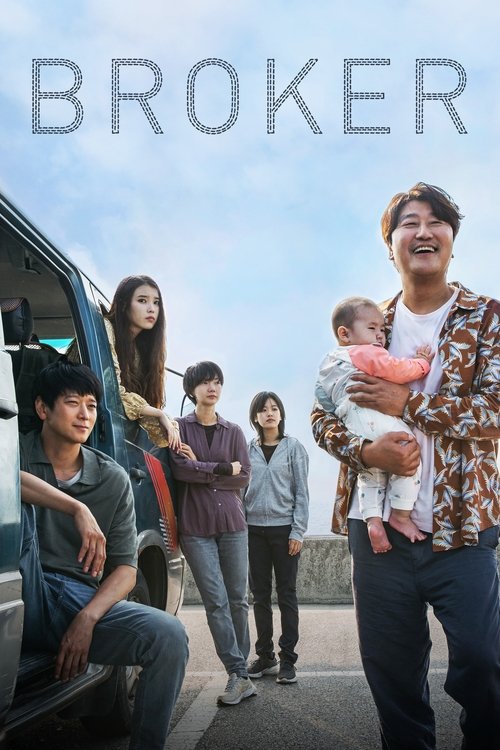
Cast: Song Kang-ho, Gang Dong-won, Bae Doona, IU, Lee Joo-young

Drama Found Family and Unconventional Kinship Deconstructing Morality and Societal Judgment Maternal Guilt, Sex Work, and Reproductive Taboos The Failure of Child Welfare and Institutional Gaps
Box Office: $18,632,208

Overview

Set against the backdrop of modern South Korea, Broker follows Ha Sang-hyeon (Song Kang-ho), a debt-ridden launderette owner, and his close associate Dong-soo (Gang Dong-won), a former orphan who volunteers at a local church. Together, they run an illicit underground scheme: intercepting infants left anonymously in the church’s “baby box” and selling them to affluent couples seeking to bypass bureaucratic adoption hurdles.

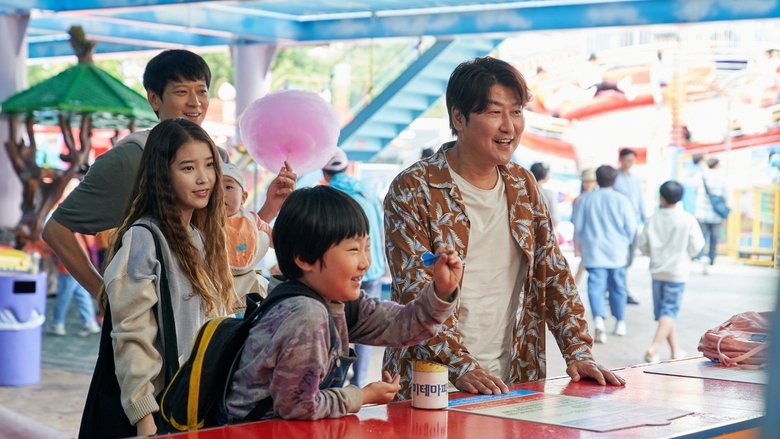
Their routine operation is upended when Moon So-young (IU / Lee Ji-eun), the desperate young mother who abandoned her newborn son Woo-sung, unexpectedly returns. Rather than calling the police, So-young decides to join the two brokers on a road trip across the country in an old van to interview prospective adoptive parents and ensure her baby finds a good home. Along the way, their journey is unintentionally joined by Hae-jin (Im Seung-soo), an energetic runaway boy from an orphanage.

Unbeknownst to the makeshift traveling troupe, two tenacious female police detectives, Soo-jin (Bae Doona) and Detective Lee (Lee Joo-young), are tailing them across South Korea. Waiting for an illicit financial transaction to take place so they can catch the brokers red-handed, the investigators slowly find their rigid moral preconceptions challenged as they witness the genuine care taking root among this unconventional, wandering band of outcasts.

Core Meaning

Hirokazu Kore-eda uses Broker to deliver a gentle yet unyielding humanist critique of institutionalized morality and the societal stigma surrounding single mothers and child abandonment. The film explores the idea that human worth is not conditional on legal legitimacy, social status, or biological heritage.

At its core, the director affirms the absolute sanctity of existence: that every human being, regardless of the painful circumstances of their conception or birth, deserves to be told that their life matters. Kore-eda suggests that when rigid institutional systems fail vulnerable individuals, genuine empathy, collective responsibility, and makeshift familial bonds can offer a sanctuary of healing and mutual salvation.

Thematic DNA

Found Family and Unconventional Kinship 30%
Deconstructing Morality and Societal Judgment 25%
Maternal Guilt, Sex Work, and Reproductive Taboos 25%
The Failure of Child Welfare and Institutional Gaps 20%

Found Family and Unconventional Kinship

Kore-eda continues his career-long exploration of kinship formed outside biological bloodlines. The crew of misfits—a laundromat debtor, an abandoned orphan, a fugitive mother, a stowaway child, and a baby—transform an illicit trafficking journey into a cocoon of mutual protection and emotional healing.

Deconstructing Morality and Societal Judgment

The narrative actively shifts the audience's perspective from detached moral superiority (embodied early on by Detective Soo-jin) to deep situational empathy. The film contrasts legal righteousness with human warmth, showing how black-and-white legal categories fail to capture the gray realities of human survival.

Maternal Guilt, Sex Work, and Reproductive Taboos

Through So-young’s character, the film addresses South Korea’s stigmatization of unmarried mothers and sex workers. It challenges the glib platitude of "don't have a baby if you will abandon it" by exposing the patriarchal traps, exploitation, and lack of support single mothers face.

The Failure of Child Welfare and Institutional Gaps

Dong-soo’s and Hae-jin’s orphanage backgrounds expose the emotional scars of state-run institutional care. The illicit baby brokers operate precisely within the vacuum created by restrictive, highly bureaucratic official adoption laws.

Character Analysis

Ha Sang-hyeon

Song Kang-ho

Archetype: Flawed Mentor / Reluctant Antihero Key Trait: Affable, world-weary gentleness and deep-seated fatherly instinct.

Motivation

To clear his crushing underworld debts while securing a comfortable future for baby Woo-sung.

Character Arc

Shifts from an opportunistic trafficker seeking to settle his debts to a self-sacrificing patriarch who surrenders his own freedom to protect his surrogate children.

Dong-soo

Gang Dong-won

Archetype: Wounded Healer / Loyal Companion Key Trait: Stoic exterior hiding deep vulnerability and empathy.

Motivation

To ensure Woo-sung does not grow up suffering the loneliness and longing of institutional life.

Character Arc

Begins harboring deep resentment toward mothers who abandon children; through So-young, he heals his trauma and willingly shoulders legal blame.

All 5 characters and cast

Symbols & Motifs

The Baby Box (베이비 박스)

Meaning:

Represents both a literal safe haven and an indictment of social neglect. It acts as the threshold between abandonment and survival, dividing cold societal indifference outside from warmth inside.

Context:

Used at the church where infants are deposited anonymously in Busan, initiating the central plot and moral dilemma.

The Car Wash (세차장)

Meaning:

A pivotal scene of communal joy and spiritual cleansing. The water metaphorically washes away past sins, guilt, and alienation, baptizing the group as a united family.

Context:

Occurs when Hae-jin opens the window during an automatic car wash, allowing soap and water to flood into the old van while the characters laugh together.

The Ferris Wheel (대관람차)

Meaning:

A motif of cyclical journeys, temporary elevation, and emotional intimacy where characters reveal their most hidden vulnerabilities and tears.

Context:

Featured during an amusement park visit where characters are suspended in the air away from the world below.

The Covering of the Eyes (손차양 / 눈 가리기)

Meaning:

Symbolizes protective tenderness, shielding another person's pain and tears from harsh exposure.

Context:

Dong-soo covers So-young’s eyes with his hand on the Ferris wheel so she can cry freely.

Rain and Umbrellas

Meaning:

Rain serves as a visual metaphor for abandonment and harsh social realities, while shared shelter or covered space represents protective empathy.

Context:

Seen prominently when baby Woo-sung is left outside in the rain and during outdoor stakeouts.

The Rearview Mirror / Group Photo

Meaning:

Captures the fragile, fleeting reality of the makeshift unit, serving as an emotional anchor that outlasts their physical separation.

Context:

Visible in the van's interior reflections and the photo booth photograph taken during their road trip.

Memorable Quotes

태어나줘서 고마워.
— Moon So-young (Lee Ji-eun)

Context

Spoken in the pitch-black hotel room near the film's climax, So-young says this individually to Dong-soo, Sang-hyeon, Hae-jin, and baby Woo-sung.

Meaning

It is the philosophical thesis of the entire film, offering unconditional validation of existence to abandoned souls who spent their lives feeling unwanted.

버릴 거면 낳지를 말든가.
— Detective Soo-jin (Bae Doona)

Context

The very first line of the film, uttered by Soo-jin while watching So-young leave Woo-sung in the rain.

Meaning

It encapsulates the unexamined prejudice of mainstream society, which the rest of the film meticulously unpacks and challenges.

All 4 quotes

Philosophical Questions

Is it inherently better to be born into hardship than not to be born at all?

The film directly confronts antinatalist impulses versus the radical affirmation of existence expressed through the central phrase "Thank you for being born".

Where does true parental responsibility reside?

Kore-eda questions whether true parenthood is defined by biological lineage, legal certification, or intentional, loving presence.

Who carries the primary guilt when an infant is abandoned?

The film investigates whether moral blame lies with the desperate mother or the indifferent societal structures that ostracize and fail her.

Alternative Interpretations

The ending lends itself to three distinct readings:

Full ending explanation

Cultural Impact

Broker engaged directly with real-world social debates in South Korea:

  • The Baby Box Debate in South Korea: South Korea introduced church-operated baby boxes in 2009 (pioneered by Pastor Lee Jong-rak at Jusarang Community Church). While intended to prevent infanticide, they sparked intense national debates regarding whether they encourage abandonment or save lives.
  • Adoption Law Realities (2012 Special Adoption Act): South Korea's 2012 adoption reforms required birth registrations in the biological mother’s official civil registry before an adoption could proceed, inadvertently leading many vulnerable or stigmatized single mothers to turn to anonymous drop boxes or black markets to avoid life-ruining records.
  • Transnational East Asian Auteurship: The film stands as a prominent example of pan-Asian cinematic collaboration, combining a premier Japanese auteur's directorial sensibilities with South Korea's top-tier screen talents, studio backing (CJ ENM), and technical crew.

Audience Reception

Critical Praise:

  • Exemplary Acting Ensemble: Critics widely celebrated the cast, notably Song Kang-ho’s effortless warmth and IU’s complex, nuanced portrayal of trauma and motherhood.
  • Humanist Directing: Kore-eda was praised for his trademark gentleness, non-judgmental approach, and emotional resonance.
  • Lyrical Technical Craft: Hong Kyung-pyo’s naturalistic lensing and Jung Jae-il’s minimalist piano score received high acclaim.

Criticisms & Controversies:

  • Tonal Juggling and Sprawling Plot: Some critics felt the addition of gangsters, murder subplots, and police stings made the narrative messier and less understated than Kore-eda’s Japanese works like Still Walking or Shoplifters.
  • Overt Sentimentality: A segment of international critics noted that the film wears its moral messaging more overtly on its sleeve, sacrificing ambiguity for emotional directness.
  • Controversial Elements: Debates arose over the premise of rendering baby traffickers deeply sympathetic, with some commentators questioning whether it romanticized black-market child dealing.

Overall Verdict: A warm, emotionally resonant, and gently moving road movie that, despite a busier narrative structure than Kore-eda's finest minimalist works, succeeds brilliantly on the strength of its profound empathy and stellar performances.

Interesting Facts

  • Song Kang-ho won the Best Actor Award at the 75th Cannes Film Festival (2022) for his performance as Sang-hyeon, making him the first South Korean male actor in history to win an acting prize at Cannes.
  • Hirokazu Kore-eda cast Lee Ji-eun after binge-watching the acclaimed 2018 K-drama My Mister during the COVID-19 pandemic, being captivated by her emotional range.
  • The iconic moment on the Ferris wheel where Gang Dong-won covers IU's eyes with his hand was an unscripted improvisation suggested by Gang Dong-won during filming to convey tenderness without overt melodrama.
  • Gang Dong-won spent considerable time interviewing adults who grew up in South Korean orphanages to capture Dong-soo's lingering childhood wounds accurately.
  • The film brought together elite Korean crew members who worked on Bong Joon-ho's Parasite, including renowned cinematographer Hong Kyung-pyo and composer Jung Jae-il.
  • In addition to Song Kang-ho’s win, Broker was awarded the Prize of the Ecumenical Jury at Cannes 2022, which honors works of high artistic quality that touch upon the human condition and spiritual dimensions.
  • Kore-eda and Song Kang-ho had pledged to work together since first meeting at the Busan International Film Festival over 15 years prior.

Easter Eggs

Cameos by My Mister & Itaewon Class Alumni

Kore-eda filled supporting roles with actors from Korean dramas he admired, including Song Sae-byeok and Park Hae-joon from My Mister, and Ryoo Kyung-soo and Lee Joo-young from Itaewon Class.

Lee Dong-hwi’s Comedic Cameo

Actor Lee Dong-hwi makes a memorable cameo appearance as Song, a comically unqualified and shallow prospective buyer who tries to bargain down the price of the baby.

Bae Doona’s Kore-eda Reunion

This marks Bae Doona’s second collaboration with Kore-eda, having previously starred as the inflatable doll brought to life in his 2009 Japanese film Air Doll (空気人形).

Theatrical Echoes of Shoplifters

The composition of the makeshift family crowded into an old vehicle directly mirrors the beach outing and living room compositions in Kore-eda's 2018 Palme d'Or winner Shoplifters.

Frequently Asked Questions

Explore More About This Movie

Dive deeper into specific aspects of the movie with our detailed analysis pages

Comments (0)

Leave a comment

No comments yet. Be the first to share your thoughts!

Similar Movies