Cardcaptor Sakura
A sun-drenched magical girl reverie, where gentle courage blooms and every captured card is a lesson in the boundless, compassionate power of love.
Cardcaptor Sakura

Cardcaptor Sakura

カードキャプターさくら

07 April 1998 — 10 June 2018 Japan 4 season 92 episode Returning Series ⭐ 8.6 (766)
Cast: Sakura Tange, Junko Iwao, Motoko Kumai, Aya Hisakawa, Emi Shinohara
Animation Sci-Fi & Fantasy Action & Adventure
The Many Forms of Love Growth and Responsibility Redefining Strength and Femininity Confronting and Accepting Feelings

Overview

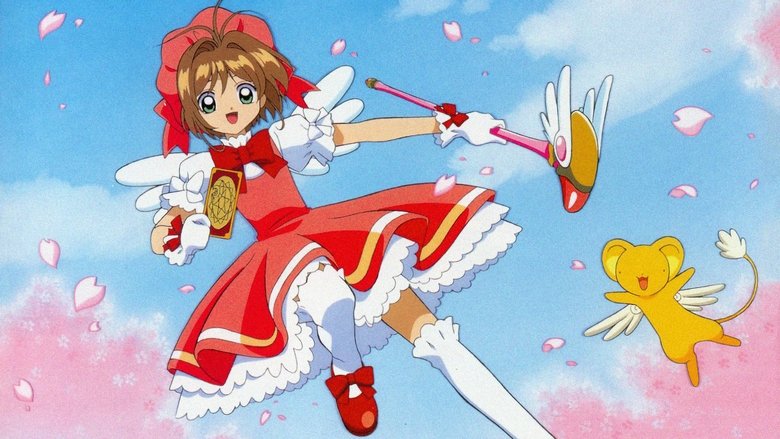
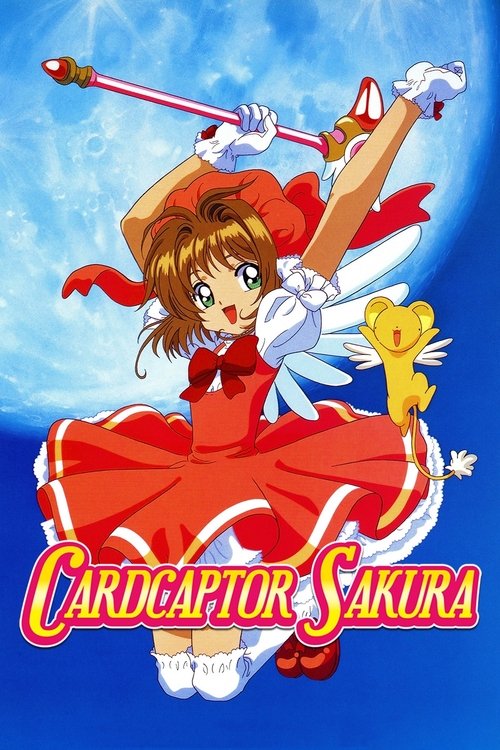
"Cardcaptor Sakura" follows Sakura Kinomoto, a cheerful and athletic ten-year-old girl who accidentally unleashes a set of magical Clow Cards from a mysterious book in her basement. The guardian beast of the cards, Cerberus (Kero), awakens and tasks Sakura with recapturing the scattered cards to prevent a catastrophe from befalling the world. Each card represents a unique force and causes magical phenomena in her hometown of Tomoeda. Aided by her best friend and second cousin, Tomoyo Daidouji, who designs her battle costumes and films her adventures, Sakura learns to master her growing magical abilities.

Her mission is soon complicated by the arrival of Syaoran Li, a descendant of the Clow Cards' creator, Clow Reed, who initially acts as a rival but gradually becomes a crucial ally and friend. The first part of the series, the Clow Card Arc, focuses on the duo's competitive but collaborative efforts to capture all the cards. The second part, the Sakura Card Arc, sees Sakura face a new set of challenges orchestrated by a mysterious new transfer student, Eriol Hiiragizawa. She must transform the Clow Cards into her own Sakura Cards, a process that tests her strength and forces her to create her own unique magic, solidifying her role as the new Master of the Cards.
Core Meaning

The core meaning of "Cardcaptor Sakura" is an exploration and celebration of love in its myriad forms—platonic, familial, romantic, and unrequited. The series posits that the greatest magic is not the phenomenal power of the Clow Cards, but the empathy, kindness, and compassion that connect people. Through Sakura's journey, the show teaches that true strength lies in gentleness, understanding, and the courage to face one's own feelings and the feelings of others. It carefully deconstructs the traditional 'good vs. evil' narrative, instead presenting conflicts that are often misunderstandings or trials of character, solved not with violence, but with ingenuity and a sincere desire to connect with others.

Thematic DNA

The Many Forms of Love 40%
Growth and Responsibility 30%
Redefining Strength and Femininity 20%
Confronting and Accepting Feelings 10%

The Many Forms of Love

"Cardcaptor Sakura" is fundamentally a story about love. It moves beyond simple romantic love to explore a diverse spectrum of relationships with a gentle, non-judgmental lens. This includes Sakura's initial crush on the gentle Yukito, Syaoran's evolving feelings for Sakura that grow from rivalry to deep affection, and Tomoyo's profound and selfless devotion to Sakura's happiness. The series also gives significant weight to the deep, loving bond between Sakura's brother, Touya, and his best friend, Yukito, which is one of the most prominent and positive queer relationships in mainstream anime of its era. Familial love is also central, shown through Sakura's relationship with her kind father and her memories of her late mother.

Growth and Responsibility

Sakura's journey from an ordinary fourth-grader to the Master of the Clow Cards is a powerful coming-of-age story. Initially, she is a cheerful but somewhat naive girl who is frightened by her new responsibilities. Throughout the series, she learns to face her fears, think creatively to solve magical problems, and handle the immense power she wields with grace and care. Her magical development, symbolized by the transformation of the Clow Wand into her own Star Wand, mirrors her personal growth from a child relying on others to a confident and capable young sorceress who trusts in her own strength and judgment.

Redefining Strength and Femininity

The series challenges traditional gender norms and tropes within the magical girl genre. Sakura's power doesn't come from aggression but from her kindness, empathy, and emotional intelligence. She often seeks to understand the Clow Cards rather than simply defeat them. Her battle costumes, created by Tomoyo, are incredibly varied and often frilly or elaborate, subverting the idea that power must be presented in a masculine or purely utilitarian way. The show promotes a vision of femininity that is both gentle and immensely powerful, teaching that emotional vulnerability and compassion are sources of strength.

Confronting and Accepting Feelings

A significant part of the characters' development involves learning to understand and express their emotions honestly. Sakura must confront her crush on Yukito and accept that his heart belongs to her brother. Syaoran undergoes a profound arc, moving from a denial of his feelings for Sakura to a heartfelt confession. Tomoyo exemplifies selfless love, finding her greatest joy in Sakura's happiness even if her own romantic feelings are not reciprocated. The show emphasizes that acknowledging and communicating feelings, even difficult ones, is a vital part of growing up and forming meaningful bonds.

Character Analysis

Sakura Kinomoto

Sakura Tange

Archetype: The Heroine
Key Trait: Boundless Empathy

Motivation

Her primary motivation is the protection of her friends, family, and town. She is driven by a deep sense of responsibility and an innate kindness. She doesn't seek power for its own sake, but rather accepts her role to ensure everyone's happiness and safety. Her famous catchphrase, "Everything will be all right," reflects her optimistic determination to overcome any obstacle.

Character Arc

Sakura begins as a cheerful, slightly naive elementary school student, overwhelmed by the sudden responsibility of being a Cardcaptor. Initially, she is often scared and relies heavily on Kero's guidance. Across the series, she grows into a confident, resourceful, and powerful sorceress who trusts her own judgment. Her journey is one of emotional and magical maturation, learning to understand complex relationships and eventually surpassing the power of Clow Reed himself by creating her own unique magic to transform the cards. She evolves from a girl chasing cards to a master who commands them with empathy.

Syaoran Li

Motoko Kumai

Archetype: The Rival / The Ally
Key Trait: Fierce Loyalty

Motivation

Initially, his motivation is to prove himself as the rightful heir to Clow Reed and to gather the cards for his family. This motivation shifts entirely as the series progresses. His focus moves from the cards to Sakura herself, and his primary drive becomes protecting her and helping her succeed, even at his own expense.

Character Arc

Syaoran is introduced as an arrogant and serious rival, determined to collect the Clow Cards himself. He is initially dismissive of Sakura's abilities and views her as unworthy. However, as he witnesses her kindness, courage, and growing power, his respect for her blossoms into friendship and eventually deep romantic love. His arc is one of the most significant in the series, as he transforms from a solitary antagonist into Sakura's most loyal supporter and partner, learning to value collaboration and express his vulnerability.

Tomoyo Daidouji

Junko Iwao

Archetype: The Confidante / The Supporter
Key Trait: Selfless Devotion

Motivation

Tomoyo's core motivation is her profound love for Sakura. Everything she does, from designing elaborate battle costumes to filming every capture, is an expression of this love. She wants to capture and enhance Sakura's charm and greatness for the world, and her greatest happiness is seeing Sakura happy and successful.

Character Arc

Tomoyo is Sakura's steadfast best friend and biggest supporter from the very beginning. Her character does not undergo a dramatic transformation because her core traits—maturity, selflessness, and devotion—are already firmly established. Instead, her arc is one of consistent and unwavering support. She acts as Sakura's confidante, costume designer, and documentarian. She finds her happiness in supporting Sakura's own happiness, encouraging her relationship with Syaoran despite her own deep, loving feelings for Sakura. Her arc is about expressing love through acts of service and finding joy in the happiness of others.

Touya Kinomoto

Tomokazu Seki

Archetype: The Guardian / The Protector
Key Trait: Perceptive

Motivation

Touya is driven by a powerful protective instinct, primarily for his sister Sakura and his best friend Yukito. He holds the belief that he is the only one entitled to tease his sister, but this belies a fierce desire to keep her safe from harm. His ultimate motivation is the well-being of the two most important people in his life, leading him to make a significant personal sacrifice.

Character Arc

Touya, Sakura's older brother, initially appears as a teasing but caring sibling. His arc involves the gradual reveal of his own magical abilities and his deep, perceptive awareness of Sakura's secret life as a Cardcaptor. He watches over her from a distance, quietly protecting her. The culmination of his arc is a profound act of sacrifice: he gives up his magical powers to Yue to save both Yue and Yukito's life, demonstrating the depth of his love and his commitment to protecting those he cares about.

Yukito Tsukishiro / Yue

Megumi Ogata

Archetype: The False Persona / The Guardian
Key Trait: Duality

Motivation

Yukito's motivation is to live a normal life and cherish his bond with Touya. Yue's initial motivation is his unwavering loyalty to Clow Reed, which makes him resist acknowledging Sakura as a worthy successor. After Touya sacrifices his powers to save him, Yue's motivation expands to include protecting both Yukito and Sakura, honoring the love and sacrifice that allowed him to survive.

Character Arc

Yukito is presented as a kind, gentle, and perpetually hungry high school student, who is Touya's best friend and Sakura's first crush. His arc is one of discovery, as both he and Sakura learn he is merely a temporary form for Yue, the cold and powerful lunar guardian of the Clow Cards. Yue is initially dismissive of Sakura, loyal only to his former master, Clow Reed. Over the course of the series, Yukito grapples with his fading existence and Yue must come to accept Sakura as his new master. The two halves of his being eventually reconcile, with Yukito's love for Touya and Yue's newfound loyalty to Sakura creating a stable, unified existence.

Symbols & Motifs

Clow Cards / Sakura Cards

Meaning:

The cards symbolize challenges, emotions, and aspects of the natural world. In their Clow form, they represent a legacy of power that Sakura must understand and master. When she transforms them into Sakura Cards, they symbolize her personal growth, ingenuity, and ownership of her own unique magic, distinct from her predecessor, Clow Reed.

Context:

The central driving force of the plot. Sakura encounters and captures a different card in nearly every episode of the first arc. In the second arc, she revisits them, transforming them one by one through trials that test her abilities, solidifying her status as their new master.

Tomoyo's Camera and Costumes

Meaning:

The camera symbolizes devotion, perspective, and the preservation of memory. Tomoyo's act of filming Sakura is an expression of her love and admiration, capturing the qualities she finds most beautiful in her friend. The ever-changing battle costumes symbolize the unique nature of each challenge and celebrate Sakura's femininity as a source of strength, rather than a single, static magical uniform.

Context:

Tomoyo is present at nearly every card capture, diligently recording the event. Before each mission, she presents Sakura with a new, specially designed costume, complete with accessories, which has become one of the most iconic visual elements of the series.

The Sun and The Moon

Meaning:

This duality represents the two sources of magic under Clow Reed and the balance of power. The Sun is embodied by Cerberus (Kero), representing active, outward, and Western magic. The Moon is embodied by Yue, representing passive, introspective, and Eastern magic. Sakura's ability to command both guardians signifies her immense potential and her role as a unifier who balances these different forces.

Context:

Kero is Sakura's constant companion from the beginning, while Yue is the hidden true form of Yukito Tsukishiro. Yue's appearance marks the climax of the Clow Card arc, serving as the Final Judge to test Sakura's worthiness as the new Master. Sakura's acceptance by both guardians is crucial to her success.

Memorable Quotes

ぜったいだいじょうぶだよ。

— Sakura Kinomoto

Context:

Sakura says this throughout the entire series, often to reassure herself or her friends before confronting a Clow Card or facing a difficult situation. It becomes a personal mantra that reflects her growth in confidence.

Meaning:

Translating to "Everything will be all right," this is Sakura's iconic catchphrase. It encapsulates her unwavering optimism, resilience, and her ability to inspire courage in herself and others, even in the face of daunting magical challenges. It is the heart of her character and the series' hopeful tone.

The greatest happiness for me is to let the person I most like have the most happiness.

— Tomoyo Daidouji

Context:

Tomoyo often expresses this sentiment when discussing her support for Sakura. It's particularly poignant when she helps Syaoran with his feelings for Sakura, demonstrating that her own love for Sakura translates into wanting the best for her, no matter what form that takes.

Meaning:

This quote perfectly summarizes Tomoyo's selfless and profound love for Sakura. It highlights a mature understanding of love that prioritizes the beloved's well-being above one's own desires, a central theme of the show. It is a beautiful expression of platonic (with romantic subtext) devotion.

Even if I lose this feeling, I'm sure that I'll just fall in love with you all over again.

— Syaoran Li

Context:

This line is spoken during a moment of emotional vulnerability in the second movie, "Cardcaptor Sakura The Movie 2: The Sealed Card," as they face a powerful force that threatens to erase feelings. It serves as the ultimate confession and reassurance of his love.

Meaning:

Syaoran says this to Sakura, expressing the depth and certainty of his feelings for her. It signifies the complete transformation of his character from a rival to a devoted partner. The quote suggests that his love for her is not a fleeting emotion but a fundamental and inevitable truth for him.

No matter what you're thinking, if you don't say it, you won't be able to express it.

— Tomoyo Daidouji

Context:

Tomoyo gives this advice to Syaoran, encouraging him to confess his feelings to Sakura. She acts as a gentle catalyst, helping him overcome his shyness and move his relationship with Sakura forward.

Meaning:

A piece of sage advice that underscores the series' theme of emotional honesty. Tomoyo, despite her own reserved feelings, understands the importance of communication in building relationships. It's a simple but powerful message about vulnerability and the courage to express one's true self.

Episode Highlights

Sakura's Wonderful First Day

S1E1

The series premiere introduces the cheerful Sakura Kinomoto, her family, and her idyllic life. Drawn by a noise in her father's library, she finds and opens the magical Clow Book, accidentally scattering the powerful Clow Cards across town and awakening their guardian, Cerberus. Kero tasks her with becoming the Cardcaptor, and she successfully captures her first card, The Windy.

Significance:

This episode masterfully sets the tone for the entire series: a blend of slice-of-life charm with magical adventure. It establishes the central premise, introduces the key characters, and begins Sakura's journey from an ordinary girl to a burgeoning magician, all with a sense of wonder and warmth.

Sakura and the Double

S1E25

Sakura is troubled by reports of a doppelgänger causing mischief around town. The situation becomes serious when the double, revealed to be The Mirror card, lures her brother Touya into danger, injuring him. Sakura confronts the card, and rather than a simple battle, the encounter is an emotional one where the Mirror card shows remorse for its actions before being sealed.

Significance:

This episode is significant for giving a Clow Card a distinct personality and a small character arc. It reinforces the series' theme of understanding over conflict. It also highlights Touya's protective nature and his subtle awareness of Sakura's secret life.

Sakura and the Final Judgement

S2E11

The climax of the Clow Card arc. After capturing all the cards, Sakura must face the Final Judgment administered by Yue, the moon guardian and Yukito's true form. The stakes are immense: if she fails, everyone will forget the person they love most. Yue easily defeats Syaoran, leaving Sakura to face him alone. Using her ingenuity and the very first card she captured, The Windy, she succeeds without harming Yue, proving her worth.

Significance:

This is a pivotal turning point where Sakura officially becomes the new Master of the Clow Cards. Her victory is not one of brute force but of compassion and cleverness, cementing her character and the show's core message that true strength is gentle. It concludes the first major storyline of the series.

Sakura and the Snowy New School Term

S3E1

Sakura starts the fifth grade, but a mysterious blizzard envelops the town in April. Sensing a Clow Card, Sakura investigates, but discovers a new, unknown magical force at play. This marks the first major trial she faces as the new Master of the Cards and sets the stage for the second half of the series.

Significance:

This episode kicks off the Sakura Card arc, introducing a new antagonist and a new central conflict: the need for Sakura to transform the Clow Cards into her own. It shifts the dynamic from collecting to creating, marking a new stage in her magical development.

Sakura and Her True Feelings

S3E24

The final episode of the original series. With all the trials over, the narrative focuses entirely on Sakura's emotional state as she processes Syaoran's confession and his imminent departure to Hong Kong. After a heartfelt rush to the airport, she learns she has created a new, nameless card from her feelings for him. The episode ends on a poignant, hopeful note about their future.

Significance:

Serving as the emotional climax of the series, this episode resolves the central romantic storyline. It brings Sakura's emotional arc full circle, as her own feelings become the source of a powerful new magic. It provides a satisfying, albeit open-ended, conclusion to her journey of self-discovery.

Philosophical Questions

What is the nature of 'love'?

The series is a deep dive into this question, presenting love not as a single concept but as a vast spectrum of feelings. It explores romantic love (Sakura and Syaoran), unrequited love (Sakura for Yukito, Tomoyo for Sakura), familial love (the Kinomotos), and deep platonic/romantic love (Touya and Yukito). The show suggests that all forms of love are valid and powerful, and that the highest form of love is selfless, prioritizing the happiness of the loved one. It never judges the nature of these feelings, whether they are between different genders, the same gender, or even across perceived barriers of age in the source material.

Is strength found in power or in kindness?

"Cardcaptor Sakura" consistently argues that true strength lies in kindness. Sakura is destined to become the most powerful sorceress, but her real power is her empathy. She feels for the Clow Cards, understands their natures, and captures them with ingenuity and care, not brute force. Her victory in the Final Judgement is a prime example: she wins not by overpowering Yue, but by trapping him gently with The Windy card, refusing to hurt him. The series posits that compassion and the ability to connect with others is a far greater power than any destructive magic.

Alternative Interpretations

Queer Subtext and Relationships: While some relationships like Touya and Yukito's are textually romantic, much of the series can be read through a queer lens. Tomoyo's feelings for Sakura are a cornerstone of this interpretation. While she explicitly states her love, its depiction as a pure, selfless devotion that finds happiness in Sakura's own happiness (even with a boy) is seen by some as a subtle and positive representation of unrequited queer love. The original manga and uncensored anime also feature a relationship between the elementary school student Rika and her adult male teacher, which is often viewed critically by modern Western audiences but is presented within the series' non-judgmental framework of 'true love' transcending age or gender.

Feminist Reading: The series is often analyzed as a feminist work that challenges traditional gender roles. Sakura's power is inherently linked to her empathy and emotional intelligence, qualities traditionally coded as feminine. She resolves conflicts through understanding rather than domination. Tomoyo's role as the costume designer subverts the male gaze; she dresses Sakura not for others, but as an expression of her own artistic appreciation and love for her friend's 'cuteness' and strength. The show presents a world where female friendship and support are paramount, and a girl's kindness is her greatest asset.

Cultural Impact

"Cardcaptor Sakura" had a profound impact on the magical girl genre and anime as a whole. Airing in the wake of "Sailor Moon," it refined and evolved the genre by shifting the focus from a 'monster-of-the-week' battle formula to a character-driven story centered on emotional growth and relationships. Its emphasis on kindness and understanding over violence set a new standard, influencing a wave of "Neo-classical" magical girl shows that prioritized personal development.

The series was a critical and commercial success, becoming a cultural touchstone for a generation of viewers in Japan and internationally. Despite a heavily censored English dub that failed to capture its essence, the original Japanese version endured and grew in popularity, praised for its sophisticated storytelling and emotional depth. One of its most significant legacies is its frank and positive portrayal of LGBTQ+ relationships, particularly the unambiguous romantic love between Touya and Yukito, and Tomoyo's devoted crush on Sakura. This was groundbreaking for a mainstream children's show in the 1990s and helped normalize queer representation in anime.

"Cardcaptor Sakura" also heavily influenced the concept of 'moe' (a strong affection for cute characters) due to its charming protagonist and visually appealing designs, broadening its audience to include older male fans. Its legacy continues with the sequel series, "Cardcaptor Sakura: Clear Card," demonstrating its lasting appeal and solidifying its status as one of the three pillars of the magical girl genre, alongside "Sailor Moon" and "Puella Magi Madoka Magica".

Audience Reception

"Cardcaptor Sakura" was met with widespread critical and audience acclaim upon its release in Japan and has since become a beloved classic worldwide. It is praised for its charming and optimistic tone, strong character development, and sophisticated emotional storytelling. Fans consistently laud the series for its wholesome nature, beautiful art style, and the genuine warmth of its character relationships. Sakura's journey is celebrated as a heartwarming and empowering coming-of-age story.

The positive and matter-of-fact portrayal of diverse relationships, especially the queer relationships between Touya and Yukito and the subtext of Tomoyo's feelings for Sakura, has been a significant point of praise, particularly among older audiences and critics who appreciate its progressive nature for its time. However, the English dub, "Cardcaptors," received significant criticism from fans of the original for its heavy-handed edits, which removed episodes, changed character relationships, and shifted the focus to be more action-oriented in an attempt to appeal to a young male demographic. This censorship is widely seen as having diluted the emotional core of the series for its initial North American broadcast.

Interesting Facts

  • The series was created by CLAMP, an all-female manga artist collective. Head writer Nanase Ohkawa wanted to create a magical girl series that CLAMP could make their own, focusing on a character younger readers could relate to.
  • Unlike other magical girl anime like Sailor Moon where the heroine has one transformation outfit, CLAMP's artists thought it would be 'sad' for Sakura to wear the same thing all the time. This led to the iconic concept of Tomoyo designing a unique battle costume for almost every episode.
  • The 1998 anime series contains 70 episodes, spread across three seasons in its original Japanese broadcast.
  • The English dub, titled "Cardcaptors," was heavily edited by Nelvana for American audiences. It re-ordered episodes, cut entire episodes out, and removed or altered plot points considered controversial, such as the various same-sex relationships, to refocus the show on action.
  • There are more Clow Cards in the anime (52, plus the two movie cards) than in the original manga (19). The anime staff created the additional cards to extend the story for television.
  • The relationship between Touya and Yukito is one of the earliest and most prominent canon gay couples in a mainstream anime targeted at a young audience.
  • The series won the Animage Grand Prix award for Best Anime in 1999.

Easter Eggs

Characters and concepts from "Cardcaptor Sakura" reappear in other CLAMP works, most notably "Tsubasa: Reservoir Chronicle" and "xxxHolic".

These series establish a shared multiverse where alternate versions of Sakura, Syaoran, Touya, and Yukito exist. In "Tsubasa," the main plot is driven by a quest to reclaim the scattered memories (in the form of feathers) of an alternate Princess Sakura. This creates a deep and rewarding connection for fans who follow CLAMP's entire body of work, suggesting that these characters are 'soul pairs' destined to be together across different worlds.

⚠️ Spoiler Analysis

Click to reveal detailed analysis with spoilers

Frequently Asked Questions

Explore More About This Movie

Dive deeper into specific aspects of the movie with our detailed analysis pages

Comments (0)

Leave a comment

No comments yet. Be the first to share your thoughts!