Counterattack
Contraataque
Overview
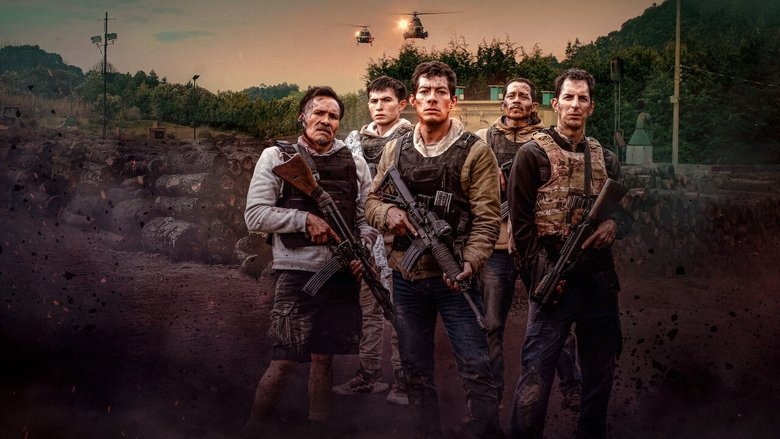
"Counterattack" (originally titled "Contraataque") is a 2025 Mexican action-thriller directed by Chava Cartas. The film plunges viewers into the perilous world of an elite Mexican Special Forces unit known as the 'Murciélagos' (Bats). The narrative ignites when Captain Armando Guerrero (Luis Alberti) and his team, on the cusp of a well-deserved leave, intervene to protect two women from being harassed by members of the notorious El Enjambre cartel. This act of principle sets off a deadly chain of events, as the women are witnesses to a mass grave of soldiers, a brutal crime committed by the cartel led by the ruthless Josefo 'El Aguijon' Urias (Noé Hernández).
What begins as a simple act of duty escalates into a desperate struggle for survival. After their identities are compromised by a corrupt government official, Guerrero and his men—Tanque, Pollo, Toro, and Combo—are ambushed and left stranded in hostile territory. Hunted by Josefo, who seeks vengeance for his brother's death during the initial skirmish, the soldiers must use their elite training and unyielding camaraderie to navigate the treacherous landscape and fight their way to an extraction point. The film is a high-octane cat-and-mouse chase that explores the blurred lines between justice and revenge in a country ravaged by cartel violence.

Core Meaning
In an interview, director Chava Cartas explained that "Counterattack" is intended as a 'counter-attack' against the prevalent narco-culture in media, which often glorifies criminals. The film's core message is to showcase the heroism and integrity of those who fight against organized crime, presenting members of the Mexican armed forces as honorable figures. Screenwriter José Rubén Escalante further emphasized that a central theme is the triumph of good over evil, a narrative he felt was often absent in contemporary Mexican cinema. The film aims to provide a hopeful perspective, suggesting that even in a corrupt system, the courage and moral fortitude of a few good individuals can make a difference. It's a deliberate shift to celebrate the heroes who defend their country rather than the criminals who threaten it.
Thematic DNA
Heroism and Sacrifice
The film portrays the elite soldiers not just as skilled warriors, but as heroes with an unwavering moral compass. Their willingness to protect innocent civilians, even at great personal risk, is a central tenet of their portrayal. This theme is powerfully embodied in the sacrifices made by members of the squad, particularly Tanque, who gives his life to save his comrades during the final siege, underscoring the profound sense of duty and brotherhood among the soldiers.
Justice vs. Revenge
The narrative constantly explores the tension between formal justice and personal vengeance. While the cartel leader, Josefo, is driven by a personal vendetta against Guerrero, whom he blames for his brother's death, Guerrero consistently chooses a more honorable path. This is most evident in the film's climax, where Guerrero has the opportunity to kill Josefo but instead chooses to capture him, believing that true justice must be served through the legal system, not through personal retribution. This decision highlights his commitment to his principles over the desire for revenge.
Corruption and Betrayal
A significant undercurrent in "Counterattack" is the theme of institutional corruption. The soldiers, who represent order and justice, are betrayed by a high-ranking government official, the Secretary, who colludes with the cartel. This betrayal is the catalyst for the ambush and transforms their mission into a fight for survival. The film critiques a system where the lines between law enforcement and criminality are dangerously blurred, making the soldiers' fight not just against a cartel, but against a corrupt system.
Brotherhood and Camaraderie
The bond between the members of the 'Murciélagos' is the emotional core of the film. Their banter, mutual support, and coordinated efforts in combat highlight a deep-seated camaraderie. This brotherhood is what allows them to persevere against overwhelming odds. Reviews have praised the film for its strong depiction of this team dynamic, which makes the stakes of their survival feel more personal and emotionally resonant.
Character Analysis
Captain Armando Guerrero
Luis Alberti
Motivation
Guerrero is driven by a profound sense of duty to protect the innocent and uphold justice. His initial motivation is to save Lucia and Carla, which then evolves into a mission to survive and bring the cartel leader to justice, both for his crimes and for the deaths of his fallen comrades.
Character Arc
Captain Guerrero begins as a respected and principled leader of his unit. Throughout the film, his resolve is tested by betrayal and the loss of his men. His arc is not one of drastic change, but of reaffirming his core values under extreme pressure. He maintains his moral integrity, culminating in his decision to spare Josefo's life in favor of lawful justice, proving that his heroism is defined by principle, not violence.
Josefo 'El Aguijon' Urias
Noé Hernández
Motivation
Initially, Josefo is motivated by the desire to protect his criminal enterprise. After his brother's death, his primary motivation becomes revenge against Captain Guerrero and his unit. There is also a backstory mentioned about their father being killed by a previous generation of special forces, adding another layer to his hatred for soldiers like Guerrero.
Character Arc
Josefo is a ruthless and intelligent cartel leader. His character arc sees him devolve from a calculating criminal to being consumed by a personal vendetta after Guerrero's team kills his brother, Roman. This emotional shift makes him more reckless and ultimately leads to his downfall, as his rage clouds his strategic thinking.
Dámaso 'Tanque'
Leonardo Alonso
Motivation
Tanque's motivation is rooted in his loyalty to his captain and his comrades. He is committed to the mission and the protection of his team, a dedication that he proves with his life.
Character Arc
Tanque is the experienced veteran of the group. He is a steadfast and loyal soldier who provides a stabilizing presence for the team. His arc culminates in an act of ultimate sacrifice, where he uses a grenade to take out a group of enemy fighters, saving the rest of his team. This act solidifies his legacy as a selfless hero.
Jorge 'Pollo'
Luis Curiel
Motivation
Pollo is motivated by a desire to prove himself and live up to the standards of his more experienced teammates. He is loyal and courageous, fighting bravely until the very end.
Character Arc
Pollo is the youngest member of the squad, and his impending birthday is a recurring detail. He represents the youth and perhaps a touch of innocence within the hardened group. His arc is tragic, as he is killed in the final confrontation on his birthday, symbolizing the devastating cost of the conflict on the next generation.
Symbols & Motifs
The 'Murciélagos' (Bats) Emblem
The bat emblem of the special forces unit symbolizes their nature as elite soldiers who operate with precision and often under the cover of darkness. In some cultures, bats can also represent intuition and the ability to navigate through darkness, which reflects the soldiers' skills in traversing the dangerous and morally ambiguous landscape of their mission. Josefo's remark that a 'Murciélago' can only be killed from behind suggests their formidable reputation.
The emblem is visible on the soldiers' gear and is mentioned by the antagonists, who are aware of their elite status. It serves as a constant reminder of their identity and the high standards of conduct they are expected to uphold, even when faced with betrayal and overwhelming odds.
The Mass Grave ('Narcofosa')
The discovery of the mass grave is the inciting incident of the plot. It symbolizes the deep-seated brutality and inhumanity of the cartel violence plaguing the region. Screenwriter José Rubén Escalante stated that the image of a 'narcofosa' was the initial seed for the film's story, representing a grim and all-too-common reality in Mexico. It serves as a stark visual representation of the evil the soldiers are fighting against.
Discovered by Lucia and Carla near the highway, the grave contains the bodies of soldiers previously killed by Josefo's cartel. This discovery makes the women targets and directly leads to Captain Guerrero's intervention, setting the entire narrative in motion.
Memorable Quotes
The only thing necessary for evil to triumph is that good men do nothing.
— Narrative text at the end of the film
Context:
This quote is displayed on-screen at the very end of the movie, after Guerrero and the surviving members of his team have been rescued. It serves as a final, poignant reflection on the events of the film and its broader commentary on the fight against organized crime.
Meaning:
This quote, which appears on screen at the conclusion of the film, encapsulates the central message of "Counterattack." It posits that inaction in the face of injustice is a form of complicity and underscores the film's theme that true heroism lies in taking a stand against evil, no matter the personal cost.
Listen, I'm giving you the chance to avenge our father.
— Josefo Urias
Context:
Josefo says this to his brother, Roman, framing their attack on Guerrero's team not just as a necessary action to protect their cartel, but as an act of familial vengeance.
Meaning:
This line reveals a deeper layer to Josefo's motivations, connecting his present conflict with a past grievance against the special forces. It suggests a generational cycle of violence and revenge, adding a historical context to the animosity between the cartel and the military.
We go in together, we get out together.
— Captain Armando Guerrero
Context:
This line is featured in the film's trailer and reflects the ethos of Guerrero's elite unit. It's a recurring sentiment throughout the film, demonstrated by the team's unwavering support for one another during their desperate fight for survival.
Meaning:
This phrase, spoken by Captain Guerrero, embodies the powerful theme of camaraderie and brotherhood that is central to the film. It's a declaration of loyalty and solidarity, promising that no member of the team will be abandoned, no matter the circumstances.
Philosophical Questions
What is the nature of true justice?
The film delves into this question through the contrasting actions of Captain Guerrero and Josefo. Josefo's pursuit of Guerrero is fueled by a desire for personal revenge, which he views as a form of justice for his brother's death. Guerrero, on the other hand, ultimately rejects the path of vengeance, choosing to apprehend Josefo so he can face legal consequences. This raises the question of whether justice is an act of retribution or a process of upholding a moral and legal code, even when it's more difficult.
Can morality be maintained in a corrupt world?
Guerrero and his team operate in a world where the lines between good and evil are blurred by institutional corruption. They are betrayed by their own government, yet they never abandon their principles. The film explores whether it is possible to remain honorable and just when the system you serve is compromised. The soldiers' unwavering commitment to their duty and to protecting civilians, despite being hunted by both criminals and corrupt officials, suggests that individual morality can indeed persevere.
Cultural Impact
"Counterattack" made a significant impact by offering a narrative that diverges from the popular 'narco-cinema' genre, which often romanticizes the lives of drug traffickers. Director Chava Cartas and screenwriter José Rubén Escalante have explicitly stated their intention was to create a 'counter-attack' to this trend by celebrating the heroism of the Mexican military. This shift in perspective was well-received by audiences, as evidenced by the film's rapid ascent to the top of Netflix's global charts for non-English language films.
The film's success suggests a public appetite for stories that portray law enforcement and the military in a positive light, especially within a Mexican context where the fight against organized crime is an ongoing reality. By focusing on themes of honor, duty, and sacrifice, "Counterattack" provides a sense of hope and patriotism. Some critics have viewed it as a form of propaganda for the Mexican armed forces, while others see it as a necessary and refreshing change of pace in a media landscape saturated with anti-heroes. The film's straightforward, action-driven plot has been compared to classic American action films of the 1980s and 90s, but with a distinctly Mexican identity.
Audience Reception
"Counterattack" was met with a generally positive audience reception, particularly for its intense action sequences and straightforward, fast-paced narrative. Many viewers appreciated the film's concise 85-minute runtime, finding it a refreshing change from longer, more convoluted action blockbusters. The strong sense of camaraderie and brotherhood among the soldiers was a frequently praised aspect, with audiences finding it easy to root for the well-defined heroes.
Criticism of the film tended to focus on its 'wafer-thin' plot and one-dimensional characters. Some reviewers noted that the political subplot involving the corrupt Secretary felt underdeveloped and that the villains were portrayed as straightforwardly evil without much nuance. The final hand-to-hand combat scene between Guerrero and Josefo was also singled out by some as being poorly executed compared to the film's gunfights. Despite these criticisms, the overall consensus from audiences was that "Counterattack" is an entertaining and adrenaline-fueled action-thriller.
Interesting Facts
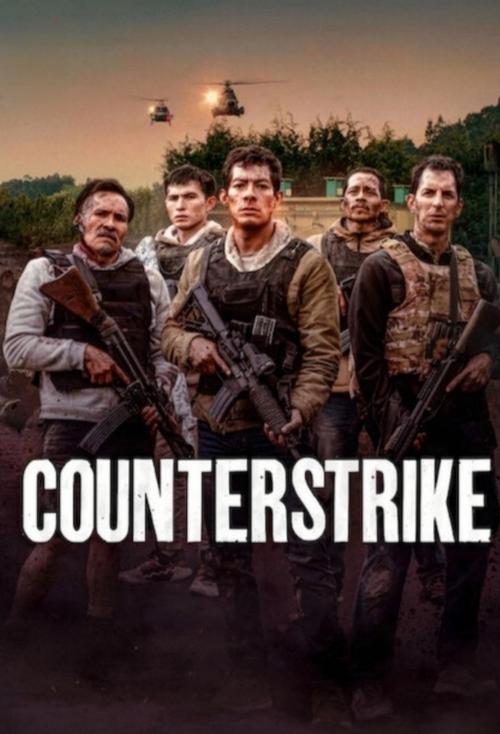
- The film was released on Netflix under two different English titles: "Counterattack" and "Counterstrike". Its original Spanish title is "Contraataque".
- Upon its release on Netflix in February 2025, "Counterattack" quickly became a global hit, reaching the number one spot on the platform's ranking for non-English language films.
- The film was shot in and around Mexico City, which provided a diverse and gritty backdrop for the intense action sequences.
- Screenwriter José Rubén Escalante conceived of the story after being struck by the image of a 'narcofosa', or a cartel's mass burial pit, a grim reality in Mexico.
- Director Chava Cartas and the producers made a conscious decision to cast talented actors who were not necessarily big social media stars, prioritizing acting skill over online popularity.
- The elite special forces unit in the film is called 'Murciélagos', which is Spanish for 'Bats'.
⚠️ Spoiler Analysis
Click to reveal detailed analysis with spoilers
Frequently Asked Questions
Explore More About This Movie
Dive deeper into specific aspects of the movie with our detailed analysis pages
Comments (0)
No comments yet. Be the first to share your thoughts!