Skip to content
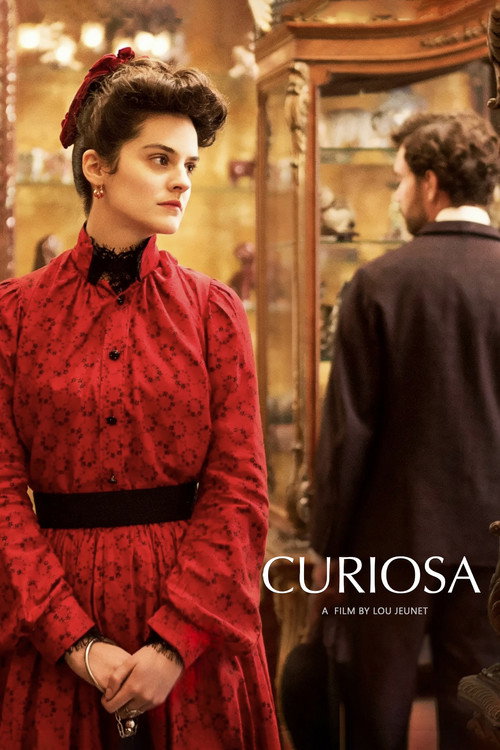
Curiosa
A sensual Belle Époque drama pulsating with transgressive obsession and artistic rebirth, Curiosa captures a caged bird transforming into the falcon, seizing the lens to claim her own unruly desire.
Curiosa

Curiosa

03 April 2019 France 107 min 5.8 (253)

Director: Lou Jeunet

Cast: Noémie Merlant, Niels Schneider, Benjamin Lavernhe, Camélia Jordana, Amira Casar

Drama History The Female Gaze & Erotic Emancipation Voyeurism, Photography, and the Power of the Lens Social Conventions vs. Libertine Desires Artistic Rivalry, Authorship, and the Muse Dynamic

Overview

Set in Paris in 1895, Curiosa explores the literary and artistic demimonde of the French Belle Époque. The narrative centers on Marie de Heredia, a free-spirited young woman and daughter of the respected Cuban-French Parnassian poet José-Maria de Heredia. Marie is courted by two aspiring writers and close friends: the passionate libertine Pierre Louÿs and the more conventional, financially stable Henri de Régnier. Despite her fierce attraction to Pierre, Marie is coerced by social duty and her father’s mounting debts to marry Henri, securing her family’s financial status at the cost of her romantic autonomy.

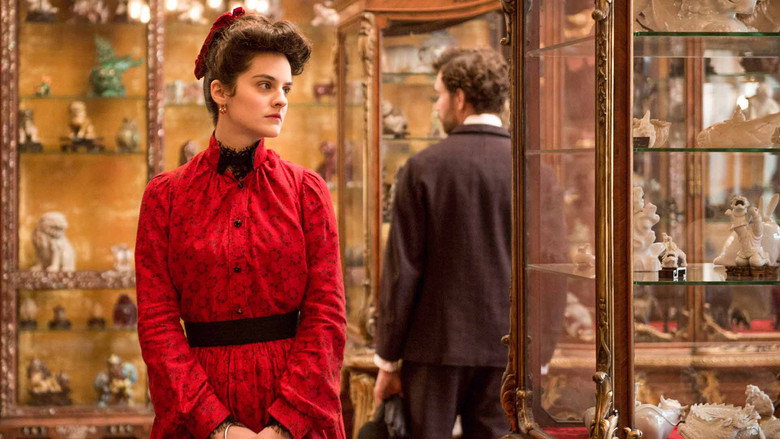
Heartbroken and seeking diversion, Pierre flees to French colonial Algeria, where he becomes captivated by Zohra, a local woman who introduces him to unrestrained erotic games and a fascination with erotic photography. When Pierre returns to Paris accompanied by Zohra, Marie’s suppressed longing erupts into an illicit, feverish affair. Entering Pierre’s private studio, Marie agrees to pose for his forbidden collection of nude and erotic photographic prints—known colloquially as curiosa.

As their secret liaison deepens, the boundary between love, voyeurism, and creative experimentation dissolves. Rather than remaining a passive object of male desire, Marie begins to use the erotic encounters and the camera itself to explore her own sexual subjectivity and literary voice, initiating a complex game of jealousy, power, and reinvention within Parisian high society.
Core Meaning

Directed by Lou Jeunet and co-written with Raphaëlle Desplechin, Curiosa examines the reclamation of the female gaze and female agency within a rigid, patriarchal society. The film illustrates how a woman designated as a decorative muse and societal pawn subverts her domestic confinement by mastering the very tools used to objectify her: the photographic lens and the written word. Jeunet demonstrates that true emancipation in the Belle Époque did not emerge from conventional rebellion, but from transforming erotic curiosity into creative autonomy and self-authorship.

Thematic DNA

The Female Gaze & Erotic Emancipation 35%
Voyeurism, Photography, and the Power of the Lens 25%
Social Conventions vs. Libertine Desires 20%
Artistic Rivalry, Authorship, and the Muse Dynamic 20%

The Female Gaze & Erotic Emancipation

The central narrative tracks Marie's evolution from a society bride traded to settle debts into an active creator of her own erotic and literary destiny. Her physical pleasure and intellectual ambition merge as she transcends patriarchal boundaries.

Voyeurism, Photography, and the Power of the Lens

Photography in the 1890s serves as an instrument of both possession and exposure. The film explores the dynamics of looking—who controls the shutter, who poses, and what happens when the subject turns the camera back on the voyeur.

Social Conventions vs. Libertine Desires

The contrast between the rigid, polite parlors of bourgeois Parisian salons and the secluded, hedonistic boudoirs highlights the era's hypocrisy, where marriages of convenience coexisted with clandestine erotic networks.

Artistic Rivalry, Authorship, and the Muse Dynamic

Through the entanglements of Pierre Louÿs, Henri de Régnier, and Marie de Heredia, the film dissects how male artists use women as raw material for poetry, prompting Marie to adopt a male pseudonym to claim equal literary stature.

Character Analysis

Marie de Heredia (Marie de Régnier)

Noémie Merlant

Archetype: The Rebel / Emerging Creator Key Trait: Defiant intellectual curiosity

Motivation

To achieve emotional, sexual, and creative self-determination outside societal constraints.

Character Arc

Transitions from a dutiful daughter sacrificed for family finances into an empowered, polyamorous author and photographer.

Pierre Louÿs

Niels Schneider

Archetype: The Hedonistic Libertine Key Trait: Erotomanic voyeurism

Motivation

To pursue aesthetic beauty, erotic obsession, and poetic notoriety through artistic experimentation.

Character Arc

Moves from a possessive libertine obsessed with capturing women on film to an isolated figure outpaced by his muse’s independence.

All 5 characters and cast

Symbols & Motifs

The Camera / Photographic Glass Plates

Meaning:

Represents the mechanism of the male gaze and voyeurism, which Marie progressively seizes to document her own visual perspective and agency.

Context:

Utilized throughout the private darkroom and studio scenes where intimate images are taken and processed.

The Velvet Choker / Restrictive Belle Époque Costuming

Meaning:

Symbolizes the social and physical confinement imposed on aristocratic women.

Context:

Marie's elaborate corsetry and structured wardrobe in high-society salons contrast sharply with her uninhibited nudity in the private photography studio.

The Mask

Meaning:

Represents anonymity, transgression, and the division between public societal identity and private erotic indulgence.

Context:

Worn by subjects during clandestine erotic photographic sessions in Pierre's studio.

The Algerian Postcards and Props

Meaning:

Serve as signifiers of exoticism, colonialism, and sensory escape from Parisian bourgeois conformity.

Context:

Brought back by Pierre after his journey to French colonial Algeria and displayed in his creative workspace.

Pen and Paper (The Writing Desk)

Meaning:

Represents intellectual emancipation and the translation of lived bodily sensations into recognized literature.

Context:

Contrasted with the photographic darkroom as the space where Marie crafts her written works under a male pseudonym.

Memorable Quotes

« Je me suis gardée pour vous. »
— Marie de Heredia

Context

Spoken to Pierre Louÿs upon his return from Algeria.

Meaning

Marks the transition of their relationship from conventional courtship to an illicit, rule-breaking pact, indicating that her sensual loyalty remains with Pierre despite her marriage to Henri.

« Pour vous aimer, il faut vous inventer. »
— Pierre Louÿs

Context

Spoken during an intimate studio session where Pierre arranges Marie in stylized, artistic poses.

Meaning

Captures Pierre’s aesthetic view of women as literary and visual fabrications rather than autonomous beings.

All 3 quotes

Philosophical Questions

Can the object of voyeurism attain genuine power without dismantling the gaze itself?

The film explores whether posing for a camera can serve as an act of self-empowerment or if it inevitably remains complicit in male erotic consumption and objectification.

Is artistic creation inherently predatory?

Through Pierre’s compulsion to arrange and document his lovers, the narrative questions whether artists unavoidably exploit the physical and emotional vulnerabilities of their muses for creative output.

What constitutes marital fidelity when social conventions force economic unions?

By contrasting Marie's intellectual and erotic passion for Pierre with her companionship and domestic alliance with Henri, the film redefines loyalty and the practical boundaries of marriage.

Alternative Interpretations

The film can be analyzed through several distinct thematic frameworks:

Full ending explanation

Cultural Impact

Curiosa sits at the intersection of modern French feminist revisionism and classic erotic costume drama. In late 19th-century Paris, artistic circles experimented with early portable photography to document underground eroticism. The film sheds light on Marie de Régnier, the first woman to win the Grand Prix de Littérature de l'Académie française (in 1918), who was historically overshadowed by her male contemporaries. Released during a renaissance of female-gaze French cinema in 2019, Curiosa challenged traditional period-piece tropes by blending anachronistic music with intimate, naturalistic performances.

Audience Reception

Aggregated critical and audience reception highlighted several key strengths and polarizing elements:

  • Praised Elements: Critics widely lauded Noémie Merlant's magnetic performance, Simon Roca’s lush, candlelit cinematography, and Arnaud Rebotini’s pulsing electronic score for injecting modern vitality into the period setting.
  • Criticisms: Some reviewers found the pacing emotionally distant and episodic, noting that secondary characters like Henri and Zohra felt under-characterized compared to the central pair.
  • Controversies: The frequent explicit nudity polarized viewers between those who saw it as empowering female sensuality and those who viewed it as conventional erotic voyeurism. Pierre's cruel staging of an encounter for Henri to overhear also divided viewers.
  • Overall Verdict: An aesthetically striking, sensual historical drama offering a compelling exploration of female artistic awakening.

Interesting Facts

  • The film is based on real historical correspondence, diaries, and erotic photographs produced by author Pierre Louÿs and Marie de Régnier (who published under the masculine pen name Gérard d'Houville).
  • The term curiosa was the nineteenth-century library and antiquarian bookseller classification for erotica, pornographic books, and sexually explicit prints kept in restricted cabinets.
  • French electronic music pioneer Arnaud Rebotini composed an analog synthesizer score for the film, intentionally contrasting modern electronic club textures with classical period visuals.
  • Lou Jeunet made her feature film directorial debut with Curiosa after years of directing French television films.
  • Curiosa premiered in France in April 2019, just a month before Noémie Merlant gained worldwide acclaim at the Cannes Film Festival for Céline Sciamma’s Portrait of a Lady on Fire.
  • Marie de Heredia gave birth to a son, Pierre de Régnier (nicknamed 'Tigre'), officially recognized by Henri de Régnier but widely acknowledged in Parisian circles to have been fathered by Pierre Louÿs.

Easter Eggs

Claude Debussy Cameo

Composer Claude Debussy appears in the film (played by Guilhem Fabre), referencing the real-life close friendship between Louÿs and Debussy, who collaborated on Les Chansons de Bilitis.

Damien Bonnard Cameo

French actor Damien Bonnard makes an appearance playing the literary editor André Chaumeix.

Parnassian Literary Circles

Scali Delpeyrat portrays Marie's real-life father, José-Maria de Heredia, celebrated author of Les Trophées, depicting the Parisian Parnassian poetry movement.

Real Photographic Recreations

Several framing choices throughout the darkroom and boudoir scenes directly recreate surviving archival glass plate negatives taken by Pierre Louÿs in the 1890s.

Frequently Asked Questions

Explore More About This Movie

Dive deeper into specific aspects of the movie with our detailed analysis pages

Comments (0)

Leave a comment

No comments yet. Be the first to share your thoughts!

Similar Movies