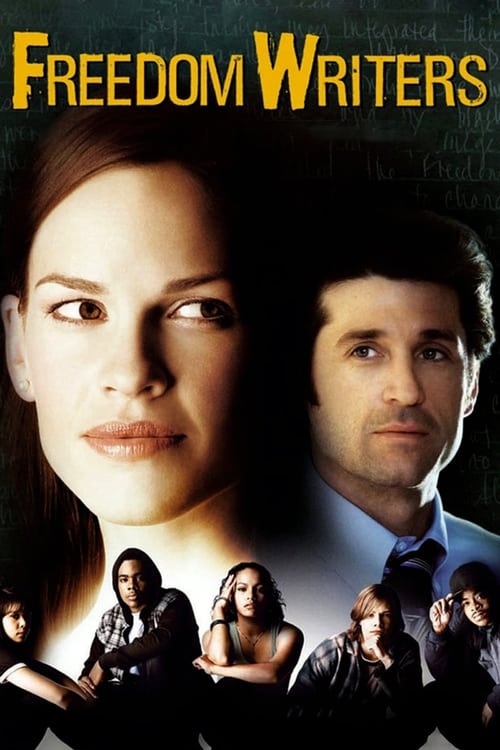
Freedom Writers
An emotionally charged drama where the raw energy of street-hardened youth collides with the unwavering hope of an idealistic teacher, illuminating the power of words to rewrite destinies.
Freedom Writers

Freedom Writers

"Their story. Their world. Their future."

05 January 2007 Germany 123 min ⭐ 7.9 (2,347)
Director: Richard LaGravenese
Cast: Hilary Swank, Patrick Dempsey, Scott Glenn, Imelda Staunton, April Hernandez Castillo
Drama Crime
The Transformative Power of Education Overcoming Racism and Prejudice The Power of Writing and Storytelling Individual vs. The System
Budget: $21,000,000
Box Office: $43,095,175

Overview

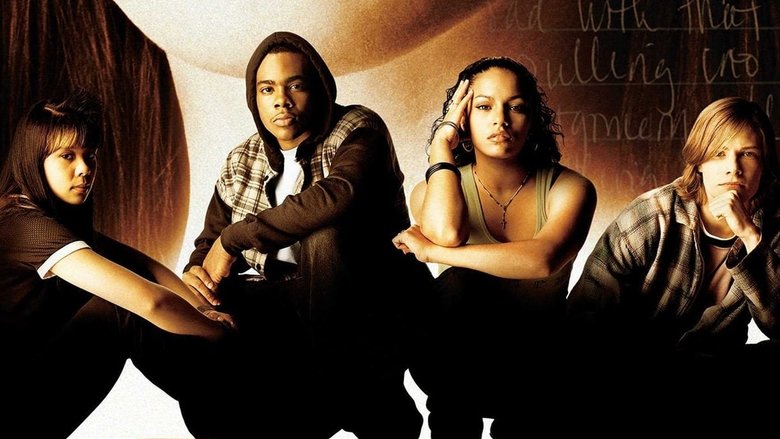
"Freedom Writers" is a powerful drama based on the true story of Erin Gruwell, a young, idealistic teacher who begins her career at Woodrow Wilson High School in Long Beach, California, in 1994. The school is racially divided and rife with gang tension, a stark reality for which her formal training has not prepared her. Her students, deemed "unteachable" by the administration, are a volatile mix of African American, Latino, and Asian teenagers who are more focused on surviving their violent daily lives than on education.

Initially met with hostility and defiance, Erin struggles to connect with her students. She gradually breaks down the walls between them by introducing literature that reflects their own experiences of prejudice and struggle, most notably "The Diary of Anne Frank." To further encourage self-expression, she provides them with composition notebooks to journal their thoughts and experiences. These diaries become a lifeline for the students, allowing them to voice their fears, frustrations, and hopes. As they begin to share their stories, the racial barriers in the classroom start to dissolve, and they form an unlikely community.

The film follows Erin's unwavering dedication to her students, even as it takes a toll on her personal life. She takes on extra jobs to fund field trips and new books, facing opposition from skeptical colleagues and her increasingly distant husband. Through her unconventional methods and relentless belief in their potential, Erin inspires her students to see beyond their circumstances and aspire to a future they never thought possible.


Core Meaning

The core meaning of "Freedom Writers" lies in the transformative power of education, empathy, and finding one's voice. The film posits that education is not merely the transmission of information but a tool for empowerment that can help individuals rise above their circumstances. Director Richard LaGravenese wanted to convey the message that every individual's story matters and that by sharing these stories, we can bridge even the most profound divides. The film carries a powerful message of hope, illustrating that with dedication, respect, and understanding, it is possible to overcome deeply ingrained prejudice and societal barriers. It champions the idea that a single person can be a catalyst for change, inspiring others to believe in their own self-worth and potential.

Thematic DNA

The Transformative Power of Education 35%
Overcoming Racism and Prejudice 30%
The Power of Writing and Storytelling 25%
Individual vs. The System 10%

The Transformative Power of Education

This is the central theme of the film. Erin Gruwell's approach to teaching goes beyond the standard curriculum. She uses literature and writing as tools for self-discovery and empowerment. By connecting the students' lives to historical events like the Holocaust, she makes education relevant and impactful. The students, initially disengaged, begin to see education as a means to understand their own world and to imagine a different future for themselves. Their academic growth is intrinsically linked to their personal growth, demonstrating that education can be a powerful force for social and individual change.

Overcoming Racism and Prejudice

The classroom in "Freedom Writers" is a microcosm of the racially segregated and gang-ridden society the students inhabit. They are divided along ethnic and gang lines, harboring deep-seated hatred and mistrust for one another. Through shared experiences, such as reading "The Diary of Anne Frank" and visiting the Museum of Tolerance, the students begin to see the humanity in each other. The film explores how empathy and understanding can dismantle prejudice, as the students realize their shared struggles and pain transcend their racial differences.

The Power of Writing and Storytelling

The act of writing in journals is a pivotal element in the students' transformation. It provides them with a safe outlet to express their trauma, anger, and aspirations. Their stories, which they eventually compile into "The Freedom Writers Diary," give them a voice and a sense of identity. This theme highlights how storytelling can be a form of healing and a way to build community. By sharing their personal narratives, the students not only find their own voices but also learn to listen to and empathize with the stories of others.

Individual vs. The System

Erin Gruwell's journey is a constant battle against a rigid and unsupportive educational system. Her innovative teaching methods are met with scorn and resistance from her colleagues and the school administration, who have written off her students as lost causes. Her perseverance in the face of bureaucratic obstacles underscores the theme of an individual's power to effect change even within a flawed system. The film celebrates her determination and willingness to challenge the status quo for the benefit of her students.

Character Analysis

Erin Gruwell

Hilary Swank

Archetype: The Mentor/The Idealist
Key Trait: Determined

Motivation

Driven by a deep-seated idealism and a desire to make a difference, Erin is motivated by the belief that every student deserves a chance to succeed. She is committed to fighting against the injustices of a system that has failed her students and wants to empower them through education.

Character Arc

Erin begins as a naive but passionate teacher, unprepared for the realities of an inner-city school. Initially, she struggles to connect with her students, but her unwavering belief in their potential drives her to adapt and innovate. Her character arc is one of resilience and sacrifice; she risks her financial stability and marriage for her students. By the end, she is a seasoned and respected educator who has not only transformed her students' lives but has also been profoundly changed by them.

Eva Benitez

April Hernandez Castillo

Archetype: The Skeptic/The Witness
Key Trait: Loyal

Motivation

Initially, Eva is motivated by a deep-seated loyalty to her gang and a desire to protect her own, a code instilled in her from a young age. She is also driven by the anger and pain from her past experiences with racism and violence. Her motivation shifts as she begins to see a world beyond gang warfare and racial division.

Character Arc

Eva starts as a hardened gang member, fiercely loyal to her "people" and deeply mistrustful of everyone else, especially white authority figures like Erin. Her pivotal moment comes when she has to testify in a murder trial and must choose between loyalty to her gang and telling the truth. Her decision to tell the truth, inspired by the lessons of tolerance and integrity from Erin's class, marks a significant turning point. Her arc is a journey from prejudice and hate to courage and moral responsibility.

Andre Bryant

Mario

Archetype: The Troubled Youth
Key Trait: Resentful

Motivation

Andre is motivated by a sense of hopelessness and the belief that the system is rigged against young black men like him. His actions are often a reaction to the pain and anger he feels about his family situation and the bleak future he sees for himself. Erin's influence helps him find a new motivation: the desire for a better life.

Character Arc

Andre is an angry and withdrawn student who feels the weight of the world on his shoulders, particularly concerning his brother's imprisonment. He is initially resistant to Erin's efforts and sees no point in education. Through the class and the journal writing, he begins to open up and find hope. His arc involves a struggle between the pull of the streets and the possibility of a different life. He has setbacks but ultimately chooses the path of education and self-improvement, demonstrating the potential for change.

Margaret Campbell

Imelda Staunton

Archetype: The Obstacle/The Cynic
Key Trait: Cynical

Motivation

Margaret is motivated by a desire to maintain the status quo and adhere to traditional teaching methods. Her cynicism stems from years of experience in a challenging environment, leading her to believe that trying to save every student is a futile and naive endeavor. She is protective of the school's limited resources and reputation.

Character Arc

Margaret Campbell is a veteran teacher and department head who represents the cynical and bureaucratic nature of the school system. She is a foil to Erin's idealism, believing the at-risk students are beyond saving and that Erin's methods are a waste of resources. Her character does not have a significant arc; she remains an antagonist throughout, symbolizing the institutional resistance to change and innovation in education.

Symbols & Motifs

The Journals (Composition Books)

Meaning:

The journals symbolize a voice for the voiceless and the power of self-expression. They represent a safe space for the students to articulate their deepest fears, pains, and dreams without judgment. Ultimately, they become a testament to their transformation and a symbol of their collective identity as the "Freedom Writers."

Context:

Erin Gruwell distributes the composition books to her students after realizing they feel no one listens to them. The students initially hesitate but soon begin to fill the pages with their raw and honest stories. The film frequently uses voice-overs of the students reading their journal entries, which provides insight into their personal lives and struggles.

The "Line Game"

Meaning:

This activity serves as a powerful symbol of shared experience and the breaking down of barriers. It visually demonstrates that despite their different racial and gang affiliations, the students are united by common hardships and traumas.

Context:

Erin has her students play a game where she asks a series of personal questions about their experiences with violence, loss, and imprisonment. Students step forward to a line if the question applies to them. As more and more students from different groups step up to the line, they begin to see their commonalities for the first time, fostering a sense of unity and empathy within the classroom.

The Pearl Necklace

Meaning:

The pearl necklace Erin wears initially symbolizes her naivety and her status as an outsider from a privileged background. It represents the cultural and socio-economic gap between her and her students.

Context:

On her first day, Erin wears a pearl necklace given to her by her father. A colleague warns her not to wear it to class, implying it will be stolen. The necklace is a visual cue of her disconnect from the students' world. As she begins to understand her students and invests herself more in their lives, her appearance becomes less formal, and the focus shifts from her external symbols of status to her genuine connection with the students.

Memorable Quotes

I am not a hero. No. I did what I had to do, because it was the right thing to do. That is all.

— Miep Gies

Context:

Miep Gies says this to the students when she visits their class as a guest speaker. One of the students, Marcus, calls her his hero for her bravery during the Holocaust. Her response has a profound impact on the students, showing them that heroism is not about grand gestures but about moral choices.

Meaning:

This quote encapsulates the theme of moral responsibility. Miep Gies, the woman who hid Anne Frank, humbly dismisses the label of 'hero,' suggesting that acts of great courage are often just ordinary people choosing to do what is right in the face of injustice. It inspires the students to see that they too can make a difference in their own small ways.

Nobody ever listens to a teenager. Everybody thinks you should be happy just because you're young. They don't see the wars that we fight every single day.

— Brandy Ross (in her journal)

Context:

This is an excerpt from a student's journal entry that Erin reads aloud. It is a powerful moment that allows the audience and Erin to understand the deep-seated pain and frustration of the students. It validates their experiences and marks a step in building trust between them and their teacher.

Meaning:

This quote gives voice to the central struggle of the students. It poignantly expresses their feeling of being invisible and misunderstood by the adult world. It highlights the hidden battles they face daily, from gang violence to abuse, and underscores the importance of having someone like Erin who is willing to listen.

White people wanting their respect like it's for free.

— Eva Benitez

Context:

Eva says this to Erin early in the film, during a heated classroom confrontation. It is a direct challenge to Erin's authority and highlights the racial divide that separates the teacher from her students.

Meaning:

This quote powerfully conveys the racial tension and mistrust in the classroom. It challenges the notion of inherent authority and respect, particularly from a student who has experienced systemic racism and injustice from white authority figures. It encapsulates the initial resistance Erin faces and the deep-seated anger of her students.

I see who you are. Do you understand me? I can see you. And you are not failing.

— Erin Gruwell

Context:

Erin says this to Andre after he gives himself a failing grade on an assignment. She refuses to accept his self-assessment, forcefully telling him that she sees his potential and will not allow him to fail. This intense, personal moment demonstrates her unwavering dedication.

Meaning:

This quote is a powerful affirmation of a student's worth and potential. It signifies Erin's commitment to seeing her students as individuals beyond their labels as "at-risk" or "delinquents." It's a promise that she will not give up on them, and it's a pivotal moment in earning their trust.

Philosophical Questions

Can one person truly make a difference against a broken system?

The film champions the idea that an individual's passion and dedication can create profound change. Erin Gruwell's relentless efforts to reach her students, despite opposition from the school's administration and the personal cost to her life, suggest that one person can indeed be a powerful catalyst. However, the film also implicitly raises the question of sustainability. While Erin is successful with her 150 students, the systemic problems of poverty, racism, and underfunding in the education system remain. The film leaves the viewer to ponder whether individual heroism is a sufficient solution to systemic failure, or if it is simply a feel-good story that masks the need for larger, structural reforms.

What is the nature of identity and is it possible to rewrite it?

The students in "Freedom Writers" initially define themselves by their race and gang affiliation. Their identities are shaped by the "us vs. them" mentality of the streets. The film explores whether this identity is fixed or fluid. Through the process of writing and sharing their stories, the students begin to see themselves and each other differently. They discover a shared identity as "writers" and as survivors, which transcends their previously held allegiances. The film suggests that while our past and environment shape who we are, we have the agency to redefine ourselves and choose a different path, essentially rewriting our own life stories.

Where does true loyalty lie?

This question is central to Eva's character arc. She is torn between her loyalty to her gang, which she considers her family, and her burgeoning sense of justice and what is morally right. Her decision to testify against one of her own is a profound betrayal in the eyes of her community, but it is also an act of immense courage and personal integrity. The film forces the audience to consider the complexities of loyalty. Is it owed to a group, a code, or to a higher principle like truth and justice? "Freedom Writers" suggests that true loyalty is ultimately to one's own conscience.

Alternative Interpretations

One of the primary alternative interpretations of "Freedom Writers" centers on the "white savior" trope. From this perspective, the film can be seen as a story that, while well-intentioned, reinforces a problematic narrative. It positions the white, middle-class teacher, Erin Gruwell, as the sole catalyst for change in the lives of her students of color. This interpretation suggests that the film minimizes the agency and inherent strengths of the students and their communities, implying they are passive recipients of salvation rather than active participants in their own transformation. Critics of this view argue that Gruwell's role is over-glorified, and the film overlooks the systemic issues that create the difficult circumstances in the first place, instead offering a simplified, individualistic solution.

Another interpretation focuses on the film's portrayal of the education system. While on the surface it's a critique of a rigid, under-resourced system, some might argue that it inadvertently demonizes other teachers and administrators, like Margaret Campbell. Instead of presenting a nuanced view of the challenges faced by all educators in such environments, the film creates a simple dichotomy of the heroic new teacher versus the jaded, cynical veterans. This could be seen as an unfair representation that doesn't acknowledge the burnout and systemic pressures that affect longtime teachers in underfunded schools. The film's narrative choice to have Gruwell loop with her students for all four years is also highly unusual in public education and has been pointed out as an unrealistic element that makes her story unique but not easily replicable, potentially setting an impossible standard for other teachers.

Cultural Impact

"Freedom Writers" had a significant cultural impact, particularly in the field of education. It revitalized a conversation about teaching in underprivileged, inner-city schools and highlighted the challenges and rewards of culturally relevant pedagogy. The film, along with the book, has been used as a teaching tool in many schools to discuss themes of racism, tolerance, and the power of writing. It brought the story of Erin Gruwell and her students to a global audience, popularizing the "Freedom Writers" methodology and leading to the establishment of the Freedom Writers Foundation, a non-profit organization that provides training to educators.

However, the film also faced some criticism. Some critics and educators argued that it perpetuates a "white savior" narrative, where a white teacher comes in to rescue minority students. This critique suggests that the film oversimplifies complex social issues and potentially romanticizes the role of the teacher while not giving enough agency to the students' own resilience. Despite this, the film was generally well-received by audiences and continues to be praised for its inspirational and emotionally resonant story. It has become a touchstone film in the genre of inspirational teacher dramas, often compared to films like "Dangerous Minds" and "Stand and Deliver."

Audience Reception

"Freedom Writers" was generally well-received by audiences, who were moved by its inspirational true story. On platforms like Rotten Tomatoes, it holds a high audience score, indicating widespread appreciation. Viewers frequently praise the powerful performances, particularly Hilary Swank's portrayal of Erin Gruwell and the authentic feel of the student actors. The film's emotional impact is a recurring point of praise, with many viewers finding the story of transformation and hope deeply touching and motivational. The main points of criticism from some audience members and critics echo the "white savior" narrative concern, with some finding the story formulaic and predictable for the inspirational teacher genre. There were also discussions around the film's depiction of the school and other teachers, which some who were familiar with the real story found to be overly negative and dramatic. Despite these critiques, the overall verdict from audiences is that "Freedom Writers" is a powerful and worthwhile film that effectively conveys its message of hope and the importance of education.

Interesting Facts

  • The film is based on the book "The Freedom Writers Diary," a collection of real diary entries written by the students of Erin Gruwell at Woodrow Wilson High School in Long Beach, California.
  • The title "Freedom Writers" is a deliberate play on the term "Freedom Riders," the civil rights activists who challenged segregation in the American South in the 1960s.
  • Many of the actors who played the students were newcomers and not professional actors, which added to the authenticity of their performances.
  • The real Erin Gruwell and several of the original Freedom Writers were involved in the making of the film and have cameos.
  • The film is dedicated to the memory of Armand Jones, one of the actors who played a student named Grant Rice. He was tragically killed in a shooting shortly after filming concluded.
  • Hilary Swank also served as an executive producer for the film.
  • The real Miep Gies, who was in her late nineties at the time of filming, was consulted for the film. She is portrayed by actress Pat Carroll.
  • Director Richard LaGravenese wrote the screenplay in addition to directing the film.

⚠️ Spoiler Analysis

Click to reveal detailed analysis with spoilers

Frequently Asked Questions

Explore More About This Movie

Dive deeper into specific aspects of the movie with our detailed analysis pages

Comments (0)

Leave a comment

No comments yet. Be the first to share your thoughts!