Day & Night
Animation/Philosophical Parable. A visually inventive ballet of duality where fear transforms into wonder. Two silhouetted figures—windows into contrasting worlds—clash before discovering the breathtaking unity of their cyclical existence.
Day & Night

Day & Night

17 June 2010 United States of America 6 min ⭐ 7.7 (931)
Director: Teddy Newton
Cast: Wayne Dyer
Animation Family Comedy
Fear of the Unknown Perspective and Duality Connection and Empathy

Overview

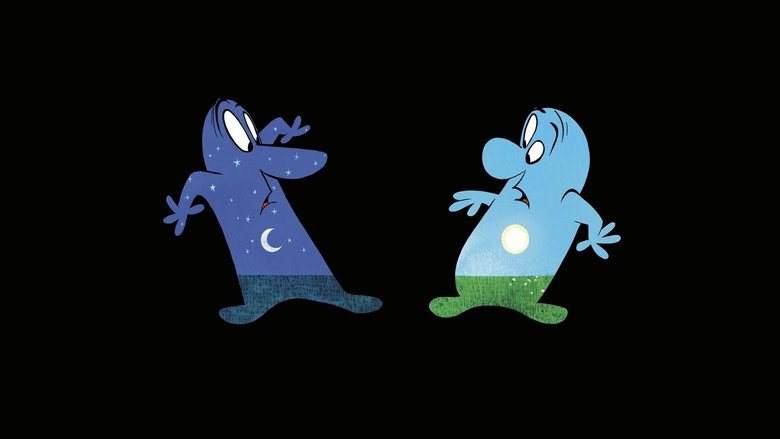
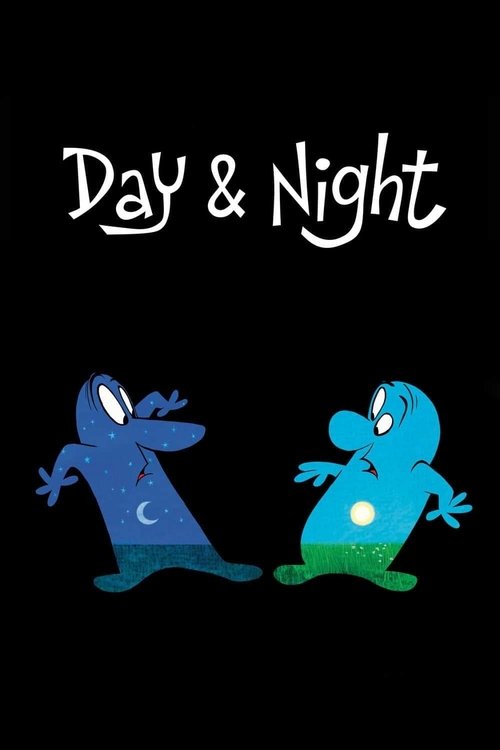
In this innovative Pixar short, two personified elements of time, Day and Night, encounter each other for the first time. Day is a sunny, vibrant character whose internal world is filled with bright skies, rainbows, and bustling activity. Night is his darker counterpart, containing a world of fireflies, moonlit lovers, and quiet mystery. Their meeting is initially marked by suspicion and jealousy; Day is frightened by Night's darkness, while Night feels overshadowed by Day's brilliance.

Devoid of spoken dialogue between the characters, the story unfolds through their expressive body language and the 3D scenes visible through their 2D outlines. As they compete to prove whose world is superior, their rivalry slowly shifts into curiosity. They begin to share the unique joys of their respective times—showing off fireworks, beaches, and city lights—leading to a profound realization about their interconnected nature.
Core Meaning

The film acts as a profound meditation on prejudice and the fear of the unknown. Director Teddy Newton uses the literal duality of day and night to illustrate how people often reject what they do not understand. The core message is that the things we fear often hold a mysterious beauty that can enrich our lives if we open ourselves to new perspectives. Ultimately, it suggests that we are all connected parts of a larger whole, just as day and night are merely different phases of the same world.

Thematic DNA

Fear of the Unknown 40%
Perspective and Duality 30%
Connection and Empathy 30%

Fear of the Unknown

The central conflict arises from the characters' initial refusal to accept something different. Day creates a wall of misunderstanding because he cannot comprehend the darkness, mirroring human xenophobia. The narrative deconstructs this fear, showing it as a barrier to experiencing the 'most beautiful things in all the universe.'

Perspective and Duality

The film visually represents the idea that truth depends on one's vantage point. Neither character changes the world; they simply offer a different window into it. The film argues that opposing forces are not enemies but necessary complements that complete the human experience.

Connection and Empathy

Through the act of sharing their internal worlds, the characters move from rivalry to friendship. This theme highlights that empathy is built by literally 'seeing' through another person, dissolving boundaries until the characters blend into one another at twilight.

Character Analysis

Day

Sound effects only

Archetype: The Everyman / The Optimist
Key Trait: Vibrant but Anxious

Motivation

To validate his own existence and superiority, initially driven by a fear of the dark/unknown.

Character Arc

Starts as arrogant and dismissive of the dark. Through interaction, he learns humility and discovers that the unknown (Night) holds wonders like fireworks and drive-in movies that his sunlight obscures.

Night

Sound effects only

Archetype: The Outsider / The Introvert
Key Trait: Mysterious and Serene

Motivation

To be understood and to share the unique magic that only exists in the absence of light.

Character Arc

Initially defensive and seemingly menacing. He evolves from being the frightening 'other' to a guide who reveals the quiet beauty and excitement of the nocturnal world.

Symbols & Motifs

The Silhouettes (Windows)

Meaning:

They symbolize the human self as a vessel for experience. The fact that they are 2D outlines containing a 3D world suggests that our internal depth is far greater than our external appearance.

Context:

Throughout the film, the characters are black outlines that act as masking layers, revealing a computer-generated 3D world inside them.

The Radio Tower

Meaning:

It represents the voice of wisdom and higher consciousness, bridging the gap between the two characters' limited understandings.

Context:

In the film's climax, both characters tune into a radio frequency broadcasting a lecture by Dr. Wayne Dyer, which articulates the film's moral thesis.

Sunset and Sunrise

Meaning:

These transitional moments symbolize unity and change. They prove that Day and Night are not separate entities but a continuous cycle.

Context:

At the end of the film, Day becomes Night and Night becomes Day, blurring the line between them during the 'magic hour'.

Memorable Quotes

Fear of the unknown. They are afraid of new ideas. They are loaded with prejudices, not based upon anything in reality, but based on… if something is new, I reject it immediately because it's frightening to me.

— Dr. Wayne Dyer (Archival Audio)

Context:

Played over a radio broadcast that both characters listen to during a quiet moment on a beach, leading to their reconciliation.

Meaning:

This monologue serves as the thesis statement of the film. It explicitly critiques the human tendency to reject the unfamiliar and encourages viewers to embrace mystery rather than fear it.

The most beautiful things in all the universe are the most mysterious.

— Dr. Wayne Dyer (Archival Audio)

Context:

The concluding thought of the radio lecture, delivered just as the characters begin to merge and swap roles.

Meaning:

This line reframes 'mystery' from a source of terror to a source of beauty, fundamentally shifting the characters' (and audience's) perspective on the unknown.

Philosophical Questions

Is reality objective or subjective?

The film suggests that reality is subjective and defined by the observer. The landscape inside the characters changes based on who is looking (Day or Night), implying that the world is not a fixed state but a reflection of our internal nature.

Why do we fear the unknown?

Using Wayne Dyer's lecture, the film posits that fear of the unknown is a defense mechanism based on prejudice rather than reality. It challenges the viewer to replace this fear with curiosity, suggesting that growth only happens when we engage with what we do not understand.

Alternative Interpretations

While generally viewed as a lesson on prejudice, some critics interpret the film as a commentary on the Cold War or political polarization, where two superpowers (or ideologies) view each other with suspicion before realizing they share the same world. Another reading suggests a Jungian psychological interpretation, where Day represents the conscious mind (ego) and Night represents the unconscious (shadow), and the film depicts the process of individuation—integrating the shadow self to achieve wholeness.

Cultural Impact

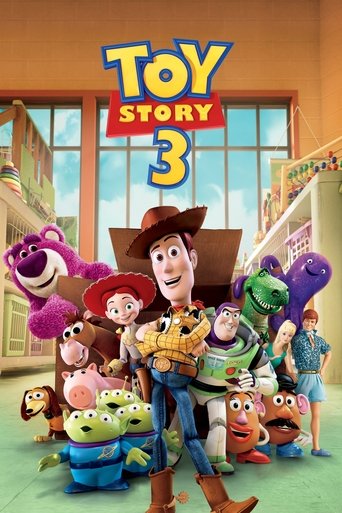
Released alongside the blockbuster Toy Story 3, Day & Night received widespread critical acclaim for its technical innovation and philosophical depth. It was nominated for the Academy Award for Best Animated Short Film and won the Annie Award for Best Animated Short Subject. Culturally, it is cited as a prime example of animation as a medium for complex abstract thought, proving that cartoons can effectively discuss xenophobia and prejudice without being heavy-handed. It also marked a significant technical milestone for Pixar in successfully blending traditional and CGI mediums, influencing the '2.5D' style seen in later works like Paperman.

Audience Reception

Audiences and critics alike praised the film for its visual ingenuity and emotional resonance. Viewers were particularly moved by the clever use of the Wayne Dyer speech, which elevated the short from a simple comedy to a thoughtful piece of art. Criticism was virtually non-existent, though some found the conceptual style initially disorienting. It holds a high rating on IMDb (around 8.0) and is frequently ranked among the top 5 best Pixar shorts of all time.

Interesting Facts

  • The voice of the narrator is taken from a real 1970s lecture by motivational speaker Dr. Wayne Dyer. Director Teddy Newton remembered his mother listening to the tapes.
  • This was the first Pixar film to combine 2D hand-drawn animation (for the characters' outlines) with 3D computer animation (for the world inside them).
  • Pixar invited Dr. Wayne Dyer to a private screening of the film to honor his contribution.
  • The film uses no dialogue between the main characters, relying entirely on sound effects, music, and body language.
  • Sound designer Barney Jones used natural sounds to voice the characters; for example, a woodpecker for a heartbeat or a squeaky hinge for a blink.
  • The visual style was partly inspired by the 'Pink Elephants on Parade' sequence from Disney's Dumbo.
  • Unlike most Pixar productions which use a 'Brain Trust', Teddy Newton worked more independently with John Lasseter to maintain the film's unique singular vision.

Easter Eggs

101 Dalmatians TV Clip

When Night watches a drive-in movie inside his silhouette, the film playing is a western similar to the one the puppies watch in Disney's 101 Dalmatians (1961). It's a nod to classic Disney animation history.

Cars Cameo

In the drive-in movie scene inside Night, the cars in the audience are characters from Pixar's Cars franchise, referencing the studio's other works.

⚠️ Spoiler Analysis

Click to reveal detailed analysis with spoilers

Frequently Asked Questions

Explore More About This Movie

Dive deeper into specific aspects of the movie with our detailed analysis pages

Comments (0)

Leave a comment

No comments yet. Be the first to share your thoughts!