Skip to content
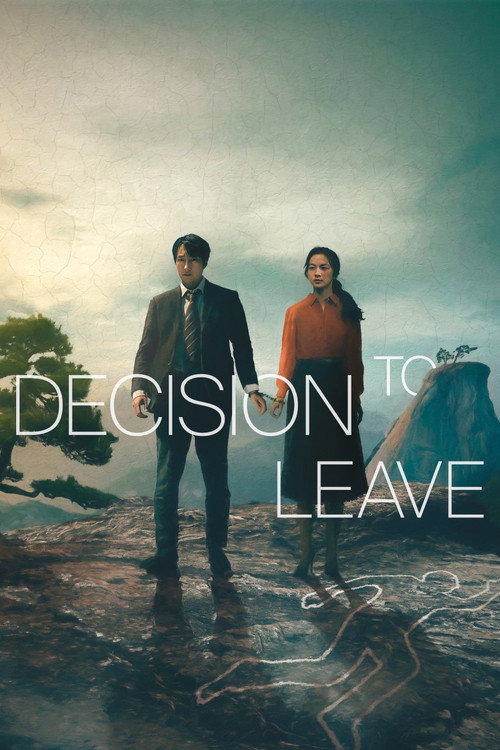
Decision to Leave
Drenched in mist and quiet yearning, this haunting romantic neo-noir submerges an obsessive detective and a mysterious widow in a tide of unspoken desire, where love blooms like ink spreading in deep water.
Decision to Leave

Decision to Leave

헤어질 결심

"The closer you look, the harder you fall."

29 June 2022 South Korea 139 min 7.3 (1,558)

Director: Park Chan-wook

Cast: Tang Wei, Park Hae-il, Lee Jung-hyun, Go Kyung-pyo, Park Yong-woo

Thriller Mystery Romance Unspoken Love and Language Barriers Obsession and Surveillance Professional Pride vs. Moral Collapse Separation and Permanence / The Unsolved Case
Box Office: $16,914,773

Overview

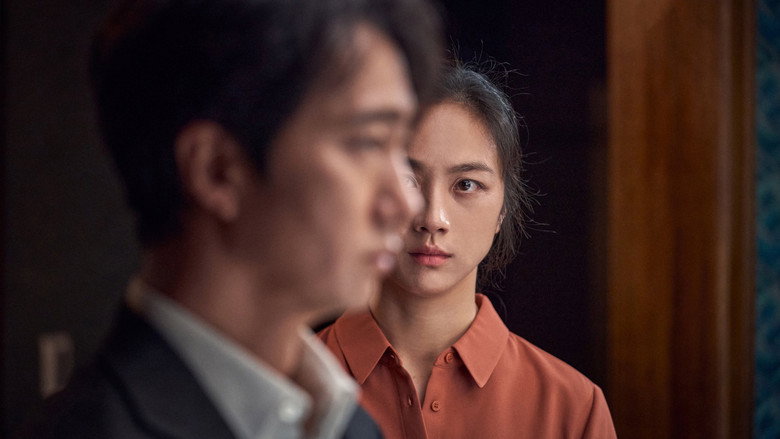
Directed by South Korean auteur Park Chan-wook, Decision to Leave (2022) begins in Busan with the investigation of Ki Do-soo, a retired civil servant and avid climber who fell to his death from a mountain peak. The assigned lead detective, Jang Hae-jun (Park Hae-il), is a fastidious, insomniac police officer known for his obsessive attention to detail. When Hae-jun interrogates the deceased man’s much younger wife, Song Seo-rae (Tang Wei)—a Chinese immigrant working as a caregiver—he is struck by her uncanny calmness and lack of visible grief.

Hae-jun places Seo-rae under round-the-clock surveillance. However, as he watches her through binoculars and night-vision lenses, his professional scrutiny morphs into an intimate fascination. Seo-rae, aware that she is being watched, subtlely invites his gaze, engaging in an unexpressed psychological romance built on shared meals, whispered observations, and unspoken understanding. As Hae-jun buries himself deeper into her world, his professional objectivity begins to erode.

Set against stark mountain cliffs and coastal fog, Decision to Leave blends modern technology—translation apps, smartphone recordings, smartwatches—with classical noir suspense. The narrative shifts fluidly between a murder mystery and a delicate romantic melodrama, exploring how desire can obscure truth and redefine reality.
Core Meaning

Director Park Chan-wook set out to craft an "adult love story" that completely avoids explicit sexual content and never uses the phrase "I love you" directly. The film explores love not as a comforting, neat union, but as an elusive, destabilizing force tied to sacrifice, obsession, and loss.

At its core, Decision to Leave asserts that true emotional intimacy often resides in the space between understanding—communicated through small acts of care, professional ruin, and unfulfilled longing. By subverting traditional noir tropes (where the femme fatale uses a male detective strictly for self-preservation), the film transforms Seo-rae's deceptive actions into a profound, tragic act of romantic devotion.

Thematic DNA

Unspoken Love and Language Barriers 30%
Obsession and Surveillance 25%
Professional Pride vs. Moral Collapse 25%
Separation and Permanence / The Unsolved Case 20%

Unspoken Love and Language Barriers

Love is expressed indirectly through caretaking, silence, and automated voice translation. Because Seo-rae is not fluent in Korean, her formal and archaic phrasing creates a poetic distance that forces Hae-jun to read between the lines.

Obsession and Surveillance

Hae-jun's detective work functions as romantic stalking, blurring the line between legal interrogation and romantic intimacy. Watching someone becomes a surrogate for loving them.

Professional Pride vs. Moral Collapse

Hae-jun’s identity is anchored in his fastidious reputation as an honorable police officer. Falling for a prime suspect destroys his self-conception, causing his moral and emotional "collapse" (bung-goe).

Separation and Permanence / The Unsolved Case

The paradox that love often crystallizes only when separation is finalized. To remain permanently alive in the mind of the beloved, one must remain an unresolvable, eternal mystery.

Character Analysis

Jang Hae-jun

Park Hae-il

Archetype: The Obsessive / Tragic Detective Key Trait: Fastidious, insomniac, observant.

Motivation

Solving cases; maintaining professional pride; understanding Seo-rae.

Character Arc

Begins as an immaculate, prideful star detective; falls for a murder suspect; collapses morally to protect her; ends up adrift, searching endlessly for her.

Song Seo-rae

Tang Wei

Archetype: Subverted Femme Fatale / Tragic Heroine Key Trait: Composed, beguiling, resilient, poetic.

Motivation

To be loved and understood by Hae-jun; to restore his dignity.

Character Arc

A battered Chinese immigrant widow; uses murder to escape abuse; falls in love with Hae-jun's dignity; chooses to bury herself to remain his eternal unsolved case.

All 5 characters and cast

Symbols & Motifs

Mountains vs. Sea (Land vs. Water)

Meaning:

Drawing on Confucius's quote ("The wise love water, the benevolent love mountains"), the mountain represents rigid order, pride, and fixed truth, while the sea symbolizes fluid emotion, chaos, depth, and ultimate romantic submersion.

Context:

Used to contrast Ki Do-soo's fatal climb on a mountain peak with Seo-rae's ultimate submersion in the ocean.

Fog and Mist

Meaning:

Represents moral ambiguity, obscured vision, confusion, and the emotional haze surrounding both main characters.

Context:

Predominant in the seaside town of Ipo.

Eye Drops and Lenses

Meaning:

Symbolizes Hae-jun's desperate attempt to see the objective truth clearly while remaining blind to his own emotional biases.

Context:

Hae-jun constantly applies eye drops to dry eyes while observing subjects through binoculars and night-vision lenses.

The Green/Blue Dress

Meaning:

Highlights the subjective nature of perception and truth. Green connects her to the mountain earth; blue connects her to the ocean depth.

Context:

Seo-rae wears a dress whose color appears green in certain lighting and blue in others.

Mountain/Wave Patterned Wallpaper

Meaning:

Visually synthesizes the film's central dichotomy between mountains and sea.

Context:

Featured on the wallpaper in Seo-rae's apartment, displaying an ambiguous pattern resembling both jagged mountain peaks and crashing ocean waves.

Smartphones and Translation Apps

Meaning:

Bridges the linguistic divide between Mandarin and Korean, translating raw emotion into synthetic computerized voices and preserving voice recordings that become romantic artifacts.

Context:

Utilized throughout Hae-jun and Seo-rae's interactions to record observations, translate conversations, and store voice notes.

Memorable Quotes

나는요... 완전히 붕괴됐어요.
— Jang Hae-jun

Context

Hae-jun realizes Seo-rae manipulated evidence in her husband's death and confronts her.

Meaning

Hae-jun explains that covering up her crime destroyed his professional pride and identity as a police officer. Seo-rae interprets this declaration of total personal ruin as his deepest confession of love.

당신이 사랑한다고 말했을 때 당신의 사랑이 끝났고, 당신의 사랑이 끝났을 때 내 사랑이 시작됐다.
— Song Seo-rae

Context

Spoken or recorded in Mandarin to Hae-jun.

Meaning

Summarizes the tragic timing of their relationship: Hae-jun's love peaked during the investigation and died when he broke off the relationship; Seo-rae's love bloomed when she realized he ruined his own life to protect her.

All 6 quotes

Philosophical Questions

Can true intimacy exist when built on surveillance, secrets, and projection rather than mutual open communication?

Explored through Hae-jun's surveillance of Seo-rae, where watching through binoculars and night-vision lenses morphs into intimate romantic fascination and surrogate affection.

What happens to personal morality when duty and obsessive desire come into direct conflict?

Explored through Hae-jun's total moral collapse as an honorable, fastidious police officer when he covers up Seo-rae's crime to protect her.

Is a lover more permanently remembered through emotional resolution or through an unresolvable, eternal mystery?

Explored through Seo-rae's ultimate choice to bury herself in the tide, becoming Hae-jun's permanent, unresolvable unsolved case to remain in his thoughts forever.

Alternative Interpretations

Love as Transcendental Sacrifice: Seo-rae buries herself under the beach sand so the tide will wash away all physical evidence of her presence. By doing so, she saves Hae-jun from future legal ruin while making herself an eternal, unresolvable mystery in his mind.

Full ending explanation

Cultural Impact

Decision to Leave premiered in competition at the 75th Cannes Film Festival in May 2022, where Park Chan-wook won the Best Director award.

The film developed a massive cult following in South Korea, creating a "Decision to Leave Syndrome." Key formal phrases like "machimnae" (at last) and "bung-goe" (shattered/collapsed) became widespread internet memes, catchphrases, and social media quotes.

Additionally, the film highlights the unique social position of Chinese immigrants in Korea, exploiting the contrast between modern Korean slang and Seo-rae's polite, archaic Korean learned from TV historical dramas (sageuk).

Audience Reception

Decision to Leave was praised for its visual storytelling, subtle performances by Tang Wei and Park Hae-il, inventive editing, sound design, and the clever integration of modern technology into a noir structure.

However, criticisms noted that some viewers found the two-part structure slightly convoluted, pacing slow in the second half, or the plot intricate on first view. Controversial elements included the abrupt shift in tone and setting to Ipo in Part 2 and the emotionally agonizing ending, which divided audiences between deep catharsis and overwhelming tragedy.

Overall, the film was unanimously recognized as a modern masterpiece of romantic neo-noir cinema.

Interesting Facts

  • Co-writer Jeong Seo-kyeong and director Park Chan-wook conceived the character of Song Seo-rae specifically for Tang Wei before approaching her.
  • Park Chan-wook fully storyboarded the entire film before principal photography began, allowing precise visual planning for camera movements, reflections, and composite shots.
  • Deviating from his famously explicit works (Oldboy, The Handmaiden), Park purposefully eliminated explicit gore and nudity to make an old-fashioned, delicate thriller focused on subtle psychological intimacy.
  • Tang Wei did not speak fluent Korean before filming; she learned her lines phonetically and intensely studied Korean grammar to grasp every nuance of her character's formal dialogue.
  • Principal photography wrapped in March 2021 after 76 days of shooting across South Korea, utilizing locations in Busan and coastal regions alongside studio work at Busan Cinema Studios.
  • Visual effects supervisor Lee Jeon-hyoung, who has worked with Park Chan-wook since Oldboy (2003), produced over 100 subtle VFX shots, including impossible phone camera angles, combined mountain-sea wallpapers, and the final tidal sequence.

Easter Eggs

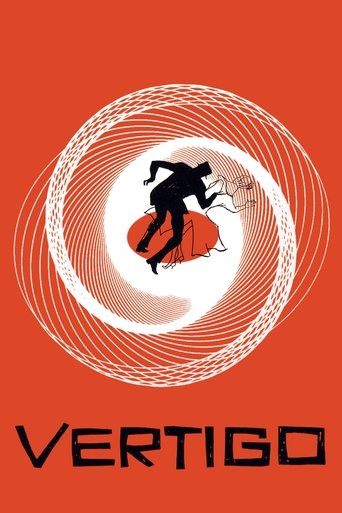
Homage to Alfred Hitchcock's Vertigo (1958)

The narrative diptych structure, a detective falling for a suspect linked to a fatal fall, themes of surveillance, and obsessive romantic makeover directly mirror Hitchcock's masterpiece.

The Classic of Mountains and Seas (Shanhaijing)

Seo-rae owns a copy of this ancient Chinese mythical geography book, which she transcribes into notebooks, mirroring her elemental connection to land and water.

Mahler's Symphony No. 5 (Adagietto)

Played in Hae-jun's car, this classical piece (famously used in Luchino Visconti's Death in Venice) highlights themes of fatalistic, overwhelming love.

Song "The Mist" (안개)

The iconic 1967 Korean pop ballad by Jung Hoon-hee serves as the emotional musical core of the film, rerecorded as a duet with Song Chang-sik for the end credits.

Kim Shin-young's Dramatic Cameo

Popular South Korean comedian Kim Shin-young was cast in a serious role as Hae-jun's second police partner (Yeon-soo) in Ipo, receiving critical praise for her dramatic performance.

Frequently Asked Questions

Explore More About This Movie

Dive deeper into specific aspects of the movie with our detailed analysis pages

Comments (0)

Leave a comment

No comments yet. Be the first to share your thoughts!

Similar Movies