
Don't Blame the Kid
¿Qué culpa tiene el niño?
"There are hangovers that last 9 months."
Overview
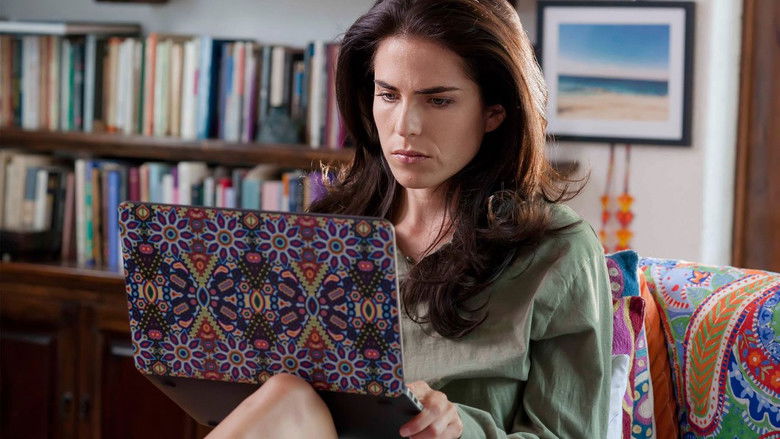
Maru (Karla Souza), a sophisticated young woman from a wealthy political family, wakes up in a hotel room in Acapulco after a wild wedding party with no memory of the previous night. Two months later, she discovers she is pregnant. Her friends help her track down the father, who turns out to be Renato (Ricardo Abarca), a young, unemployed eccentric from a working-class background whom she calls "The Frog".
Fearing the wrath of her politician father and the scandal it could cause during an election year, Maru decides to marry Renato for appearances, planning to divorce him after the election. Renato, however, is genuinely excited about fatherhood and moves into her world. As they navigate the culture clash between their families and the challenges of pregnancy, Maru begins to see past Renato's immaturity to his genuine heart.
The couple grows closer, documenting their journey in a video diary. However, the birth of the baby brings a shocking twist regarding the child's paternity that tests Renato's commitment. Ultimately, the film concludes with a heartwarming message about acceptance and the true meaning of fatherhood.

Core Meaning
The film's core meaning is encapsulated in its title: innocence deserves love regardless of origin. It challenges the rigid classism of Mexican society and the traditional definitions of family. The director uses comedy to deliver a progressive message that biological paternity is secondary to the choice of loving and raising a child. It suggests that true maturity involves taking responsibility for situations we didn't plan, and that love can bridge even the widest social divides.
Thematic DNA
Classism and Social Prejudice
The film sharply contrasts Maru's "fresa" (upper-class) world with Renato's working-class reality. Much of the humor and conflict stems from the friction between these two Mexicos, ultimately critiquing the snobbery of the elite and humanizing those they look down upon.
Unconditional Love and Fatherhood
Renato's arc redefines fatherhood not as a biological imperative but as an act of will and love. His acceptance of the child, despite the final twist, underscores the theme that being a father is about presence and care, not DNA.
Political Corruption and Hypocrisy
Through Maru's father, a politician more concerned with polling numbers than his daughter's happiness, the film satirizes the hypocrisy of public figures who preach family values while treating their own families as political assets.
Maturity and Responsibility
Both protagonists undergo a coming-of-age journey. Maru learns to look beyond superficial status, while Renato, initially dismissed as a "Nini" (neither studies nor works), steps up to become a responsible partner and parent.
Character Analysis
Maru
Karla Souza
Motivation
Initially motivated by preserving her family's reputation and her father's political career; later motivated by the desire for a genuine family connection.
Character Arc
Starts as a judgmental, status-obsessed woman who views the pregnancy as a tragedy. She gradually softens as she witnesses Renato's genuine care, eventually prioritizing love over social appearance.
Renato (La Rana)
Ricardo Abarca
Motivation
To prove he can be a good father and to win Maru's respect and love.
Character Arc
Begins as an immature young man with no direction. He finds purpose in the prospect of fatherhood, proving himself to be the most mature character emotionally by the film's end.
El Cadáver
Biassini Segura
Motivation
To support his best friend Renato.
Character Arc
Provides comic relief and loyal support to Renato. He bridges the gap between the two worlds often through humor and awkward interactions with Maru's friends.
Symbols & Motifs
The Video Diary
Represents the construction of a narrative and memory. It is Renato's way of bonding with the unborn child and proves his genuine commitment, serving as the emotional anchor that eventually sways Maru.
Renato records messages for the baby throughout the pregnancy, and this footage is shown at the end to reveal his enduring love despite the genetic surprise.
The Frog (La Rana)
Renato's nickname symbolizes his initial repulsive appearance to Maru (the prince in disguise). He is the "toad" she must kiss (or accept) to find her prince, subverting the fairy tale trope.
Maru and her friends constantly refer to him by this nickname, highlighting their initial disgust which transforms into affection.
The Asian Baby
A symbol of the ultimate test of love and the breaking of expectations. It physically manifests the truth that love transcends biological lineage.
The baby's birth at the climax reveals he is of Asian descent, shocking everyone and revealing that Renato is not the biological father.
Memorable Quotes
¿Qué culpa tiene el niño?
— Renato
Context:
Used implicitly as the thematic resolution when the paternity is revealed but the love remains.
Meaning:
The titular line encapsulates the film's moral compass: the innocent child should not bear the burden of the parents' mistakes or circumstances. It justifies Renato's decision to stay.
No estudia, no trabaja, está jodido.
— Maru's Father
Context:
When Maru's father learns about who the "father" is and dismisses him entirely based on his economic status.
Meaning:
Reflects the harsh, classist judgment of the older generation towards the younger, struggling working class (the "Ninis").
Es una mala broma de la vida.
— Maru
Context:
Maru lamenting her situation to her friends after discovering she is pregnant.
Meaning:
Summarizes her initial despair at her situation—pregnant by a man she considers beneath her.
Philosophical Questions
What defines a father: biology or choice?
The film's twist forces the audience to confront this question directly. By having Renato accept a child that is clearly not his, the film posits that fatherhood is a performative act of love and commitment rather than a biological consequence.
Can love truly dismantle class barriers?
The film explores whether romantic love is enough to bridge the vast economic and cultural chasm between the 'fresas' (wealthy) and the working class, or if these differences are merely glossed over for the sake of a happy ending.
Alternative Interpretations
The Cynical Reading: Some critics interpret the film not as a romance, but as a satire of the Mexican elite's desperation to maintain appearances. In this view, Renato is a pawn used by Maru's family to cover up a scandal, and his "reward" is being allowed into their circle only because he accepts a lie.
The Feminist Reading: Maru's character can be seen as reclaiming agency. Despite the pressure to abort or marry her ex, she chooses a third path—co-parenting with a man she initially dislikes but who respects her. However, the ending where she stays with Renato can be critiqued as her settling for the 'safe' option demanded by patriarchy.
Cultural Impact
Don't Blame the Kid was a cultural phenomenon in Mexico, grossing over 277 million pesos and drawing more than 5.8 million viewers. It arrived during a resurgence of Mexican commercial cinema, solidifying the romantic comedy genre as a box-office titan.
Culturally, the film sparked conversations about classism and single motherhood. While some critics argued it reinforced stereotypes by having the poor character 'saved' by proximity to wealth, others praised it for portraying a non-traditional family dynamic where biology doesn't dictate fatherhood. It remains a reference point for successful domestic cinema that competes with Hollywood blockbusters in Mexico.
Audience Reception
The audience reaction was overwhelmingly positive regarding entertainment value, with viewers praising the chemistry between Karla Souza and Ricardo Abarca. The humor, particularly the culture clash between the families, resonated deeply with Mexican audiences.
However, critical reception was mixed. Some criticized the film for being predictable and formulaic, while others found the humor relied too heavily on classist stereotypes. The ending was polarizing; some found it sweet and progressive, while others felt it was a bizarre twist that strained credibility.
Interesting Facts
- The film was a massive blockbuster in Mexico, becoming the third highest-grossing Mexican film of all time upon its release in 2016.
- Director Gustavo Loza stated that the twist ending was designed to challenge the 'machismo' in Mexican culture, asking if a man could love a child that wasn't his.
- Karla Souza (Maru) was also a producer on the film, leveraging her success from 'How to Get Away with Murder' to boost the project.
- The film was produced by Diamond Films, marking their first venture into original Mexican production.
- The movie's box office success helped cement the 'romantic comedy' boom in modern Mexican cinema.
Easter Eggs
The 'Chinese' Wedding Guest
Throughout the wedding flashback scenes, if one looks closely, there are glimpses of an Asian guest. This is a hidden setup for the final twist where the baby turns out to be Asian, revealing who the real biological father was.
Cameo by Jesús Ochoa
Ochoa, playing the father, is a legendary figure in Mexican cinema known for playing corrupt figures. His casting acts as a meta-commentary on the stereotype of the 'vulgar Mexican politician'.
⚠️ Spoiler Analysis
Click to reveal detailed analysis with spoilers
Frequently Asked Questions
Explore More About This Movie
Dive deeper into specific aspects of the movie with our detailed analysis pages
Comments (0)
No comments yet. Be the first to share your thoughts!