Skip to content
Dragon Ball Super: Beerus
A radiant, thunderous action-fantasy of gods and fighters, where cosmic dread arrives wearing a cat's yawn. Familiar heroes blaze anew, like old gold repolished until it throws light across the whole sky.
Dragon Ball Super: Beerus

Dragon Ball Super: Beerus

ドラゴンボール超 ビルス

11 October 2026 — 11 October 2026 Japan 1 season 19 episode Returning Series 9.8 (119)

Cast: Masako Nozawa, Ryo Horikawa, Naoko Watanabe, Unsho Ishizuka, Koichi Yamadera

Animation Sci-Fi & Fantasy Action & Adventure Limitless growth and rivalry Renewal and legacy Gods and mortals Family and friendship Comedy against catastrophe

Overview

Dragon Ball Super: Beerus is a Toei Animation television series made for the studio's 70th anniversary and for Dragon Ball's 40th anniversary. It is billed as an "enhanced edition" of the Dragon Ball Super anime. It premiered on Fuji Television on October 11, 2026, with the world premiere of episode one at New York Comic Con on October 8. It is a remaster and re-edit rather than a new story: it rebuilds the narrative with updated animation and new or redrawn cuts.

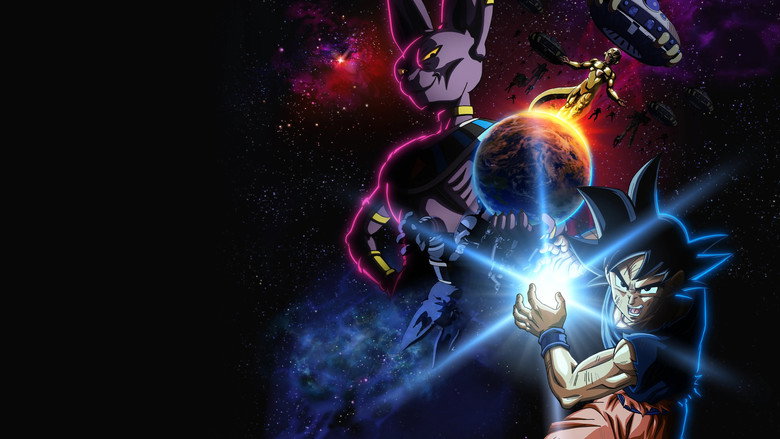
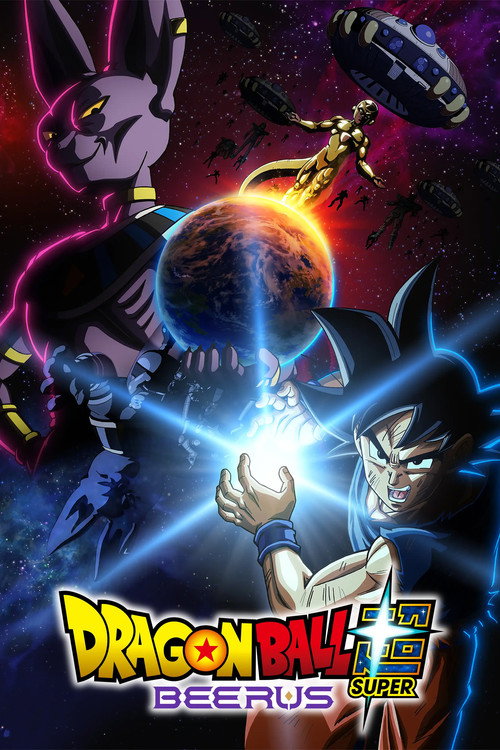
The story opens with Beerus, the God of Destruction, awake and looking for a worthy rival. Goku, Vegeta and their friends and family have to face a being who can erase worlds on a whim, and Earth is in danger. The cast includes Masako Nozawa as Goku, Ryo Horikawa as Vegeta, Koichi Yamadera as Beerus, Masakazu Morita as Whis, Naoko Watanabe as Chichi and Unsho Ishizuka as Mr. Satan.

Fan sources describe it as the first part of a continued Super anime. It remakes the God of Destruction Beerus Saga and, according to an April 2026 trailer, the Golden Frieza Saga as well. The Dragon Ball fandom wiki also lists the Universe 6 Saga. The season is listed at 19 episodes and the show is still airing, so its full arc is not yet settled.
Core Meaning

As a remake, the series is about legacy and renewal. It treats a story that has lasted forty years as something to re-edit and polish, not only repeat. Within the story, the message inherited from the original Super is that no matter how strong you become, there is always someone above you. That should inspire humility and a love of the fight rather than despair. Power is met with curiosity, humor and heart, and ordinary life (food, family, friends) holds its own against cosmic destruction.

This reading draws on my own understanding of the franchise. The sources describe the production but not any stated thematic intent for this remake.

Thematic DNA

Limitless growth and rivalry 30%
Renewal and legacy 25%
Gods and mortals 20%
Family and friendship 15%
Comedy against catastrophe 10%

Limitless growth and rivalry

Beerus searches for a worthy opponent, and Goku and Vegeta answer with ever greater training. Each new level of power shows that growth has no ceiling.

Renewal and legacy

As a 70th and 40th anniversary remake, the series reworks earlier material with new animation and a reconstructed narrative. It honors the past while updating it.

Gods and mortals

Divine beings such as Beerus and Whis hold absolute power over Earth, yet they are drawn into human pleasures and humor. The gap between divine and human is tested and softened.

Family and friendship

Goku's family, Vegeta and the Earth's defenders, including Mr. Satan, are what is at stake. Their bonds give the cosmic threats an emotional anchor.

Comedy against catastrophe

World-ending stakes are mixed with slapstick and everyday indulgence. The tone suggests that joy survives even the end of the world.

Character Analysis

Son Goku

Masako Nozawa

Archetype: Hero Key Trait: Joyful, open-hearted hunger for challenge

Motivation

A pure love of fighting stronger opponents, joined to a wish to protect Earth.

Character Arc

Goku moves from a mortal champion to someone who can stand before gods. The season adapts the Beerus, Golden Frieza and Universe 6 material, so his arc is a steady expansion of limits. In the original Super story, the god-level encounters lead into the tournament-style stakes of the Universe 6 material.

Beerus

Koichi Yamadera

Archetype: Trickster god / antagonist turned ally Key Trait: Capricious, feline, terrifyingly casual

Motivation

Finding a worthy rival and satisfying his appetites.

Character Arc

He begins as a threat to Earth, a God of Destruction roused in search of a worthy rival. In the original story he becomes a recurring, gruff ally who is easily bought with good food.
All 4 characters and cast

Symbols & Motifs

The God of Destruction

Meaning: Entropy, and the humbling of the mighty.
Context: Beerus embodies destruction as a cosmic function. He is a lazy, playful figure who is also a lethal one.

Dragon Balls

Meaning: Hope and the possibility of restoring what is lost.
Context: A recurring franchise device. This is general franchise knowledge, not drawn from the sources.

Golden hair and divine aura

Meaning: Transcendence and the next step of growth.
Context: Transformations mark each leap in power across the sagas the series adapts.

Food and feasting

Meaning: Common pleasures as a source of peace.
Context: Appetite and cuisine often decide the mood of divine encounters in Super. This is my own interpretation.

Philosophical Questions

What does a worthy rival give meaning to?

Beerus looks for a worthy opponent, and Goku measures himself against greater and greater powers. Both treat challenge as meaning, not just conflict.

Can absolute power be benevolent or is it always arbitrary?

A god who can destroy worlds on a whim is held back mostly by his tastes and moods. This shows how fragile mortal safety is.

Is a remake a continuation or a replacement of the original?

An 'enhanced edition' reworks the narrative while keeping the story. This raises the question of what makes a story the same story.

How It Ends

Alternative Interpretations

Some viewers may read the remake as a correction of the original Super anime, whose pacing and animation were criticized. One entertainment article contrasts this remake with the original's pacing and look. Others may see it as a commercial anniversary product. These are interpretations rather than settled consensus.

Full ending explanation

Cultural Impact

The series arrives as part of Dragon Ball's 40th anniversary and Toei Animation's 70th. It reflects the current industry habit of remastering and re-editing classic anime for new audiences. Its slot replaced One Piece on Fuji Television while that show is on hiatus, which shows how Dragon Ball serves as flagship content for the network. Because it is still airing, its long-term influence and critical standing cannot yet be judged.

Interesting Facts

  • It is produced by Toei Animation to commemorate the studio's 70th anniversary and is tied to Dragon Ball's 40th anniversary celebrations.
  • Remaster production was announced in January 2026.
  • Producer Akio Iyoku said the work began several years earlier and is a reconstruction of the story starting with the Battle of Gods arc.
  • Koichi Yamadera announced the Beerus remake at the 'Dragon Ball Genkidamatsuri!' 40th anniversary event.
  • The world premiere of episode one took place at New York Comic Con on October 8, 2026, before the Japanese broadcast.
  • It premiered on Fuji Television on October 11, 2026 at 11:15 p.m., replacing One Piece in that timeslot while that series is on hiatus.
  • An April 19, 2026 trailer revealed that the Golden Frieza Saga would also be remade.
  • Episode one is titled 'The God Who Destroys'.

Frequently Asked Questions

Explore More About This Movie

Dive deeper into specific aspects of the movie with our detailed analysis pages

Comments (0)

Leave a comment

No comments yet. Be the first to share your thoughts!

Similar Movies