Skip to content
Extracurricular
A suffocating neo-noir psychological thriller steeped in relentless dread and adolescent desperation; it moves like a fragile hermit crab stripped of its shell, scuttling blindly across shattered glass beneath flickering neon lights.
Extracurricular

Extracurricular

인간수업

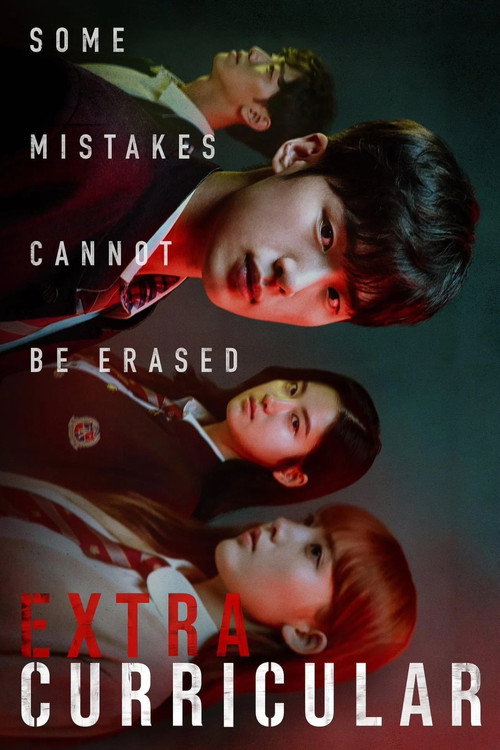
"Some mistakes cannot be erased."

29 April 2020 — 29 April 2020 South Korea 1 season 10 episode Ended 8.1 (690)

Cast: Kim Dong-hee, Park Ju-hyun, Jung Da-bin, Nam Yoon-su, Kim Yeo-jin

Drama Crime The Illusion of Detachment and the Inevitability of Consequences Systemic Abandonment and Adult Neglect Class Stratification and the Desperation for Normalcy Juvenile Exploitation and Moral Erosion

Overview

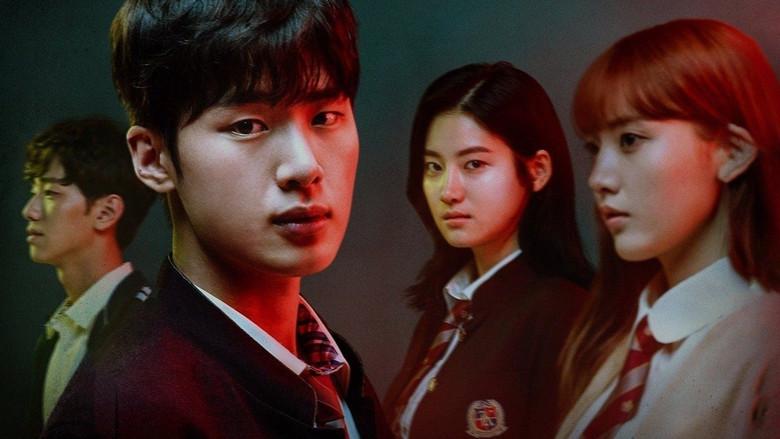
Extracurricular (인간수업 / Ingansueop, literally translating to Human Class or Human Lessons) is a 10-episode South Korean crime drama created and written by Jin Han-sae and directed by Kim Jin-min, produced by Studio 329 for Netflix. The series subverts the traditional high school drama format by plunging into the dark, predatory underbelly of juvenile delinquency, adolescent survival, and modern digital crime.

The narrative centers on Oh Ji-soo, a quiet, seemingly invisible model student with top academic rankings who harbors a sinister secret. Abandoned by his parents and forced to fend for himself, Ji-soo masterminds an illegal compensated dating (jogeon mannam) brokering service through an encrypted smartphone app, using the alias "Uncle" and employing a grizzled enforcer named Lee Wang-chul for physical security. Ji-soo's sole ambition is modest on the surface: earn enough money to pay for his cram school, living expenses, and university tuition to achieve an "ordinary" middle-class life.

His precarious underground enterprise begins to unravel when his wealthy, privileged classmate Bae Gyu-ri discovers his double life. Rather than turning him in, Gyu-ri blackmails Ji-soo into a business partnership as an escape from her suffocating family. What begins as a calculated scheme quickly spirals into an uncontrollable catastrophe as fellow classmate Seo Min-hee, high school bully Kwak Ki-tae, local organized crime syndicates, and juvenile division police detectives collide in a chain reaction of escalating violence, betrayal, and psychological destruction.

Core Meaning

The fundamental message of Extracurricular revolves around the philosophical inquiry into the weight of human choices and the irreversible nature of crime. Writer Jin Han-sae explicitly explored the moral question: "Why is crime fundamentally bad, and what does it cost a human being to cross that threshold?"

The series illustrates that criminal shortcuts—even when rationalized by systemic abandonment or survival needs—inevitably corrode human morality and extract a devastating toll ("human lessons" / 인간수업). The creators critique both the hyper-competitive, uncaring capitalist social structure that leaves marginalized youth without safety nets and the illusion that one can remain clean and detached while orchestrating exploitation behind a digital screen.

Thematic DNA

The Illusion of Detachment and the Inevitability of Consequences 40%
Systemic Abandonment and Adult Neglect 25%
Class Stratification and the Desperation for Normalcy 20%
Juvenile Exploitation and Moral Erosion 15%

The Illusion of Detachment and the Inevitability of Consequences

Ji-soo believes his automated app and anonymous persona insulate him from the human cost and criminality of sex work. The narrative systematically dismantles this delusion, proving that violence in the physical world cannot be contained behind an algorithm and every transgression demands full retribution.

Systemic Abandonment and Adult Neglect

Throughout the series, adults exist either as direct predators, parasites (such as Ji-soo's gambler father), oppressive taskmasters (Gyu-ri's corporate parents), or well-meaning figures whose institutional limitations render them powerless (Teacher Cho Jin-woo and Detective Lee Hae-gyoung). The youth are left fundamentally unattended.

Class Stratification and the Desperation for Normalcy

The series contrasts Ji-soo, who commits heinous crimes simply to afford the baseline of a normal life, with Gyu-ri, who comes from immense wealth but engages in criminality out of boredom and rebellion. It highlights how extreme socioeconomic polarization warps the moral compasses of both ends of the economic spectrum.

Juvenile Exploitation and Moral Erosion

The series examines compensated dating and youth prostitution not as glamorous rebellion, but as a dehumanizing trap where vulnerable teenagers trade their physical and mental safety for luxury goods or basic subsistence.

Character Analysis

Oh Ji-soo

Kim Dong-hee

Archetype: Tragic Antihero / Corrupted Underdog Key Trait: Pathological introversion & calculated detachment

Motivation

Desperation to earn tuition and afford an "ordinary life."

Character Arc

Begins as an invisible, timid honor student running a cold criminal empire; disintegrates into panic, physical ruin, and moral damnation.

Bae Gyu-ri

Park Ju-hyun

Archetype: The Catalyst / Cynical Accomplice Key Trait: Fearless, manipulative boldness & sharp intellect

Motivation

Escaping the suffocating pressure and expectations of her elite parents.

Character Arc

Starts as a manipulative, wealthy socialite; develops into a reckless, hardened criminal partner who embraces chaos to escape parental control.

All 5 characters and cast

Symbols & Motifs

The Hermit Crab (소라게)

Meaning:

Represents Ji-soo himself: a soft, vulnerable creature hiding inside a rigid, protective shell. The shell symbolizes his invisible student persona and the security of his digital avatar.

Context:

Ji-soo keeps a hermit crab in a glass terrarium in his cramped apartment. In the final scene, the crab's terrarium is seen empty, symbolizing Ji-soo losing his protective facade and facing raw exposure.

those

The Second Smartphone / Voice Synthesizer

Meaning:

Serves as both the literal and metaphorical mask allowing Ji-soo to project authority and detach from the real-world violence he facilitates.

Context:

Used by Ji-soo as a burner phone equipped with a digital voice distortion application to run his business anonymously under the persona of "Uncle."

The Stack of Hidden Cash / Floorboards

Meaning:

Represents Ji-soo's ticket to a "normal" future, while simultaneously acting as a curse that attracts greed, theft, and bloodshed.

Context:

Ji-soo stashes banknotes hidden under the floorboards in his room, which are eventually stolen by his estranged father.

Endless Staircases and Dimly Lit Alleys

Meaning:

Mirrors Ji-soo's exhausting, uphill battle for survival and his subsequent downward moral and physical spiral.

Context:

Appears as a recurring visual motif featuring long, exhausting outdoor staircases across older Seoul neighborhoods.

High School Uniforms

Meaning:

Emphasizes the loss of innocence and the collapse of the barrier between childhood and brutal adulthood.

Context:

Pristine school uniforms are placed in stark contrast against filthy motel rooms, bloodstains, and dark karaoke bars.

Memorable Quotes

내 꿈은 비싸요. 평범하게 사는 거.
— Oh Ji-soo

Context

Ji-soo explains to his homeroom teacher Cho Jin-woo why he studies relentlessly and works so hard.

Meaning

Establishes Ji-soo's foundational justification for his illicit enterprise, framing an ordinary life as an unattainable luxury.

너 하는 일 나도 좀 껴달라고. 나도 좀 벌게.
— Bae Gyu-ri

Context

Gyu-ri corners Ji-soo after discovering his secret phone, aggressively pushing herself into his illegal business.

Meaning

Marks the primary turning point where Ji-soo loses exclusive control of his operation, setting off a catastrophic escalation.

All 4 quotes

Episode Highlights

Episode 1

S1E1

Introduces Ji-soo's double life as a quiet straight-A student and the mastermind behind the "Uncle" brokering service.

Significance:

Establishes the core tension between his model student facade and his underground criminal operations.

Episode 3

S1E3

Gyu-ri uncovers Ji-soo's burner phone and forces an unwanted partnership with him.

Significance:

Marks the critical turning point where Ji-soo loses absolute control over his criminal system.

Episode 5

S1E5

Ji-soo's estranged, gambling-addict father discovers and steals Ji-soo's hidden life savings of 60 million won.

Significance:

Leaves Ji-soo penniless, forcing him to accept Gyu-ri's dangerous and reckless expansion plans.

Episode 7

S1E7

Gyu-ri and Ji-soo's botched attempt to expand by recruiting classmates draws the attention of mob boss Ryu Dae-yeol.

Significance:

Directly entangles the high school students with the Banana Karaoke Club and organized crime.

Episode 9

S1E9

Lee Wang-chul unleashes brutal violence against Dae-yeol's syndicate to rescue the imperiled teenagers.

Significance:

Results in fatal clashes that shatter any illusion that the characters can walk away from the criminal underworld unscathed.

Episode 10

S1E10

Seo Min-hee discovers Ji-soo's identity and is fatally injured on the stairs, while Kwak Ki-tae tracks down and brutally stabs Ji-soo in his room before Gyu-ri intervenes.

Significance:

Serves as the tragic series climax where all lies collapse, ending with Ji-soo and Gyu-ri fleeing as bleeding fugitives.

Philosophical Questions

Can an individual separate the morality of a crime from its execution through digital anonymity?

The series explores how Ji-soo attempts to remain emotionally and morally detached behind an encrypted app, only to discover that digital criminality directly fuels real-world physical violence.

What constitutes the threshold of 'a normal life,' and is society structured so that some must commit atrocities merely to achieve mediocrity?

Explored through the contrast between Ji-soo's criminal measures to afford basic education and Gyu-ri's elite, suffocating upbringing.

Where does juvenile accountability end and adult/institutional culpability begin when children resort to organized crime?

Examined via the failure and impotence of teachers, parents, and police officers who consistently fail to protect or guide vulnerable teenagers.

Is true redemption possible after causing irreversible harm to innocent human lives?

Explored through the catastrophic fallout experienced by Min-hee, Mr. Lee, and Ji-soo as their criminal entanglements spiral past the point of no return.

Alternative Interpretations

Viewers and critics have interpreted the ending and themes through several distinct lenses:

Full ending explanation

Cultural Impact

Extracurricular was conceived during a period of intense public anxiety in South Korea regarding juvenile crime laws (Juvenile Act), digital sex crimes, and compensated dating (조건만남 / jogeon mannam).

The drama was widely celebrated for dismantling the sanitized conventions of traditional K-dramas. At the 57th Baeksang Arts Awards (2021), Park Ju-hyun won Best New Actress – Television for her role as Bae Gyu-ri, and the series earned a nomination for Best Drama.

Furthermore, the show helped pave the way for a new wave of gritty, R-rated Netflix Original Korean productions (such as D.P., My Name, Squid Game, and Juvenile Justice) by proving global demand for uncompromising Korean social noir.

Audience Reception

Extracurricular received widespread critical and audience acclaim for its rapid pacing, razor-sharp dialogue, visceral tension, and realistic depiction of adolescent psychology. Lead actors Kim Dong-hee and Park Ju-hyun were heavily praised for their compelling portrayals of morally grey protagonists.

Conversely, some viewers found the graphic physical violence, dark thematic material, and absence of clear moral role models uncomfortable to watch. The ambiguous cliffhanger ending also divided audiences between those who appreciated its thematic open-endedness and those seeking concrete closure.

Overall, the series is widely regarded as one of the most daring, original, and genre-defining Korean streaming thrillers.

Interesting Facts

  • Extracurricular marked the screenwriting debut of Jin Han-sae, the son of legendary South Korean screenwriter Song Ji-na.
  • Director Kim Jin-min chose the project because he viewed the script as an unapologetic, authentic portrayal of youth alienation.
  • Netflix and Studio 329 held open auditions to cast fresh, lesser-known actors for the teenage roles to enhance gritty realism.
  • Director Kim Jin-min utilized a non-intervention directing method, giving minimal micro-directions to encourage raw emotional instincts.
  • Completed in 2019 and released in April 2020, the drama's release coincided with South Korea's real-life 'Nth Room' scandal.

Easter Eggs

The Meaning of the Korean Title (인간수업)

Translating to "Human Class" or "Lessons in Humanity", the title serves as a dark parody of high school curriculums, contrasting academic classes with the brutal, real-world lessons delivered by crime and pain.

Gyu-ri's Self-Harm Bandages & Pencils

Gyu-ri is frequently seen nervously biting or snapping stationery and wearing wrist accessories, subtly signaling her psychological distress and self-harm tendencies under her perfectionist parents.

The Red Baseball Cap

Lee Wang-chul's faded red cap and beat-up motorcycle serve as an homage to classic Korean hard-boiled cinema heroes of the late 1990s, reinforcing Choi Min-soo's noir archetype.

Frequently Asked Questions

Explore More About This Movie

Dive deeper into specific aspects of the movie with our detailed analysis pages

Comments (0)

Leave a comment

No comments yet. Be the first to share your thoughts!

Similar Movies