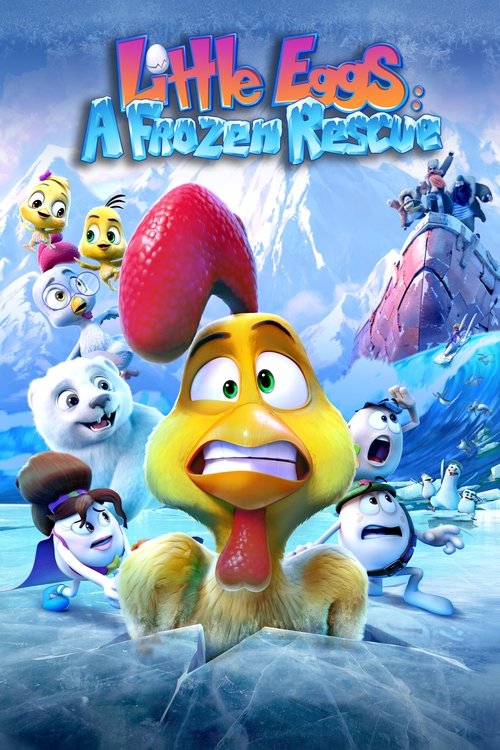
Little Eggs: A Frozen Rescue
Huevitos Congelados
Overview
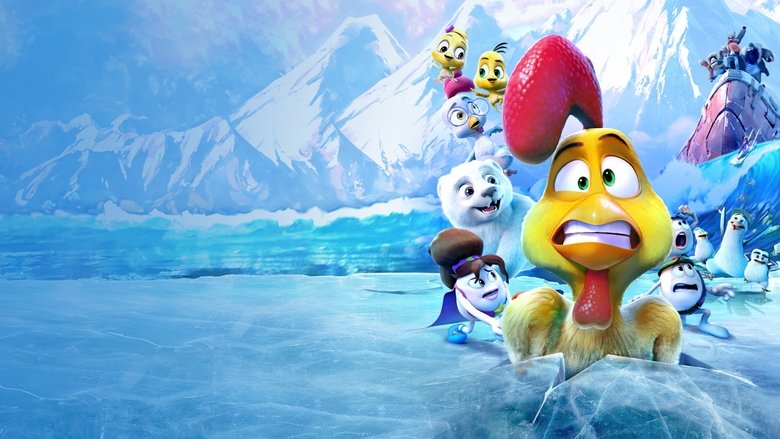
In this fifth and final installment of the legendary Huevocartoon franchise, Toto the rooster and his family embark on their most ambitious journey yet. When a polar bear cub named Polito is snatched from his home by unscrupulous circus owners, Toto—honoring a promise to his dying mother, Mama Gallina—vows to return the cub to his parents. The mission takes the typically warm-weather avian crew from their comfortable ranch to the treacherous, freezing landscapes of the South Pole.
The adventure is fraught with danger as the group is pursued by the Barba family, a trio of pirate-hunters who run a clandestine circus. Toto, along with his wife Di, their egg children, and the eccentric gang of friends including Willy and Confi, must outsmart the pirates, survive extreme weather, and navigate the absurdity of penguins in the desert before reaching the ice. The film balances slapstick humor with a surprisingly poignant emotional core centered on the cycle of life and saying goodbye to a beloved matriarch.
Core Meaning
At its heart, Little Eggs: A Frozen Rescue is a meditation on closure and legacy. As the concluding chapter of a 20-year saga, it uses the narrative device of a dying mother's wish to explore how the values instilled by older generations drive the actions of the new. The director aims to show that true strength lies not in physical power, but in the resilience of the family bond and the integrity to keep a promise, even when it requires leaving one's comfort zone to face the unknown.
Thematic DNA
The Cycle of Life and Loss
Unlike previous entries focused on growing up, this film tackles the end of life through Mama Gallina's illness and death. Her passing serves as the emotional catalyst for the plot, teaching characters (and young viewers) that while loved ones leave physically, their influence remains a guiding force.
Family Unity in Adversity
The "warm" family is contrasted against the "cold" environment. Every character, from the fragile eggs to the rooster, contributes to the rescue. The film posits that a family is a self-sustaining unit of warmth that can survive even the harshest (frozen) external conditions.
Environmental Responsibility
Through the plight of Polito the polar bear, the film touches on animal rights and the cruelty of poaching/circuses. It criticizes the exploitation of nature for entertainment, positioning the protagonists as defenders of the natural order.
Bravery vs. Fragility
A recurring motif in the franchise is the physical fragility of eggs. Here, that fragility is tested against ice and snow. The theme emphasizes that bravery is not the absence of fear (or cracks), but the will to proceed despite the risk of breaking.
Character Analysis
Toto
Bruno Bichir
Motivation
To fulfill his dying mother's wish and return Polito to his parents, securing his legacy as a man of his word.
Character Arc
Toto evolves from a reluctant adventurer seeking a quiet life into a selfless leader. His journey is defined by the acceptance of grief; he processes the loss of his mother by fulfilling her final wish, ultimately proving he can protect both his own family and the innocent cub.
Di
Maite Perroni
Motivation
To keep her family intact and support Toto's emotional burden.
Character Arc
Di transitions from a supportive partner to an active warrior. No longer just a love interest, she physically fights to protect her husband and children, notably taking down a walrus to save Toto.
Polito
Marcelo Barceló
Motivation
To return home to his parents.
Character Arc
While he doesn't change deeply, Polito represents the innocence that must be protected. His presence forces the other characters to mature and step up as guardians.
The Barba Family
Miguel Rodarte, Arath de la Torre
Motivation
Profit through the exploitation of rare animals.
Character Arc
A trio of pirates (Red, Black, and Jan) who serve as flat antagonists. Their greed leads to their downfall, ending with their circus license revoked and being surrounded by orcas.
Symbols & Motifs
The South Pole
It represents the ultimate test and the unknown. Geographically misplaced for a polar bear (a deliberate movie quirk), it symbolizes the farthest possible distance one would go to keep a promise.
The destination of the journey, standing in stark, blue-toned contrast to the warm, yellow-toned ranch of the opening scenes.
Mama Gallina's Promise
A symbol of generational duty. It transforms the mission from a simple adventure into a sacred pilgrimage.
The vow Toto takes at his mother's deathbed drives his motivation throughout the entire film, outweighing his fear of the cold.
The Ice Block Barrier
Symbolizes separation and helplessness. It physically separates Toto from his family at a crucial moment, forcing them to break through to save him.
In the climax, Toto is trapped behind ice, and Di must fight a walrus to break the barrier and revive him.
Memorable Quotes
Sabe bastante mal, carnal.
— Willy
Context:
Spoken during a moment of physical comedy involving tasting something unpleasant (ice/snow or food) during the journey.
Meaning:
Translating to "Tastes pretty bad, bro," this line captures the irreverent, slang-heavy humor that defined the franchise for two decades.
Venga con todo sin miedo.
— Toto
Context:
Used as a rallying cry when the group faces the pirates or a dangerous physical obstacle.
Meaning:
"Come on with everything, no fear." It encapsulates the film's message of facing overwhelming odds with courage.
Joder.
— Spanish Penguins
Context:
Exclaimed by the penguins when situations go awry, emphasizing their distinct nationality within the dub.
Meaning:
A distinct linguistic marker for the "Spanish" penguins. It highlights the franchise's tradition of using stereotypes and regional accents for comedy.
Philosophical Questions
Does duty to the dead outweigh safety for the living?
Toto risks his children's lives to fulfill a promise to his dying mother. The film explores the ethics of legacy and whether a promise is worth the ultimate danger.
Can disparate natures coexist?
By placing a polar bear among penguins and chickens, the film asks if biological enemies or strangers can form a functional community (family) through shared struggle.
Alternative Interpretations
Critics have discussed the film's geographical confusion (Polar Bears in the South Pole) not just as an error, but as a potential meta-commentary on the 'cartoon logic' the series has always embraced—prioritizing fun interactions (bears vs. penguins) over realism. Additionally, the death of Mama Gallina is interpreted by some as a metaphor for the death of the franchise itself; just as Toto must move on without his mother, the audience must move on from the Huevos films.
Cultural Impact
Huevitos Congelados marks the end of an era for Mexican animation. The Huevocartoon franchise, starting as crude flash animations on the early internet, evolved into a box-office juggernaut that proved Mexican animation could compete domestically with Hollywood. This final film cements the legacy of the Riva Palacio brothers, demonstrating a maturation from 'edgy' double-entendre humor to a more polished, family-oriented (though still cheeky) CGI spectacle. It is significant for being one of the first major Mexican animated franchises to conclude a planned five-film arc spanning nearly two decades.
Audience Reception
Reception has been mixed to positive. Long-time fans praised the improved CGI animation and the emotional weight of the ending, appreciating the closure for beloved characters. However, critics pointed out the predictable plot and the repetition of jokes that have been used since 2006. The geographical inaccuracy (Polar Bears in the South Pole) was a common point of ridicule in user reviews, though often forgiven as 'cartoon logic'.
Interesting Facts
- This is the fifth and final film in the 'Huevos' franchise, which began in 2006 with 'Una Película de Huevos'.
- The pirate villains are named the 'Barba' family (Redbeard, Blackbeard), which is an ironic joke because none of them have facial hair.
- The film was released exclusively on the streaming platform ViX+ rather than in theaters, marking a shift in distribution for the series.
- Geographical anomaly: The film sends a Polar Bear (native to the Arctic/North) to the South Pole to live with Penguins. This is a known 'movie logic' choice or biological error.
- The production took four years to complete, with directors citing it as the most technically advanced film of the saga.
- Directors Gabriel and Rodolfo Riva Palacio stated that the theme of death was chosen specifically to 'close the cycle' of the franchise.
Easter Eggs
Return of the Penguin Brothers
The trio of penguins (Antonio, Venancio, Manolo) originally appeared in the second film, Otra Película de Huevos y un Pollo. Their return is a major fan-service callback to the franchise's history.
Tlacua and Cuache at the South Pole
In the mid-credits scene, the recurring opossum characters (who usually serve as comic relief narrators) accidentally arrive at the South Pole, continuing their running gag of being lost or in the wrong place.
Confi's Confetti
Confi the egg continues his running gag of vomiting confetti when stressed or excited, a visual signature that has persisted through all five films.
⚠️ Spoiler Analysis
Click to reveal detailed analysis with spoilers
Frequently Asked Questions
Explore More About This Movie
Dive deeper into specific aspects of the movie with our detailed analysis pages
Comments (0)
No comments yet. Be the first to share your thoughts!