Skip to content
Fantastic Planet
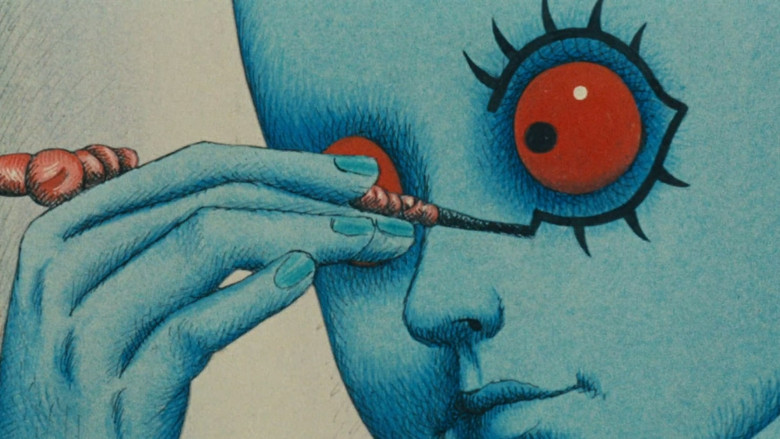
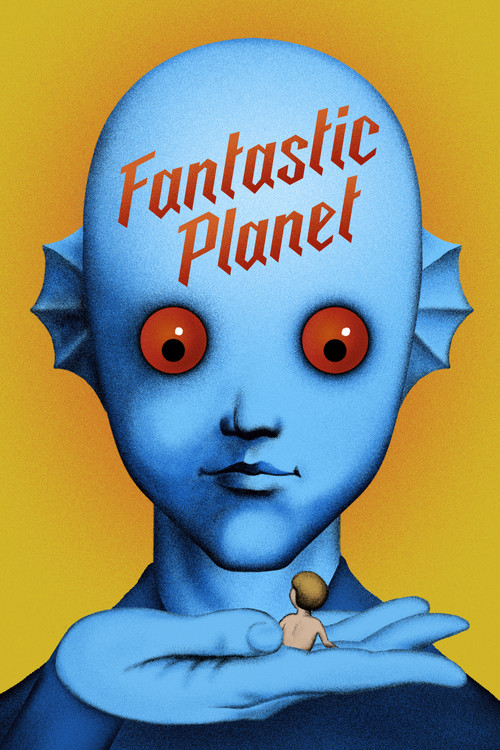
A hallucinatory cut-paper dream in which tiny humans scurry beneath the gaze of serene blue giants, so that wonder and horror fall together like a slow, psychedelic jazz rain.
Fantastic Planet
Fantastic Planet

La Planète sauvage

"A sublime trip to a fine new world!"

01 December 1973 Czechoslovakia 72 min 7.6 (1,077)

Director: René Laloux

Cast: Gérard Hernandez, Jean Valmont, Jennifer Drake, Yves Barsacq, Jeanine Forney

Animation Science Fiction Oppression, colonialism and dehumanization Knowledge as liberation Resistance and rebellion Perspective, scale and the relativity of 'civilization' Coexistence and mutual recognition

Fantastic Planet — Ending Explained

⚠️ Spoiler Analysis

The film opens with an Om mother fleeing with her baby before she is killed when young Draags toy with her. The orphan is found by Tiwa, daughter of the high-ranking Master Sinh, who keeps him as a pet and names him Terr. Because Draag lessons come through a headset and Terr stays close to Tiwa, he secretly absorbs Draag knowledge, including their language and science.

As Tiwa grows up and turns to Draag meditation, Terr escapes, taking the learning headset with him. He finds the wild Oms living in the parks. After initial distrust, the headset spreads literacy and technical skill among them. The Draags then launch a de-Oming campaign, and many Oms are killed. The survivors flee to an abandoned rocket depot and prepare for resistance.

The key revelation concerns Draag meditation. In it, Draags travel in spirit to the Fantastic Planet, a moon where their minds join headless statues and mate with beings of other species. This is how the Draags reproduce and survive. The Oms fly rockets to the moon and begin destroying the statues, which threatens the Draag species itself.

Facing their own extinction, the Draags agree to peace. The Oms get their own artificial satellite, which they name Terr, and the two species coexist. The hidden meaning becomes clear only at the end: the all-powerful oppressor had a fatal dependency the oppressed could exploit once they had enough knowledge. Liberation came from understanding, not strength.

Alternative Interpretations

  • Anti-Soviet allegory: Given the production history in Prague, the Draags can be read as the Soviet occupiers and the Oms as the Czechoslovak people resisting domination.
  • Anti-colonial allegory: Many critics read the film as a commentary on European colonialism. It depicts a \"civilized\" power that treats native peoples as animals, carries out exterminations, and justifies itself through its own sense of superiority.
  • Animal rights and speciesism: By putting humans in the position of pets and pests, the film invites viewers to reconsider how humanity treats animals it considers lesser.
  • Racial discrimination: Student and academic essays have used the film to discuss difference, power and discrimination. The Oms' treatment mirrors segregation and dehumanization based on perceived inferiority.
  • An ambiguous peace: Some viewers see the ending as a hopeful story of coexistence. Others see it as peace achieved only through threat and deterrence, closer to a Cold War balance of power than true reconciliation.

Explore More About This Movie

Dive deeper into specific aspects of the movie with our detailed analysis pages

Similar Movies