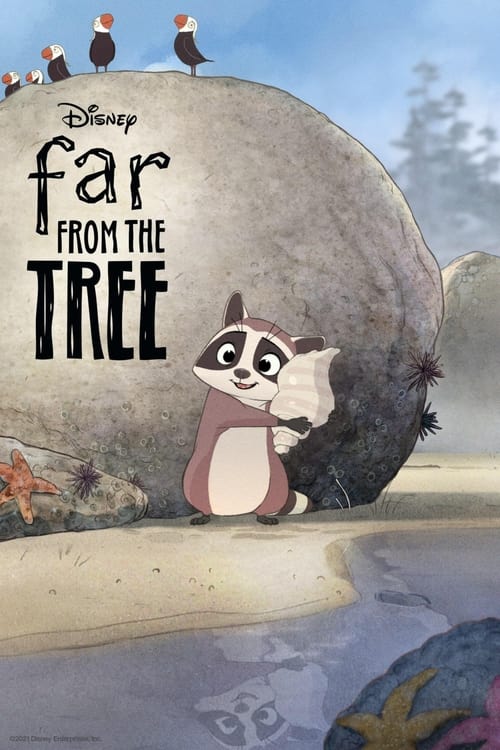
Far from the Tree
A poignant, hand-drawn animated short where a parent raccoon's fierce, fear-born protectiveness clashes with a child's boundless curiosity, creating a visually rich, emotional allegory for generational healing.
Far from the Tree

Far from the Tree

24 November 2021 United States of America 7 min ⭐ 8.1 (382)
Director: Natalie Nourigat
Animation Family
Generational Cycles and Inherited Trauma Parental Fear vs. Childhood Curiosity Healing and Conscious Parenting

Overview

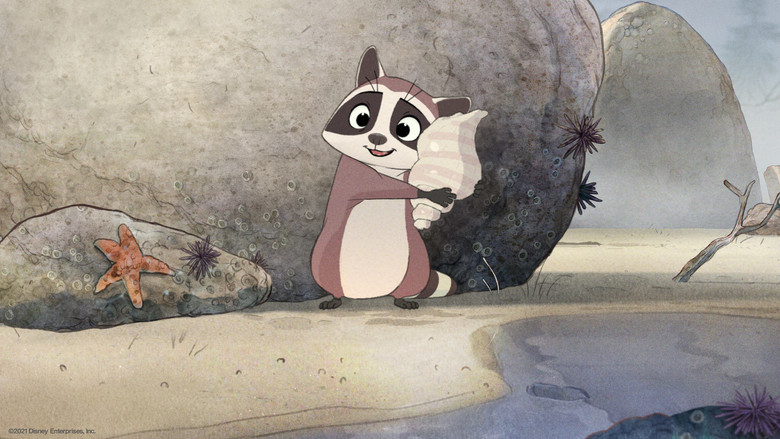
"Far from the Tree" is a wordless animated short film from Walt Disney Animation Studios. It follows a young, curious raccoon and its parent as they venture from the safety of their forest home to a Pacific Northwest beach to forage for food. The parent, bearing a scar from a past encounter with danger, is stern and overprotective, trying to curb the young raccoon's adventurous spirit to keep it safe.

Despite the parent's efforts, the little raccoon's curiosity leads it into a dangerous situation with a coyote, mirroring the very event that scarred its parent. Years later, the young raccoon is now an adult with its own child. When its own offspring exhibits the same curious nature, the parent raccoon finds itself repeating the same harsh, protective behaviors it experienced. This moment of recognition sparks a change, leading to a more understanding and open-hearted approach to parenting, breaking the cycle of fear.
Core Meaning

The central message of "Far from the Tree" revolves around the complexities of parenting, intergenerational trauma, and the conscious effort it takes to change learned behaviors. Director Natalie Nourigat and the creative team wanted to explore the anxieties parents feel about keeping their children safe in a dangerous world. The film illustrates how fear, born from past trauma, can be passed down through generations, manifesting as strictness and control. However, the film's ultimate message is one of hope. It posits that through self-awareness and empathy, a parent can recognize these inherited patterns and choose a different path—one that balances safety with allowing a child to experience the world with an open heart. It’s a story about learning from the past to become a better parent.

Thematic DNA

Generational Cycles and Inherited Trauma 40%
Parental Fear vs. Childhood Curiosity 35%
Healing and Conscious Parenting 25%

Generational Cycles and Inherited Trauma

The film's primary theme is the cycle of parenting behaviors passed from one generation to the next. The parent raccoon's harshness is a direct result of its own traumatic experience with a coyote, symbolized by its scar. This fear is then imposed on its child. The narrative structure, which shows the child growing up to become a parent and initially repeating the same actions, directly illustrates this cycle. The film explores how trauma can shape parenting styles, turning protection into stifling control, but also shows the powerful moment of realization that can break that cycle.

Parental Fear vs. Childhood Curiosity

A central conflict in the film is the dynamic between the parent's need for safety and the child's innate curiosity. The young raccoon sees the beach as a world of wonder, from seashells to seagulls, while the parent sees only potential threats. This theme is explored visually through the parent constantly reining in the child. The film validates the parent's fear by showing the real danger of the coyote, but it also champions the child's need to explore and learn, suggesting that the ideal parenting style involves teaching and guiding rather than just sheltering.

Healing and Conscious Parenting

The film's resolution focuses on the theme of healing and making conscious choices as a parent. When the grown-up raccoon sees its own fear and anger reflected in its actions towards its child, it remembers its own childhood frustrations. This moment of empathy allows it to break from the inherited pattern and approach its child with understanding. Instead of destroying the seashell as its parent did, it shares the experience, symbolizing a new, more open-hearted approach. This highlights the idea that it's possible to learn from your upbringing—both the good and the bad—to forge a different, more positive path.

Character Analysis

The Parent Raccoon

N/A (Non-speaking role)

Archetype: The Wounded Guardian
Key Trait: Overprotective

Motivation

The parent's motivation is entirely driven by fear stemming from a past attack by a coyote, which left it with a prominent scar. It is desperate to prevent its child from suffering the same fate, and this fear overrides its ability to parent with warmth and understanding.

Character Arc

The parent raccoon begins as a strict and overbearing guardian, its actions dictated by past trauma. Its primary goal is to prevent its child from getting hurt, but in doing so, it stifles the child's spirit and creates emotional distance. After its child grows up and has its own offspring, the parent is implied to have passed away. Its arc is primarily understood through the legacy of its parenting style, which its child must confront and evolve from.

The Progeny Raccoon

N/A (Non-speaking role)

Archetype: The Innocent Explorer / The Cycle-Breaker
Key Trait: Curious

Motivation

As a child, its motivation is pure curiosity and the desire to explore the exciting new world of the beach. As an adult, its motivation shifts to protecting its own child, but this is complicated by the memory of its own upbringing. Its ultimate motivation becomes the desire to be a better, more balanced parent than its own was.

Character Arc

The film follows this character from childhood into adulthood. As a child, it is curious, adventurous, and often frustrated by its parent's restrictions. After a dangerous encounter with a coyote, it learns the basis for its parent's fear. As a new parent itself, it initially mimics the same harsh behaviors. However, its arc culminates in a moment of self-realization where it recognizes the negative pattern and consciously chooses to parent with more empathy and openness, thus breaking the cycle of inherited trauma.

Symbols & Motifs

The Parent's Scar

Meaning:

The scar over the parent raccoon's eye is a physical manifestation of past trauma. It symbolizes the painful experience that shaped its fearful and overprotective parenting style. It serves as a constant, visible reminder of the dangers of the world, justifying its strictness in its own mind.

Context:

The scar is prominent from the beginning. The parent points to it when scolding the young raccoon after its encounter with the coyote, explicitly linking the danger to its past experience. This action visually communicates the source of its fear without words.

The Seashell

Meaning:

The seashell symbolizes curiosity, wonder, and the beauty of the world that the child wants to explore. For the parent, it initially represents a distraction and a potential danger. The act of destroying it is symbolic of the parent's fear crushing the child's spirit of discovery. When the grown-up raccoon later gives a seashell to its own child, it symbolizes the breaking of the generational cycle and the choice to nurture curiosity rather than fear it.

Context:

In the first half of the film, the young raccoon is fascinated by a seashell, but its parent snatches it away and crushes it. In the final scene, the now-adult raccoon finds a seashell and shares the experience with its own child, showing a complete reversal of the earlier behavior.

The Beach

Meaning:

The beach represents the world outside the safety of home—a place of both immense beauty and potential danger. For the child, it is a playground of new experiences. For the parent, it is an environment filled with threats that must be managed. The setting itself embodies the central conflict of the film: the tension between exploring life's wonders and protecting oneself from its perils.

Context:

The entire narrative unfolds on the beach, located in the Pacific Northwest. The director, Natalie Nourigat, drew on her childhood memories of Cannon Beach in Oregon to create a setting that felt both beautiful and moody, with its gray sands and wild nature, perfectly encapsulating this duality.

Philosophical Questions

To what extent should a parent's past trauma dictate how they raise their child?

The film directly confronts this question by showing the consequences of fear-based parenting. The parent raccoon's actions are understandable, given its history, but they also emotionally harm its child. The narrative explores the idea that while experience should inform parenting, it should not become a cage for the next generation. The ending suggests that true wisdom lies in using past trauma not as a rigid set of rules, but as a source of empathy to guide a child with a balance of caution and freedom.

Is it possible to protect a child without limiting their experience of the world?

"Far from the Tree" frames this as the central dilemma of parenting. The initial approach of the parent is to limit the child's world entirely to ensure safety, which proves to be stifling. The film's resolution doesn't offer a simple answer but proposes a better way: shared experience. By sharing the seashell with its child, the grown-up raccoon demonstrates a method of engaging with the world's wonders together, teaching safety through guidance rather than through prohibition and fear.

Cultural Impact

"Far from the Tree" was released theatrically with Disney's blockbuster feature "Encanto," a film that also deeply explores themes of family and inherited generational trauma. This thematic pairing was widely noted by critics and enhanced the viewing experience for many, as the short served as a poignant, concise prelude to the feature's more complex narrative. Critically, the short was very well-received, with reviewers praising its emotional depth, beautiful animation, and its ability to tell a powerful, relatable story about parenting without a single word of dialogue. It was often described as 'delightful,' 'endearing,' and 'surprisingly emotional.' For audiences, the film resonated strongly with parents who saw their own struggles and anxieties reflected in the story. While it may not have had a broad impact on pop culture as a standalone piece, its placement before a major Disney release allowed its message about conscious parenting and breaking negative cycles to reach a massive global audience, contributing to a growing cultural conversation about mental health and generational healing.

Audience Reception

Audience reception for "Far from the Tree" was largely positive, with many viewers finding it deeply moving and emotionally resonant. Parents in particular often expressed that the short accurately captured the anxieties of trying to keep a child safe while not stifling their spirit. The beautiful, storybook-like animation and the touching, wordless narrative were frequently praised. Some viewers mentioned being moved to tears by the film's exploration of the parent-child relationship and its hopeful ending about breaking generational cycles. While there was little specific criticism, some reviewers felt the epilogue was slightly rushed. Overall, audiences saw it as a poignant and powerful companion piece to "Encanto," appreciating its heartfelt and universal message.

Interesting Facts

  • The film was originally conceived with human characters, but the creators shifted to raccoons to soften the story's darker themes of intergenerational trauma and death.
  • Director Natalie Nourigat was inspired by her own childhood memories of visiting Cannon Beach in Oregon, and it was important to her to capture the specific moody, wild beauty of the Pacific Northwest.
  • The film uses a hybrid of 2D and 3D animation techniques, employing custom Disney software called Meander (first developed for the short "Paperman") to achieve a hand-drawn, watercolor look.
  • The creative team held 'parent roundtables' with studio employees to gather insights into the anxieties and challenges of parenting, which heavily influenced the film's emotional themes.
  • Finding the right balance between realistic animal behavior and anthropomorphic, human-like emotion for the raccoons was a significant challenge for the animators.
  • The film was developed as part of a Disney program to pitch new theatrical short films and was greenlit from a pitch by Natalie Nourigat that was initially just a 'mood piece' about her nostalgia for Oregon beaches.
  • The film premiered at the Annecy International Animation Film Festival on June 15, 2021, before being released theatrically with "Encanto" on November 24, 2021.

⚠️ Spoiler Analysis

Click to reveal detailed analysis with spoilers

Frequently Asked Questions

Explore More About This Movie

Dive deeper into specific aspects of the movie with our detailed analysis pages

Comments (0)

Leave a comment

No comments yet. Be the first to share your thoughts!