Skip to content
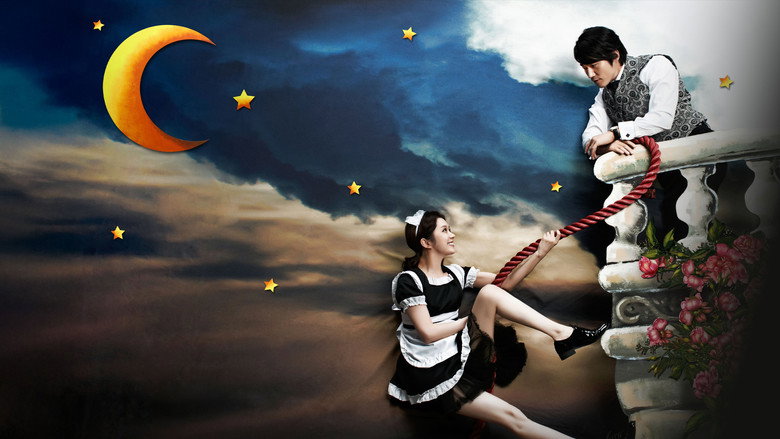
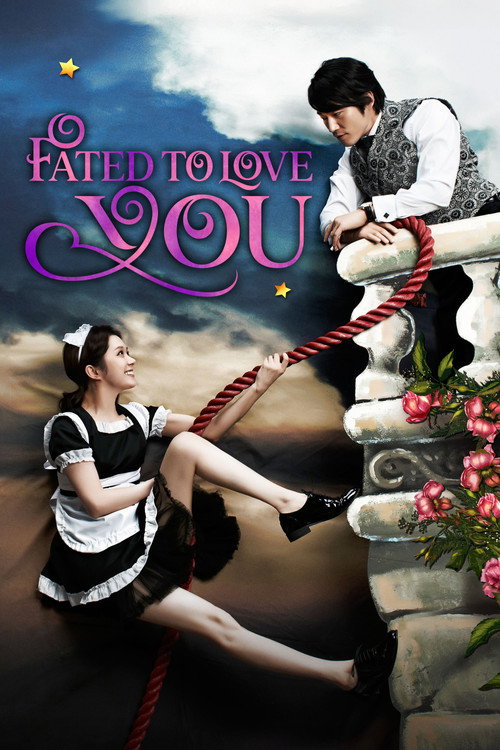
Fated to Love You
An accidental encounter blossoms into an enduring devotion, mirroring porcelain shattered under tragedy and painstakingly reassembled with golden lacquer.
Fated to Love You

Fated to Love You

운명처럼 널 사랑해

"One night stand or a lifetime of love? A sweet reverse romance between a man and a woman who are both free spirits"

02 July 2014 — 04 September 2014 South Korea 1 season 20 episode Ended 8.3 (272)

Cast: Jang Hyuk, Jang Na-ra, Choi Jin-hyuk, Wang Ji-won, Park Won-sook

Drama Comedy Self-Actualization and Reclaiming Self-Worth Destiny vs. Deliberate Choice Grief, Loss, and Healing Familial Duty vs. Personal Autonomy

Overview

Fated to Love You (2014) is a 20-episode South Korean romantic comedy-drama adapted from the hit 2008 Taiwanese series of the same name. The narrative centers on Lee Gun, the eccentric ninth-generation heir and CEO of Jangin Chemicals, and Kim Mi-young, an overly docile, bespectacled legal office assistant whose inability to refuse requests earns her the diminutive moniker "Post-it Girl". Both travel to Macau for disparate romantic pursuits, but a clandestine plot orchestrated by disgruntled island factory owners leads to drugged drinks and a mistaken hotel room assignment, culminating in an inadvertent one-night stand between the two strangers.

Upon returning to Korea, Mi-young discovers she is pregnant. Pressured by the traditional Jeonju Lee clan—an ancestral lineage where direct male heirs historically perish prematurely from a rare hereditary disease—Gun and Mi-young enter into a pragmatic contract marriage. What begins as a loveless arrangement marked by emotional wariness and comical domestic clashes gradually gives way to genuine affection as Gun discovers Mi-young's quiet resilience and she unearths his hidden warmth, while both receive support from designer Daniel Pitt and navigate the return of Gun's ex-girlfriend Kang Se-ra.

The drama shifts abruptly into melodrama in its midpoint when familial genetic affliction and grief shatter their bond, prompting a separation that spans years and continents. Re-emerging in Seoul as self-assured artist Ellie Kim, Mi-young confronts an emotionally scarred Gun, forcing both characters to grapple with unresolved bereavement, self-worth, and the choice between passive resignation to cruel fate or the deliberate courage to love in spite of mortality.

Core Meaning

The core philosophical thesis of Fated to Love You asserts that genuine love and personal worth are forged through deliberate choice and self-acceptance rather than serendipitous destiny alone. While an inadvertent accident initiates Gun and Mi-young's union, their ultimate partnership requires stripping away personal insecurities—Mi-young's habitual subservience and Gun's dread of his mortal legacy.

The series dismantles the conventional romantic concept of "fate" as an effortless alignment of circumstances, positing instead that life inevitably inflicts grief, disease, and irreversible loss, and true devotion consists of actively choosing to stand beside another person in the face of precarious mortality.

Thematic DNA

Self-Actualization and Reclaiming Self-Worth 30%
Destiny vs. Deliberate Choice 25%
Grief, Loss, and Healing 25%
Familial Duty vs. Personal Autonomy 20%

Self-Actualization and Reclaiming Self-Worth

Mi-young's transformation from an easily discarded "post-it note" into a renowned, self-possessed artist ("Ellie Kim") embodies the series' core developmental arc. The narrative stresses that healthy love cannot take root in self-erasure; Mi-young must first recognize her intrinsic value before she can stand on equal footing with Gun.

Destiny vs. Deliberate Choice

Although the premise opens with comedic fate and accidental coincidences, the narrative dismantles romantic inevitability. Both leads must actively choose to confront Gun's genetic vulnerability rather than allowing fear or circumstances to dictate their separation.

Grief, Loss, and Healing

Through the tragic loss of their unborn child, the narrative explores the devastating weight of grief and the subsequent psychological scars. Grief serves both as an estranging force and as the emotional crucible through which the characters discover emotional depth and forgiveness.

Familial Duty vs. Personal Autonomy

The Jeonju Lee clan's strict adherence to ancestral continuity creates tremendous pressure for Gun, who is bound to carry on a lineage burdened by early death. Gun's journey involves detaching himself from dynastic expectations to build a genuine, self-determined family rooted in mutual emotional honesty.

Character Analysis

Lee Gun

Jang Hyuk

Archetype: The Eccentric Chaebol / Flawed Hero Key Trait: Maniacal, theatrical laugh masking severe existential anxiety.

Motivation

Initially driven to honor clan lineage and marry Se-ra; evolves into fiercely protecting Mi-young and building a genuine family.

Character Arc

Begins as a flamboyant, theatrical executive concealing deep dread of his family's genetic curse; softens into a loving husband, falls into noble idiocy to spare Mi-young from his illness, and finally learns to face life's uncertainties openly.

Kim Mi-young (Ellie Kim)

Jang Na-ra

Archetype: The "Everywoman" transformed into Artist / Reluctant Heroine Key Trait: Soft-spoken gentleness concealing steely moral courage.

Motivation

Initially seeking to avoid inconveniencing others; evolves into securing autonomy, honoring her grief, and pursuing reciprocal love.

Character Arc

Begins as an unassertive, overlooked office temp; endures marital turbulence and the devastating loss of her child; studies art abroad to become self-assured artist Ellie Kim, capable of setting boundaries and demanding emotional truth.

All 5 characters and cast

Symbols & Motifs

The Post-it Note (포스트잇)

Meaning:

Symbolizes disposability and passivity. Early on, Gun rebukes Mi-young's doormat tendencies, but later redefines her as "super glue" when her emotional endurance binds their fractured family together.

Context:

Used in Mi-young's office environment where colleagues constantly attach tasks to her because she cannot refuse requests, and later recontextualized by Gun during a high-society auction gala.

The Snail (달팽이)

Meaning:

Gun's central affectionate metaphor for Mi-young, representing someone who moves slowly, carries her protective shell, and leaves an indelible, glistening trail that breaks through emotional defenses.

Context:

Appears as a verbal term of endearment, in Gun's spoken confessions, and through recurring animated visual motifs creeping across the screen.

"Gae-ddong" (개똥이 / Dog Poop) and the Baby Cup

Meaning:

A traditional Korean folk naming convention used to ward off death and malignant spirits from delicate newborns. It functions as a tangible repository of Gun and Mi-young's shared love, guilt, and mourning.

Context:

Applied as the nickname for their unborn child, manifested in a hand-painted ceramic cup, and later depicted in Mi-young's signature artwork.

Youk Shim-won Artworks

Meaning:

Symbolizes Mi-young's reclamation of joy, emotional autonomy, and artistic rebirth following profound heartbreak.

Context:

Featured extensively after the three-year time jump as the paintings created by Mi-young under her artist persona, Ellie Kim, highlighting vibrant portraits of wide-eyed, smiling women.

The Rice Cake Pestle Metaphor (Tteok-me)

Meaning:

A surreal, playful Korean cultural euphemism symbolizing sexual consummation.

Context:

Visualized during the Macau bedroom scene, depicting Gun and Mi-young pounding rice cakes while dressed in traditional hanbok.

The Haircut

Meaning:

Signals Gun's psychological evolution from volatile, manic escapism to solemn maturity, personal gravity, and suppressed heartbreak.

Context:

Lee Gun transitions from a flamboyant, eccentric long mane in the first half of the series into a tailored, cropped haircut following the three-year time jump.

Memorable Quotes

김미영 씨... 당신은 나한테 달팽이 같은 사람입니다. 느릿느릿 내 안에 기어들어와서, 이제는 당신 없이는 안 되게 만들어 버렸으니까요.
— Lee Gun

Context

Delivered in Episode 10/11 when Gun formally adopts the "snail" metaphor to confess his deepening romantic feelings to Mi-young.

Meaning

Signifies Gun's emotional surrender, acknowledging that Mi-young's slow, gentle persistence successfully dismantled all of his guarded defenses.

당신은 더 이상 쓰고 버리는 포스트잇이 아닙니다. 나한테는 없어서는 안 될 초강력 접착제예요.
— Lee Gun

Context

Spoken in Episode 8 after Gun defends Mi-young at a high-society auction gala from former colleagues who treated her like an errand runner.

Meaning

Validates Mi-young's intrinsic self-worth and commands her to stop self-deprecating or viewing herself as disposable.

All 4 quotes

Episode Highlights

The Collision in Macau

S1E1

Establishes the starkly contrasting personalities of Gun's corporate vanity and Mi-young's downtrodden office life, setting up their chance collision in Macau.

Significance:

Introduces the core characters and establishes the whimsical, screwball comedy tone that launches the narrative.

The Unintended Morning

S1E2

Depicts the infamous Macau bedroom sequence and drugged drink mix-up that results in an accidental one-night stand.

Significance:

Establishes the pivotal inciting incident and accidental intimacy that anchors the entire 20-episode series arc.

The Island Wedding

S1E4

Gun travels to Yeoul Island to accept responsibility for the unexpected pregnancy, facing Mi-young's family and community.

Significance:

Establishes the contractual terms of their marriage and triggers Gun's complex internal conflict between resentment and duty.

The Gala Transformation

S1E8

Gun publicly introduces Mi-young as his wife at a high-society auction gala, defending her against dismissive colleagues.

Significance:

Dismantles Mi-young's "Post-it Girl" persona and marks the couple's transition from pragmatic contract partners to genuine romantic companions.

The Temporary Void

S1E11

Gun collapses from acute neurological symptoms and awakens with transient amnesia, wiping away memories of Mi-young and reverting to Se-ra.

Significance:

Signals an abrupt narrative shift from screwball comedy to high-stakes melodrama and introduces Gun's genetic mortality.

The Loss of Gae-ddong

S1E12

Gun feigns emotional detachment to push Mi-young away; while chasing after him, Mi-young is struck by a vehicle and miscarries their unborn baby.

Significance:

Serves as the series' devastating emotional turning point, shattering the marriage and prompting Mi-young's departure to Paris.

Three Years Later

S1E13

Following a major time jump, Mi-young returns to Seoul as successful artist Ellie Kim, while a refined Gun secretly buys her painting of their child under a pseudonym.

Significance:

Establishes the post-trauma status quo, highlighting Mi-young's newfound empowerment and Gun's unresolved mourning.

The Secret Room Unveiled

S1E18

Mi-young discovers Gun's secret nursery and video diaries, uncovering the painful sacrifice behind his abandonment before confronting him at a press conference.

Significance:

Dismantles years of misunderstandings and noble idiocy, leading to their passionate and truthful reconciliation.

True Destiny Reclaimed

S1E20

Gun and Mi-young celebrate a genuine wedding, return to Macau to recreate their first night on honest terms, and raise healthy twins three years later.

Significance:

Provides narrative resolution by proving that conscious commitment overcomes the dread of genetic mortality and ancestral curses.

Philosophical Questions

Is sacrifice without consent an act of love or an act of cowardice?

The drama critically evaluates Gun's unilateral decision to abandon Mi-young to spare her the grief of his illness, ultimately demonstrating that depriving a partner of their agency to share suffering dismantles true emotional intimacy.

Does fate create meaning, or does meaning create fate?

The series balances arbitrary coincidences—such as spiked drinks, wrong room numbers, and lottery tickets—with conscious decisions, demonstrating that serendipity provides only the raw material, whereas deliberate commitment establishes enduring significance.

Can genuine wholeness emerge from deep bereavement?

Through the devastating loss of Gae-ddong, the drama explores whether profound grief leaves an individual permanently hollow or if it can serve as an emotional crucible that builds resilience and fuels creative rebirth.

Alternative Interpretations

The Existential Reading (Embracing Finitude): Gun's familial neurodegenerative disorder functions as an existential memento mori. Rather than serving merely as a melodramatic plot device, Gun's arc explores the psychological necessity of embracing happiness in the fleeting present instead of allowing the anticipation of mortality to poison living connections.

Full ending explanation

Cultural Impact

Fated to Love You reflected the 2014 trend of Korean broadcasters adapting popular Taiwanese idol dramas (Tai-ryu). The original 2008 Taiwanese drama had set historic television ratings records, and the Korean remake successfully adapted the source material by softening slapstick elements and infusing classic Korean melodramatic depth.

The drama subverted the traditional "Cold Chaebol" archetype prevalent in modern romantic K-dramas, giving Jang Hyuk freedom to depict Lee Gun with operatic eccentricity, manic laughter, and raw domestic vulnerability.

Competing in a competitive Wednesday-Thursday prime-time slot against high-profile rivals like It's Okay, That's Love and Joseon Gunman, the series climbed from single-digit ratings to peak nationwide ratings exceeding 11–13%. At the 2014 MBC Drama Awards, Jang Hyuk and Jang Na-ra earned Top Excellence Awards and the Best Couple Award.

Audience Reception

Audience reception was defined by widespread acclaim for the exceptional chemistry between Jang Hyuk and Jang Na-ra, whose performances balanced eccentric physical comedy with grounded, vulnerable emotional resonance.

However, the drama faced critical scrutiny for its tonal bipolarity around Episodes 11–14. International recappers observed that the sudden shift into amnesia, car accidents, miscarriage, and heavy melodrama stalled the brisk screwball comedy rhythm established early on.

Retrospective critics also highlighted discomfort with the series' inciting incident, particularly the non-consensual drugging via aphrodisiacs that led to the Macau encounter, as well as the repetition of the gag in the finale. Despite these pacing flaws, it remains regarded as a definitive 2010s romantic comedy celebrated for its warmth, memorable acting, and acclaimed soundtrack.

Interesting Facts

  • The casting of Jang Hyuk and Jang Na-ra marked their celebrated reunion 12 years after starring together in the runaway 2002 hit drama Successful Story of a Bright Girl.
  • Immediately after completing the series, the two lead actors and director Lee Dong-yoon reunited for a third project in the 2014 MBC Drama Festival single-episode special Old Goodbye.
  • The distinct, whimsical paintings credited to "Ellie Kim" throughout the drama were genuine original artworks created by renowned South Korean pop-artist Youk Shim-won.
  • Macau location scenes for the early episodes were filmed on-site at The Venetian Macao and historic city landmarks in July 2014 during a tight pre-broadcast window.
  • While filming the finale on Jeju Island, the production team was delayed by severe weather, resulting in the infant twins featured in the final epilogue being cast on the very day the finale aired.
  • At the time of its 2014 release, Fated to Love You set records as the second most expensive Korean television drama license sold to Chinese streaming platforms, garnering hundreds of millions of online views.
  • Ailee's emotional ballad for the drama, "Goodbye My Love", gained widespread acclaim and won Best Original Soundtrack at the 7th Korea Drama Awards.

Easter Eggs

Jang Hyuk's g.o.d Rap and Joon Park Cameo

Gun bursts into the iconic rap from g.o.d's 1999 debut song "To Mother" in front of guest star Joon Park, serving as a meta-reference to Jang Hyuk starring in g.o.d's original 1999 music video at the start of his career.

Chuno Martial Arts Parody

Multiple physical comedy scenes feature Jang Hyuk executing dramatic martial arts stances and swordless action choreography set to traditional music, directly parodying his acclaimed performance in the historical drama Chuno (The Slave Hunters).

Inspector Gadget Homage

In Episode 13, when Gun sneaks into Ellie Kim's private art gallery in a trench coat and sunglasses to spy on her and Daniel, the scene features music mimicking the Inspector Gadget theme alongside over-the-top acrobatics.

Clara Cameo

Model and actress Clara makes a cameo in Episode 1 as an uncooperative shampoo commercial model, prompting Gun to step onto the set and wash his own hair on camera.

Frequently Asked Questions

Explore More About This Movie

Dive deeper into specific aspects of the movie with our detailed analysis pages

Comments (0)

Leave a comment

No comments yet. Be the first to share your thoughts!

Similar Movies