Father There Is Only One
Padre no hay más que uno
Overview
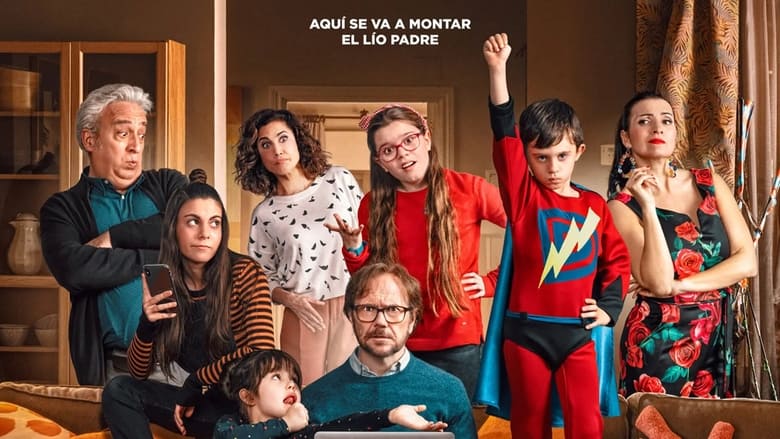
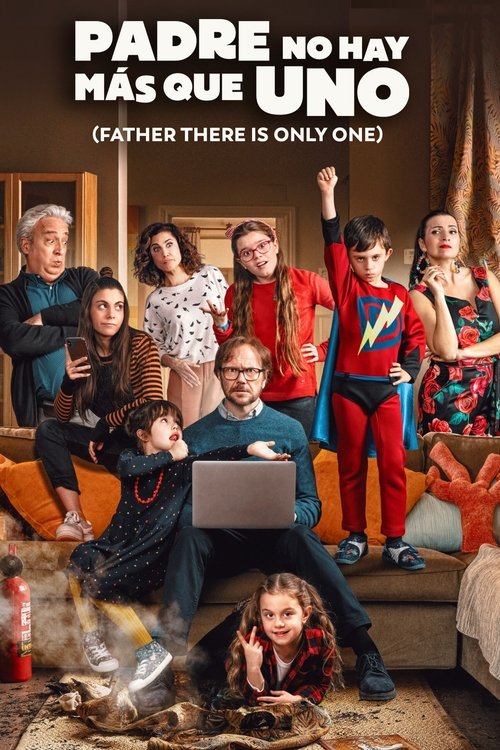
Father There Is Only One (Padre no hay más que uno) is a 2019 Spanish comedy directed by and starring Santiago Segura. The film follows Javier, a traditional, workaholic father who believes his wife exaggerates the difficulties of raising their five children. When his wife, Marisa, decides she has had enough and leaves for a Caribbean vacation with her sister-in-law, Javier is left solely responsible for the household.
Quickly, Javier's confident facade crumbles as he faces the relentless chaos of daily parenting. From school runs and extracurricular activities to navigating the treacherous waters of the school's mothers-only WhatsApp group, he is pushed to his absolute limits. The film chronicles his hilarious descent into desperation and his gradual journey toward understanding his children.
As the days pass, Javier must abandon his corporate, detached approach to family life and learn to genuinely connect with his kids. The movie blends slapstick humor with heartfelt moments, ultimately serving as a relatable reflection on the invisible labor of motherhood and the importance of shared parenting.

Core Meaning
The core message of the film revolves around the exposure and appreciation of invisible maternal labor. Through the comedic downfall of a classic Spanish cuñao (a know-it-all, somewhat macho figure), director Santiago Segura highlights the severe imbalance of domestic responsibilities in traditional households.
The film argues that parenting cannot be managed like a corporate job with detached efficiency; it requires immense emotional presence, patience, and active participation. Ultimately, it carries a message of empathy, urging partners to step into each other's shoes to truly understand the mental and physical load of raising a large family in the modern age.
Thematic DNA
The Invisible Labor of Motherhood
The film brilliantly showcases the mental load of parenting. Marisa's absence immediately highlights how much she does behind the scenes [1.3]. Javier's initial arrogance is shattered as he realizes that managing schedules, emotional needs, and domestic chores is a monumental task.
Deconstruction of the Patriarchal 'Cuñao'
Javier represents the archetype of the Spanish cuñao—a man who gives unsolicited advice about things he doesn't understand. The plot systematically dismantles his male privilege, forcing him to abandon his patronizing attitude and face reality.
The Anxieties of Modern Parenting
The narrative explores how technology has complicated family life. From the constant pinging of the toxic school WhatsApp group to the eldest daughter's obsession with influencer culture, the film portrays the overwhelming digital landscape modern parents must navigate.
Empathy and Family Connection
Beneath the chaos, the film is about bridging the gap between an absentee father and his children. By being forced to spend time together without a mediator, Javier and his kids discover each other's true personalities and build a genuine bond.
Character Analysis
Javier
Santiago Segura
Motivation
Initially, to prove to his wife that parenting is easy; later, simply to survive the week and keep his children safe and happy.
Character Arc
He transitions from a detached, arrogant husband who dismisses his wife's stress to a humbled, empathetic father who genuinely engages with and appreciates his family [1.3].
Marisa
Toni Acosta
Motivation
To seek rest and teach her husband a much-needed lesson about the reality of the domestic burden.
Character Arc
She moves from the brink of a nervous breakdown, suffocated by unappreciated labor, to reclaiming her independence and forcing a necessary shift in her family's dynamic.
Paco
Leo Harlem
Motivation
To offer 'help' to his brother, which usually involves terrible advice and avoiding any actual responsibility.
Character Arc
Paco remains relatively static, serving as a foil to Javier's growth by representing the unrepentant, irresponsible bachelor lifestyle.
Sara
Martina D'Antiochia
Motivation
To gain social media followers and navigate the awkwardness of teenage life without parental interference.
Character Arc
She goes from being distant and obsessed with internet fame to finding a grounded connection with her struggling father.
Symbols & Motifs
The Mothers' WhatsApp Group
It symbolizes the overwhelming social pressure, micro-management, and mental load that modern society places almost exclusively on mothers [1.4].
Javier is forced to use Marisa's phone to navigate the school chat, facing a barrage of relentless notifications, passive-aggressive comments, and complex social rules he completely misunderstands.
The Caribbean Vacation
It represents female liberation, self-care, and the breaking point of an underappreciated spouse.
Marisa's trip is the catalyst for the entire plot, serving as a physical and emotional boundary she sets to force her husband into accountability.
Javier's Laptop
The laptop symbolizes Javier's emotional detachment, his corporate mindset, and the barrier he places between himself and his family's domestic reality.
Early in the film, Javier is frequently seen working on his laptop, physically present in the chaotic house but mentally absent and ignoring the children's pleas for attention.
Memorable Quotes
Es que no te organizas.
— Javier
Context:
Javier tells this to Marisa early in the film when she expresses how overwhelmed she is by the children's schedules.
Meaning:
This phrase perfectly captures the condescension of a partner who doesn't understand the complexities of domestic life. It represents the catalyst for the mother's departure [1.9].
No te pongas nerviosa.
— Javier
Context:
Javier frequently uses this phrase to dismiss Marisa's panic before he actually experiences the chaos of the children himself.
Meaning:
A classic gaslighting phrase used to minimize women's legitimate stress and emotional exhaustion.
Padre no hay más que uno.
— Javier (and Title Reference)
Context:
It serves as the thematic umbrella for the entire movie.
Meaning:
A clever subversion of the traditional Spanish idiom 'Madre no hay más que una' (There is only one mother), pointing out that while there is one father, he is finally having to do the work of the mother.
Philosophical Questions
Does society inherently devalue domestic labor because it is traditionally associated with women?
The film explores this by showing how Javier, a successful professional, assumes raising children is a simple matter of 'organization.' His hubris reflects a broader societal failure to recognize child-rearing as highly demanding, complex work [1.9].
Can true empathy only be achieved through lived experience?
Javier is completely deaf to his wife's verbal explanations of her exhaustion. It is only when he is physically abandoned and forced to live her reality that he develops genuine empathy and understanding.
Alternative Interpretations
While widely viewed as a progressive critique of male incompetence in the domestic sphere, some critics have offered a conservative interpretation of the film. They argue that despite Javier's struggles, the film ultimately reinforces traditional gender roles. Javier remains the 'hero' of the story for simply doing the bare minimum, while the female characters (other mothers and the sister-in-law) are often portrayed as hysterical, neurotic, or irresponsible.
Another alternative reading is the anti-technology perspective. Some audiences interpret the film primarily as a cautionary tale about the digital age rather than a gender critique. In this view, the true antagonist is not male privilege, but the smartphones, iPads, and social media platforms that alienate family members from one another until a crisis forces them to unplug and interact face-to-face.
Cultural Impact
Father There Is Only One had a monumental impact on the Spanish box office, generating over 3 million euros in its opening and ultimately reviving the local cinema industry during its run. It proved that domestic family comedies could compete with Hollywood blockbusters. Released in the summer of 2019, it tapped directly into the zeitgeist of modern Spanish parenting.
Culturally, the film sparked national conversations about the mental load and the unequal distribution of domestic labor. By placing a beloved comedian in the role of the quintessential clueless husband, it made feminist critiques of household inequality accessible and palatable to mainstream audiences.
Furthermore, its comedic depiction of 'school WhatsApp groups' became a widespread cultural touchstone, perfectly parodying a universal source of modern parental anxiety. The film's immense success led to a franchise that dominated Spanish cinemas for the next half-decade, establishing Segura as the king of modern Spanish family entertainment.
Audience Reception
Audience reception was overwhelmingly positive, particularly among families and parents who found the daily struggles depicted on screen highly relatable. Viewers praised the natural, charismatic performances of the child actors and the hilarious, accurate portrayal of modern parenting nuisances like WhatsApp groups.
On the critical side, some reviewers noted that the film's structure was highly predictable, following a standard three-act Hollywood formula of hubris, downfall, and redemption. A minority of critics felt the humor relied too heavily on outdated stereotypes regarding gender and family dynamics. However, the overall verdict was that it succeeded perfectly in its goal: providing wholesome, laugh-out-loud entertainment with a heartwarming message.
Interesting Facts
- The film is a direct remake of the 2017 Argentine blockbuster comedy 'Ten Days Without Mom' (Mamá se fue de viaje) directed by Ariel Winograd [1.5].
- Director and star Santiago Segura cast his own real-life daughters, Calma and Sirena Segura, to play two of his character's children (Carlota and Paula) in the film.
- It became a massive box office hit, becoming the highest-grossing Spanish film of 2019 and sparking a highly successful franchise with four sequels.
- Santiago Segura stated that the classic 1962 Spanish film 'La gran familia' was a major reference for him when capturing the chaotic essence of a large household.
Easter Eggs
Casting of Martina D'Antiochia
Martina D'Antiochia, who plays the eldest daughter Sara, is a massively popular real-life YouTuber and influencer in Spain. Casting her is a meta-reference to her character's obsession with internet fame [1.11].
The Segura Cinematic Universe Actors
Several actors in the film, including Tony Acosta, Leo Harlem, and Silvia Abril, are frequent collaborators of Santiago Segura, creating a familiar comedic troupe reminiscent of his famous 'Torrente' movies, albeit in a family-friendly setting.
⚠️ Spoiler Analysis
Click to reveal detailed analysis with spoilers
Frequently Asked Questions
Explore More About This Movie
Dive deeper into specific aspects of the movie with our detailed analysis pages
Comments (0)
No comments yet. Be the first to share your thoughts!