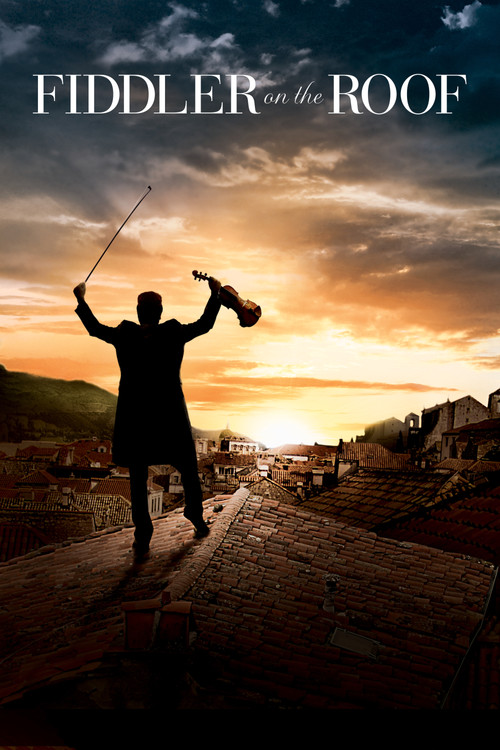
Fiddler on the Roof
"To Life!"
Overview
In the small village of Anatevka, Russia, in 1905, Tevye is a poor Jewish milkman trying to raise his five daughters according to strict religious and cultural customs. His life is defined by "Tradition," which dictates everything from how they eat to whom they marry. However, his world is shaken when his three eldest daughters—Tzeitel, Hodel, and Chava—challenge the established order by choosing their own husbands, moving progressively further away from the arranged marriages Tevye expects.
As Tevye wrestles with his love for his children and his devotion to his faith, the external world encroaches on their insular community. Political revolution and rising anti-Semitism threaten the village's existence. The Tsar's edict eventually forces the Jews of Anatevka to leave their homes, transforming the family's personal struggles into a larger narrative of diaspora and survival.
Core Meaning
The Balance of Survival
At its heart, Fiddler on the Roof is a meditation on how communities and individuals maintain their identity in the face of overwhelming change. Director Norman Jewison and the writers explore the tension between tradition (which provides stability and identity) and love (which requires flexibility and adaptation). The film argues that while traditions may bend or break, the spirit of a people—symbolized by the Fiddler—survives through resilience, family bonds, and the ability to carry one's culture into the unknown.
Thematic DNA
Tradition vs. Modernity
This is the central conflict. Tevye is the gatekeeper of tradition, yet he is constantly forced to compromise as his daughters choose husbands based on love, political ideals, and personal agency rather than the Matchmaker's selection. Each daughter's choice represents a further step away from the old ways.
Prejudice and Displacement
The film depicts the harsh reality of anti-Semitism in Tsarist Russia. The looming threat of the pogrom and the final eviction notice serve as a dark undercurrent to the musical numbers, reminding the audience of the precariousness of Jewish life in the Diaspora.
Generational Conflict
The story universalizes the struggle between parents and children. Tevye's monologues to God reveal his internal battle to understand a younger generation that respects him but refuses to live by his rules.
Faith and Resilience
Despite poverty and oppression, the characters maintain a dialogue with God and a zest for life. This spiritual resilience is portrayed not just as religious duty, but as a survival mechanism.
Character Analysis
Tevye
Chaim Topol
Motivation
To protect his family, uphold God's law, and maintain his dignity in a hostile world.
Character Arc
Tevye begins as the firm ruler of his house but is gradually softened by his daughters' rebellions. He bends for Tzeitel and Hodel but breaks when Chava marries outside the faith. By the end, he is a man displaced but not defeated, carrying his family to a new life.
Golde
Norma Crane
Motivation
The physical survival and security of her daughters.
Character Arc
Golde is the grounding force, focused on survival and status. Through the song "Do You Love Me?", she realizes that her arranged marriage has grown into genuine love, allowing her to accept the changes in her daughters' lives more readily than Tevye.
Hodel
Michèle Marsh
Motivation
To change the world and support the man she loves.
Character Arc
She moves from a spirited village girl to a committed revolutionary partner. Her choice to follow Perchik to Siberia represents the sacrifice of home and family for ideals and love.
Chava
Neva Small
Motivation
Love that transcends cultural boundaries.
Character Arc
The shy, bookish daughter who crosses the ultimate line by marrying Fyedka, a Russian Christian. She forces Tevye to confront the limits of his tolerance.
Symbols & Motifs
The Fiddler
The Fiddler represents the precarious balance of life for the Jews of Anatevka. He symbolizes the struggle to "scratch out a pleasant, simple tune" (life, joy, culture) without "breaking one's neck" (succumbing to oppression or assimilation).
He appears on the roof in the opening/closing scenes and follows the family as they leave Anatevka, signifying that their traditions and spirit go with them into exile.
The Roof
The roof symbolizes the physical and social instability of the community. It is a dangerous place to stand, yet it is where the music plays.
Referenced in the title and visualised in the opening shot; it suggests that they are exposed to the elements (political forces) but remain elevated by their culture.
The Sewing Machine
Represents industrialization and the arrival of the modern world. It is a tool of self-sufficiency that contrasts with the old ways.
Motel the Tailor buys it to prove he can support Tzeitel, marking his transition from a timid boy to a modern man.
Memorable Quotes
Tradition! Without our traditions, our lives would be as shaky as... as a fiddler on the roof!
— Tevye
Context:
Opening monologue, breaking the fourth wall to address the audience directly.
Meaning:
The thesis statement of the film. It explains that rigid customs are what keep the community safe and balanced in a hostile environment.
If I were a rich man, Ya ha deedle deedle, bubba bubba deedle deedle dum.
— Tevye
Context:
Sung in the barn while Tevye rests his lame horse and daydreams.
Meaning:
Expresses the universal desire for a better life, but Tevye's specific wish is not just for money, but for the leisure to study the holy books.
Do you love me? ... For twenty-five years I've washed your clothes, cooked your meals, cleaned your house... If that's not love, what is?
— Golde
Context:
Sung by Golde and Tevye in their bedroom after Hodel announces she is marrying for love.
Meaning:
A pragmatic definition of love born from shared struggle rather than romance. It validates their arranged marriage.
A bird may love a fish, signor, but where would they build a home together?
— Tevye
Context:
Spoken to Chava when she tries to introduce Fyedka.
Meaning:
Tevye's metaphor for why Chava cannot marry a non-Jew. It highlights the fundamental incompatibility of their worlds.
God be with you.
— Tevye
Context:
Muttered under his breath (and repeated by Tzeitel) as Chava and Fyedka say goodbye during the evacuation.
Meaning:
A silent forgiveness. Tevye cannot break tradition to speak to his disowned daughter, but he cannot suppress his fatherly love.
Philosophical Questions
Does tradition protect us or imprison us?
The film suggests it does both. Tradition provides the 'balance' and identity that keeps the community together, but it also creates the rigidity that nearly destroys Tevye's relationship with his daughter Chava.
What is the cost of survival?
Tevye must constantly weigh the cost of his principles against the happiness of his children. The film asks if surviving as a distinct culture is worth the price of personal unhappiness or exclusion.
Alternative Interpretations
Tevye as a Transitional Figure: Some critics view Tevye not as a defender of tradition, but as the agent of its dissolution. By accepting the first two marriages, he paves the way for the inevitable break with the third.
Feminist Reading: The film can be seen as the story of three strong women emancipating themselves from a patriarchal system. The daughters drive the plot, forcing the father to react.
Zionist vs. American Narrative: The ending diverges from the original Sholem Aleichem stories (where Tevye is left alone). The film offers a 'happier' tragic ending where the family heads to America (and Yente to Jerusalem), reflecting the two major paths of 20th-century Jewish survival.
Cultural Impact
Fiddler on the Roof was a massive critical and commercial success, becoming the highest-grossing film of 1971. It brought the specific experience of the Eastern European shtetl to a global audience, proving that the story's themes of family, displacement, and generational clashes were universal. For Jewish audiences, it became a touchstone of cultural identity, romanticizing the 'old country' while acknowledging the pain of the Diaspora.
The film won three Academy Awards (Cinematography, Sound, Scoring). Its songs, particularly 'Sunrise, Sunset' and 'If I Were a Rich Man,' became standards in pop culture, with the latter notably sampled by Gwen Stefani. It remains one of the most beloved movie musicals of all time, frequently cited for its ability to balance joyous musical comedy with tragic historical realism.
Audience Reception
In 1971, the film was praised for its emotional depth, Topol's charismatic performance, and the gritty, realistic visual style that departed from the glossy look of typical Hollywood musicals. Some purists criticized the omission of certain songs from the stage show.
Modern audiences continue to rate it highly (Rotten Tomatoes scores are consistently high), appreciating its poignant relevance to modern issues of refugees and displacement. It is widely considered one of the best film adaptations of a stage musical ever made.
Interesting Facts
- To achieve the film's earthy, period look, cinematographer Oswald Morris shot the entire movie with a brown woman's nylon stocking over the camera lens.
- The violin solos were performed by the world-renowned violinist Isaac Stern.
- The casting of Chaim Topol was controversial because he was an Israeli actor chosen over Zero Mostel, who had originated the role on Broadway. Director Norman Jewison felt Mostel was 'too big' and theatrical for the screen.
- The film was shot largely in Yugoslavia (now Croatia), specifically in the village of Lekenik, to recreate the look of pre-revolutionary Russia.
- Director Norman Jewison is not Jewish, despite his surname. He famously told the producers, 'You know I'm a goy, right?' to which they replied, 'We don't want a Seventh Avenue Tevye, we want a Russian Tevye.'
- Leonard Nimoy (Spock from Star Trek) famously played Tevye in a stage production, but was not considered for the film.
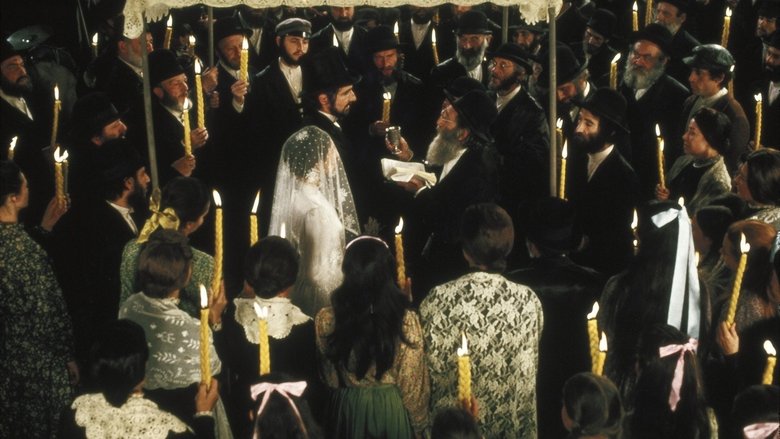
- The 'Bottle Dance' at the wedding was so iconic that many real Jewish weddings started incorporating it, believing it to be an ancient tradition, though it was created by choreographer Jerome Robbins.
Easter Eggs
Sepia Tone Dream
The sequence for 'Tevye's Dream' is shot in a stark, high-contrast sepia style to visually distinguish it as a fabrication Tevye is inventing to fool Golde.
John Williams' Early Work
The score was adapted and conducted by a young John Williams, who won his first Oscar for this film, years before Star Wars or Jaws.
⚠️ Spoiler Analysis
Click to reveal detailed analysis with spoilers
Frequently Asked Questions
Explore More About This Movie
Dive deeper into specific aspects of the movie with our detailed analysis pages
Comments (0)
No comments yet. Be the first to share your thoughts!