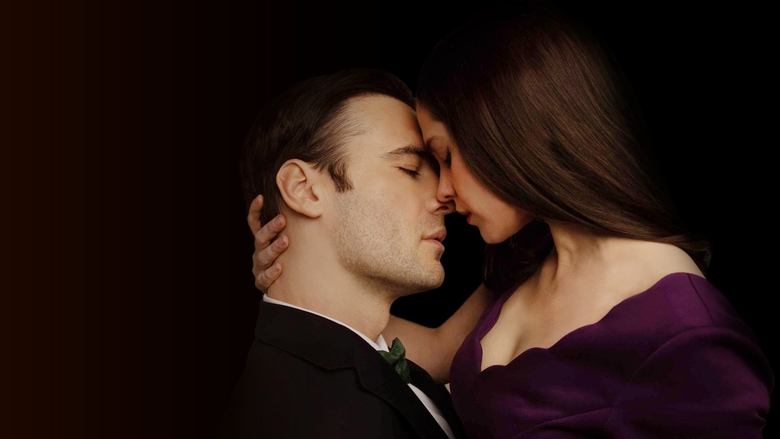

Gabriel's Inferno: Part II
A passionate and atmospheric romantic drama, this film is a slow-burn courtship painted with literary allusions and the delicate light of second chances.
Gabriel's Inferno: Part II

Gabriel's Inferno: Part II

31 July 2020 106 min ⭐ 8.4 (1,532)
Director: Tosca Musk
Cast: Melanie Zanetti, Giulio Berruti, James Andrew Fraser, Margaux Brooke, Agnes Albright
Drama Romance
Redemption and Forgiveness Forbidden Love and Ethics The Power of Literature and Art Healing from Past Trauma

Overview

Picking up where the first installment left off, "Gabriel's Inferno: Part II" continues the tumultuous and intensely emotional story of Professor Gabriel Emerson and his graduate student, Julia Mitchell. After Gabriel's stunning realization of Julia's identity—the stranger who brought him comfort years ago—he finds that his memory has returned too late. Julia, hurt and weary of his erratic behavior, has closed herself off, determined to move on.

The film charts Gabriel's deliberate and tender efforts to win back Julia's trust and affection. He begins a proper, old-fashioned courtship, revealing a softer, more vulnerable side that contrasts sharply with the harsh and arrogant professor from Part I. As they navigate the complexities of their forbidden student-teacher relationship, they must also confront their own past traumas and insecurities. Their journey is one of slow-healing wounds, whispered confessions, and the blossoming of a profound connection, all set against the backdrop of academia and their shared passion for Dante's literary world.


Core Meaning

The core meaning of "Gabriel's Inferno: Part II" revolves around the themes of redemption and the transformative power of unconditional love. The director, Tosca Musk, and the narrative itself emphasize that no matter how broken a person is by their past, genuine repentance and the patient, forgiving love of another can lead to profound healing and salvation. Gabriel's journey is a modern parallel to Dante's ascent from his own personal 'Inferno,' guided by his 'Beatrice' (Julia). The film suggests that true intimacy is built not on passion alone, but on vulnerability, forgiveness, and the courage to confront one's demons.

Thematic DNA

Redemption and Forgiveness 35%
Forbidden Love and Ethics 25%
The Power of Literature and Art 20%
Healing from Past Trauma 20%

Redemption and Forgiveness

This is the central theme of the film. Gabriel, a man haunted by a dark past of substance abuse and emotional turmoil, seeks redemption. He sees in Julia a chance for salvation and a path away from his personal hell. The narrative heavily focuses on his efforts to atone for his past cruelty towards her. Forgiveness is equally crucial, as Julia must learn to trust the changed man Gabriel strives to be, while also coming to terms with her own history of neglect.

Forbidden Love and Ethics

The professor-student dynamic creates a constant, underlying tension. Their relationship is ethically forbidden within the university's code of conduct, forcing them to keep their growing intimacy a secret. This theme explores the conflict between professional responsibility and personal desire, and the film navigates this by having Gabriel and Julia pursue a chaste courtship to avoid crossing the ultimate line while she is still his student.

The Power of Literature and Art

The film is deeply interwoven with references to Dante Alighieri's "The Divine Comedy." Gabriel is a Dante specialist, and he constantly frames his relationship with Julia through the lens of Dante's love for Beatrice. This literary parallel elevates their romance, suggesting a destined, almost spiritual connection that transcends a typical love story. Art and culture, particularly from Florence, serve as a backdrop and a symbolic language for their emotions.

Healing from Past Trauma

Both protagonists are prisoners of their pasts. Gabriel is tormented by his history of bad choices and a cold upbringing, while Julia is scarred by a childhood of abuse and neglect, which has left her with deep-seated feelings of worthlessness. Their relationship becomes a space for mutual healing, as they slowly open up to one another and provide the support and acceptance needed to overcome their respective traumas.

Character Analysis

Professor Gabriel Emerson

Giulio Berruti

Archetype: The Byronic Hero / The Penitent
Key Trait: Intense

Motivation

His primary motivation is to earn Julia's forgiveness and win her love. He sees her as his last chance at redemption and happiness, his "Beatrice" who can lead him out of his personal "Inferno" of guilt and self-loathing.

Character Arc

In Part I, Gabriel is cold, arrogant, and cruel. Part II marks the beginning of his transformation. After remembering Julia, he sheds his harsh exterior and embarks on a path of penance. His arc is about dismantling the walls he built around his heart and learning to be vulnerable and gentle. He moves from a tormentor to a devoted suitor, actively trying to be worthy of Julia's love.

Julia Mitchell

Melanie Zanetti

Archetype: The Innocent / The Healer
Key Trait: Compassionate

Motivation

Initially, her motivation is self-preservation. As the film progresses, it shifts to tentatively exploring the possibility of a future with the changed Gabriel. She is motivated by a deep-seated love for him that she has harbored for years, but she needs to see consistent proof that he has truly changed.

Character Arc

Julia begins Part II emotionally guarded and resolved to protect herself from Gabriel. Her arc in this film is about finding her voice and confidence. While still shy and gentle, she starts to stand up for herself, challenging Gabriel's behavior and setting boundaries. She evolves from a passive victim of his moods to an active participant in defining their relationship, slowly learning to trust him and her own worth.

Paul Norris

James Andrew Fraser

Archetype: The Rival / The Foil
Key Trait: Supportive

Motivation

His motivation is to win Julia's affection. He offers her friendship and support, hoping it will blossom into something more. He represents a normal, healthy relationship, in stark contrast to the intense and forbidden one offered by Gabriel.

Character Arc

Paul serves as a consistent, kind, and stable alternative to Gabriel's volatility. He is an attentive friend to Julia and his romantic interest in her is clear. His character doesn't have a significant arc in this part but acts as a foil to Gabriel, representing a safer, less complicated path for Julia. His presence creates external conflict and forces Gabriel to confront his jealousy and prove his intentions are sincere.

Symbols & Motifs

Dante and Beatrice

Meaning:

This is the most significant symbol in the film. Julia represents Beatrice, the pure, angelic figure who guides Dante (Gabriel) out of his sinful life (Inferno) and towards salvation (Paradiso). Gabriel frequently refers to Julia as his Beatrice, signifying that he views her as his spiritual and romantic guide to becoming a better man.

Context:

This motif is woven throughout their dialogue and the academic setting. Gabriel's lectures on Dante often mirror the events of his own life. When Julia feels betrayed by him, she pointedly says, "I'm not your Beatrice anymore," using their shared symbolic language to express her pain.

Apples

Meaning:

The recurring, subtle presence of apples is an intentional nod to the story's origins as a Twilight fanfiction, where the apple is a prominent cover symbol representing forbidden love. It serves as a small homage to the source of the inspiration.

Context:

Director Tosca Musk confirmed that the inclusion of apples was a deliberate choice to connect to the danger of their relationship being discovered, similar to the danger inherent in the human-vampire romance of Twilight.

Florence, Italy

Meaning:

Florence is not just a location but a symbol of art, history, and the very origins of the Dante and Beatrice story. It represents a future goal for the couple, a place where their love can hopefully exist freely, and a pilgrimage site for their literary-infused romance. It symbolizes a paradise or a new beginning for them.

Context:

While much of the film is set at the University of Toronto, Florence is frequently mentioned as a place they will visit. The desire to go there fuels their connection and frames their love within a grand, historical context.

Memorable Quotes

I'm not your Beatrice anymore.

— Julia Mitchell

Context:

Julia says this during a heated and emotional confrontation after Gabriel has hurt her deeply. It's a turning point where she draws a clear boundary, refusing to engage with him on his literary terms and instead demanding genuine remorse.

Meaning:

This line is a powerful rejection of the symbolic roles Gabriel has placed upon her. It signifies Julia's refusal to be a passive figure in his redemption story. She is reclaiming her identity and telling him that he has broken the idealized image he held of their connection, forcing him to see her as a real person he has hurt.

Of course, but why should you when I'm here to do it for you?

— Professor Gabriel Emerson

Context:

This line is spoken during a tender moment where Gabriel is attempting to feed Julia. Her initial resistance reflects her independence, but his response is disarmingly sweet, showcasing the new dynamic of their courtship.

Meaning:

This quote encapsulates the shift in Gabriel's character. It's gentle, devoted, and slightly old-fashioned. It demonstrates his desire to cherish and care for Julia in every small way, moving from a position of dominance to one of service and adoration. It's a moment of simple charm that reveals his changing heart.

Philosophical Questions

Can a person truly atone for past cruelty through love?

The film explores this through Gabriel's character. He is not just seeking forgiveness from Julia, but a complete redemption for his past life. His every action in Part II is a calculated step away from the man he used to be. The film poses the question of whether his devotion to Julia is a genuine transformation of his character or a selfish use of her love as a means to his own salvation, a complexity Gabriel himself acknowledges.

What is the line between romantic idealization and genuine connection?

Gabriel constantly frames Julia as his 'Beatrice,' an angelic, idealized figure from literature. The film questions whether this is healthy. Julia's journey to find her own voice, culminating in her declaration that she is 'not his Beatrice,' forces both characters (and the audience) to consider the difference between loving a person for who they are versus loving the idea of them and the role they play in one's own life story.

Where are the ethical boundaries in a relationship with a significant power imbalance?

The entire narrative is built on the taboo of a professor-student relationship. The film explores this by making their courtship chaste and intellectual, consciously avoiding the physical crossing of boundaries. However, it still raises questions about emotional manipulation and consent when one person holds significant professional power over the other. The film presents their love as pure enough to transcend these ethical concerns, but the question remains a central tension.

Alternative Interpretations

There are two primary ways to interpret "Gabriel's Inferno: Part II," largely dependent on the viewer's relationship with the romance genre and the source material.

1. A Deeply Romantic and Healing Love Story: Fans and romance enthusiasts view the film as a beautiful, intense, and respectful depiction of a slow-burn courtship. From this perspective, Gabriel's transformation is a powerful story of redemption, and the chaste nature of their interactions in this part is seen as a sign of his profound respect for Julia. The literary references to Dante are considered a sophisticated layer that elevates the narrative beyond a simple romance. The chemistry between the leads is seen as electric and perfectly cast.

2. A Melodramatic and Problematic Fantasy: Critics or viewers less familiar with the genre may interpret the film as 'corny,' unintentionally funny, and filled with over-the-top dialogue. The power imbalance of the professor-student relationship can be viewed as inherently problematic, regardless of the characters' intentions. Gabriel's behavior, even in his 'reformed' state, can be read as possessive and intense, while Julia can be seen as overly passive. From this viewpoint, the film is a niche fantasy that relies on well-worn tropes rather than realistic character development.

Cultural Impact

"Gabriel's Inferno: Part II" exists within a very specific and modern cultural niche: the fanfiction-to-mainstream pipeline. Originally a Twilight fanfiction, its journey mirrors that of Fifty Shades of Grey, showcasing the power of online fan communities to generate commercially successful properties. However, its impact is more contained, as it was produced and released by Passionflix, a streaming service dedicated to the romance novel genre.

For its target audience—fans of the book series—the film was a massive success, celebrated for its faithfulness and the casting. It demonstrates a successful model of direct-to-consumer content for a dedicated fanbase. Critically, it received little mainstream attention. The reception that exists outside the fandom is often mixed, with some viewers finding the dialogue and tropes of the genre to be melodramatic or 'corny'. The film's influence, therefore, is not on mainstream cinema but within the romance community, where it stands as a prime example of a faithful book-to-screen adaptation that deeply satisfied its intended viewers.

Audience Reception

The audience reception for "Gabriel's Inferno: Part II" is sharply divided between fans of the book series and casual viewers. Fans of the books are overwhelmingly positive. They praise the film for its remarkable fidelity to the source material, often citing specific scenes and lines of dialogue that were lifted directly from the page. The casting of Melanie Zanetti and Giulio Berruti is frequently celebrated, with their on-screen chemistry highlighted as a major strength. For this group, the slow pacing is seen as a welcome 'slow burn' that does justice to the characters' emotional development.

Conversely, viewers unfamiliar with the books have offered more critical reviews. Common points of criticism include the pacing being too slow, the dialogue feeling unnatural or 'corny,' and the plot being overly melodramatic. Some find the teacher-student romance trope uncomfortable or unbelievable. These viewers sometimes describe the film as unintentionally humorous due to its intense earnestness.

Interesting Facts

  • The story originated as a 'Twilight' fanfiction titled 'The University of Edward Masen' by author Sylvain Reynard under a different pseudonym.
  • The film is the second of three parts adapted from the first book in the series, also titled 'Gabriel's Inferno.' Director Tosca Musk decided to split the lengthy book to include more details for the fans.
  • Tosca Musk, the director and CEO of the streaming service Passionflix, is the sister of Elon Musk.
  • The lead actors, Giulio Berruti and Melanie Zanetti, were praised by fans for their palpable on-screen chemistry, which many felt was essential to the adaptation's success.
  • Passionflix is a streaming service specifically created to adapt best-selling romance novels into films and series, with 'Gabriel's Inferno' being one of its flagship projects.
  • Filming was done on custom-built sets to perfectly capture the director's vision of locations like Gabriel's office and the seminar room.
  • The filmmakers worked closely with the author, Sylvain Reynard, to ensure the adaptation was faithful to the spirit of the novel, including key musical choices from the book.

Easter Eggs

Throughout the film series, apples are subtly placed in various scenes.

This is a direct homage to the story's origins as a Twilight fanfiction. The apple is the iconic symbol on the cover of Stephenie Meyer's Twilight, representing forbidden fruit and knowledge. Director Tosca Musk confirmed this was an intentional reference to the 'danger' of Gabriel and Julia's forbidden relationship.

⚠️ Spoiler Analysis

Click to reveal detailed analysis with spoilers

Frequently Asked Questions

Explore More About This Movie

Dive deeper into specific aspects of the movie with our detailed analysis pages

Comments (0)

Leave a comment

No comments yet. Be the first to share your thoughts!