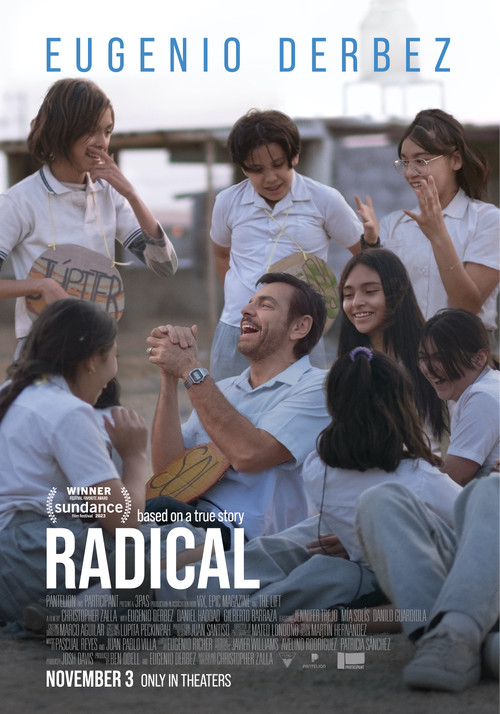
Radical
"Think for yourself."
Overview
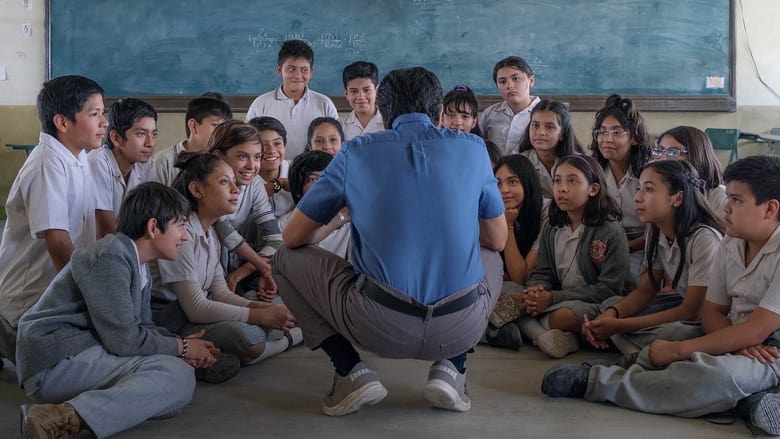
"Radical" is a poignant drama based on the true story of Sergio Juárez Correa, a teacher who takes a position at a neglected elementary school in Matamoros, a Mexican border town rife with poverty and cartel violence. The school is known as a "place of punishment," with disillusioned staff and students who are among the worst-performing in the country. Faced with apathy and a soul-crushing, rigid curriculum focused on standardized tests, Sergio decides to implement a radical, student-led teaching method designed to unlock his students' curiosity and potential.
The film follows Sergio, portrayed by Eugenio Derbez, as he challenges the conventional norms of education. Instead of demanding silence and obedience, he fills his classroom with unconventional lessons, turning desks into lifeboats to teach physics and encouraging philosophical debates. His approach is initially met with skepticism from the cautious school principal, Chucho (Daniel Haddad), and confusion from the students themselves.
As the narrative unfolds, it focuses on the transformative journey of a few specific students, including the brilliant Paloma (Jennifer Trejo), who lives by a garbage dump but dreams of being an aerospace engineer; the thoughtful Lupe (Mia Fernanda Solis), forced to choose between school and family duties; and the conflicted Nico (Danilo Guardiola), who is being drawn into the local drug trade. "Radical" showcases how one teacher's belief in his students' inherent genius can serve as a powerful catalyst for change, even in the most hopeless of circumstances.

Core Meaning
The core meaning of "Radical" is a powerful testament to the transformative power of education and the profound impact one dedicated individual can have on a community crippled by systemic failure. Director Christopher Zalla wanted to convey that potential can be found and nurtured anywhere, regardless of the bleakness of the environment. The film's central message is a critique of rigid, outdated educational systems that stifle curiosity and prioritize rote memorization over genuine learning and critical thinking. It argues that the true purpose of education is not just to pass tests, but to empower students, ignite their curiosity, and give them the tools to think for themselves and rise above their circumstances. Ultimately, the film champions the idea that by treating children not as empty vessels to be filled but as individuals with boundless potential, we can inspire a generation of thinkers and dreamers.
Thematic DNA
The Power of Unconventional Education
This is the central theme of the film. Sergio Juárez Correa rejects the rigid, obedience-focused curriculum. Instead of lectures and memorization, he introduces student-led, problem-based learning. He flips desks over to create "lifeboats" to teach about buoyancy, encourages open debate on complex moral issues, and allows students' own interests to guide the lessons. This "radical" method is contrasted sharply with the traditional approach favored by the administration, which has failed the students. The film demonstrates that by fostering curiosity and critical thinking, education becomes a tool for empowerment rather than mere compliance.
Hope Amidst Despair
The film is set in Matamoros, a town plagued by extreme poverty, neglect, and constant cartel violence. The school is located next to a garbage dump, a visual metaphor for the students' perceived place in society. Against this bleak backdrop, Sergio's classroom becomes a sanctuary of hope and possibility. The film doesn't shy away from the harsh realities—students walk past crime scenes on their way to school—but it posits that even in the darkest environments, the spark of potential can be ignited. It's a story about finding reasons to dream when the world provides every reason to give up.
Systemic Failure vs. Individual Agency
"Radical" critiques the broader societal and institutional failures that have abandoned the children of Matamoros—from a broken education system to corrupt officials and pervasive crime. The teachers are overworked and under-resourced, and the administration is focused solely on inadequate standardized tests. Sergio's success is a direct challenge to this system. The film explores the tension between the overwhelming force of a failed system and the power of one person's determination to make a difference. It asks whether individual heroism is enough to overcome deeply entrenched societal problems.
Unlocking Human Potential
At its heart, the film is about the belief that every child possesses untapped potential, or as Sergio tells them, "What you are is potential." He sees past their poor test scores and difficult circumstances to the genius within each of them. Paloma, in particular, embodies this theme. Initially unmotivated, she is revealed to be a math prodigy, eventually dubbed "the next Steve Jobs" in the article that inspired the film. The film argues that intelligence isn't a fixed trait but something that can be unlocked and nurtured with the right encouragement and environment.
Character Analysis
Sergio Juárez Correa
Eugenio Derbez
Motivation
Sergio is motivated by a profound disillusionment with an educational system that prioritizes discipline and test scores over actual learning. He is driven by the desire to be the kind of teacher who truly inspires students, to connect with them, and to prove that every child has the potential for greatness, regardless of their circumstances.
Character Arc
Sergio begins as a frustrated and disillusioned teacher who feels like a failure within the traditional system. He arrives at the school in Matamoros with a desperate, last-ditch plan to try something completely new. Initially, his methods are chaotic and questioned. As his students begin to flourish, he gains confidence and inspires his colleagues, particularly the principal, Chucho. However, he faces a crisis of faith after a tragedy strikes one of his students, causing him to temporarily abandon his teaching. His arc is completed when his students, empowered by his lessons, seek him out, reminding him of his own teachings and reinforcing his belief in their potential, prompting his return.
Paloma Noyola
Jennifer Trejo
Motivation
Initially, her motivation is simply to survive and help her father. Sergio's encouragement provides her with a new motivation: to pursue her intellectual curiosity and see how far her mind can take her. Her father's belief in her, even in his final moments, becomes a powerful driving force.
Character Arc
Paloma starts as a quiet, observant, and seemingly unmotivated student who lives with her father by the city's garbage dump. Under Sergio's guidance, her innate curiosity and extraordinary aptitude for mathematics are awakened. She transitions from a girl resigned to her fate to a confident and ambitious student who dares to dream of becoming an aerospace engineer. Her journey culminates in her achieving the highest score in the nation on the standardized math test, becoming a symbol of the success of Sergio's method.
Chucho
Daniel Haddad
Motivation
His initial motivation is to maintain order and avoid trouble with the authorities. He operates from a place of resignation, believing the system is unchangeable. Sergio's success and passion remind him of why he became an educator in the first place, shifting his motivation toward genuinely helping the students.
Character Arc
Chucho is the school's principal who has largely given up, enforcing a rigid philosophy of "silence, discipline, and order" as the foundation of learning. He is initially skeptical and wary of Sergio's disruptive methods, seeing him as a troublemaker. However, as he witnesses the positive transformation in the students, his own dormant idealism is reawakened. He evolves from an obstacle into Sergio's staunchest supporter and co-conspirator, even participating in the unconventional lessons himself.
Nico
Danilo Guardiola Escobar
Motivation
Nico is motivated by a mix of loyalty to his brother, the need for survival, and a budding desire for a different future. He is also motivated by a crush on Paloma, which pushes him to engage more in the classroom.
Character Arc
Nico is a bright and curious boy who is being groomed by his older brother to work as a courier for a local drug gang. He represents the students whose potential is most directly threatened by the violent environment of Matamoros. He is torn between the allure of a different life offered by education and the immediate pressures of his reality. His interest in Paloma and his engagement in Sergio's class show his desire for a better path. Tragically, his arc is cut short when he is killed, serving as a heartbreaking reminder of the harsh realities that even the most inspiring education cannot always overcome.
Symbols & Motifs
The Garbage Dump
The massive garbage dump bordering the school symbolizes the societal neglect and the discarded potential of the children. It represents the bleak future assigned to them by their circumstances, a place where things—and people—are forgotten. Paloma's home is right next to it, physically tying the film's greatest hope to its most potent symbol of hopelessness.
The dump is a constant visual presence throughout the film. It's where Paloma and her father scavenge to survive. Her journey from the edge of the dump to national recognition is a powerful visual and narrative arc, representing a rise from the ashes of societal waste.
The Lifeboats (Overturned Desks)
The overturned desks symbolize Sergio's radical departure from traditional teaching methods and the idea that education is a tool for survival. By turning the classroom into an ocean and the desks into lifeboats, he shows the students that learning is an active, collaborative effort to stay afloat in a dangerous world, not a passive act of receiving information.
This is one of the first unconventional lessons Sergio introduces. He physically transforms the rigid structure of the classroom into a dynamic, problem-solving space, shocking both the students and the principal. The lesson on buoyancy becomes a metaphor for lifting oneself and others up.
The Unused Computers
The school's locked and defunct computer lab symbolizes the gap between the students and the modern world, as well as the system's failure to provide essential resources. It represents a locked door to opportunity and knowledge that the students are denied access to, forcing Sergio to find other ways to connect them to bigger ideas.
The computer lab is mentioned early on as having been out of service for years. This fact highlights the school's severe lack of resources and the systemic neglect the community faces, making Sergio's success with no modern tools even more remarkable.
Memorable Quotes
Lo que son es potencial.
— Sergio Juárez Correa
Context:
Sergio says this to his students to counter the negative labels placed upon them by the system and society. He repeats this idea in various forms throughout the film to instill a sense of self-worth and ambition in children who have been taught to expect very little from life.
Meaning:
Translated as "What you are is potential." This is the philosophical cornerstone of Sergio's teaching method. It encapsulates his belief that his students should not be defined by their current situation or their test scores, but by what they are capable of becoming. It's a message of profound hope and empowerment.
El silencio es la base de la obediencia; la obediencia es la base de la disciplina, y la disciplina es la base del aprendizaje.
— Chucho
Context:
Principal Chucho recites this mantra to the students at the beginning of the school year. It establishes the rigid, uninspiring atmosphere of the school before Sergio arrives and provides a stark contrast to his dynamic and interactive methods.
Meaning:
Translated as "Silence is the foundation of obedience; obedience is the foundation of discipline, and discipline is the foundation of learning." This quote represents the oppressive, outdated educational philosophy that Sergio is fighting against. It frames learning as an act of compliance rather than discovery.
El mundo ha cambiado, Sr. Juárez. — Sí, y nosotros no.
— Chucho and Sergio Juárez Correa
Context:
This conversation occurs between Sergio and Chucho as they discuss the difficulties their students face. Chucho points to the violence outside as a reason for the students' struggles, but Sergio argues that the failure is internal—the system's refusal to change its methods to meet the needs of modern children.
Meaning:
Chucho says, "The world has changed, Mr. Juárez." Sergio replies, "Yes, and we have not." This exchange highlights the core problem the film addresses: education has remained static for a hundred years while the world and its challenges have evolved dramatically. It's a direct critique of the educational system's failure to adapt.
Philosophical Questions
What is the true purpose of education?
The film constantly questions the purpose of modern education. Is it to create obedient workers who can pass standardized tests, as the existing system suggests? Or is it, as Sergio advocates, to foster curiosity, critical thinking, and the ability to solve problems creatively? The film explores this by showing the students engaging with deep philosophical questions, such as utilitarianism (the lifeboat problem) and moral dilemmas surrounding issues like abortion, rather than just memorizing dates and facts. It argues that a true education equips children to navigate the complexities of the world, not just to score well on a test.
Can individual effort overcome systemic failure?
Sergio is a single individual pushing against a massive, failing system of education, government neglect, and societal violence. The film celebrates his individual agency and the incredible results he achieves. However, it also presents the limits of his impact through Nico's tragic death and Lupe having to drop out. This raises the philosophical question of how much one person can truly change. Is individual heroism a solution, or is it a temporary fix that highlights the need for a radical, top-to-bottom overhaul of the entire system? The film leaves this question open, offering both an inspiring story of individual success and a somber reminder of the vast, unchanged problems.
Alternative Interpretations
While the film is largely presented as a straightforward, inspirational story, some critics have pointed out that it follows the "inspirational teacher" formula quite closely, which could be seen as predictable. A more critical interpretation could question the sustainability of Sergio's method without systemic support. The film presents him as a heroic individual, but one could argue it downplays the immense structural changes needed for such success to be replicable. Is one "radical" teacher enough, or does the film's focus on a single success story risk creating a feel-good narrative that papers over the deep, systemic rot that remains after he leaves? The tragic fate of Nico serves as a stark counter-narrative within the film itself, suggesting that even the most brilliant teaching cannot erect an impenetrable shield against the violence and poverty outside the classroom walls. This raises the question of whether the film is a story of ultimate triumph or a beautiful, heartbreaking exception to a brutal rule.
Cultural Impact
"Radical" enters a long tradition of inspirational teacher films like "Stand and Deliver" and "Dead Poets Society," but distinguishes itself with its specific cultural and socio-political context. Set in 2011 in Matamoros, the film shines a light on the brutal reality of the Mexican drug war and its devastating impact on communities and especially children. It challenges the stereotypical portrayals of border towns by focusing on a story of hope and intellectual achievement rising from the violence.
The film was a significant box office success in Mexico and performed strongly in its limited U.S. release, resonating with audiences and critics alike. It garnered a 94% positive rating on Rotten Tomatoes, with praise for Eugenio Derbez's heartfelt dramatic performance and the inspiring nature of the true story. The film has sparked conversations about education reform, not just in Mexico but globally, questioning the efficacy of standardized testing and promoting more student-centric learning models. For Derbez, a producer on the film, it was also an opportunity to tell a positive, empowering story about Latinos, aiming to "change how Hollywood perceives Latinos."
Audience Reception
Audience reception for "Radical" has been overwhelmingly positive. The film won the Sundance Film Festival's prestigious Festival Favorite Award, indicating strong early audience approval. On review aggregator sites, it holds a very high audience score, for example, a 99% Popcornmeter on Fandango. Viewers have praised the film for being deeply moving, inspirational, and heartwarming. Many reviewers highlight the powerful and sincere performance by Eugenio Derbez in a dramatic role, a departure from his usual comedic work. The performances of the child actors, particularly Jennifer Trejo as Paloma, have also been widely lauded. The main points of praise center on the film's emotional impact and its uplifting true story. Some minor criticism points to the film's use of a familiar, sometimes predictable formula common to the "inspirational teacher" genre. Despite this, the consensus is that the film's genuine heart and powerful message overcome any narrative conventionality.
Interesting Facts
- The film is based on Joshua Davis's 2013 article in *Wired* magazine titled, "A Radical Way of Unleashing a Generation of Geniuses."
- The real-life teacher, Sergio Juárez Correa, was on set during filming and supervised the depiction of his teaching methods to ensure their accuracy.
- Eugenio Derbez, who is primarily known for his comedic roles, considers his dramatic performance as Sergio to be the most challenging of his career.
- The film won the Festival Favorite Award at the 2023 Sundance Film Festival, an honor voted on by audiences.
- While the character of Paloma Noyola is based on a real student, the other two main student characters, Lupe and Nico, are composite characters representing the various struggles of other real students in the class.
- Director Christopher Zalla felt a deep personal connection to the story, as he was also at a point of restarting his own career when he came across the project.
- To get genuine reactions, director Christopher Zalla did not tell the child actors that their teacher would be played by Eugenio Derbez, a massive comedy star in Mexico, until the first day of shooting the classroom scene.
- Eugenio Derbez first became interested in the story after seeing a TV report about Paloma Noyola being called "the next Steve Jobs" in the *Wired* article.
⚠️ Spoiler Analysis
Click to reveal detailed analysis with spoilers
Frequently Asked Questions
Explore More About This Movie
Dive deeper into specific aspects of the movie with our detailed analysis pages
Comments (0)
No comments yet. Be the first to share your thoughts!