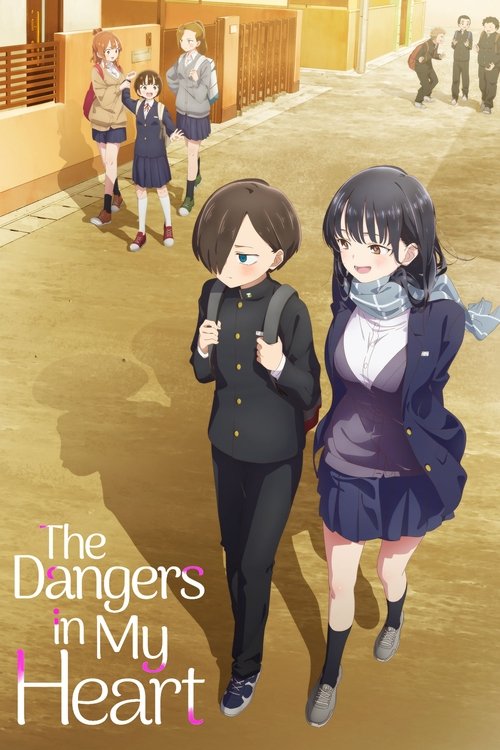
The Dangers in My Heart
A heartwarmingly awkward romance that blossoms in the quiet corners of a school library, depicting the tender dismantling of adolescent anxieties through the vibrant lens of first love.
The Dangers in My Heart

The Dangers in My Heart

僕の心のヤバイやつ

02 April 2023 — 31 March 2024 Japan 1 season 25 episode Ended ⭐ 8.6 (203)
Cast: Shun Horie, Hina Youmiya, Ayaka Asai, Megumi Han, Atsumi Tanezaki
Animation Comedy
Overcoming Social Anxiety and Self-Loathing The Difference Between Perception and Reality The Awkwardness and Purity of First Love Communication (Verbal and Non-Verbal)

Overview

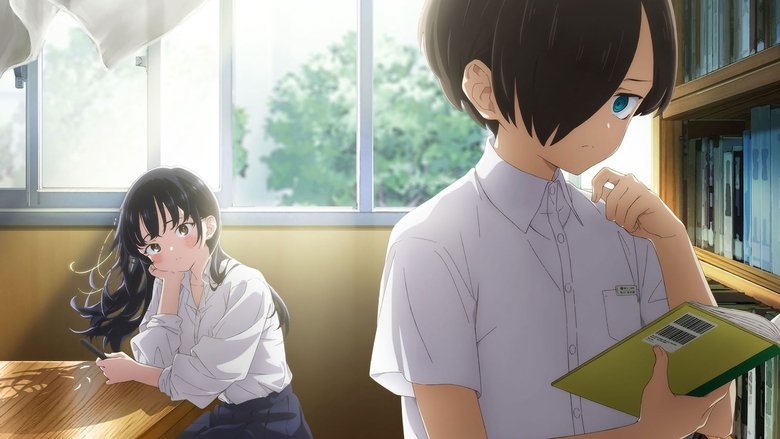
"The Dangers in My Heart" follows Kyotaro Ichikawa, a gloomy and socially awkward middle schooler who secretly harbors dark, chūnibyō fantasies of murdering his popular and beautiful classmate, Anna Yamada. He spends his days in the library, his personal sanctuary, observing her from afar. However, his sinister daydreams begin to crumble when he discovers that Yamada is not the perfect idol she appears to be; she's endearingly quirky, a bit of an airhead, and has an insatiable appetite for snacks, which she often eats in the very same library.

As they share the quiet space of the library, a series of small, often humorous, and surprisingly gentle interactions begin to chip away at Ichikawa's cynical exterior. He finds himself inadvertently helping her and protecting her from awkward situations, and in turn, Yamada's cheerful and genuine nature starts to draw him out of his self-imposed isolation. The series, spanning two seasons, meticulously charts the evolution of their relationship from two polar opposites into a deeply connected pair who find solace and understanding in each other's perceived flaws, navigating the cringey, confusing, and ultimately beautiful journey of adolescent love and self-acceptance.

Core Meaning

The core meaning of "The Dangers in My Heart" is a profound exploration of self-acceptance and the transformative power of genuine human connection. The "dangers" are not external threats, but the internal anxieties, insecurities, and self-loathing that Ichikawa projects onto the world. The series posits that the path out of this internal darkness is not through isolation but through vulnerability and allowing another person to see you for who you truly are. It suggests that love is not about finding a perfect person, but about finding someone who sees past the defensive walls you've built and cherishes the real, flawed individual within. Yamada and Ichikawa's relationship demonstrates that empathy and small acts of kindness can heal deep-seated insecurities, allowing individuals to grow beyond their self-perceived limitations and embrace a more hopeful view of themselves and the world.

Thematic DNA

Overcoming Social Anxiety and Self-Loathing 35%
The Difference Between Perception and Reality 30%
The Awkwardness and Purity of First Love 25%
Communication (Verbal and Non-Verbal) 10%

Overcoming Social Anxiety and Self-Loathing

The series is fundamentally about Kyotaro Ichikawa's journey out of his shell. Initially, he copes with his social anxiety by creating a dark, edgy persona, believing himself to be an unlikable outcast. His fantasies are a defense mechanism against rejection. Through his interactions with Yamada, who accepts his awkwardness without judgment, he slowly realizes his self-perception is warped. The show meticulously portrays the internal monologues of an anxious person, capturing the overthinking and self-doubt that plague him. His growth is not instantaneous but a gradual process of gaining confidence through Yamada's consistent kindness, showing that connection is a powerful antidote to anxiety.

The Difference Between Perception and Reality

Ichikawa initially perceives Yamada as a flawless, popular girl—an idol completely out of his league whom he resents. This perception is the basis for his dark fantasies. However, as he gets to know her, he discovers her reality: she is goofy, clumsy, insecure about her modeling career, and a big eater. Conversely, Yamada sees past Ichikawa's gloomy exterior to the kind and considerate person he truly is. The series constantly plays with this theme, showing how preconceived notions and social labels prevent genuine understanding, and how true relationships are built on seeing and accepting each other's authentic, often quirky, selves.

The Awkwardness and Purity of First Love

The romance between Ichikawa and Yamada is depicted with a level of realism that many viewers find relatable. It avoids many common rom-com tropes in favor of small, incremental moments: hesitant conversations, shared snacks, accidental touches, and the internal panic of sending a text message. Their progression feels natural and earned, focusing on the emotional development and the courage it takes to communicate feelings when you're young and insecure. The story captures the essence of a first crush—the exhilarating highs, the crushing self-doubt, and the simple joy of spending time with someone you care about.

Communication (Verbal and Non-Verbal)

A significant part of the narrative revolves around the characters' struggle to communicate. Ichikawa is often trapped in his own head, unable to voice his thoughts or feelings. Much of their early relationship is built on non-verbal cues: Yamada's gestures, Ichikawa's subtle acts of kindness, and shared moments of silence in the library. As the series progresses, they learn to communicate more directly, culminating in their heartfelt confessions. The show emphasizes that communication is a skill that must be learned and that even small, brave attempts to connect can bridge vast emotional distances.

Character Analysis

Kyotaro Ichikawa

Shun Horie

Archetype: Antihero turned Hero
Key Trait: Introspective

Motivation

Initially, his motivation is rooted in self-preservation through isolation. He wants to maintain his edgy persona to keep others at a distance and avoid getting hurt. As he falls for Yamada, his motivation shifts entirely. He becomes driven by a desire to protect her, to understand her, and ultimately, to be someone who is worthy of standing by her side. His actions are no longer about himself but about ensuring Yamada's happiness and well-being.

Character Arc

Ichikawa begins as a classic 'chūnibyō' character, deeply insecure and hiding behind a facade of dark fantasies about murdering his classmates. He is socially isolated and has extremely low self-esteem, convinced he is an unlikable creep. His arc is one of the most significant transformations in modern romance anime. Through his interactions with Yamada, he slowly dismantles this false persona. In Season 1, he transitions from a silent observer to a secret protector, performing small acts of kindness. In Season 2, his growth accelerates as he begins to confront his insecurities head-on, learns to communicate his feelings, and accepts that he is worthy of Yamada's affection, culminating in him confessing his love. He evolves from someone who rejects the world to someone who actively strives to be a better person for himself and for the person he loves.

Anna Yamada

Hina Youmiya

Archetype: The Ingenue / The Manic Pixie Dream Girl (Subverted)
Key Trait: Expressive

Motivation

Her primary motivation is to connect with Ichikawa, who she finds intriguing and, later, deeply kind. She is drawn to his quiet authenticity in a way she isn't with the more popular boys. She wants to break through his shell and share her world with him, from her favorite snacks to the pressures of her job. As their bond deepens, her motivation is simply to be with him and have him reciprocate the strong feelings she has developed.

Character Arc

Yamada is introduced as the popular, beautiful class idol and a professional model. Her arc is about revealing the genuine, quirky, and sometimes insecure person behind the public image. While she appears perfect, she is shown to be an airhead, a voracious snacker, and emotionally sensitive. Unlike a typical 'Manic Pixie Dream Girl' who exists only to save the male protagonist, Yamada has her own insecurities and goals. She struggles with the pressures of her modeling career and her own clumsiness. Her development involves learning to trust her own feelings for Ichikawa, moving from playful teasing to genuine and deep affection. She becomes more assertive in showing her interest and relies on Ichikawa for emotional support, making their relationship a two-way street of mutual growth.

Moeko Sekine

Megumi Han

Archetype: The Perceptive Friend
Key Trait: Observant

Motivation

Her motivation is rooted in her friendship with Yamada. She wants to see her friend happy. While she enjoys teasing Yamada about her obvious crush on Ichikawa, her actions are ultimately driven by a desire to support her. She is also curious about their unusual dynamic and seems to enjoy watching their wholesome romance unfold.

Character Arc

Moeko, or 'Moe', is one of Yamada's close friends. Initially, she appears somewhat frivolous and boy-crazy. Her character arc involves moving from a more superficial understanding of friendship and romance to becoming a key, supportive figure in Yamada and Ichikawa's relationship. She is one of the first to notice the genuine connection between the two and, instead of judging, she becomes a subtle wing-woman, creating opportunities for them to be together and offering Yamada advice. She grows into a more mature and genuinely caring friend.

Symbols & Motifs

The Library

Meaning:

The library symbolizes a sanctuary or a safe space where both Ichikawa and Yamada can be their true selves, away from the judgment of their classmates. For Ichikawa, it's a refuge from the social pressures he despises. For Yamada, it's a private place where she can indulge in her love of snacks without worrying about her image as a model.

Context:

Throughout Season 1, the library is the primary setting for their interactions. It is the neutral ground where their unlikely friendship begins and blossoms. It's where Ichikawa's perception of Yamada begins to change, and where she first starts to notice and appreciate his quiet kindness. Their shared experiences in this space lay the foundation for their entire relationship.

Ichikawa's Box Cutter

Meaning:

Initially, the box cutter represents Ichikawa's 'chūnibyō' persona and his dark, edgy fantasies. It's a physical manifestation of the "dangers" in his heart—a harmless prop for his imaginary role as a troubled killer. As the story progresses, it becomes a symbol of his past self, a weakness he overcomes.

Context:

In the early episodes, Ichikawa carries the box cutter and fantasizes about using it. A pivotal moment occurs when he uses it not for violence, but to help Yamada with a loose thread on her skirt. This act marks a turning point, where an object of his dark imagination is used for an act of kindness, symbolizing the beginning of his transformation.

Snacks and Food

Meaning:

Food, particularly the snacks Yamada constantly eats, symbolizes comfort, normalcy, and a shared, simple pleasure. It's a tool that breaks the ice between them and grounds their relationship in everyday reality. Sharing food becomes a form of communication and an expression of care.

Context:

Yamada's constant snacking in the library is what first reveals her quirky, non-idol side to Ichikawa. Key moments in their relationship revolve around food: Ichikawa buying Yamada a drink she likes, her sharing her candy with him, and the emotional weight of giving Valentine's Day chocolates. These moments are simple yet powerful illustrations of their growing closeness.

Episode Highlights

I Melted It

S1E6

A pivotal early episode where Ichikawa accompanies Yamada to a meet-and-greet event for her modeling work. He buys her a chocolate bar that she wanted, but it melts in his hand as he hesitates to give it to her. Yamada, far from being disgusted, is touched by the gesture and licks the chocolate from his hand.

Significance:

This is one of the first major turning points in their relationship. It's a moment of unexpected intimacy that shatters Ichikawa's remaining defenses. Yamada's action shows her complete acceptance of him, awkwardness and all, and solidifies his growing romantic feelings for her.

I Wanted to Be Seen

S1E12

In the Season 1 finale, Ichikawa visits a shrine with Yamada on New Year's Eve. Overwhelmed by his feelings and insecurities about their different social standings, he runs away. Yamada chases after him, and they have their most honest conversation yet, with Ichikawa admitting he wants to know more about her. Yamada, in turn, makes it clear she wants him by her side.

Significance:

This episode concludes the first major arc of their relationship, moving them from a tentative, unspoken friendship to a mutual acknowledgment that they are important to each other. It sets the stage for the more direct romantic developments of Season 2 by establishing a new level of emotional intimacy and commitment between them.

Yamada is Mine

S2E6

During a visit to the school for a meeting, a persistent and entitled TV producer tries to scout Yamada. Witnessing his aggressive behavior and Yamada's discomfort, Ichikawa intervenes. In a moment of unprecedented courage, he stands up to the adult and boldly declares, "Yamada is mine," shocking both Yamada and himself.

Significance:

This is a landmark moment for Ichikawa's character development. It is the first time he vocally and publicly stakes a claim and protects Yamada, moving past his internal anxieties to take direct action. It's a powerful declaration of his feelings and marks a significant shift in his self-confidence.

I Want to Tell Her

S2E12

On White Day, Ichikawa struggles with the monumental task of giving Yamada a return gift and confessing his feelings. The episode is a masterclass in tension and internal monologue, as he battles his crippling self-doubt. He finally manages to meet her and gives her the gift, but the confession remains unspoken, leading to an emotionally charged moment.

Significance:

This episode perfectly encapsulates the central conflict of the series: Ichikawa's internal war with his own anxiety. It builds the emotional stakes to their highest point before the finale, making his eventual confession even more impactful. The focus on his internal struggle is a hallmark of the series' storytelling.

Me and My Dangers

S2E13

The season finale. After the intense build-up of the previous episode, Ichikawa and Yamada have an unplanned meeting. In a beautifully animated and emotionally resonant scene, Ichikawa finally, explicitly, confesses his love for her. Yamada, overwhelmed with happiness, reciprocates, and they officially become a couple.

Significance:

This is the culmination of the entire series' narrative arc. It provides a deeply satisfying resolution to the 'will-they-won't-they' tension, rewarding viewers with a sincere and heartfelt confession that feels earned after 25 episodes of gradual character development. It marks the successful end of Ichikawa's journey from self-loathing to self-acceptance through love.

Philosophical Questions

To what extent does our self-perception shape our reality?

The series explores this question through Kyotaro Ichikawa. He believes he is a dark, twisted, and unlovable person, and as a result, he lives an isolated and lonely reality. His internal monologue is a constant stream of self-criticism. However, as Anna Yamada enters his life and treats him with kindness, his reality begins to change. He starts to see himself through her eyes—as a kind, caring, and reliable person. The series argues that while our internal self-perception is powerful, it is not immutable. External validation and genuine connection can challenge and ultimately reshape the stories we tell ourselves about who we are, allowing us to break free from self-imposed prisons.

What is the nature of true intimacy?

"The Dangers in My Heart" posits that true intimacy is not built on grand romantic gestures but on the accumulation of small, vulnerable moments. The relationship between Ichikawa and Yamada develops not through dramatic confessions (until the very end) but through sharing snacks, quiet companionship in the library, helping with a loose thread, and listening to each other. It is in these mundane, everyday interactions that they reveal their true selves and build a foundation of trust and acceptance. The series suggests that intimacy is the quiet process of allowing someone to see your quirks and insecurities and loving them not in spite of them, but because of them.

Alternative Interpretations

While the primary reading of the series is a straightforward and wholesome romance about overcoming anxiety, some viewers have offered alternative perspectives. One interpretation focuses on the series as a critique of social hierarchies in school. Ichikawa, at the bottom rung, and Yamada, at the top, bridge this gap, suggesting that these social structures are artificial and that genuine connection transcends popularity. Their relationship challenges the cliquish nature of adolescence.

Another, more critical interpretation, particularly from early viewers, found the initial premise and some of the fan-service shots of a middle-school-aged Yamada to be uncomfortable. These viewers argue that despite the wholesome turn, the series' starting point is problematic and that the male gaze is a persistent, if subtle, element. However, most fans and critics argue that the narrative's focus quickly and definitively shifts to genuine emotional connection, with Ichikawa's growth being a direct refutation of his initial objectifying and dark thoughts.

Cultural Impact

"The Dangers in My Heart" arrived in a crowded field of high school romantic comedies but distinguished itself through its psychological depth and realistic portrayal of social anxiety. Created by female mangaka Norio Sakurai, the series offers a remarkably insightful and empathetic look into the mind of an adolescent boy, subverting genre expectations. While its initial premise of a would-be murderer was off-putting to some, viewers who continued watching were rewarded with a surprisingly wholesome and emotionally intelligent story.

The anime adaptation by Shin-Ei Animation received widespread critical acclaim, particularly for its second season. It was praised for its masterful direction, subtle visual storytelling, and Kensuke Ushio's evocative musical score, which elevated the source material. The show frequently topped weekly popularity charts during its run, often surpassing more high-profile action series, indicating a strong audience connection to its character-driven narrative. In pop culture, the series has become a benchmark for healthy and well-paced romantic development in anime, praised for its lack of contrived drama and its focus on mutual support and personal growth. Its legacy lies in its compassionate handling of mental health themes like anxiety and low self-esteem, proving that a romance story can be both incredibly sweet and profoundly resonant without sacrificing depth.

Audience Reception

The audience reception for "The Dangers in My Heart" evolved significantly over its run. The first few episodes of Season 1 were met with some hesitation, as Ichikawa's 'chūnibyō' personality and dark fantasies were perceived as cringey or off-putting by a portion of the audience. However, as the series progressed and the focus shifted to the genuinely wholesome and awkward romance, public opinion turned overwhelmingly positive. Many viewers who were initially skeptical became ardent fans, praising the realistic portrayal of social anxiety and the slow-burn, yet incredibly rewarding, development of the central relationship.

Season 2 was met with even greater acclaim, with many fans and critics calling it a masterpiece of the romance genre. The series was lauded for its emotional depth, strong character arcs, and satisfying payoff. On platforms like MyAnimeList and Reddit, the show garnered high scores and glowing reviews, with particular praise for Ichikawa's character growth, which many found to be one of the best in modern anime. The main point of criticism, for some, remained the occasional use of fan-service for middle school characters, but this was largely overshadowed by the praise for its heartfelt storytelling.

Interesting Facts

  • The creator of the manga, Norio Sakurai, based the character of Kyotaro Ichikawa on herself and her own experiences with having few friends and limited contact with the opposite sex during her school days.
  • Norio Sakurai is a fan of idols, and the initial idea for the series came from daydreaming about what it would be like if her favorite idol attended her school. This fantasy became the basis for Anna Yamada's character.
  • The animation for the second season's opening was storyboarded and directed by Tetsuro Araki, a renowned director known for his work on series like "Attack on Titan" and "Death Note".
  • The series is produced by Shin-Ei Animation, the studio famous for iconic, long-running anime like "Doraemon" and "Crayon Shin-chan".
  • The manga chapters are called "kartes," a reference to medical charts, to symbolize Ichikawa's journey of emotional healing through his interactions with Yamada.
  • Ichikawa is shown to be a fan of several real-world manga and anime, including "Baki," "Beastars," and "Re:Zero," with his LINE profile picture being the character Rem from Re:Zero.
  • A spin-off series of animated shorts titled "Twi-Yaba" was released, adapting the bonus comics the author posts on her Twitter account.

⚠️ Spoiler Analysis

Click to reveal detailed analysis with spoilers

Frequently Asked Questions

Explore More About This Movie

Dive deeper into specific aspects of the movie with our detailed analysis pages

Comments (0)

Leave a comment

No comments yet. Be the first to share your thoughts!