Skip to content
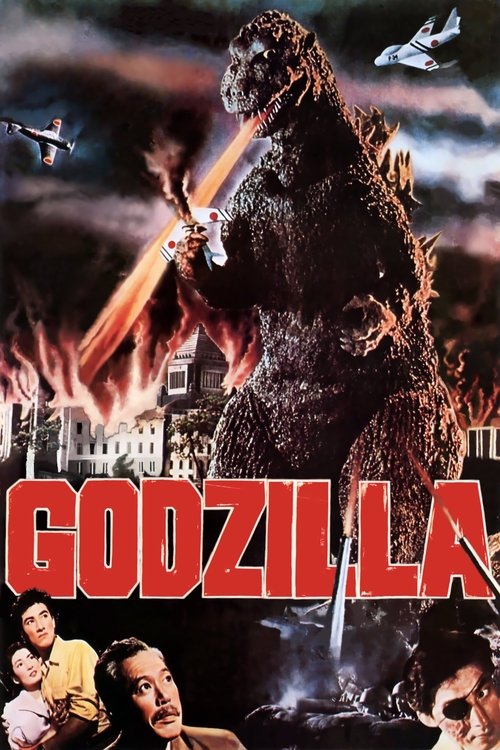
Godzilla
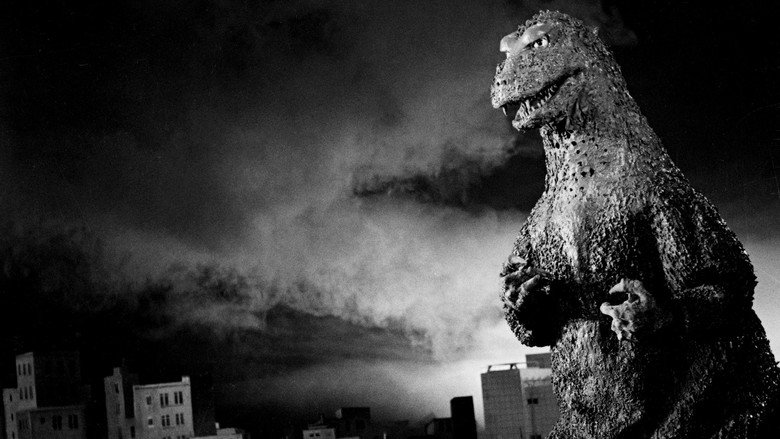
A black-and-white requiem in the shape of a monster: grief, dread and radioactive fire move across a nation still scarred by war, as a living mushroom cloud wades out of the sea.
Godzilla

Godzilla

ゴジラ

"Godzilla, a weapon of science, a great battle of wonder and terror!"

03 November 1954 Japan 96 min 7.6 (1,078)

Director: Ishirō Honda

Cast: Akira Takarada, Momoko Kôchi, Akihiko Hirata, Takashi Shimura, Fuyuki Murakami

Thriller Science Fiction Horror Nuclear trauma and the atomic age Scientific responsibility Collective grief and civilian suffering Humanity versus nature Personal sacrifice and love
Budget: $60,000
Box Office: $2,250,000

Overview

Ishirō Honda's Godzilla (Gojira) starts at sea. Ships vanish, fishermen go missing, and a coastal community wakes to something older and larger than anything it has a name for. Scientists, the military and ordinary citizens try to understand the threat. They find an ancient creature, disturbed and changed by hydrogen-bomb testing, that is now coming toward the Japanese mainland.

While Tokyo braces for catastrophe, the story centres on a small group of people. A veteran paleontologist, Dr. Kyohei Yamane (Takashi Shimura), wants to study the creature rather than simply destroy it. A reclusive young scientist, Dr. Daisuke Serizawa (Akihiko Hirata), is keeping a dangerous secret. Their personal loyalties and consciences become tied to the fate of the city.

The film was made less than a decade after Hiroshima and Nagasaki, and only months after a Japanese fishing crew was exposed to fallout from a U.S. thermonuclear test. It is a grave, mournful disaster film rather than a monster romp. The effects were pioneering, and the real subject is how a society lives with weapons of mass destruction.
Core Meaning

At its heart, Godzilla is an allegory for nuclear weapons. Critics describe the creature as a kind of living mushroom cloud, a force let loose by human atomic testing that Japan experiences as disaster all over again. The film does not celebrate victory over the monster. It asks what it costs to fight destruction with even greater destruction, and it warns that as long as nuclear testing continues, new "Godzillas" may appear.

Serizawa's struggle with his own invention carries the film's moral centre: scientific knowledge carries responsibility, and some discoveries may be too dangerous for the world to keep.

Thematic DNA

Nuclear trauma and the atomic age 35%
Scientific responsibility 25%
Collective grief and civilian suffering 20%
Humanity versus nature 10%
Personal sacrifice and love 10%

Nuclear trauma and the atomic age

Godzilla is awakened and irradiated by H-bomb testing. The ruined cities, burned victims and radiation readings deliberately recall Hiroshima, Nagasaki and the Lucky Dragon fallout incident of March 1954.

Scientific responsibility

Serizawa's Oxygen Destroyer is a weapon potentially worse than the bomb. His fear that politicians will turn it into a weapon, and his final choice to let the secret die with him, frame science as a moral burden.

Collective grief and civilian suffering

The film dwells on hospitals, orphaned children, mothers comforting their children in the face of death, and national prayer. The disaster is shown through its victims rather than through spectacle.

Humanity versus nature

Yamane sees Godzilla as a unique prehistoric survivor worth studying. The monster itself is not evil: it is a creature displaced and deformed by human action.

Personal sacrifice and love

The love triangle between Emiko, Ogata and Serizawa gives the story its private stakes. The ending turns personal loss into a sacrifice made for the common good.

Character Analysis

Dr. Daisuke Serizawa

Akihiko Hirata

Archetype: Tragic hero / reluctant genius Key Trait: Tormented conscience

Motivation

To stop his discovery from ever becoming a weapon like the atomic bomb, while still saving people from Godzilla.

Character Arc

He begins as a withdrawn, scarred scientist guarding a terrible secret. He ends by using his invention once and sacrificing his own life so the knowledge can never be recreated.

Dr. Kyohei Yamane

Takashi Shimura

Archetype: Mentor / sage Key Trait: Humane wisdom

Motivation

Scientific understanding and a respect for life, including the monster's.

Character Arc

A paleontologist who wants to study Godzilla rather than kill it. He becomes the film's grieving voice of warning, and it is his words that close the film.

All 4 characters and cast

Symbols & Motifs

Godzilla

Meaning:

The atomic bomb made flesh: a walking mushroom cloud and a returning wartime trauma.

Context:

Its looming shape and mushroom-shaped head, its keloid-scarred, burnt black skin, and its radioactive breath deliberately recall the bomb and its survivors.

The Oxygen Destroyer

Meaning:

The next, even worse weapon: the arms race and the danger of any technology that can wipe out life.

Context:

Serizawa's device removes oxygen from water, suffocating living things and dissolving them. It is used only once, against Godzilla.

The skeleton in Tokyo Bay

Meaning:

Death that is total and leaves no trace. It is a ghostly afterimage rather than a triumphant kill.

Context:

At the climax, Godzilla dissolves until only its skeleton remains, and then even that disappears.

Burned skin and radiation

Meaning:

The physical legacy of the bomb carried by survivors, the hibakusha.

Context:

Godzilla's skin texture was inspired by the burns suffered by the Lucky Dragon fishermen, and the aftermath scenes show radiation-sick victims.

Ships lost at sea

Meaning:

The invisible spread of fallout across the Pacific.

Context:

The film opens with fishing vessels destroyed at sea, a clear echo of the Lucky Dragon incident.

Memorable Quotes

I can't believe that Godzilla was the only surviving member of its species... But if we continue conducting nuclear tests, it's possible that another Godzilla might appear somewhere in the world again.
— Dr. Kyohei Yamane

Context

The closing lines, spoken after Godzilla and Serizawa have died in Tokyo Bay.

Meaning

This is the film's explicit anti-nuclear thesis. Killing the monster does not remove the cause, and the danger will return as long as testing goes on. (Quoted from the English translation; the original Japanese wording could not be verified with the searches available.)

Philosophical Questions

Can destruction be ended with a weapon even worse than the one that caused it?

The Oxygen Destroyer kills Godzilla, but Serizawa knows that once it is revealed, nations will want it. The film shows the arms-race logic in miniature and refuses to treat the victory as clean.

Is a scientist responsible for how their discoveries are used?

Serizawa destroys his notes and dies with his secret. That choice suggests the only safe way to deal with some knowledge is to make sure it cannot spread.

Is the monster evil, or is it a victim of human action?

Godzilla is awakened and irradiated by nuclear testing. Yamane's grief over killing a unique living creature makes the audience ask where the real blame lies.

Does one individual's sacrifice end a collective danger?

Serizawa's death saves Tokyo, but Yamane's final words deny the audience any comfort. Another Godzilla may come if the testing continues.

How It Ends

Alternative Interpretations

Nuclear allegory (the dominant reading): Godzilla is the bomb, and the attack on Tokyo restages Hiroshima and Nagasaki. The final warning points at continued H-bomb testing.

Full ending explanation

Cultural Impact

Historical context: Godzilla was released in November 1954. That was less than ten years after Hiroshima and Nagasaki, shortly after the U.S. occupation ended, and only months after the Lucky Dragon fallout incident. Its origins are, in critics' words, "steeped in tragedy."

Reception: Reviews on release were mixed, but the film was a box-office success. It earned ¥183 million in distributor rentals, was the eighth-highest-grossing Japanese film of the year, and won the Japanese Movie Association Award for Best Special Effects. Some commentators point out that the settled view of the film as an "anti-nuclear" masterpiece and a symbol of postwar Japan was largely built later, by fans, critics and publishers during the kaiju fandom boom of the 1970s–80s.

Influence: The film founded the kaiju genre and one of the longest-running franchises in film history. Its "suitmation" technique became the standard for Japanese special effects for decades. Godzilla grew from a symbol of national trauma into a national, and then global, pop-culture icon. The re-edited U.S. version Godzilla, King of the Monsters! brought the monster to Western audiences. Criterion's 2012 release and essays such as "Poetry After the A-Bomb" helped restore the original's reputation as serious art.

Audience Reception

Praised: Modern audiences and critics praise the film's grave, sombre tone and its serious approach to nuclear horror. Reviewers repeatedly call it "a dark meditation on nuclear weapons." They also admire Honda's direction, Tsuburaya's pioneering effects and Ifukube's score. Many first-time viewers are surprised by how bleak and emotional it is compared with the later, lighter sequels.

Criticised: Reviews on first release were mixed. Some viewers today find the pacing slow, the love triangle melodramatic, or the miniatures and suit dated.

Controversy: The American re-edit, Godzilla, King of the Monsters!, has been criticised for softening the original's political content. Fans generally consider the original Japanese cut the definitive version.

Overall verdict: The film was a box-office hit on release, and today it is widely regarded as a landmark of world cinema and the foundational kaiju film.

Interesting Facts

  • Producer Tomoyuki Tanaka came up with the idea on his way back to Japan from an overseas production: a giant monster awakened by nuclear radiation that attacks Japan and settles in Tokyo Bay.
  • Effects director Eiji Tsuburaya originally wanted stop-motion animation. The team estimated it would take far too long (Haruo Nakajima reportedly said seven years), so they used an actor in a suit on miniature sets, the technique later known as 'suitmation'.
  • The original Godzilla suit weighed over 200 pounds, and suit actor Haruo Nakajima needed several minutes just to move in it.
  • Under the hot studio lights, the temperature inside the suit reached about 60°C (140°F). Nakajima could last only about three minutes at a time before nearly passing out, and roughly a cup of sweat was reportedly drained from the suit.
  • The sound team first tried to build Godzilla's roar from edited animal roars.
  • Composer Akira Ifukube was not allowed to see the special-effects footage while scoring the film, because Tsuburaya did not want to show unfinished work.
  • Principal photography took 51 days; special-effects photography took 71 days.
  • The film earned ¥183 million in distributor rentals, making it the eighth-highest-grossing Japanese film of that year.
  • It won the Japanese Movie Association Award for Best Special Effects.
  • A heavily re-edited American version, 'Godzilla, King of the Monsters!', was released later, and Criterion released the original Japanese cut on DVD and Blu-ray in 2012.

Easter Eggs

The opening disaster at sea recalls the Lucky Dragon (Daigo Fukuryū Maru) incident

On March 1, 1954, the Japanese fishing boat Lucky Dragon was hit by fallout from the U.S. Castle Bravo test at Bikini Atoll, and its crew suffered radiation sickness and burns. Audiences at the time would have recognised the reference immediately. It also inspired the look of Godzilla's skin.

Godzilla's keloid-like skin and mushroom-cloud head

The creature's design is itself a hidden memorial. Its burnt, scarred hide recalls the wounds of atomic-bomb survivors, and its head shape echoes a mushroom cloud.

Frequently Asked Questions

Explore More About This Movie

Dive deeper into specific aspects of the movie with our detailed analysis pages

Comments (0)

Leave a comment

No comments yet. Be the first to share your thoughts!

Similar Movies